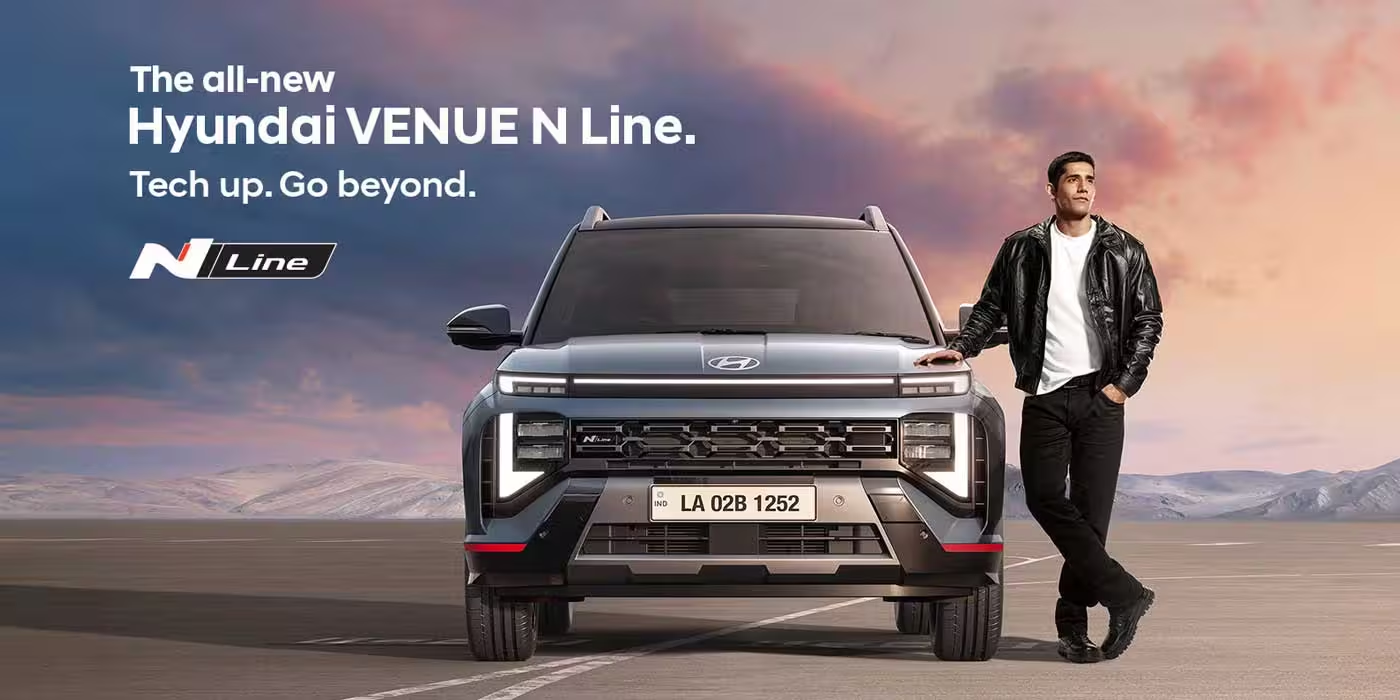
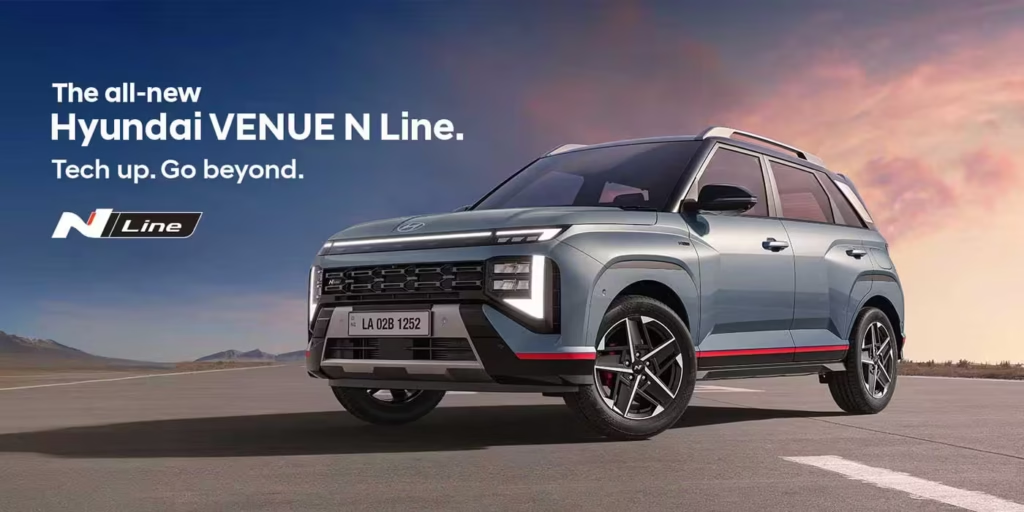
Hyundai Venue N Line 2025 has finally been unveiled, bringing genuine excitement to India’s compact SUV space. Let’s be honest, this segment has often been more show than substance red badges, shiny pedals, and little else. But this time, Hyundai might actually have nailed it, many expected the same gimmick. But the reality is far more interesting.
Hyundai has treated the N Line as more than a sticker job. The company stiffened the suspension, retuned the steering, added full Level-2 ADAS, and gave it technology that rivals some mid-size SUVs. The goal is to prove that you don’t need to spend ₹20 lakh to get genuine driving enjoyment.
Pricing and Ownership Costs
The Venue N Line 2025 is priced between ₹11.11 lakh and ₹12.81 lakh (ex-showroom). Two variants are available, N6 offered with both a 6-speed manual and 7-speed DCT, and N8 which comes exclusively with the DCT and all the bells and whistles.
In Delhi, on-road prices hover between ₹13–15 lakh depending on insurance and accessories. Bookings open for ₹25,000 online or at dealerships.
With a ₹1.5 lakh down payment, 9.8 percent interest, and a 5-year tenure, EMIs land around ₹23k–₹28k per month depending on variant. Real-world mileage sits between 14–20 kmpl, expect roughly 16–17 kmpl in mixed use.
Average ownership outlay over five years including EMI interest, maintenance, insurance, and fuel for 1,000 km a month totals ₹20–23 lakh. Considering the performance and features, that’s a fair deal.
Design and Styling
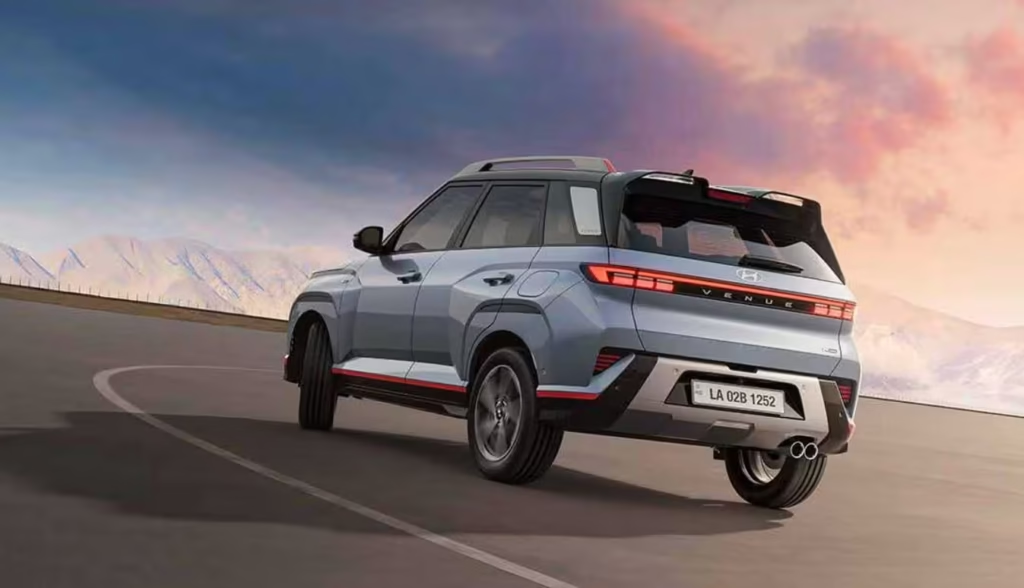
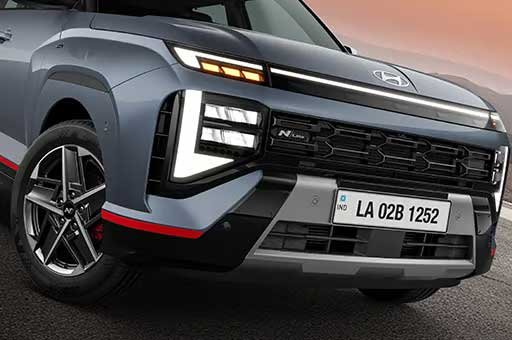
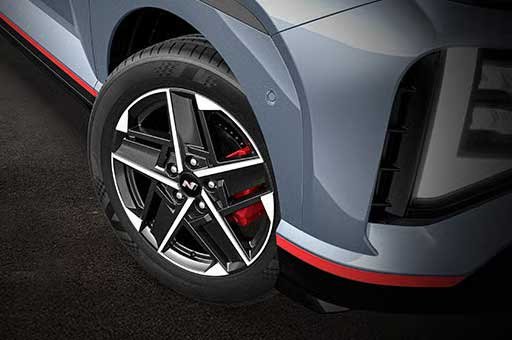
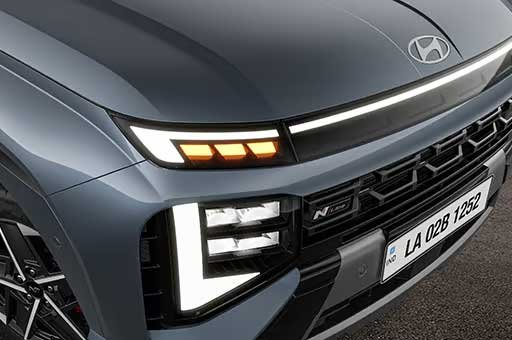
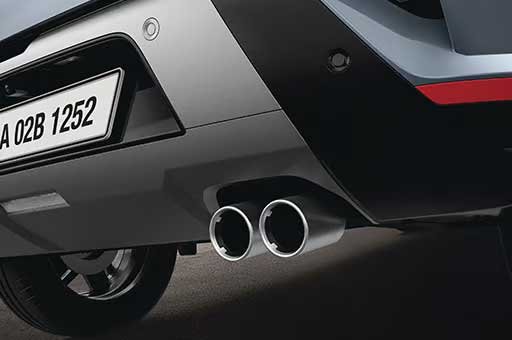
The standard Venue has always looked tidy but safe. The N Line changes that entirely. A darker chrome grille with an N emblem, red highlights on the bumpers, side skirts and brake calipers, plus twin-tip exhausts give it genuine presence.
The new 17-inch diamond-cut alloys sit flush within the arches, lending a squat, athletic stance. Even parked, it looks ready to move. The twin exhaust adds a subtle burble, more sporty growl than artificial roar.
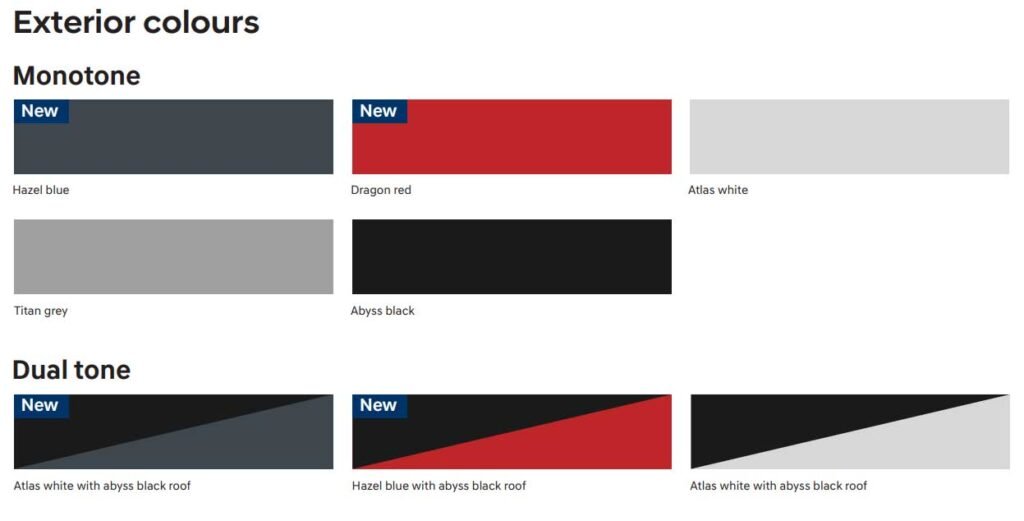
Hyundai offers four main colors: Atlas White, Titan Grey, Hazel Blue, and Dragon Red, Abyss Black each with optional Abyss black roof. The Dragon Red dual-tone screams weekend fun, while Hazel Blue keeps things tasteful for the weekday commute.
Cabin and Comfort
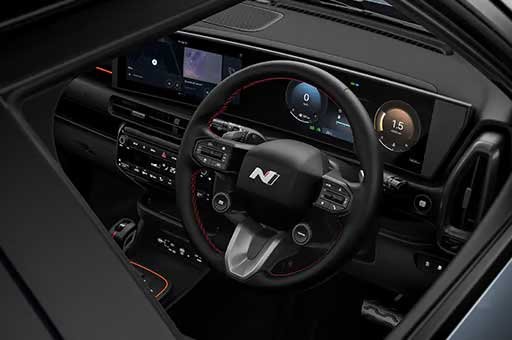
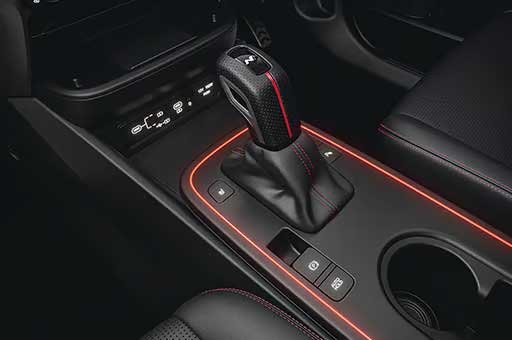
Open the door and the difference from the regular Venue is immediate. The cabin trades beige for an all-black interior with red accents, leatherette upholstery with N branding, and metal pedals. It feels intimate and focused without being claustrophobic.
The seats are firmer and more supportive than before, hugging you through corners yet staying comfortable on long drives. Red ambient lighting ties the theme together. Visibility and ergonomics are excellent, and material quality feels a notch above class average.
Darker interiors aren’t everyone’s preference, but here they fit the brief perfectly. It feels like a proper driver’s cockpit rather than a family crossover pretending to be sporty.
Technology and Features
Hyundai didn’t stop at design tweaks. The Venue N Line debuts the company’s new ccNC (Connected Car Navigation Cockpit), a twin-screen setup powered by NVIDIA hardware. Both screens measure 12.3 inches and share a single curved panel that looks lifted from a luxury model.
The interface offers three themes, Classic, Modern, and Simple, and is fluid to operate. Wireless Android Auto and Apple CarPlay work seamlessly, and the 8-speaker Bose audio system finally does justice to your playlist. Add in a 360-degree camera, front ventilated seats, and a wireless charger with cooling vents, and the Venue N Line feels properly high-tech.
Tech and Feature Highlights
| Category | Feature | Details |
|---|---|---|
| Display & Interface | Dual 12.3-inch curved screens | ccNC OS with 3 themes |
| Connectivity | Android Auto / Apple CarPlay | Wireless, stable connection |
| Audio | Bose 8-speaker system | Deep bass, crisp vocals |
| Comfort | Ventilated front seats | Leatherette N sport design |
| Camera & Sensors | 360° surround view | Dynamic guidelines |
| Charging | Wireless pad with cooling | Prevents phone overheating |
| Lighting | Red ambient LED | Linked to drive modes |
| Sunroof | Single-pane electric | Smooth operation |
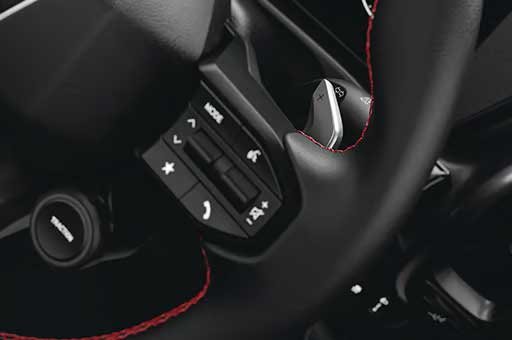
| Steering | Paddle shifters (DCT) | Metallic finish, ergonomic |
| UI Personalization | Themes & widgets | Classic / Modern / Simple |
Everything works intuitively. Even small touches like the cooled phone bay show Hyundai understands Indian conditions.
Performance
The Hyundai Venue N Line 2025 is powered by a 1.0-litre turbocharged GDi petrol engine that produces 120 PS of power and 172 Nm of torque. This engine configuration is shared with several other Hyundai and Kia models in India and is known for its balance between efficiency and responsive performance. On paper, its output figures are on par with most competitors in the compact SUV segment, but its lighter overall weight provides a favorable power-to-weight ratio.
The engine is paired with two transmission options: a 6-speed manual and a 7-speed dual-clutch automatic (DCT). The manual gearbox has been engineered for shorter shift travel and a light clutch mechanism, making it suitable for urban and highway use. The 7-speed DCT, on the other hand, is tuned for smooth and quick shifts, aided by paddle shifters for manual control. Hyundai’s calibration focuses on minimizing gear-hunting and maintaining consistent performance in stop-and-go Indian traffic conditions.
For the N Line, Hyundai has modified the suspension and chassis setup to enhance stability and handling. The springs and anti-roll bars are stiffer than the standard Venue, resulting in improved composure during cornering and more controlled body movement at higher speeds. These mechanical changes are aimed at delivering a more dynamic and confident character, aligning with the N Line’s sportier positioning.
The steering system has also been re-tuned to provide more weight and feedback in Sport mode compared to the standard variant. Hyundai’s drive-mode selection system adjusts throttle response and steering calibration across three modes—Eco, Normal, and Sport—allowing drivers to tailor the vehicle’s behavior to their preferences or road conditions.
The stiffer suspension setup is expected to offer superior cornering stability and reduced body roll on smooth roads, though it may result in a firmer ride over uneven surfaces. Overall, the engineering focus of the Venue N Line has been to create a compact SUV that combines everyday usability with a sportier, more responsive driving character without compromising overall comfort.
Safety and ADAS
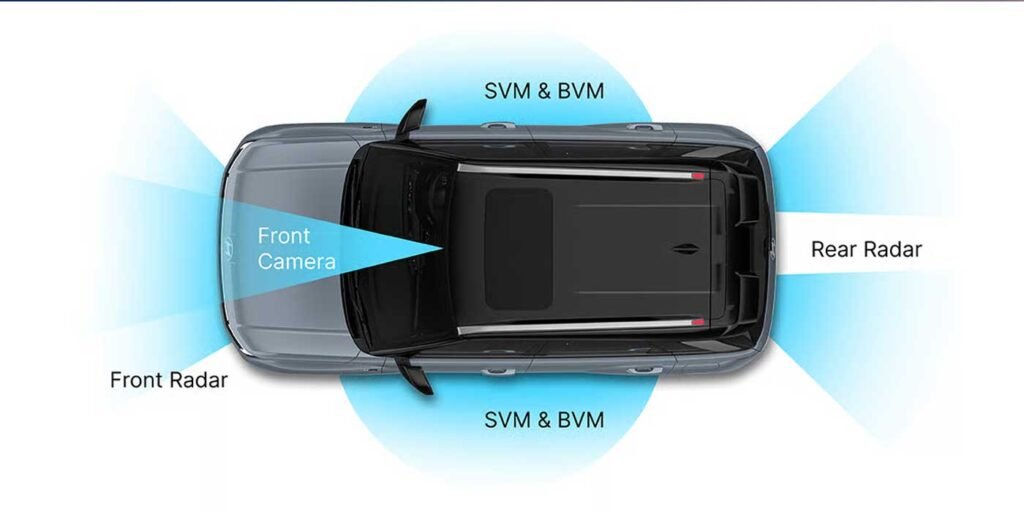
The new Venue N Line introduces Level 2 ADAS to this segment, a bold move for a compact SUV. The suite includes Adaptive Cruise Control with Stop-and-Go, Forward Collision Avoidance Assist, Lane Keeping and Lane Following Assist, Driver Attention Warning, Blind-Spot Detection, and Rear Cross-Traffic Alert.
In real Indian conditions, the radar-camera combination performs impressively well. Adaptive Cruise works smoothly on expressways, maintaining distance even in moderate traffic. Lane-Keep sometimes overreacts on faded markings but can be adjusted for sensitivity. It’s not autonomous driving, yet it meaningfully reduces fatigue on long routes.
Standard safety equipment includes six airbags, Electronic Stability Control, Hill-Start Assist, all-disc brakes, TPMS, and a 360° camera. Structural rigidity feels solid, and while Bharat NCAP ratings are pending, Hyundai’s recent focus on crash safety inspires confidence.
Space and Practicality
Despite the sporty brief, everyday usability hasn’t vanished. The front cabin offers generous space, comfortable seats, and wide storage bins. The rear bench can seat two adults comfortably; three would be tight for long journeys.
The only real compromise is the 343-litre boot, which trails most rivals. For weekend trips with two passengers, it’s fine. For a family vacation, you’ll need to pack strategically. Ride height and visibility make it easy to drive in the city, while the turning radius remains compact.
Competition Check
The sub-compact SUV space is crowded, and every rival brings its own strength. The Venue N Line’s closest competitors are the Tata Nexon, Mahindra XUV 3XO, and Kia Sonet. Here’s how they compare on paper.
| Parameter | Hyundai Venue N Line | Tata Nexon | Mahindra XUV 3XO | Kia Sonet |
|---|---|---|---|---|
| Price (₹, ex-showroom) | 11.11 – 12.81 L | 7.32 – 13.5 L | 7.49 – 13.5 L | 7.30 – 13.9 L |
| Petrol Engine | 1.0 L Turbo 120 PS | 1.2 L Turbo 120 PS | 1.2 L Turbo 120 PS | 1.0 L Turbo 120 PS |
| Torque (Nm) | 172 | 170 | 200 | 172 |
| Transmission Options | 6MT / 7DCT | 5MT / 6AMT / 7DCT | 6MT / 6AT | 6MT / 7DCT |
| ADAS Level | Level 2 (21 functions) | Partial on select trims | Limited | Available on top trims |
| Infotainment Screen | 12.3-inch twin | 10.25-inch | 10.25-inch | 10.25-inch |
| Audio System | Bose 8-speaker | 6-speaker | 6-speaker | Bose 8-speaker |
| Claimed Mileage | 18 kmpl | 17.4 kmpl | 18.9 kmpl | 18 kmpl |
| Boot Capacity | 343 L | 382 L | 364 L | 392 L |
The Nexon leads on crash-test ratings and offers more variants. The XUV 3XO’s 200 Nm torque makes it the punchiest, especially in diesel. The Sonet shares Hyundai’s mechanicals but trades refinement for flashier design. The Venue N Line, though pricier, counters with stronger tech, tighter handling, and Hyundai’s reliability network, a premium many buyers will happily pay.
Pros and Cons
The turbo engine delivers quick, linear performance with minimal lag. Dual 12.3-inch screens and Bose audio make the cabin feel truly premium. Level-2 ADAS and six airbags set a safety benchmark for this size. Build quality is solid, fit and finish are consistent, and Hyundai’s nationwide service coverage remains class-leading.
On the flip side, the price premium of ₹3–4 lakh over rivals may deter budget buyers. The firm suspension can feel jittery on broken roads, the boot is smaller, there’s no diesel option, and the single-pane sunroof feels modest next to panoramic rivals.
Who Should Buy the Venue N Line
The Hyundai Venue N Line suits young professionals and first-time buyers who want something stylish yet practical. It’s perfect for those who enjoy spirited weekend drives but need an easy-to-park city SUV.
If your commute involves smooth roads and you crave a car that makes even short drives enjoyable, this is it. It’s also ideal for tech-savvy owners who appreciate modern interfaces and connected features.
However, if space, comfort, or pure value matter more than performance, you’re better served by the standard Venue, Nexon, or XUV 3XO. Similarly, heavy-duty highway drivers might prefer a diesel-powered alternative.
Market Context and Industry Analysis
Hyundai’s decision to expand the N Line portfolio is strategic. Indian buyers are shifting from mere practicality to emotional appeal; they want vehicles that look good, feel premium, and are fun to drive. The success of the i20 N Line and Creta N Line proved there’s space for accessible performance.
Launching the new Venue N Line alongside the 2025 Venue facelift lets Hyundai target two types of buyers simultaneously: value seekers with the regular model and experience-seekers with the N Line.
It also arrives at a time when petrol turbos remain the sweet spot between efficiency and excitement before mid-segment EVs take over. For those still attached to engine sound and gearshifts, the Venue N Line represents the final chapter of pure-ICE driving fun under ₹15 lakh.
The Motors77 Final Verdict
The 2025 Hyundai Venue N Line delivers exactly what its badge promises. It’s stylish, well-built, and genuinely engaging to drive, a rare combination in the sub-compact SUV segment. Yes, it costs more than rivals and rides a bit firmer, but that’s the trade-off for excitement and finesse.
If you view your car as more than a commuting tool, if you look forward to the drive itself, the Venue N Line deserves a place high on your shortlist. For those content with practicality alone, the regular Venue or XUV 3XO will do. But for everyone else seeking affordable fun, this is the one to buy.
Frequently Asked Questions
1. What’s the real-world fuel economy?
Expect around 16–17 kmpl overall, dropping to 14 kmpl in heavy city traffic and stretching to 19–20 kmpl on highways.
2. Is the 7-speed DCT reliable for India?
Yes. Hyundai’s current DCT is refined and heat-resistant. Avoid prolonged creeping in heavy jams to extend clutch life.
3. How different is the N Line from the regular Venue?
It gains a turbo-petrol engine, stiffer suspension, all-disc brakes, sportier design, dual 12.3-inch displays, and ADAS, not just cosmetics.
4. What about maintenance costs?
Service every 10,000 km or 12 months; average ₹7k–₹12k per visit. Synthetic oil and timely care keep the turbo healthy.
5. Does ADAS work in Indian traffic?
Surprisingly yes. Adaptive cruise and collision assist handle moderate traffic well, though lane-keep is best used on clear highways.
6. Is it comfortable for long drives?
Front seats are excellent, ventilation helps in summers, and adaptive cruise reduces fatigue. Only the firm ride and small boot limit touring comfort.
7. What resale can I expect after 3–5 years?
Around 50–55 percent resale after 3 years, possibly higher due to enthusiast demand and limited supply.
8. Should I pick this over a Sonet or Nexon?
Choose the Venue N Line for driving pleasure and tech. Pick the Nexon for space and value, the Sonet for design flash, or XUV 3XO for torque and diesel range.
Also Read: Hyundai Venue Variant-Wise Engine Details Leaked Ahead of Launch