Nissan Gravite is the official name for Nissan India’s much-anticipated compact MPV, as confirmed by the Japanese automaker on December 18, 2025. This revelation marks a significant milestone in Nissan’s renewed product strategy for the Indian market, positioning the brand to compete more aggressively in the highly contested family vehicle segment. The Gravite will become Nissan’s third model in India, joining the successful Magnite compact SUV and the flagship X-Trail, and represents the first of three new products planned for launch over the next two years.
What Makes the Nissan Gravite Name Significant?
The naming choice carries deliberate symbolism. Derived from the word gravity, the Nissan Gravite name conveys balance, stability, and attractive force qualities that resonate deeply with family-oriented buyers seeking a dependable people mover. The nomenclature also maintains phonetic consistency with the Magnite, creating brand recognition and easier recall among prospective customers. This thoughtful approach to naming demonstrates Nissan’s commitment to building a cohesive product identity in the Indian market.
Nissan Gravite Launch Timeline and Market Availability
Nissan has outlined a clear roadmap for the Gravite’s market introduction. The official unveiling is scheduled for January 2026, with dealership arrivals expected by March 2026. This phased approach allows adequate time for production ramp-up and dealer network preparation.
The Gravite will be manufactured at the Renault-Nissan Alliance’s Chennai facility, leveraging existing production infrastructure while maintaining strict quality standards. India will also serve as an export hub, with the Gravite destined for multiple international markets underscoring the country’s strategic importance in Nissan’s global manufacturing network.
Platform and Engineering Foundation
The Nissan Gravite is developed on the CMF-A+ platform, a proven architecture shared with the Renault Triber. This modular platform offers flexibility in packaging while maintaining structural rigidity and crash safety performance. By utilising an established platform, Nissan benefits from reduced development costs and accelerated time-to-market without compromising on engineering fundamentals.
The sub-4-metre length classification ensures favourable tax treatment under India’s goods and services tax structure, enabling competitive pricing.
Nissan Gravite Design: A Fresh Identity
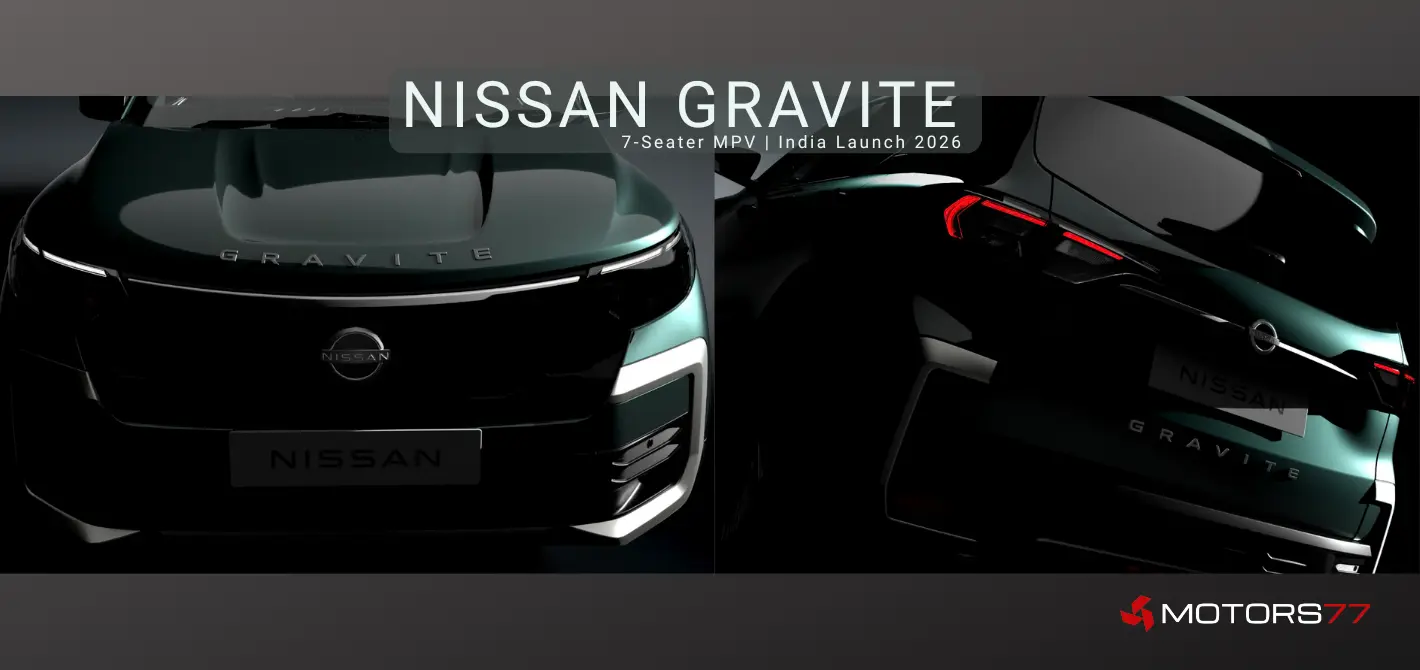
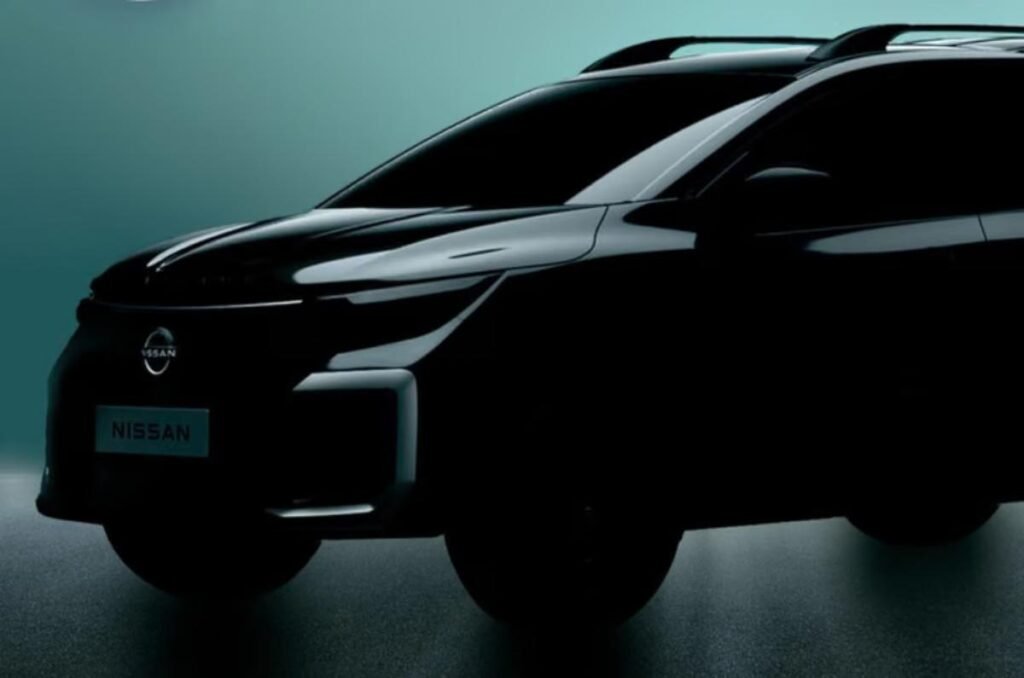
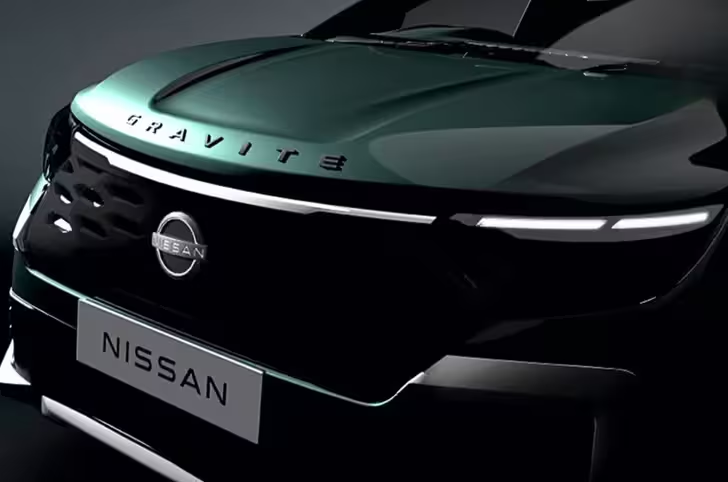
Teaser images released by Nissan reveal a distinctly different design approach compared to its platform sibling. The front fascia features the signature V-motion grille finished in gloss black, flanked by redesigned headlamp clusters incorporating segmented horizontal LED daytime running lights. A prominent chrome garnish connects the headlamps, creating visual width and presence.
The muscular bonnet bears embossed ‘GRAVITE’ lettering, lending the MPV a bold character uncommon in its segment.
At the rear, the Nissan Gravite adopts clear-lens tail lamps with distinctive J-shaped brake-light signatures. A horizontal chrome bar spans the tailgate, visually linking the lamp clusters and reinforcing the premium positioning. The rear bumper incorporates silver C-shaped inserts, adding subtle sophistication. Overall, the upright, practical design prioritises functionality over sportiness a sensible approach for the target demographic.
Interior Space and Seating Flexibility
While interior details remain officially undisclosed, the Nissan Gravite is expected to offer a versatile three-row seating arrangement in a 2+3+2 configuration. The modular seating system reportedly allows configurations for five, six, or seven occupants, with removable third-row seats enabling expanded cargo capacity when required.
This flexibility addresses varying family needs whether school runs, weekend getaways, or monthly grocery trips making the Gravite genuinely practical for Indian households.
Nissan Gravite Engine and Transmission Options
Under the bonnet, the Nissan Gravite will house a 1.0-litre, three-cylinder naturally aspirated petrol engine producing approximately 72 PS and 96 Nm of torque. Transmission choices include a 5-speed manual gearbox and an automated manual transmission (AMT) for urban convenience.
While enthusiasts may note the absence of turbocharged or hybrid options, this powertrain prioritises fuel efficiency, low maintenance costs, and proven reliability attributes that matter significantly to budget-conscious family buyers. This approach mirrors the philosophy that made the Renault Triber popular among urban family buyers.
A CNG retrofit option may also be available at the dealership level, offering further running-cost savings.
Expected Safety Equipment
While official specifications are awaited, the Nissan Gravite is expected to offer comprehensive safety equipment befitting a family vehicle. Anticipated features include six airbags, anti-lock braking system with electronic brakeforce distribution, traction control, hill-hold assist, tyre pressure monitoring system, and ISOFIX child-seat mounting points.
These provisions align with increasing consumer awareness regarding occupant protection and reflect tightening regulatory requirements in the Indian market.
Nissan Gravite Expected Price in India
Industry analysts anticipate the Nissan Gravite to start around ₹6 lakh (ex-showroom), with the range-topping variant potentially approaching ₹9 lakh. This aggressive pricing would position the Gravite competitively against the Renault Triber while undercutting established players like the Maruti Suzuki Ertiga and Toyota Rumion.
Nissan’s pricing strategy will prove crucial in attracting first-time buyers and young families seeking affordable seven-seater solutions.
How the Nissan Gravite Fits the Competitive Landscape
The compact MPV segment has witnessed renewed interest following the Triber’s success in democratising seven-seater ownership. The Gravite enters a market where buyers increasingly prioritise space and versatility over vehicle type.
Direct competitors include the Renault Triber, Maruti Suzuki Ertiga, Toyota Rumion, and Citroën C3 Aircross. The Nissan Gravite aims to differentiate itself through distinctive styling, competitive pricing, and the brand’s reputation for build quality—factors that could sway consideration among comparison shoppers.
Is Nissan Gravite Bigger Than Renault Triber?
While exact dimensions are yet to be revealed, the Nissan Gravite is expected to closely mirror the Renault Triber’s footprint due to the shared CMF-A+ platform. However, Nissan’s revised exterior design and interior packaging could offer a slightly more premium visual presence without altering the fundamental space advantages of the platform.
Nissan’s Broader India Strategy Beyond the Gravite
The Nissan Gravite represents the first phase of an ambitious three-model product offensive. Following the Gravite’s launch, Nissan will introduce the Tekton, a premium compact SUV based on the Renault Duster platform, in mid-2026. A seven-seater SUV derived from the Tekton architecture is planned for early 2027.
This comprehensive roadmap signals Nissan’s long-term commitment to the Indian market after years of limited product activity. The strategy builds on the Magnite’s success, which currently exports to 65 international markets, reinforcing India’s role as a strategic hub for the brand.
Motors77 Verdict
The Nissan Gravite arrives at an opportune moment. Indian families increasingly seek practical, affordable vehicles offering genuine seven-seat capability without the bulk or expense of traditional MPVs. By combining a proven platform, distinctive design, and competitive positioning, the Gravite appears well-conceived for its intended audience.
The reliance on a naturally aspirated 1.0-litre engine may disappoint those seeking spirited performance, but for the typical MPV buyer prioritising fuel economy and low ownership costs, this powertrain choice makes practical sense. The CMF-A+ platform’s track record with the Triber inspires confidence in packaging efficiency and real-world durability.
What remains to be seen is how Nissan executes on pricing, features, and after-sales support. The company’s dealer-network expansion across Tier-I and Tier-II cities will prove essential in converting interest into sales. If Nissan delivers on its promises, the Gravite could become a compelling choice for value-conscious families seeking Japanese reliability at accessible prices.
The Nissan Gravite deserves attention from anyone shopping in the sub-₹10 lakh seven-seater space. We await the January 2026 unveiling with measured optimism.
Buyers exploring affordable family cars may also want to check out our detailed guide on budget electric cars under ₹15 lakh in India to understand how EVs compare with petrol MPVs in terms of running costs and practicality.