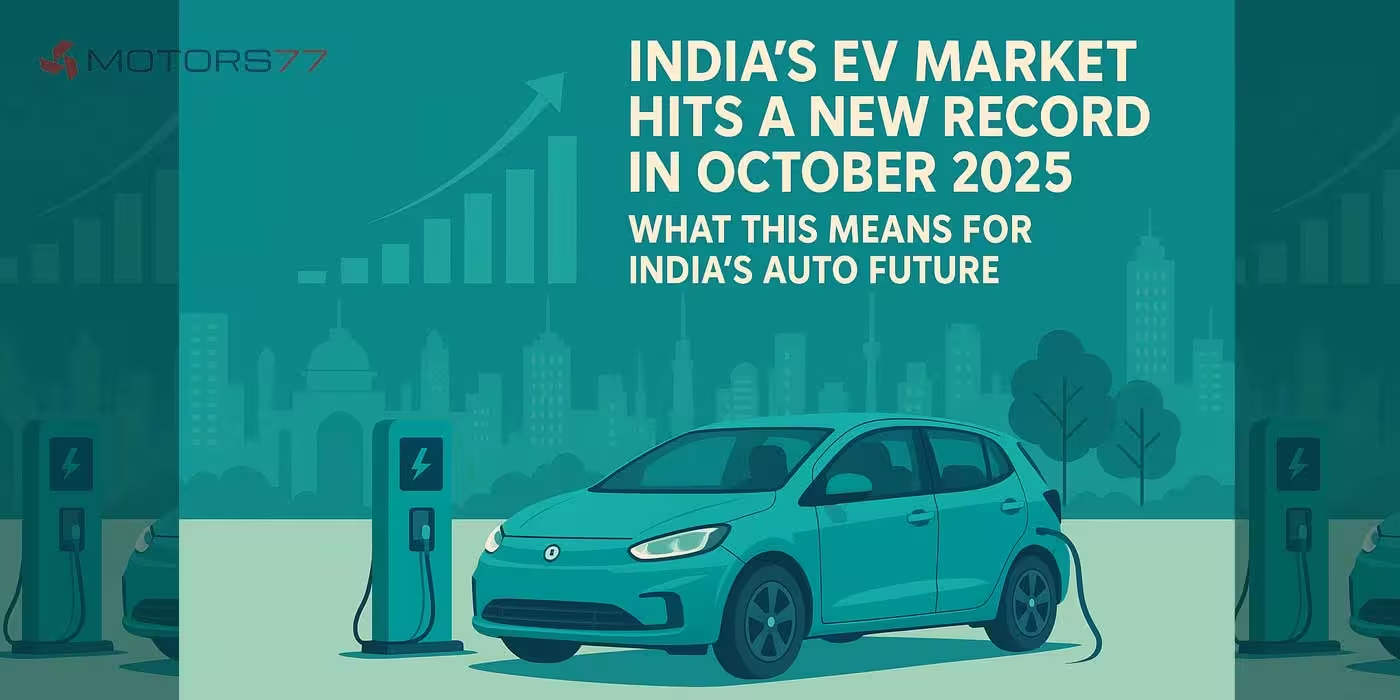
India’s EV market touched a record 2.34 lakh sales in October 2025. Here is a detailed, the role of two-wheelers, emerging challenges, and what buyers should realistically expect next.
Every once in a while, the auto industry delivers a moment that feels like a clear before-and-after. October 2025 was one of them. India’s electric vehicle market posted its highest ever monthly figure with more than 2.34 lakh EVs sold nationwide. If you follow the auto beat closely, you know this milestone didn’t come out of nowhere. It is the result of policy pressure, changing consumer behaviour, and a surprisingly fast shift among commercial buyers. And yet, the story isn’t a simple “EVs are taking over” narrative. There’s nuance, hesitation, and even contradictions.
This analysis breaks down where the market stands today, why October became a breakout month, and what the numbers actually tell us about India’s road to electric mobility.
India’s EV Sales in October 2025
According to registration data from multiple state transport departments and industry trackers, India clocked around 2.34 lakh EVs in a single month. For context, this is roughly the kind of volume the country recorded annually just four or five years ago. That alone should give you a sense of how quickly the needle is moving.
Two-wheelers dominated the charts with more than 1.44 lakh units. Three-wheelers followed with over 70,000 registrations, mostly commercial. Passenger EVs contributed close to 18,000 units, a number small in isolation but impressive considering the segment’s price sensitivity.
The bigger picture is even more compelling. From January to October 2025, cumulative EV sales reached around 18.46 lakh units. If the current pace holds, India is on track to comfortably cross the two-million-unit mark by year-end.
Why October Became a Breakthrough Month
Festive season demand certainly played its part. But attributing the record sales solely to Diwali offers only half the picture. Several other forces came together and created the perfect moment for EV demand to spike.
Improved Model Availability
Manufacturers entered October with stronger inventory. Delays seen earlier this year due to battery imports eased slightly. More importantly, brands like Tata, MG, Mahindra, Ather, Ola, Bajaj and TVS had fresh updates and wider trim options ready for delivery.
Better Charging Visibility
While the infrastructure is still far from ideal, the average Indian city now has visibly more chargers than it did even six months ago. That psychological reassurance makes a difference. You might not use a public charger daily, but knowing it exists affects your buying confidence.
Technology Improvements
Longer range batteries, reliable motors and fewer reported breakdowns have made EVs feel less “experimental”. The typical EV buyer today is not just an early adopter. They are someone who wants lower running costs and is willing to take a calculated leap.
Commercial Push
Perhaps the biggest silent force behind the October record is the EV three-wheeler market. Fleets, delivery companies and independent drivers are increasingly choosing EV autos simply because they improve daily income. When a commercial segment gets economically aligned with electrification, adoption naturally accelerates.
How Each Segment Performed
Electric Two-Wheelers
This is the heartbeat of India’s EV revolution. With more than 1.44 lakh units sold in October alone, the two-wheeler segment has reached a maturity level where buyer hesitation is noticeably dropping.
Scooters like the Ola S1, Ather 450 series, TVS iQube, Hero Vida and Bajaj Chetak continue to lead. The biggest shift however is in Tier 2 and Tier 3 markets where people are choosing EVs purely for cost savings, not environmental concerns.
Passenger EVs
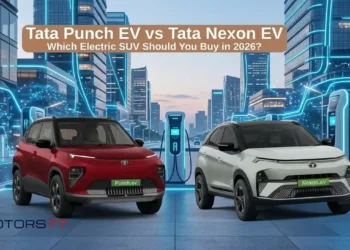
Passenger EVs remain a smaller but rapidly growing category. Around 18,000 units were registered in October, driven by models such as the Tata Nexon EV, Punch EV, MG ZS EV, Comet, BYD Atto 3 and the Mahindra XUV400. Buyers seem more confident today because reliability issues that once dominated EV conversations have reduced significantly.
However, the price gap between petrol cars and EVs continues to be a barrier. Yet, for urban families with predictable commute patterns, EV ownership is becoming an increasingly logical choice.
Electric Three-Wheelers
This is the unsung success story. More than 70,000 units sold in October and most of them went directly into commercial use. For drivers, the difference in daily profit is immediate and meaningful. With minimal maintenance and far cheaper charging costs, EV autos are proving to be a solid return-on-investment option.
Challenges That Still Need Attention
Despite the October high, the EV market has hurdles that cannot be ignored. The first is infrastructure. While metros are improving, large parts of rural India still have no reliable charging network. Battery recycling remains in its early stages. And although manufacturers are localising components, India continues to rely heavily on imported cells and rare earth materials.
Another challenge is affordability. As long as EV cars remain more expensive upfront, many buyers will keep waiting. Government incentives help, but the recent GST relief for ICE vehicles has unexpectedly created a new challenge for EV price competitiveness.
What This Means for Indian Buyers Today
If you are considering an EV, you are entering the market at a very favourable moment. Not only do you have more models to choose from, but the real-world ownership experience is finally looking predictable. Yes, there will still be occasional service delays or software issues, but the days of “early adopter pain” are fading.
Two-wheelers are the safest bet for someone new to EVs. For cars, the decision is more nuanced. If you drive mostly in the city and have home charging, an EV will likely reduce your monthly expenses significantly. If highway travel is frequent and chargers are limited where you live, waiting another six to twelve months might not be a bad idea.
Where India’s EV Market Is Heading Next
If current trends continue, 2026 might be the year when EVs genuinely become mainstream in urban India. We could see a wave of new models under the fifteen lakh bracket, better battery manufacturing inside India and charging stations in more public locations. This is also the period where fast-charging technology is expected to get quicker and more efficient.
The real future of India’s EV ecosystem depends on how effectively the industry balances affordability with reliability. If they get that right, EVs will not just be an alternative, but the default choice for new buyers.
FAQs
- What was India’s total EV sales figure for October 2025
Around 2.34 lakh units were sold across all segments. - Which EV segment performed the best
Electric two-wheelers dominated the month with more than 1.44 lakh sales. - Are EV cars becoming more popular in India
Yes, passenger EV sales crossed 17,000 units in October showing steady growth. - What is driving the rise in EV three-wheelers
Low running costs and higher daily earnings for commercial drivers. - Are EVs cheaper to maintain than petrol vehicles
Yes, they have fewer moving parts and lower per-kilometre costs. - Will EV prices drop in 2026
Prices may reduce gradually as localisation of batteries increases. - Is charging infrastructure improving across India
It is improving in metros and Tier 2 cities but still uneven nationally. - Should buyers wait before purchasing an EV
If you travel mostly in the city, now is a good time. Frequent highway users may want to wait a little longer.
Also Read: Yamaha Aerox E and EC 06 Launched in India: Can Yamaha’s New EVs Shock the Market?