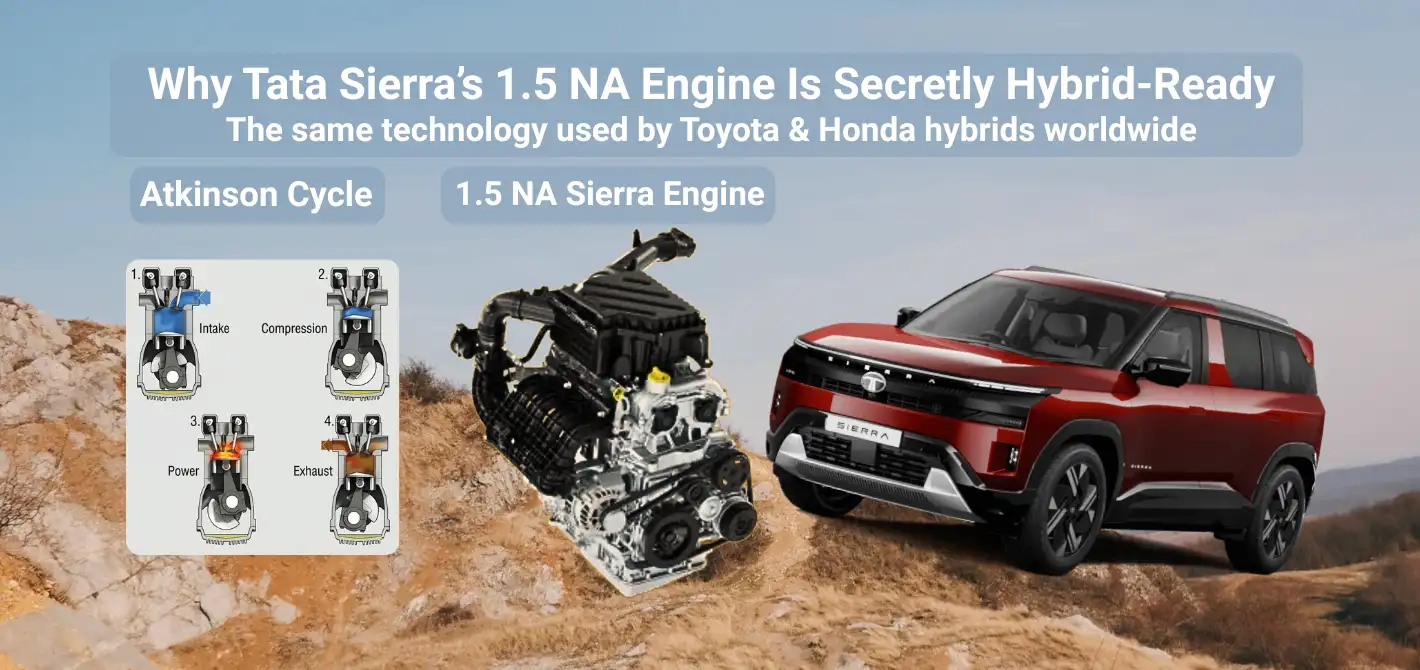
Tata Sierra 1.5 NA Atkinson Cycle Engine isn’t just another petrol motor it’s India’s first mid-size SUV powertrain built on technology that powers every major hybrid vehicle globally. While competitors focus on turbocharged engines for headline power figures, Tata made a calculated bet on thermodynamic efficiency that delivers 18.2 km/l and positions the Sierra for an electrified future.
This engineering decision mirrors what Toyota did with the Prius 27 years ago. The question isn’t whether this technology works it’s why no other Indian manufacturer attempted it until now.
What Makes the Tata Sierra 1.5 NA Atkinson Cycle EngineDifferent from Every Rival?
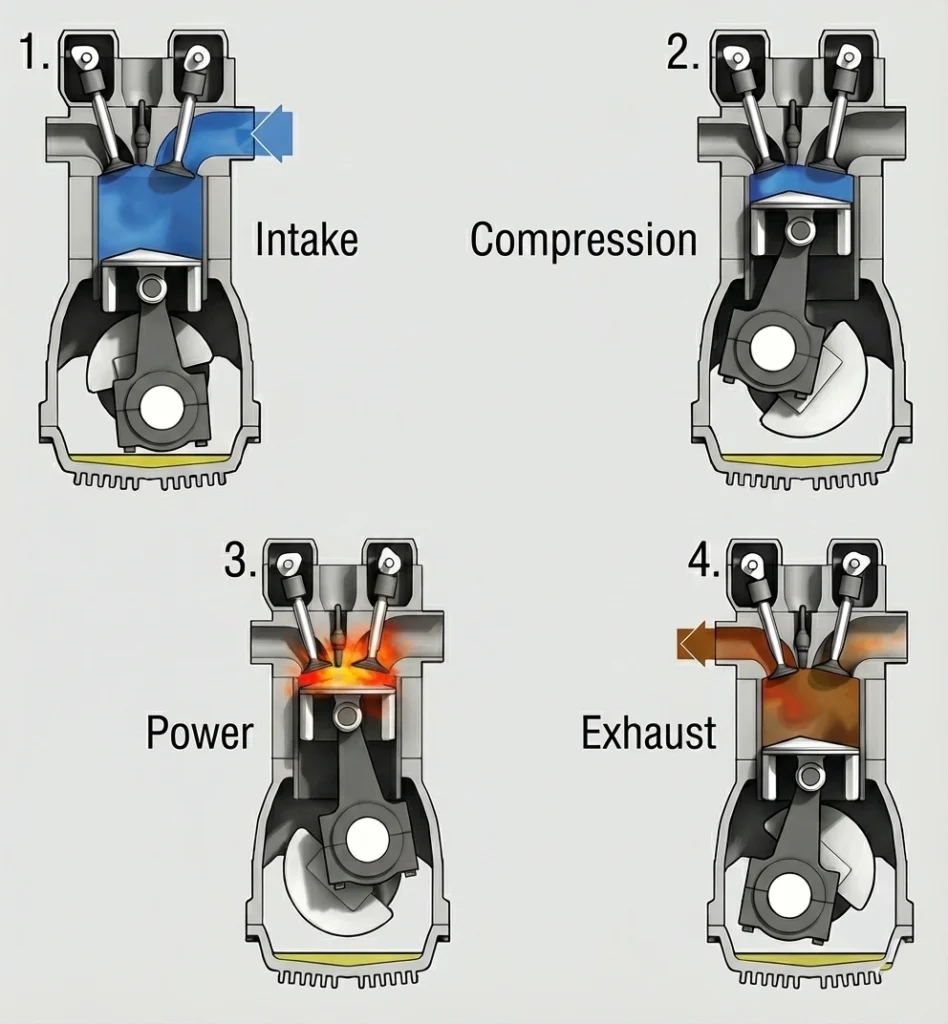
Most petrol engines operate on the Otto cycle, where the piston compresses and expands the air-fuel mixture over identical distances. The 1.5 NA Sierra Atkinson cycle engine breaks this symmetry through a deceptively simple modification: the intake valve stays open longer than normal.
During compression, approximately 20-30% of the intake charge flows backward into the manifold before the valve closes. This reduces the effective compression work while maintaining full expansion during the power stroke. The result is an expansion ratio greater than the compression ratio extracting energy that conventional engines waste through hot exhaust gases.
Where typical petrol engines achieve 25-30% thermal efficiency, Atkinson cycle engines reach 38-41%. That 10-15 percentage point improvement translates directly into fuel savings at the pump.
The Specifications That Reveal Tata’s Efficiency-First Strategy
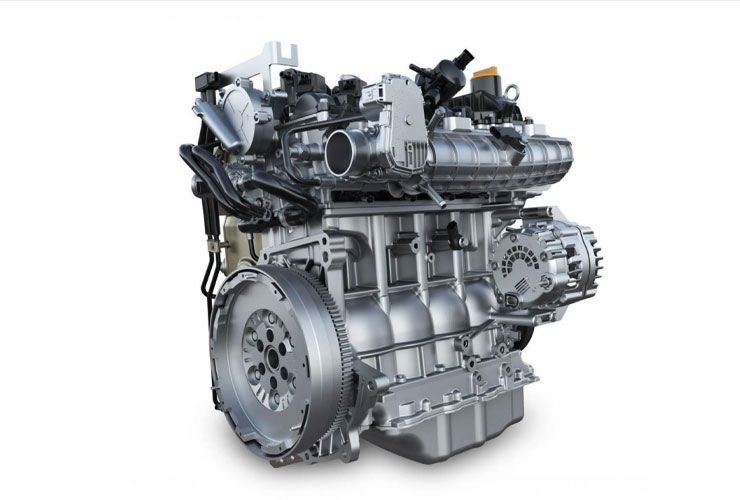
The 1.5 NA Sierra Atkinson cycle engine specifications tell a story of deliberate optimisation:
| Parameter | Specification |
|---|---|
| Displacement | 1,498 cc |
| Power Output | 106 PS @ 6,000 rpm |
| Peak Torque | 145 Nm @ 2,100 rpm |
| Compression Ratio | 13:1 |
| ARAI Mileage | 18.2 km/l |
| Transmission | 6-speed MT / 7-speed DCT |
The 13:1 compression ratio stands out immediately the Hyundai Creta’s 1.5L NA uses just 10.5:1. Higher compression enables greater energy extraction but requires sophisticated knock-resistant calibration. The peak torque arriving at just 2,100 rpm delivers what Tata describes as “diesel-like” low-end responsiveness, addressing Indian city driving conditions where low-RPM tractability matters more than peak power.
Real-world efficiency expectations suggest 10-13 km/l in city traffic and 14-16 km/l on highways competitive figures for a vehicle of this size and weight.
Why Every Major Hybrid Uses Atkinson Technology (And Why Sierra Is Ready)
Here’s the revelation that explains Tata’s engineering choice: the Atkinson cycle’s apparent weakness becomes its greatest strength when paired with electric motors.
Atkinson engines sacrifice approximately 20% power density for efficiency gains. In a conventional vehicle, this means slower acceleration. But electric motors deliver peak torque at 0 RPM exactly where Atkinson engines struggle. This complementary characteristic is why Toyota, Honda, Hyundai, and Ford universally chose Atkinson technology for their hybrid powertrains.
The operating strategy is elegant: electric motors handle variable demands like acceleration and hill climbing, while the Atkinson engine operates only in its efficiency sweet spot during steady cruising. Toyota’s data shows 50-60% of urban commutes occur in pure electric mode, with the engine contributing only when thermal efficiency peaks.
Global manufacturers have achieved remarkable results with this formula:
- Toyota A25A-FXS: 41% thermal efficiency (world’s best for production petrol)
- Honda 2.0L DI Atkinson: 41% thermal efficiency
- Toyota 2ZR-FXE (Prius): 40% thermal efficiency
- Hyundai Smartstream G1.6: 38-39% thermal efficiency
The 1.5 NA Sierra Atkinson cycle engine’s 13:1 compression ratio and efficiency-optimised calibration provide the foundational architecture that would seamlessly integrate with electric motor assistance.
How Global Automakers Perfected the Atkinson-Hybrid Formula
Toyota pioneered mass-market Atkinson hybrids with the 1997 Prius and remains the efficiency benchmark. Their 2.5L Dynamic Force engine achieves 41% thermal efficiency using 14:1 compression, dual injection systems, and electric variable valve timing. This powers the Camry Hybrid, RAV4 Hybrid, and Lexus ES300h across global markets.
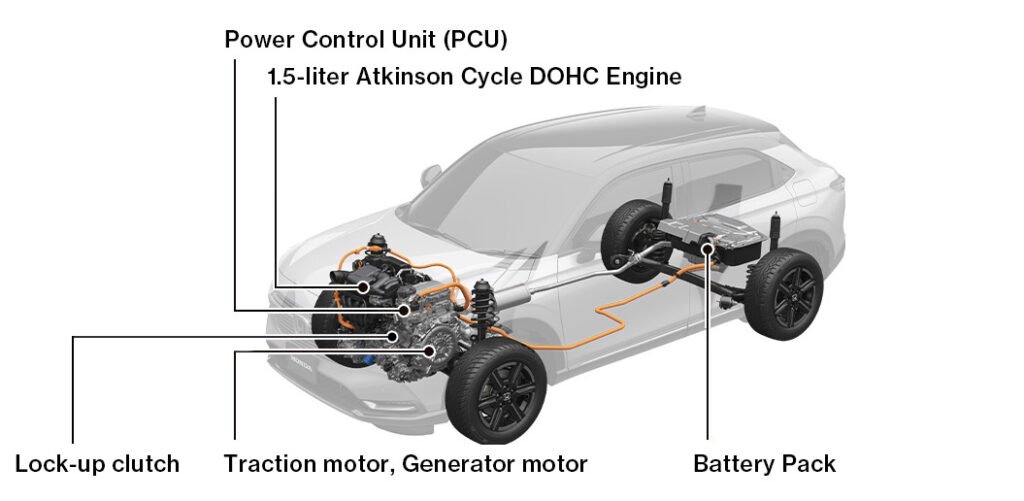
Honda’s i-MMD system pairs Atkinson engines with their i-VTEC variable valve technology. The 2.0L direct-injection unit in the Accord and CR-V Hybrid achieves 41% thermal efficiency through 13.5:1 compression and high-pressure direct injection. Honda’s system uniquely operates in pure EV mode, series hybrid mode, or direct engine drive depending on conditions.
Hyundai-Kia developed CVVD (Continuously Variable Valve Duration)—the world’s first technology allowing real-time switching between Atkinson, Miller, and Otto cycles. Their Smartstream G1.6 powers the Ioniq, Niro, and Elantra Hybrid with 12.5:1 compression.
Ford’s 2.5L Atkinson engine in the Escape and Maverick Hybrid demonstrates this technology’s viability even in larger vehicles when adequately supplemented by electric assistance.
Why Indian Market Conditions Make This Technology Particularly Compelling
With petrol exceeding ₹100 per litre and CAFE norms tightening through 2027, fuel efficiency has become a primary purchase criterion. India’s stop-start urban traffic patterns favour hybrid technology—precisely the conditions where Atkinson-electric combinations excel.
Current strong hybrids demonstrate the real-world value:
- Maruti Grand Vitara Hybrid: 27.97 km/l (ARAI certified)
- Toyota Hyryder Hybrid: 23.77 km/l city driving
- Honda City e:HEV: 26-27 km/l
- Toyota Innova Hycross: 21.1 km/l
The Hyryder delivers running costs of approximately ₹4.38 per km compared to ₹5.84 per km for the Kia Seltos diesel—a 25% reduction that compounds significantly over ownership periods.
India’s CAFE-III norms (2027-2032) will require fleet-average emissions of 91.7 g/km. Strong hybrids receive regulatory “super credits,” making them strategically valuable for manufacturer compliance. This regulatory pressure explains why Tata acknowledged evaluating strong hybrid technology for vehicles above 4 meters, with the Sierra identified as a “natural starting point.”
What Owners Should Expect from Daily Driving
The 1.5 NA Sierra Atkinson cycle engine delivers characteristics suited to typical Indian usage patterns. The low-end torque at 2,100 rpm provides confident city manoeuvrability without turbo lag. The engine’s efficiency optimisation means it performs relatively better under steady-state cruising than variable-load conditions.
The primary trade-off appears during high-speed overtaking—the efficiency-first calibration means acceleration isn’t as aggressive as turbocharged alternatives. However, for urban commuting and highway cruising that constitutes most driving scenarios, this compromise rarely manifests as a practical limitation.
The E20 ethanol compatibility future-proofs the powertrain for India’s evolving fuel regulations, while dual injectors ensure optimal fuel atomisation across operating conditions.
Motors77 Verdict
The 1.5 NA Sierra Atkinson cycle engine represents strategic engineering rather than mere specification chasing. Tata chose thermodynamic efficiency over peak power figures—a decision validated by every major hybrid manufacturer globally.
For buyers prioritising fuel economy, the 18.2 km/l rated efficiency in a mid-size SUV delivers tangible daily savings. The low-end torque characteristics address Indian driving realities better than high-revving alternatives. And the hybrid-ready architecture positions Sierra owners for potential powertrain upgrades as Tata expands its electrification strategy.
This isn’t about compromise—it’s about choosing the right tool for the job. The Atkinson cycle has proven itself across millions of Toyota, Honda, and Hyundai hybrids worldwide. Tata bringing this technology to India’s mid-size SUV segment signals both engineering maturity and forward-thinking product planning.
Rating: 4.5/5 – Efficiency-optimised engineering that delivers real-world benefits while preparing for an electrified future.
For readers wanting a variant breakdown before understanding the engine tech:
Check out our detailed Sierra variant comparison here: https://www.motors77.com/tata-sierra-features-variant-comparison/