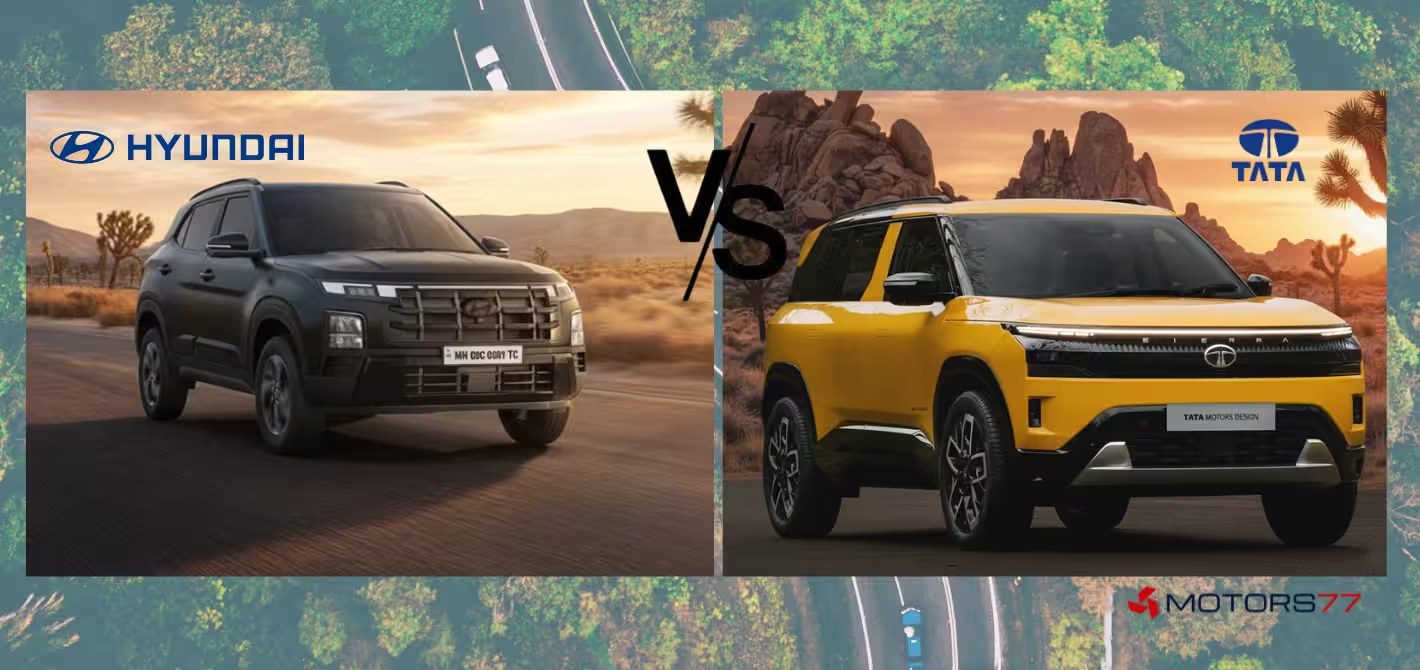
Tata Sierra vs Hyundai Creta: The mid-size SUV segment in India is about to witness a seismic shift. On November 25, 2025, Tata Motors will reveal the pricing of the all-new Sierra, marking the return of one of India’s most iconic nameplates after more than two decades. But the real question on everyone’s mind is whether the Sierra has what it takes to challenge the Hyundai Creta, a model that has dominated this segment with an iron grip, commanding over 31% market share.
If the Tata Sierra gets its fundamentals right and early indications suggest it might the Hyundai Creta could face its toughest competition yet.
Tata Sierra vs Hyundai Creta: : A Segment King Meets a Reborn Icon
The Creta Fortress: Understanding What Tata is Up Against
Before evaluating the Sierra’s chances, it’s crucial to understand the magnitude of the Creta’s dominance. The Hyundai Creta isn’t just another SUV; it’s a phenomenon that has redefined the mid-size SUV segment since its 2015 launch.
The numbers tell a compelling story. In October 2025 alone, the Creta sold 18,381 units, maintaining its position as India’s fifth best-selling car and second best-selling SUV. Over its ten-year journey, the Creta has sold over 1.2 million units in India, with annual sales doubling from 92,926 units in 2016 to 186,919 units in 2024. In the first half of 2025, the Creta emerged as the best-selling vehicle across all categories in three out of six months.
What makes the Creta virtually unshakeable? Industry experts point to a holistic strategy that competitors struggle to replicate. The Creta offers powertrain variety, comprehensive features, strong brand value, excellent resale credentials, and Hyundai’s extensive dealer network. Its resale value remains impressive, depreciating only up to 30% compared to rivals that lose up to 44% of their value. Additionally, Hyundai’s robust after-sales network spans nearly every city, making ownership hassle-free.
The Sierra’s Arsenal: Built on Strong Fundamentals
Now enters the Tata Sierra, and if first impressions are anything to go by, this SUV has been engineered with the right fundamentals to mount a serious challenge.
Platform and Build Quality
The foundation of any vehicle determines its long-term durability, safety, and performance. Here, Tata has made no compromises. While the ICE Sierra uses Tata’s Atlas architecture, the upcoming Sierra EV will be built on the advanced Acti.EV platform. Both platforms have been designed with structural integrity and safety as paramount considerations.
The Acti.EV platform, in particular, demonstrates Tata’s engineering prowess. It has been specifically designed to achieve 5-star ratings in both Global NCAP and Bharat NCAP crash tests. The platform uses high-strength materials and offers modular flexibility, supporting different body styles with outstanding build quality. This is the same philosophy that earned the Tata Altroz its prestigious 5-star Global NCAP rating when built on the ALFA architecture.
According to Tata Motors’ leadership, “From the start, it was developed on the ALFA architecture a modular, scalable platform that allowed us to engineer high levels of structural stiffness, crash safety, and NVH performance”. The Sierra extends this engineering excellence, promising build quality that could match or exceed segment standards.
Safety Credentials
Safety has become Tata Motors’ calling card, and the Sierra doesn’t disappoint. Expected safety features include six airbags as standard, a 360-degree camera system, front and rear parking sensors, and a comprehensive Level 2 Advanced Driver Assistance System (ADAS).
The ADAS suite is expected to include adaptive cruise control, lane-keeping assist, blind-spot detection, autonomous emergency braking, and rear cross-traffic alert. Additional safety technologies include Electronic Stability Control (ESC), electronic parking brake with auto-hold, hill hold assist, tyre pressure monitoring system (TPMS), and ABS with EBD.
Industry observers confidently predict the Sierra will score 5 stars in Bharat NCAP testing, which would give it a significant advantage over the Creta, which lacks a BNCAP rating.
Powertrain Options: Performance Meets Efficiency
The Sierra’s engine lineup appears strategically designed to cater to diverse buyer preferences.
The headline act is a new 1.5-litre turbo-petrol engine producing approximately 168-170 bhp and 280 Nm of torque. This engine will also power the upcoming Harrier and Safari petrol variants, ensuring proven reliability. For those seeking affordable entry, a 1.5-litre naturally aspirated petrol engine will keep pricing competitive.
Diesel enthusiasts aren’t forgotten either. The Sierra will offer Tata’s familiar 1.5-litre diesel engine, delivering 118 bhp and 260 Nm, available with both manual and automatic transmissions. Some reports suggest a more powerful 2.0-litre diesel option producing 170 PS and 350 Nm could also join the lineup.
Compared to the Creta’s 1.5-litre petrol (113 bhp, 144 Nm) and 1.5-litre diesel engines, the Sierra’s powertrains offer noticeably higher output. This performance advantage could appeal to buyers seeking a more spirited driving experience.
Technology and Features: Where Sierra Pulls Ahead
In the technology battle, the Sierra appears to have a clear edge over the Creta.
Triple-Screen Innovation
The Sierra’s most talked-about feature is its revolutionary triple-screen dashboard setup. This includes a 12.3-inch digital driver’s display, a large central infotainment screen, and a dedicated passenger-side screen that can share functions and media. This configuration significantly outclasses the Creta’s dual 10.25-inch display setup, offering a more immersive and futuristic cabin experience.
Comprehensive Feature List
The Sierra is expected to come loaded with premium features including a panoramic sunroof, wireless Android Auto and Apple CarPlay, dual-zone climate control, powered and ventilated front seats, wireless charging, and a premium 12-speaker JBL audio system with SonicSoundbar. The inclusion of a powered tailgate, built-in dashcam, and heads-up display (HUD) further elevates its premium quotient.
While the Creta offers an impressive feature list of its own—including ventilated seats, a Bose sound system, and ADAS—it lacks the powered tailgate and doesn’t match the Sierra’s triple-screen innovation.
Interior Space and Comfort
The Sierra’s boxy proportions translate to exceptional interior space. The cabin features a black/beige/white theme that conveys a plush, premium feel. Both front and rear occupants get center armrests, and the upright design provides excellent headroom.
Early reviews highlight that the Sierra offers generous legroom and comfortable seating for five adults. The flat floor design (especially in the EV variant) will eliminate the transmission tunnel, optimizing interior packaging and offering even more rear legroom.
Design Philosophy: Heritage Meets Modernity
The Sierra’s design strikes a delicate balance between nostalgia and contemporary aesthetics.
Tata has retained the iconic boxy silhouette that made the original Sierra memorable, but infused it with modern elements like connected LED lighting, dual-tone alloy wheels, and signature glass panels. The wide shoulder lines and upright stance give it a commanding road presence that stands apart from the crowd.
The Creta, by contrast, follows Hyundai’s “Sensuous Sportiness” design language with sharp lines, split LED headlamps, and a parametric grille. While undeniably attractive, the Creta’s design is more conventional and city-focused compared to the Sierra’s bold, rugged appeal.
Some critics note that the Creta’s design, despite periodic updates, may age faster than the Sierra’s distinctive character. The Sierra’s retro-inspired modern design could attract buyers wanting a stronger visual identity and a vehicle that stands out.
Pricing Strategy: The Make-or-Break Factor
Expected pricing for the Sierra ranges from ₹11 lakh to ₹22 lakh (ex-showroom). More specifically, sources suggest the starting price could be around ₹12-13 lakh, extending up to ₹20 lakh for top variants.
The Hyundai Creta is currently priced between ₹10.73 lakh and ₹20 lakh. This positioning makes the Sierra slightly more expensive at the entry level but competitive at the top end.
If Tata prices the Sierra aggressively particularly the base variants it could attract price-conscious buyers who want more features and performance than the Creta offers at similar price points. However, Hyundai’s established reputation for value may give the Creta an advantage among buyers prioritizing affordability over innovation.
The Creta’s Weaknesses: Where Sierra Can Strike
Despite its dominance, the Creta isn’t without vulnerabilities that the Sierra could exploit.
Limited Innovation
While the Creta offers solid features, it hasn’t pushed boundaries in recent updates. Its dual-screen setup, though adequate, feels less impressive compared to the Sierra’s triple-screen innovation. The absence of a powered tailgate and certain advanced features gives the Sierra room to differentiate.
Safety Rating Concerns
The Creta lacks a Bharat NCAP rating, which could become a concern for safety-conscious buyers. In contrast, Tata’s reputation for building the safest cars in India with multiple 5-star Global NCAP ratings gives the Sierra an inherent credibility advantage.
Base Variant Compromise
Some reviewers criticize the Creta’s base model as too basic and poor value for money given its increased pricing. The Sierra’s expected better-equipped base variants could attract buyers seeking more standard features.
Build Perception
While Hyundai has improved significantly, some long-term owners report concerns about build quality and camera clarity in night conditions. Tata’s recent focus on structural integrity and superior build could address these concerns.
Market Response: Early Indicators
Unofficial bookings for the Sierra have already begun at dealerships across major cities, with a starting token amount of ₹11,000. This early interest, even before price announcement, suggests strong market appetite for the Sierra.
Social media discussions reveal enthusiastic responses, with many potential buyers expressing willingness to cancel Creta or Seltos bookings in favor of the Sierra. One Reddit user commented, “Sierra offers everything. If we stop seeing it as a TATA car, it really stands out”.
However, translating initial excitement into sustained sales will be the real test. The Creta’s established reliability, proven resale value, and Hyundai’s service network remain powerful retention factors.
The Verdict: A Worthy Challenger, But Can It Dethrone the King?
If the Tata Sierra gets its fundamentals right which all evidence suggests it will it presents the most formidable challenge the Hyundai Creta has faced in its ten-year reign.
Sierra’s Strengths:
- Superior platform engineering with expected 5-star safety ratings
- More powerful engine options across petrol and diesel
- Revolutionary triple-screen technology and premium features
- Distinctive design with strong road presence
- Tata’s improving brand perception and after-sales quality
Creta’s Enduring Advantages:
- Proven reliability and established market trust
- Superior resale value and lower depreciation
- Extensive dealer and service network nationwide
- Refined, city-friendly driving dynamics
- Decade-long track record of customer satisfaction
The Realistic Outlook
Will the Sierra dethrone the Creta? Probably not immediately. The Creta’s 31% market share, 1.2 million satisfied customers, and unmatched resale value create a formidable moat that won’t crumble overnight.
However, the Sierra doesn’t need to dethrone the Creta to be successful. If it can capture even 15-20% of the mid-size SUV segment, it would represent a massive win for Tata Motors. More importantly, the Sierra’s arrival will force Hyundai to innovate faster, ultimately benefiting consumers through better products and competitive pricing.
The mid-size SUV segment, which sold approximately 10 lakh units in FY2025, has room for multiple strong players. The Sierra’s unique combination of heritage appeal, modern technology, powerful performance, and safety credentials positions it perfectly to carve out a substantial share.
For buyers, the choice will come down to priorities. If you value proven reliability, established service networks, and strong resale value, the Creta remains the safe choice. But if you want cutting-edge technology, more powerful performance, distinctive design, and industry-leading safety, the Sierra presents a compelling alternative.
The Tata Sierra may not immediately dethrone the Hyundai Creta, but it has all the right fundamentals to become a serious, sustained challenger. And in a segment as lucrative as mid-size SUVs, that’s precisely what India’s automotive market needs—real competition that drives innovation and delivers better value to consumers.
The battle for mid-size SUV supremacy just got a lot more interesting.
Also Read:Tata Sierra Unveiled – November 2025 Launch — Get full details on Tata’s new mid-size SUV prior to its pricing reveal.