Toyota is preparing its most aggressive India expansion ever 15 new cars and SUVs by 2030, including two all new SUVs, an affordable pickup, and several hybrid and electric models. Here’s the complete analysis, competition outlook, and what buyers should expect.
Toyota’s Big Plan for India
Toyota has always been a brand built on reliability, but in India, it’s been more of a premium player, strong with models like the Innova and Fortuner, yet limited in volume. That’s about to change. The company has officially confirmed plans to introduce 15 new or updated models in India by 2030, signaling its most ambitious decade yet.
This lineup will include two completely new SUVs, a budget pickup truck designed for India’s rural markets, several hybrid models, and a few rebadged offerings under the Toyota–Maruti Suzuki partnership.
With these launches, Toyota aims to grow its market share from roughly 8% to 10% by 2030, a significant goal for a brand known more for durability than mass market presence. The company is also investing heavily in new manufacturing capacity, including a facility in Chhatrapati Sambhaji Nagar and expansions in Bidadi, Karnataka. When operational, Toyota’s total capacity in India could cross one million units per year, giving it both domestic scale and export strength.
Why Toyota Is Doubling Down on India
India’s car market has become one of the fastest growing in the world, and global automakers now see it as a pillar of future growth. For Toyota, the timing couldn’t be better. With tightening emissions norms, rising fuel prices, and the government’s push for localization, India offers both scale and strategic leverage.
Toyota’s hybrid expertise also aligns perfectly with India’s transitional phase between internal combustion and full electric vehicles. While others chase EV volume, Toyota is positioning hybrids as the bridge technology, a practical solution for Indian driving conditions.
But beyond technology, Toyota’s push is also about reach. The company plans to expand deep into Tier 2 and Tier 3 cities, using smaller lean format dealerships and compact two bay workshops to reduce setup costs and improve accessibility. This rural strategy mirrors what Maruti Suzuki did decades ago, only this time, with Toyota’s global reliability tag.
Inside the 15 Model Strategy
Toyota hasn’t released an official list of all 15 models, but multiple leaks and reports outline the broad structure of its rollout. Here’s what we can expect:
- Two brand new SUVs designed for India and export markets.
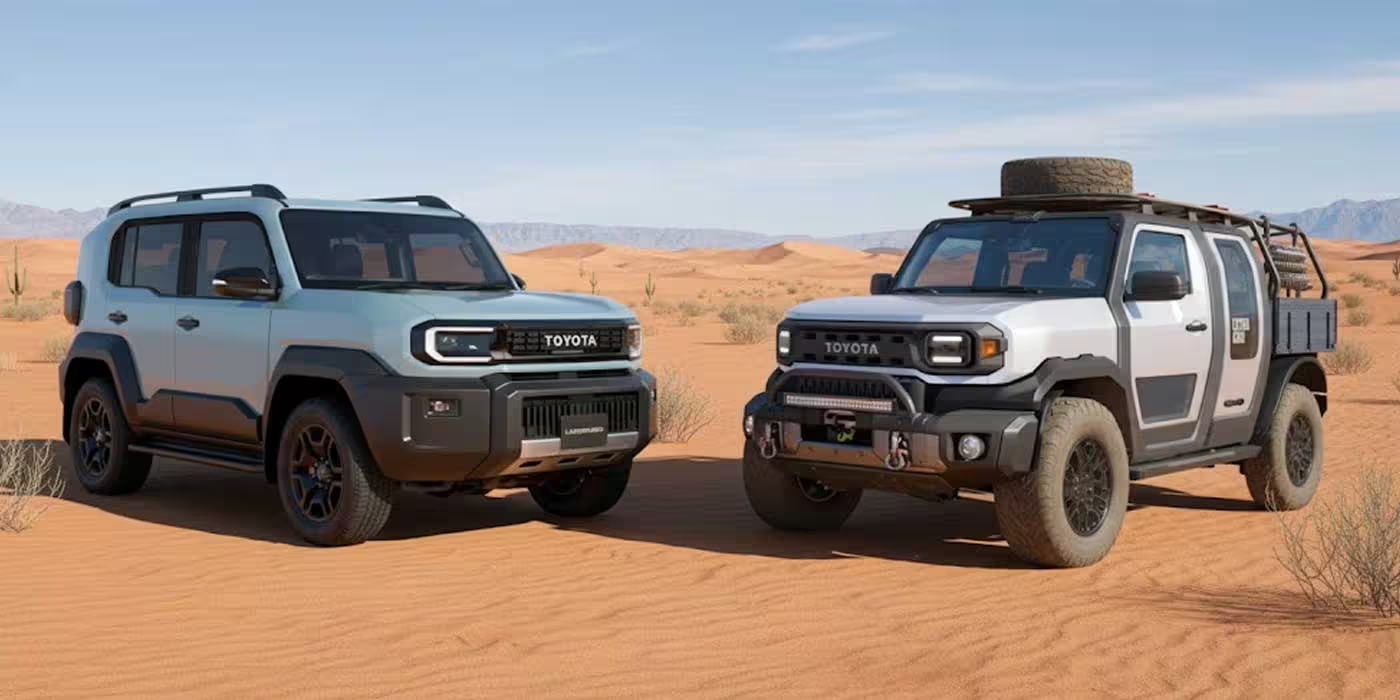
One of these is rumored to be the Toyota Land Cruiser FJ, a rugged, ladder frame SUV positioned below the Fortuner and likely to be locally built by 2028. - An affordable pickup truck targeting rural India and small business owners.
Built on a lighter version of Toyota’s IMV platform, it will slot under the Hilux and offer both petrol and diesel powertrains. - New hybrid and electric SUVs, including the upcoming Urban Cruiser EV, Toyota’s version of Maruti’s e Vitara EV, expected to launch around 2026 to 2027.
- Facelifts and updates to existing nameplates such as the Innova Hycross, Fortuner, and Urban Cruiser Hyryder, all expected to feature improved hybrid technology.
- Rebadged models from Maruti Suzuki, maintaining the alliance strategy that has already given us the Glanza and Rumion.
Toyota’s rollout will be phased, beginning with hybrid updates and lower cost SUVs, followed by the pickup and all new models later in the decade.
The Models We Know: FJ, Pickup, Urban Cruiser EV
Land Cruiser FJ (Expected 2028)
The legendary FJ nameplate will return to India as a rugged, compact off roader with modern hybrid power. It’s expected to feature a 2.7 litre petrol engine with hybrid assistance, producing around 160 to 170 hp and 246 Nm of torque. A diesel version is reportedly off the table.
Toyota will position the FJ as a more affordable alternative to the Fortuner, starting around ₹30 lakh, and export it to markets across Africa and Latin America. Its high ground clearance, 4×4 drivetrain, and traditional body on frame chassis make it ideal for adventure buyers looking for something tougher than a Creta but cheaper than a Land Cruiser LC300.
Affordable Pickup (Expected 2028 to 2029)
Toyota is developing a new pickup truck below the Hilux, intended for semi urban and commercial use. It will share parts with the Innova and Fortuner but use a simpler, cost effective design. Expect durable materials, high payload capacity, and optional 4×4 variants for rural conditions.
This pickup could be priced between ₹15 to 22 lakh, directly competing with Mahindra’s Bolero Camper and Tata’s Yodha. If Toyota prices it right, it could create a new sub segment of lifestyle pickups, something Indians have long admired but few could afford.
Urban Cruiser EV (Expected 2026)
Built on Suzuki’s e Vitara platform, this all electric SUV will feature 49 kWh and 61 kWh battery options, with a range of up to 500 km. Toyota’s version is expected to get slightly distinct styling and better cabin materials.
This EV could finally make Toyota competitive in India’s electric SUV race against models like the Tata Curvv EV, Mahindra XUV400, and Hyundai Creta EV. Pricing is expected to start around ₹22 lakh.
Toyota’s Manufacturing Push and Localization Drive
To support these models, Toyota has committed over ₹25,000 crore in Indian manufacturing and supplier ecosystems. The new plant in Maharashtra will serve dual purposes, local sales and export production.
Localization is critical here. The more Toyota sources components domestically, the better its cost structure. By 2027, analysts expect Toyota’s Indian operations to achieve 70 to 80% localization, which would help it price upcoming SUVs and pickups far more competitively.
Additionally, Toyota aims to use India as a global export hub for select models, especially the FJ and the new pickup, leveraging India’s cost advantage to supply emerging markets across Asia and Africa.
Competitive Analysis: How Toyota Stacks Up
Toyota’s strategy directly targets market leaders like Maruti Suzuki, Hyundai, Mahindra, and Tata, but each brand plays a different game.
| Brand | Focus Area | Strengths | Challenges |
|---|---|---|---|
| Toyota | Premium hybrids, SUVs, reliability | Global brand, hybrid leadership, durability | Higher cost, fewer budget models |
| Maruti Suzuki | Mass market and small cars | Network reach, pricing, affordability | Weak hybrid and EV portfolio |
| Hyundai | Feature rich SUVs and EVs | Tech, design, customer appeal | Limited off road presence |
| Mahindra | Rugged SUVs and pickups | Local design, strong rural appeal | Fit and finish inconsistencies |
| Tata Motors | EV leadership, design innovation | Safety ratings, localization | Reliability perception gap |
Toyota’s differentiation will likely come from hybrid efficiency and long term dependability, not flashy features. While rivals race toward full electrification, Toyota is betting on hybrids as India’s more realistic medium term solution.
Pricing Logic and Value Outlook
While Toyota has not revealed pricing for upcoming models, it’s clear that the company aims to cover a broader price band than before, from ₹10 lakh to ₹60 lakh.
For instance, the new pickup could start under ₹15 lakh, while the FJ might go up to ₹40 lakh depending on variants. The hybrid versions of existing models will likely stay in the ₹20 to 30 lakh zone, balancing premium quality with local affordability.
Here’s a projected positioning comparison:
| Model | Expected Launch | Estimated Price | Key Competitors |
|---|---|---|---|
| Urban Cruiser EV | 2026 | ₹22 to 28 lakh | Tata Curvv EV, Hyundai Creta EV |
| Affordable Pickup | 2028 | ₹15 to 22 lakh | Mahindra Bolero Camper, Tata Yodha |
| Land Cruiser FJ | 2028 to 2029 | ₹30 to 40 lakh | Mahindra Scorpio N, Jeep Compass, Fortuner Base |
| Fortuner Hybrid | 2025 | ₹38 to 50 lakh | MG Gloster, Skoda Kodiaq, Mahindra XUV700 |
| Innova Hycross Update | 2026 | ₹22 to 30 lakh | Kia Carens, Hyundai Alcazar |
Toyota’s focus appears to be on maintaining premium positioning while improving accessibility. If localization and hybrid efficiency keep running costs low, these vehicles could find a strong audience.
Strengths, Weaknesses, and the Road Ahead
Toyota’s biggest asset in India is trust. Its cars last long, hold resale value, and inspire confidence among both fleet and private buyers. Models like the Innova and Fortuner are proof that reliability can build brand power even in a price sensitive market.
However, Toyota has also been slow to innovate for local needs. For years, it relied on rebadged Maruti models instead of fresh products. The new 2030 roadmap suggests a genuine shift, but execution will determine whether it can sustain momentum.
Strengths:
Excellent reliability and resale value
Proven hybrid technology
Strong dealer and service network
Export friendly manufacturing base
Weaknesses:
Historically premium pricing
Limited affordable model range
Slow EV rollout
Heavy reliance on Maruti for volume models
If Toyota can fix the pricing gap and bring unique, India specific products, it has every chance to replicate its global success story here.
Market Implications: What It Means for Indian Buyers
For consumers, Toyota’s expansion is undeniably positive. More models mean more choice, especially in segments like mid SUVs, crossovers, and pickups that have been dominated by a handful of players.
Toyota’s hybrids could also serve as an excellent middle ground between conventional petrol cars and expensive EVs. Indian buyers wary of charging infrastructure can get the fuel savings of an electric without the anxiety.
From a resale perspective, new Toyota models are likely to hold value better than most competitors. The company’s rural push also means that service and parts availability should improve even outside metros, a major advantage for long term owners.
Who Should Consider Waiting for These Models
If you’re planning to buy a Toyota soon, it’s worth assessing whether to wait or buy now.
You should wait if
You’re eyeing an SUV or pickup purchase in 2026 to 2028.
You want a hybrid or EV option under ₹25 lakh.
You live in a Tier 2 or rural area and prefer Toyota’s upcoming small dealer network.
You should buy now if
You need a reliable SUV today.
You prefer proven technology and strong resale immediately.
Either way, Toyota’s expansion will push competitors to improve pricing, safety, and features, which ultimately benefits all buyers.
Motors77 Take: Can Toyota Capture 10% Market Share?
Realistically, hitting 10% by 2030 will be tough. The Indian auto market is brutally competitive, and price sensitivity remains high. But Toyota has a few structural advantages.
First, its hybrid focus fits perfectly into India’s gradual electrification phase. Second, local production and exports can offset costs and ensure long term viability. And third, its dealer expansion strategy could give it reach beyond metro cities, something even Hyundai struggles with.
The key will be pricing discipline. If Toyota can price hybrids within reach of petrol SUV buyers, it could easily add 2 to 3% market share in the next five years. But if the price gap remains wide, it risks staying a premium niche player.
Final Thoughts
Toyota’s India strategy represents a major evolution for a company often seen as conservative. By 2030, its Indian portfolio will look completely different, more diverse, more electrified, and more accessible.
This isn’t just about adding cars; it’s about redefining Toyota’s image in India from a premium, diesel centric brand to a future ready, hybrid and electric mainstream player.
For Indian buyers, that’s excellent news. Toyota’s reputation for durability combined with hybrid efficiency could make ownership more economical than ever. And as competition intensifies, expect the entire market, from Maruti to Mahindra, to respond with even better products.
If Toyota executes well, 2030 might not just mark the brand’s growth milestone, it could redefine how Indians view reliability, sustainability, and value in their next car.
Frequently Asked Questions
1. What is Toyota’s official goal for India by 2030
Toyota plans to launch 15 new or updated cars by 2030, aiming to raise its market share to 10%.
2. Which are the confirmed new models
The upcoming Land Cruiser FJ, an affordable pickup, and the Urban Cruiser EV are among the major confirmed projects.
3. Will Toyota’s upcoming cars be hybrid or electric
Most will use hybrid powertrains initially, with full EVs like the Urban Cruiser EV entering by 2026.
4. How much investment has Toyota made for this expansion
Toyota is investing roughly ₹25,000 crore in new plants and localization to support the new lineup.
5. Will Toyota’s new cars be locally made
Yes, most models will be produced in India with 70 to 80% localization to control costs and boost exports.
6. What about Toyota’s partnership with Maruti Suzuki
It will continue. Some models will be rebadged versions of Maruti cars, but Toyota is also developing original products.
7. Which segment will Toyota target most aggressively
SUVs and pickups are the focus, as they represent the fastest growing Indian segments.
8. Should buyers wait for the new models
If you want hybrids or EVs under ₹25 lakh, yes, 2026 onward will bring major options. Otherwise, current Toyota models remain solid buys.
Also Read: Japan Mobility Show 2025: India-Bound EVs & Green Tech on Display