
2026 Renault Duster Engine Options: The all-new Renault Duster marks a significant return to the Indian market with a trio of sophisticated petrol powertrains. From the accessible 1.0-litre turbo to the Formula 1-derived strong hybrid, here’s everything you need to know about the engines powering Renault’s flagship SUV.
Introduction: A New Era of Powertrains
The 2026 Renault Duster represents a complete departure from its predecessor’s engine philosophy. Gone are the diesel options that once defined the Duster’s appeal. In their place, Renault offers three distinct petrol powertrains: a 1.0-litre turbo-petrol for entry-level buyers, a 1.3-litre turbo-petrol for performance enthusiasts, and a groundbreaking 1.8-litre strong hybrid for efficiency-focused customers.
Each engine tells a story of global collaboration, technological innovation, and shared development across multiple automotive giants. Let’s examine each powertrain in comprehensive detail.
Engine 1: The 1.0-Litre Turbo-Petrol (HR10)
Overview and Positioning
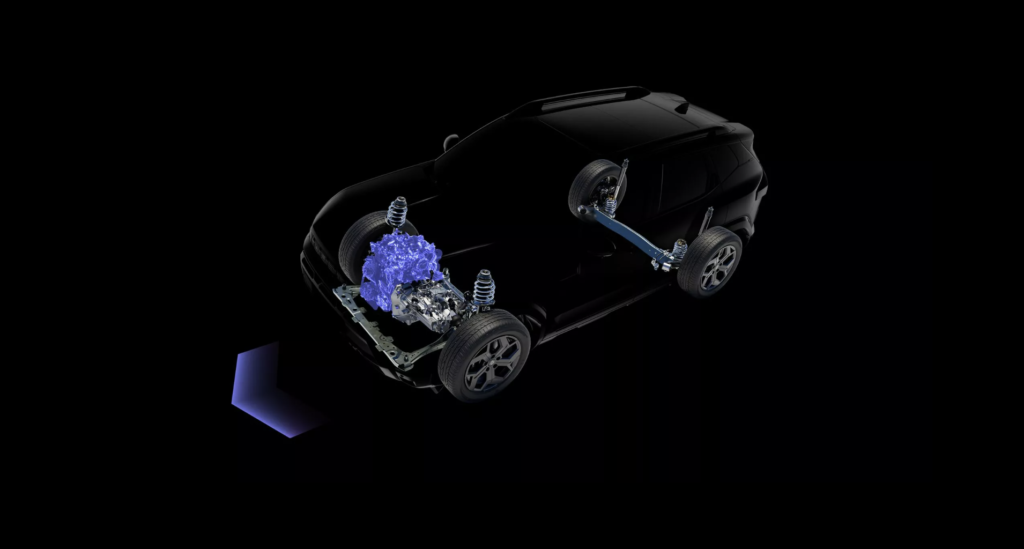
The entry-level engine in the 2026 Duster lineup is the familiar 1.0-litre turbocharged three-cylinder unit, internally codenamed HR10. This powerplant serves as the gateway to Duster ownership, offering a balance of affordability, efficiency, and adequate performance for urban-focused buyers.
Technical Specifications
| Parameter | Specification |
|---|---|
| Engine Code | HR10DET / TCe 100 |
| Displacement | 999 cc |
| Configuration | Inline 3-cylinder |
| Valvetrain | 12-valve DOHC |
| Bore × Stroke | 72.2 mm × 81.3 mm |
| Compression Ratio | 10.0:1 |
| Fuel Injection | Multi-Point Injection (MPI) |
| Turbocharger | Single-scroll turbo |
| Maximum Power | 100 PS @ 5,000 rpm |
| Maximum Torque | 160 Nm @ 2,800-3,600 rpm |
| Transmission Options | 6-speed Manual, 6-speed DCT (Wet Clutch) |
| Fuel Type | Petrol (BS6 Phase 2 compliant) |
| Expected Mileage | 17-19 km/l (ARAI) |
Development History
The HR10 engine is part of Nissan’s extensive HR engine family, co-developed with Renault under the Renault-Nissan-Mitsubishi Alliance framework. The engine’s development began in the mid-2010s as a downsized derivative of the larger HR13 1.3-litre unit.
The HR10DET (turbocharged variant) made its global debut in the fifth-generation Nissan Micra in 2017. The engine was specifically engineered to replace older naturally aspirated units while meeting increasingly stringent Euro 6 and BS6 emission norms.
Key development milestones include:
- 2016-2017: Initial development and testing
- 2017: Global launch in Nissan Micra (Europe)
- 2019: Introduction in Renault Triber (India) in naturally aspirated form
- 2021: Launch in Renault Kiger and Nissan Magnite with turbo variant
- 2026: Implementation in new-generation Duster
Architecture and Engineering Details
The HR10 engine features an all-aluminium construction for reduced weight. The cylinder block uses an open-deck design with integrated water jackets for optimal thermal management. The DOHC cylinder head incorporates hydraulic lash adjusters, eliminating the need for periodic valve clearance adjustments.
The turbocharging system employs a small-diameter turbine optimised for low-end response. An electronic wastegate provides precise boost control, while the intercooler reduces intake temperatures for improved volumetric efficiency.
Notable engineering features include:
- Variable Valve Timing (VVT): Dual independent cam phasers on intake and exhaust
- Mirror Bore Coating: Plasma-sprayed cylinder walls reduce friction
- Low-Friction Timing Chain: Lifetime component requiring no scheduled replacement
- Integrated Exhaust Manifold: Turbo housing integrated with head for faster warm-up
Vehicles Using the HR10 Engine
The HR10 engine family (both naturally aspirated and turbocharged variants) powers numerous vehicles across the Renault-Nissan-Mitsubishi Alliance and Dacia brand:
Renault Group:
- Renault Kiger (India)
- Renault Triber (India)
- Renault Duster 2026 (India)
Nissan:
- Nissan Magnite (India, Global)
- Nissan Micra K14 (Europe)
- Nissan Kicks (Select markets)
Dacia:
- Dacia Sandero (HR10DET, Europe)
- Dacia Sandero Stepway (Europe)
- Dacia Jogger TCe 110 (Europe)
- Dacia Duster (Select variants, Europe)
Duster-Specific Tuning
For the 2026 Duster application, the HR10 engine may receive calibration adjustments to suit the SUV’s larger footprint and increased kerb weight compared to the Kiger and Magnite. This could include:
- Revised turbo boost mapping for improved mid-range torque
- Updated transmission gear ratios optimised for highway cruising
- Enhanced cooling system capacity for sustained performance
Engine 2: The 1.3-Litre Turbo-Petrol (HR13/H5Ht/M282)
Overview and Positioning
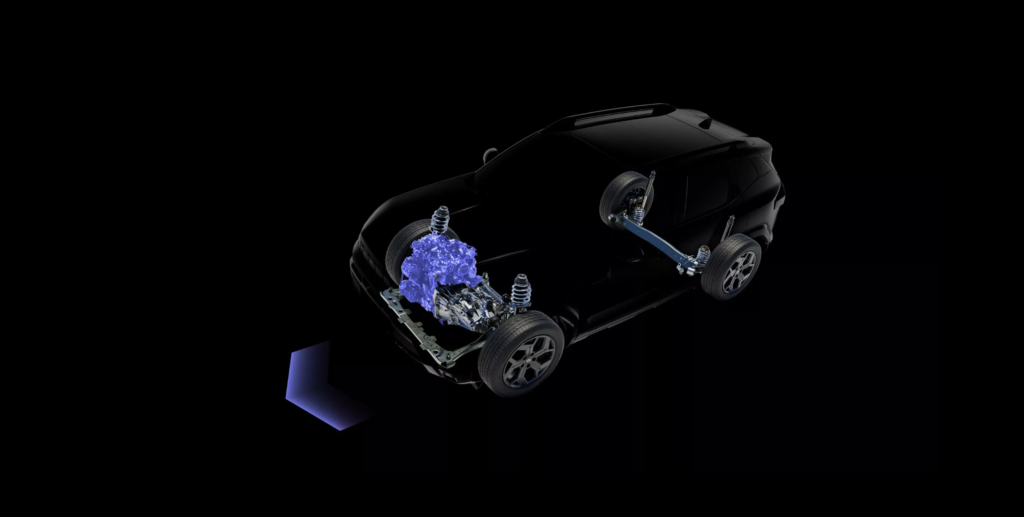
The 1.3-litre turbocharged four-cylinder engine represents the performance-oriented option in the Duster lineup. This powerplant is the result of one of the automotive industry’s most significant collaborative engineering efforts, involving three major manufacturers: Renault, Nissan, and Mercedes-Benz (Daimler).
Technical Specifications
| Parameter | Specification |
|---|---|
| Engine Codes | HR13DDT (Nissan) / H5Ht (Renault) / M282 (Mercedes-Benz) |
| Displacement | 1,332 cc |
| Configuration | Inline 4-cylinder |
| Valvetrain | 16-valve DOHC |
| Bore × Stroke | 72.2 mm × 81.3 mm |
| Compression Ratio | 10.6:1 |
| Fuel Injection | Direct Injection (DIG) at 250 bar |
| Turbocharger | Single-scroll with electronic wastegate |
| Maximum Power | 163 PS @ 5,500 rpm |
| Maximum Torque | 280 Nm @ 1,600-4,000 rpm |
| Transmission Options | 6-speed Manual, 6-speed DCT |
| Fuel Type | Petrol (BS6 Phase 2 compliant) |
| Expected Mileage | 15-17 km/l (ARAI) |
The Renault-Nissan-Daimler Partnership
The 1.3-litre TCe engine is born from a strategic partnership between the Renault-Nissan-Mitsubishi Alliance and Daimler AG (Mercedes-Benz parent company). This collaboration, announced in 2010, aimed to share development costs, leverage complementary expertise, and achieve economies of scale.
The joint development of the 1.3-litre engine began in 2013, with the following key objectives:
- Create a modern, downsized turbocharged unit to replace aging 1.6-litre and 1.8-litre naturally aspirated engines
- Meet Euro 6 emission standards with significant headroom for future regulations
- Deliver premium-quality refinement suitable for Mercedes-Benz applications
- Achieve production volumes approaching one million units annually
Development Timeline
- 2010: Renault-Nissan and Daimler sign strategic partnership agreement
- 2013: Joint engine development programme commences
- 2017: Engine unveiled at Geneva Motor Show
- December 2017: Production begins; debuts in Renault Scénic and Grand Scénic
- 2018: Introduction in Mercedes-Benz A-Class (W177)
- October 2018: Launch in Nissan Qashqai
- 2020: Introduction in India via Renault Duster (BS6)
- 2026: Implementation in new-generation Duster
Engineering Excellence: Deep Technical Analysis
The 1.3 TCe/HR13/M282 engine incorporates numerous advanced technologies that justify its “developed with Formula 1 DNA” marketing claim:
Cylinder Block:
- All-aluminium construction with cast-iron cylinder liners
- Open-deck design for optimal cooling
- Bore Spray Coating (BSC) technology — the same plasma-sprayed steel coating used in the Nissan GT-R’s VR38DETT engine
- Variable displacement oil pump reduces parasitic losses
Cylinder Head:
- Aluminium 16-valve DOHC head with integrated exhaust manifold
- Dual Variable Valve Timing (VVT) with hydraulic cam phasers
- Finger-follower rocker arms with hydraulic lash adjusters
- High-tumble intake ports for improved combustion efficiency
Fuel System:
- Direct injection at 250 bar (versus 200 bar in predecessor 1.2 TCe)
- Multi-hole piezoelectric injectors for precise fuel atomisation
- Multiple injection events per combustion cycle
- Lambda control with wideband oxygen sensor
Turbocharging:
- Garrett turbocharger with electronic wastegate (e-wastegate)
- Integrated exhaust manifold design reduces turbo lag
- Air-to-air intercooler with optimised packaging
- Low-inertia turbine wheel for rapid spool-up
Emission Control:
- Gasoline Particulate Filter (GPF) — first application on volume Renault engine
- Close-coupled three-way catalytic converter
- EGR (Exhaust Gas Recirculation) for NOx reduction
- Euro 6d-TEMP and BS6 Phase 2 compliant
Special Mercedes-Benz Features (M282):
- Cylinder deactivation on cylinders 2 and 3 (first Mercedes inline-four with this feature)
- CAMTRONIC variable valve lift system
- 48V mild-hybrid option in select applications
Manufacturing and Quality Standards
The engine underwent over 40,000 hours of testing and simulation, with 300,000 km of validation testing in extreme conditions including arctic cold, desert heat, high altitude, and tropical humidity.
Production facilities include:
- MDC Power GmbH, Kölleda, Germany: Mercedes-Benz M282 production
- Renault Valladolid, Spain: H5Ht production for European Renault/Dacia models
- NMUK Sunderland, UK: HR13DDT production for Nissan and some Renault models
- Alliance Chennai, India: Production for Indian market vehicles
Vehicles Using the 1.3 TCe/HR13/M282 Engine
This engine’s versatility is demonstrated by its application across three major automotive brands:
Mercedes-Benz (as M282):
- Mercedes-Benz A-Class (W177)
- Mercedes-Benz B-Class (W247)
- Mercedes-Benz CLA (C118)
- Mercedes-Benz GLA (H247)
- Mercedes-Benz GLB (X247)
Renault Group (as H5Ht/TCe):
- Renault Captur
- Renault Clio V
- Renault Mégane IV
- Renault Kadjar
- Renault Scénic/Grand Scénic
- Renault Talisman
- Renault Koleos
- Renault Arkana
- Renault Duster (2020-2022, 2026)
Nissan (as HR13DDT):
- Nissan Qashqai J11 (2018 onwards)
- Nissan X-Trail T32 (2019-2021)
- Nissan Kicks (Select markets)
Dacia:
- Dacia Duster (Europe)
Performance Characteristics in Duster Application
In the 2026 Duster, the 1.3-litre turbo delivers:
- 0-100 km/h: Approximately 10 seconds
- Top Speed: 180+ km/h (electronically limited)
- Real-world fuel efficiency: 12-15 km/l (mixed driving)
- CO2 emissions: Approximately 140-150 g/km
The high torque output of 280 Nm available from just 1,600 rpm makes the Duster feel significantly more powerful than the output numbers suggest, providing confident overtaking ability and relaxed highway cruising.
Engine 3: The 1.8-Litre Strong Hybrid (HR18 E-Tech 160)
Overview and Positioning
The crown jewel of the 2026 Duster engine lineup is the strong hybrid powertrain, representing Renault’s most advanced electrification technology for the Indian market. This system combines a newly developed 1.8-litre naturally aspirated petrol engine with two electric motors and Formula 1-derived energy management technology.
Technical Specifications
| Parameter | Specification |
|---|---|
| Engine Code | HR18 (Horse Powertrain) |
| Petrol Engine Displacement | 1,789 cc |
| Configuration | Inline 4-cylinder, Atkinson Cycle |
| Valvetrain | 16-valve DOHC |
| Petrol Engine Power | 109 PS (80 kW) @ 5,600 rpm |
| Petrol Engine Torque | 148 Nm |
| Electric Motor 1 (Traction) | 49 PS (36 kW) |
| Electric Motor 2 (HSG) | 20 PS (15 kW) |
| Combined System Output | 160 PS |
| Combined System Torque | 172 Nm |
| Battery Capacity | 1.4 kWh Lithium-ion (230V) |
| Transmission | Multi-mode clutchless gearbox (DHT) |
| Electric-only Capability | Up to 80% of city driving |
| Fuel Type | Petrol |
| Expected Mileage | 23+ km/l (ARAI) |
Horse Powertrain: The Joint Venture Behind the Engine
The HR18 engine is developed and manufactured by Horse Powertrain Limited, a groundbreaking joint venture between Renault Group and Geely Holding that was officially established in May 2024.
About Horse Powertrain:
- Ownership: 50% Renault Group, 50% Geely (with Saudi Aramco as potential investor)
- Headquarters: London, United Kingdom
- Employees: 19,000 globally
- Manufacturing Facilities: 17 plants across Europe, China, and South America
- R&D Centers: 5 facilities worldwide
- Annual Production Capacity: 5 million powertrain units
- Annual Revenue Target: €15 billion
The HR18 is significant as it’s the first engine developed entirely by Horse Powertrain from the ground up, rather than being inherited from either parent company. This makes the 2026 Duster one of the first vehicles globally to feature this next-generation powertrain.
Horse Powertrain’s Customer Base:
- Renault Group
- Dacia
- Geely Auto
- Volvo Cars
- Lynk & Co
- Proton
- Nissan
- Mitsubishi Motors
Formula 1 DNA: The E-Tech Technology Story
Renault’s E-Tech hybrid technology traces its roots directly to the company’s Formula 1 programme. The energy management strategies, regenerative braking algorithms, and power flow optimisation techniques were developed through Renault’s involvement in F1 since the introduction of hybrid powertrains in 2014.
Key F1-Derived Technologies:
- KERS Heritage: The Kinetic Energy Recovery System (KERS), introduced in F1 in 2009, forms the conceptual foundation of E-Tech’s regenerative capabilities.
- Energy Management Algorithms: Software developed for managing the complex energy flows in F1 hybrid power units was adapted for road car applications.
- Dog Clutch Gearbox: The clutchless multi-mode transmission uses dog engagement (like F1 gearboxes) instead of synchromesh, enabling faster, smoother shifts with reduced energy losses.
- 150+ Patents: The E-Tech system is protected by over 150 patents, many derived from F1 racing technology.
E-Tech Hybrid System Architecture
The E-Tech Strong Hybrid uses a series-parallel architecture, combining the advantages of both hybrid configurations:
Series Mode:
- Electric motor drives wheels exclusively
- Petrol engine acts as generator to charge battery
- Optimal for city driving and traffic
Parallel Mode:
- Both petrol engine and electric motor drive wheels simultaneously
- Maximum power for acceleration and highway driving
- Electric motor provides torque fill during gear changes
Combined Mode:
- Intelligent ECU seamlessly switches between modes
- 15 different combinations possible between thermal and electric operation
- Optimises for either efficiency or performance based on driving conditions
The Revolutionary Multi-Mode Gearbox
Unlike conventional CVT-based hybrids (Toyota, Honda), Renault’s E-Tech uses a fixed-gear ratio transmission with dog clutch engagement:
Transmission Structure:
- 2 gears for the main electric motor (E-Motor)
- 4 gears for the petrol engine
- 15 possible power flow combinations
- No synchronisers or torque converter
- Electronic e-shifter for gear selection
Benefits:
- Faster gear changes than CVT
- More direct, engaging driving feel
- Reduced mechanical losses
- Better efficiency than planetary gear hybrids
- No CVT “rubber band” sensation
The HR18 Engine: Technical Deep Dive
The 1.8-litre petrol engine in the E-Tech system is specifically designed for hybrid operation:
Design Philosophy:
- Atkinson cycle operation for maximum thermal efficiency
- Naturally aspirated (no turbo) for linear power delivery
- Optimised for sustained mid-range operation
- Lightweight construction (100 kg engine weight)
Key Features:
- High-pressure direct injection at 350 bar
- High compression ratio optimised for Atkinson cycle
- Variable valve timing with electric cam phasing
- Integrated water-cooled exhaust manifold
- Low-friction components throughout
Battery System
The E-Tech Strong Hybrid employs a 1.4 kWh lithium-ion battery pack:
- Voltage: 230V nominal
- Capacity: 1.4 kWh (claimed to be double the segment average)
- Cooling: Integrated with vehicle air conditioning circuit
- Location: Under rear seat for optimal weight distribution
- Warranty: Anticipated 8 years / 160,000 km coverage
- Self-Charging: No external charging required
Real-World Efficiency Claims
Renault claims the E-Tech Strong Hybrid delivers:
- 80% electric driving in city conditions — verified through internal testing
- Up to 40% fuel savings compared to equivalent petrol engines
- 100% electric start — the car always starts silently on electric power
- Over 1,000 km range on a single tank (50-litre capacity)
Vehicles Using E-Tech Strong Hybrid Technology
The E-Tech platform is deployed across the Renault and Dacia range:
First Generation E-Tech (1.6L, 140 PS):
- Renault Clio E-Tech
- Renault Captur E-Tech
- Renault Arkana E-Tech
Second Generation E-Tech (1.8L, 160-200 PS):
- Renault Austral E-Tech 200
- Renault Espace E-Tech 200
- Renault Rafale E-Tech 200
- Renault Symbioz E-Tech 160
- Dacia Bigster Hybrid 155
- Renault Duster E-Tech 160 (India, 2026)
Comparative Analysis: Which Engine Should You Choose?
1.0L Turbo-Petrol: The Budget-Conscious Choice
Best For:
- City-focused buyers
- First-time SUV owners
- Budget-conscious customers
- Those seeking lowest ownership costs
Pros:
- Most affordable variant
- Lowest insurance premiums
- Proven reliability from Kiger/Magnite applications
- Adequate for urban driving
Cons:
- May feel underpowered on highways
- Higher engine speeds required for overtaking
- Less suitable for frequent highway driving
1.3L Turbo-Petrol: The Performance Sweet Spot
Best For:
- Enthusiast drivers
- Highway-focused users
- Those seeking balance of power and efficiency
- Buyers wanting Mercedes-Benz-grade engineering
Pros:
- Strong mid-range torque (280 Nm)
- Relaxed highway cruising
- Globally proven reliability
- DCT option for urban convenience
Cons:
- Higher fuel consumption than hybrid
- More expensive than 1.0L variants
- Premium fuel recommended
1.8L Strong Hybrid: The Technology Leader
Best For:
- High-mileage users
- Environmentally conscious buyers
- Those seeking lowest running costs
- Technology enthusiasts
Pros:
- Exceptional fuel efficiency (23+ km/l claimed)
- Silent city driving
- Formula 1-derived technology
- Lowest CO2 emissions
- Premium driving experience
Cons:
- Highest upfront cost
- Limited availability initially (Diwali 2026)
- Complex technology may concern some buyers
- No manual transmission option
Motors77 Verdict
The 2026 Renault Duster’s engine lineup represents a strategic masterclass in powertrain diversification. Each option serves a distinct customer need while sharing underlying development philosophies focused on efficiency, refinement, and global quality standards.
The 1.0-litre turbo democratises Duster ownership, the 1.3-litre turbo delivers premium performance credentials backed by Mercedes-Benz collaboration, and the 1.8-litre strong hybrid positions the Duster at the forefront of electrification in its segment.
For most buyers, the 1.3-litre turbo represents the best value proposition, offering robust performance, proven reliability, and reasonable efficiency. However, the strong hybrid deserves serious consideration for those who prioritise running costs over initial price — its claimed 40% fuel savings could offset the premium within 3-4 years of typical ownership.
What’s clear is that Renault has left no stone unturned in ensuring the new Duster has the powertrain firepower to compete with the best in the segment. The absence of diesel is noteworthy, but the comprehensive petrol and hybrid offerings more than compensate for this omission.
This article is part of Motors77’s commitment to providing comprehensive, technically accurate automotive journalism. All specifications are based on official sources and industry publications available at the time of writing. Actual specifications may vary upon launch.
© 2026 Motors77. All rights reserved.