
The Japan Mobility Show 2025, held at Tokyo Big Sight from October 30 to November 9, has emerged as a crucial platform for unveiling India-centric electric and alternative fuel vehicles. This year’s edition carries special significance for Indian buyers, with multiple made-in-India models and India-bound EVs taking center stage. Honda and Maruti Suzuki (Suzuki globally) have showcased a compelling lineup that signals their serious commitment to India’s evolving automotive landscape. Here’s everything you need to know about the vehicles that will shape India’s roads in the coming years.
Honda 0 Alpha: The Affordable EV Game-Changer
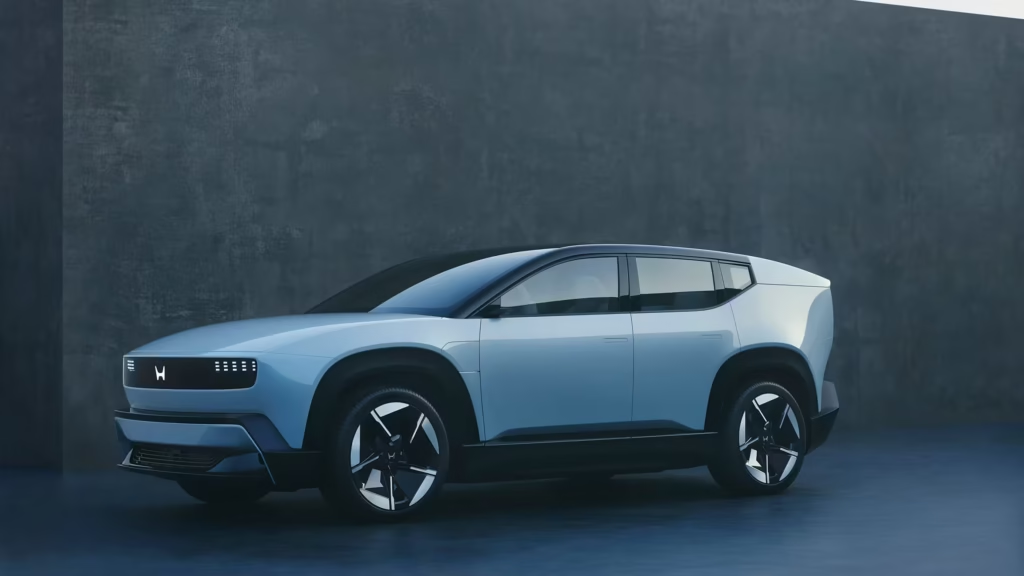
The Honda 0 (Zero) Alpha represents Honda’s strategic entry into India’s competitive electric SUV segment, confirmed for a 2027 launch as a locally manufactured model. This near-production-ready compact electric SUV will directly challenge heavyweights like the Hyundai Creta Electric, Mahindra BE 6, Tata Curvv EV, MG ZS EV, and the upcoming Maruti e Vitara. What sets the 0 Alpha apart is Honda’s “Thin, Light, and Wise” design philosophy, which prioritizes efficient packaging, lightweight construction, and intelligent systems.
The vehicle is expected to feature a wheelbase between 2,700–2,800mm, maximising interior space while maintaining compact exterior dimensions. Honda has specifically chosen LFP (Lithium Iron Phosphate) battery technology for the Indian market, acknowledging the country’s extreme climate conditions. Two battery pack options are expected likely ranging between 65–75kWh with the initial launch featuring a single-motor front-wheel-drive configuration. The anticipated range is around 400–500km on a full charge, making it viable for both city commutes and highway runs.
Styling is futuristic, with an upright stance, wraparound LED lighting, and a distinctive U-shaped light signature at the rear. The illuminated Honda logo and minimalist black grille give it a tech-forward appearance that would stand out on Indian roads. Importantly, Honda has confirmed that India will serve as both a manufacturing hub and export base for the 0 Alpha, signaling strong localization commitment. Pricing is estimated between ₹25–30 lakh, positioning it as a premium yet accessible alternative to existing EVs. Production will commence at Honda’s Tapukara plant in Rajasthan, with deliveries expected by early 2027.
Honda 0 SUV: The Premium EV Flagship
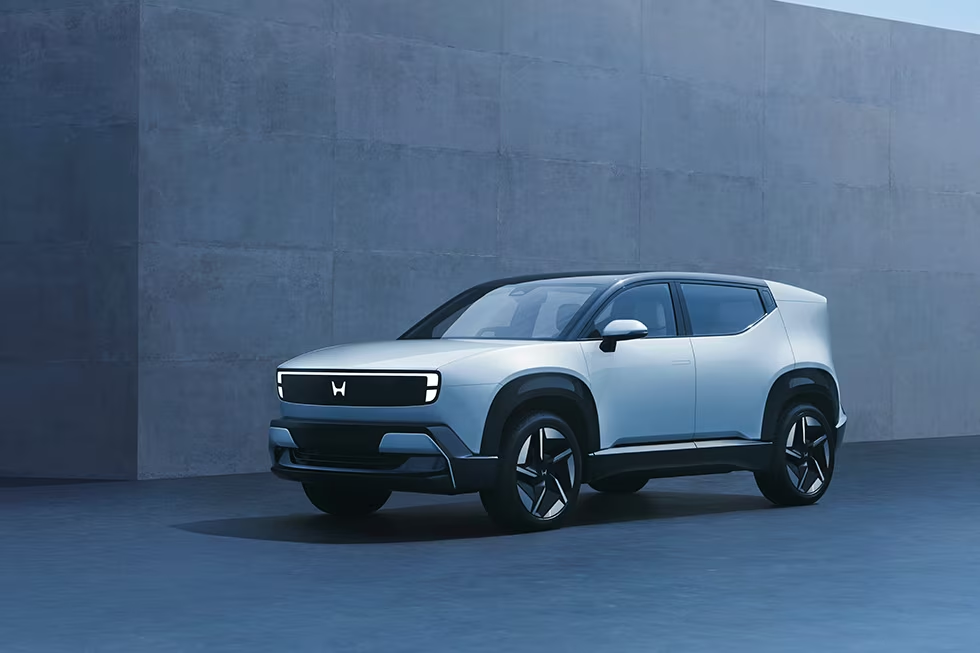
While the 0 Alpha targets the mass segment, the larger Honda 0 SUV will arrive as a halo product in 2026 as a CBU (Completely Built Unit) import, competing against the Tesla Model Y and Kia EV6. This flagship introduces Honda’s born-electric architecture and will spearhead the brand’s global 0 Series lineup of seven electric vehicles. Built on an all-new dedicated EV platform, the 0 SUV showcases Honda’s next-generation approach to efficiency and software-driven performance.
It will be available in rear-wheel-drive and all-wheel-drive variants, with battery packs between 80–100kWh depending on the market. Honda’s newly developed ultra-thin battery packaging reduces weight while maximizing cabin space, contributing to an estimated 500km real-world range. The squared-off rear design lends it a slightly MPV-like silhouette, improving visibility and interior volume.
The 0 SUV will include Level 2 autonomous driving features such as adaptive cruise control, lane-keeping assist, and emergency braking. Inside, expect a minimalist digital cockpit with a large touchscreen and OTA update support. Pricing will exceed ₹50 lakh, but this model’s purpose is not volume—it’s to showcase Honda’s technological prowess before the more affordable 0 Alpha arrives. This two-phase approach mirrors the strategy followed by Hyundai and Kia in India’s maturing EV market.
Maruti e Vitara: The Volume EV Warrior
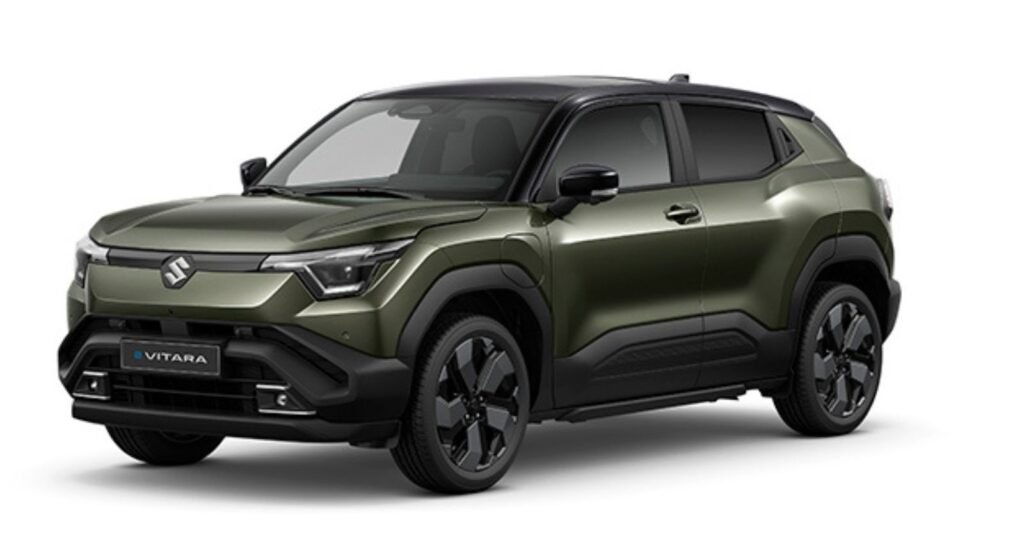
The Maruti e Vitara, first showcased at the Bharat Mobility Global Expo 2025, marks Maruti Suzuki’s official entry into the electric SUV segment, with a December 2025 launch expected. Built on the Heartect-e platform co-developed with Toyota, this midsize electric SUV will compete directly with the Tata Curvv EV, Hyundai Creta Electric, and MG ZS EV.
Two battery options 49kWh and 61kWh will be available, paired with a 144PS/192Nm and 174PS/192Nm single-motor setup, respectively. The India-spec version will feature front-wheel drive, while global variants may offer AWD. Maruti claims an estimated 500km range for the larger battery pack. The LFP battery cells will be supplied by BYD, known for safety and thermal stability.
Design-wise, the e Vitara retains the rugged SUV stance with connected LED lighting and bold proportions. Three trims—Delta, Zeta, and Alpha—are expected, with features like a 10.25-inch touchscreen, 10-speaker Infinity audio, ventilated seats, ambient lighting, and Level 2 ADAS. Safety is strong, with seven airbags and a 4-star Euro NCAP rating already achieved (77% adult protection, 85% child protection).
Production began in August 2025 at the Hansalpur plant in Gujarat, with exports already underway to Europe. Pricing is expected between ₹17–22.5 lakh, making it one of India’s most accessible midsize electric SUVs. Maruti’s vast dealer network and charging infrastructure rollout will give it a massive advantage in EV adoption.
Maruti Fronx Flex Fuel: Supporting Green Initiatives
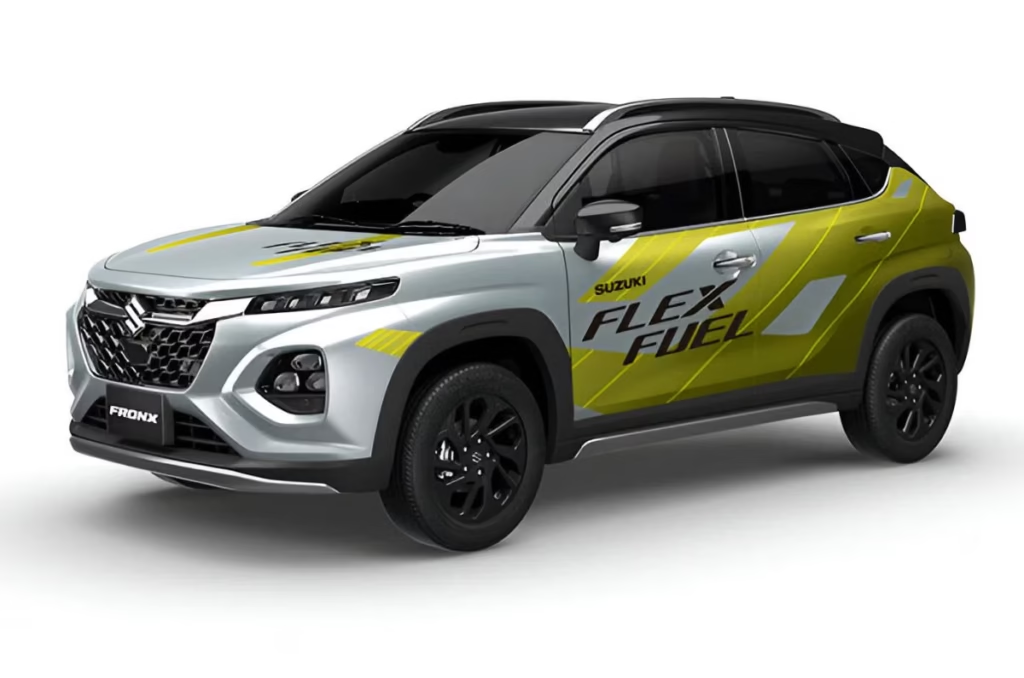
Suzuki showcased the Fronx Flex Fuel (FFV) at the Japan Mobility Show, demonstrating the compact SUV’s capability to run on up to 85% ethanol (E85). This aligns with India’s ethanol-blending initiative, which aims for E20 nationwide rollout and higher future blends. The Fronx FFV’s 1.2L K-Series DualJet engine has been re-engineered with corrosion-resistant fuel lines, modified injectors, and ECU remapping to handle ethanol blends efficiently.
Brazil’s success with flex-fuel tech (where over 80% of cars can run on ethanol) serves as a benchmark. The Fronx FFV could reach India by 2026, depending on ethanol supply and government policy. Pricing would carry a modest premium of ₹20,000–30,000 over standard petrol variants, offset by lower operating costs. This variant positions Maruti to offer eco-friendly options even before EV adoption peaks.
Maruti Victoris CBG: The Biomethane Pioneer
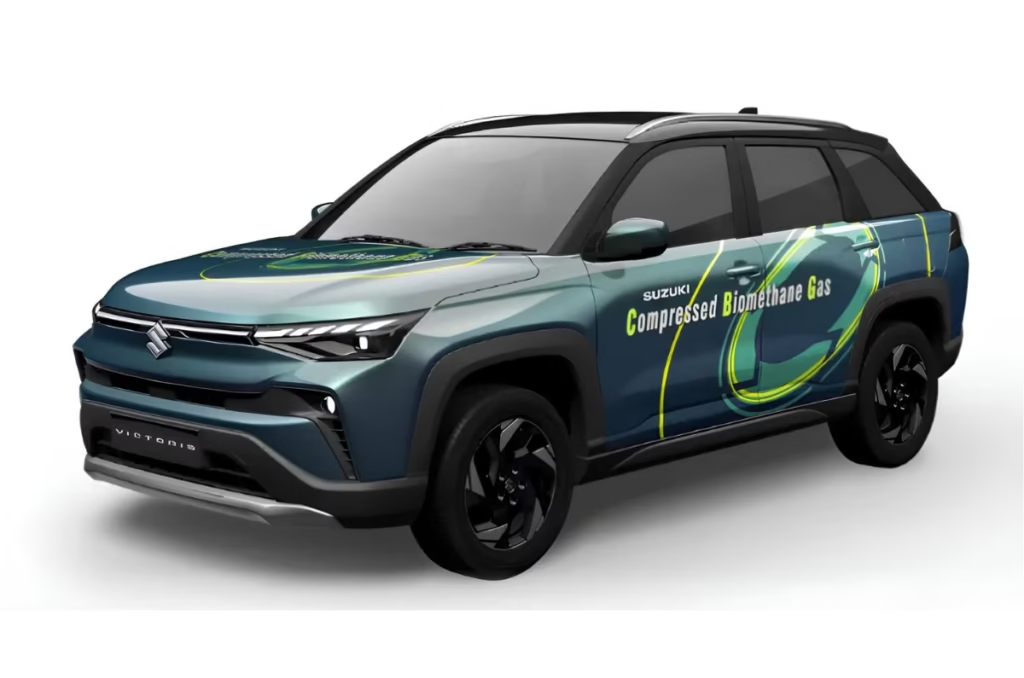
The Maruti Victoris CBG (Compressed Biomethane Gas) variant, in development since 2022, showcases Suzuki’s diversification into renewable fuels. CBG is produced from organic waste such as crop residue and sewage, making it a carbon-neutral alternative to CNG.
Aligned with the government’s SATAT (Sustainable Alternative Towards Affordable Transportation) initiative, India plans to commission over 5,000 CBG plants nationwide. The Victoris CBG uses the proven 1.5L K-Series petrol engine, tuned for biomethane compatibility. Performance matches its CNG counterpart (~90PS/122Nm), but with significant sustainability advantages.
Infrastructure remains the challenge CNG stations are widespread, while CBG is still expanding. However, Oil Marketing Companies are already integrating CBG pumps within existing CNG outlets, accelerating accessibility. Pricing should mirror CNG models (~₹1 lakh above petrol). The Victoris CBG could offer a near-term bridge for buyers seeking eco-mobility without charging concerns.
Maruti Jimny Nomade: The Made-in-India Export
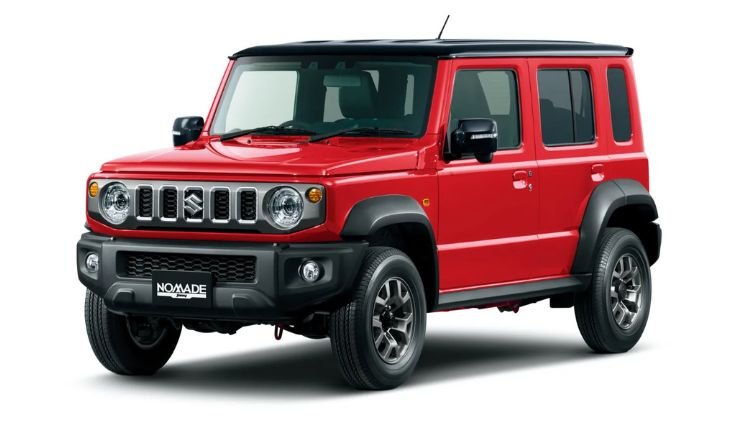
The Jimny Nomade showcased in Tokyo is the same 5-door model manufactured in India, underscoring India’s role as Suzuki’s export base for this global off-roader. It retains the 1.5L K-Series petrol engine (105PS/134Nm) with 5-speed manual or 4-speed automatic options and ALLGRIP PRO 4WD.
The Nomade edition featured enhancements such as Level 2 ADAS, heated seats, and premium materials for export markets like Japan and Europe. India’s Hansalpur facility currently produces 2,500–3,000 units per month, split between domestic and export demand. The Nomade’s additional safety and tech could inspire a limited-edition Indian launch around ₹16–17 lakh.
In India, the Jimny remains a niche “lifestyle SUV,” priced between ₹12.74–15.05 lakh, admired for its off-road capability and retro design. The Nomade’s global showcase reinforces India’s rising status as a manufacturing hub for Suzuki worldwide.
Toyota Land Cruiser FJ – The Baby Land Cruiser
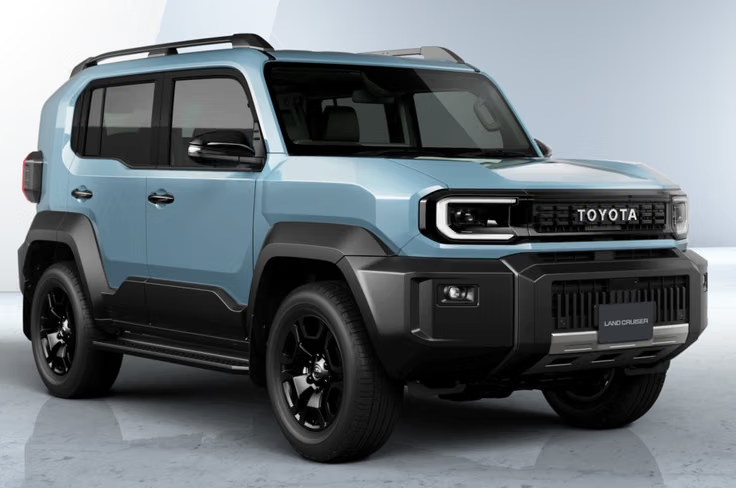
Toyota turned heads with the Land Cruiser FJ concept, inspired by the beloved FJ Cruiser of the 2000s. Designed as a compact version of the legendary Land Cruiser, it’s built on the IMV platform shared with the Hilux and Fortuner. This makes it technically feasible for Indian assembly at Toyota’s Bidadi plant if greenlit.
Powertrain options are expected to include a 2.8L turbo-diesel (204PS/500Nm) and 2.4L turbo-petrol (280PS/430Nm). Standard equipment would include 4WD with terrain modes and diff locks. The interior emphasizes durability over luxury washable floors, modular storage, and tie-down hooks for adventure gear.
Pricing, if launched, could fall between ₹40–50 lakh, slotting between the Fortuner and Land Cruiser 300. With India’s appetite for rugged SUVs growing, the FJ could serve as a spiritual successor to the original FJ Cruiser, offering Land Cruiser heritage at a fraction of the cost.
Conclusion: A Green Future Takes Shape
The Japan Mobility Show 2025 sent a clear message: Japan’s top automakers now view India as a priority market for electrification, ethanol, and biomethane innovations. Honda’s dual-pronged EV plan (premium 0 SUV and localized 0 Alpha), Maruti’s e Vitara EV and alternative-fuel experiments, and Toyota’s adventurous Land Cruiser FJ concept all underscore genuine long-term commitment.
For Indian consumers, the next two years promise unprecedented variety from affordable urban EVs to rugged off-roaders and green fuel options. The road to India’s mobility future is no longer theoretical it’s already taking shape.
Note : Explore Suzuki’s futuristic direction in electric mobility with the Vision e-Sky BEV Concept a compact EV that previews the brand’s next generation of affordable urban electrics. Read the full story here