Motors77 | Latest Auto News - Cars, Bikes & EV Updates
  • Home
  • CARS
    • India Car News
    • International Car News
    • New Car Launches
    • Upcoming Cars
  • BIKES
    • India Bike News
    • International Bike News
    • New Bike Launches
    • Upcoming Bikes
  • ELECTRIC
    • Electric Cars
    • Electric Bikes
  • REVIEWS
    • Bike
    • Car
    • Features
    • Fuel Cost Calculator
No Result
View All Result
Motors77 | Latest Auto News - Cars, Bikes & EV Updates
  • Home
  • CARS
    • India Car News
    • International Car News
    • New Car Launches
    • Upcoming Cars
  • BIKES
    • India Bike News
    • International Bike News
    • New Bike Launches
    • Upcoming Bikes
  • ELECTRIC
    • Electric Cars
    • Electric Bikes
  • REVIEWS
    • Bike
    • Car
    • Features
    • Fuel Cost Calculator
No Result
View All Result
Motors77 | Latest Auto News - Cars, Bikes & EV Updates
No Result
View All Result
Home CARS

Mahindra XEV 9S Launched at Rs 19.95 Lakh: India’s First Mass-Market 7-Seater Electric SUV

Yogesh B by Yogesh B
December 27, 2025
in CARS, Car
0
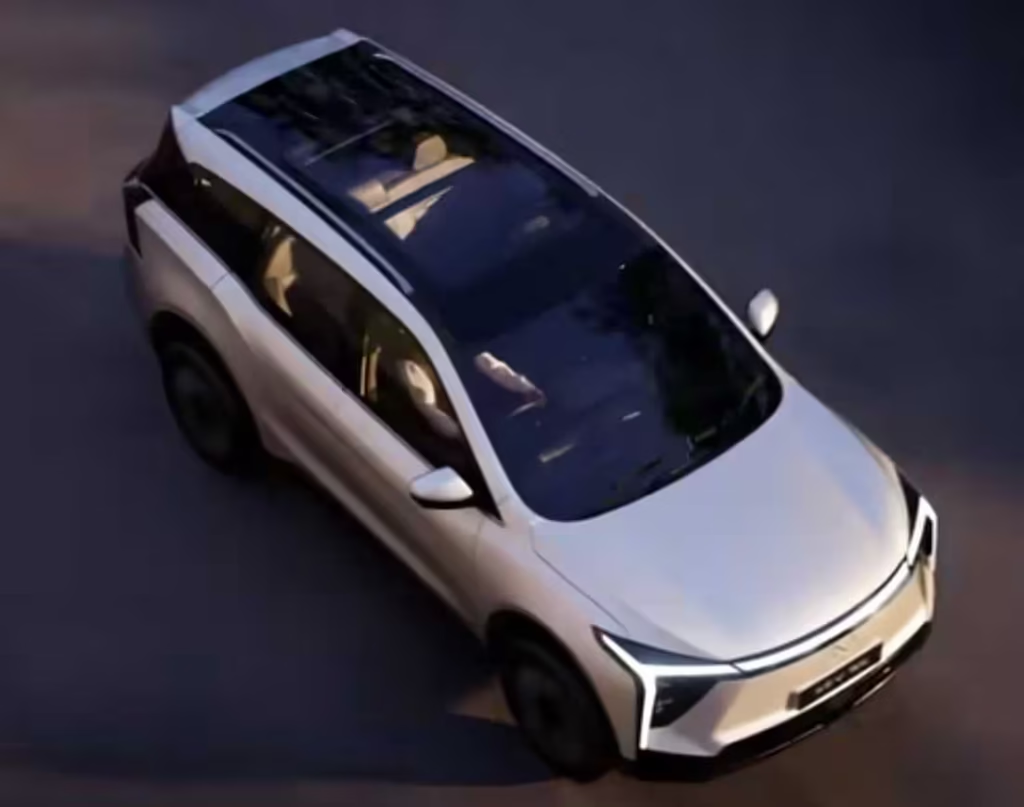
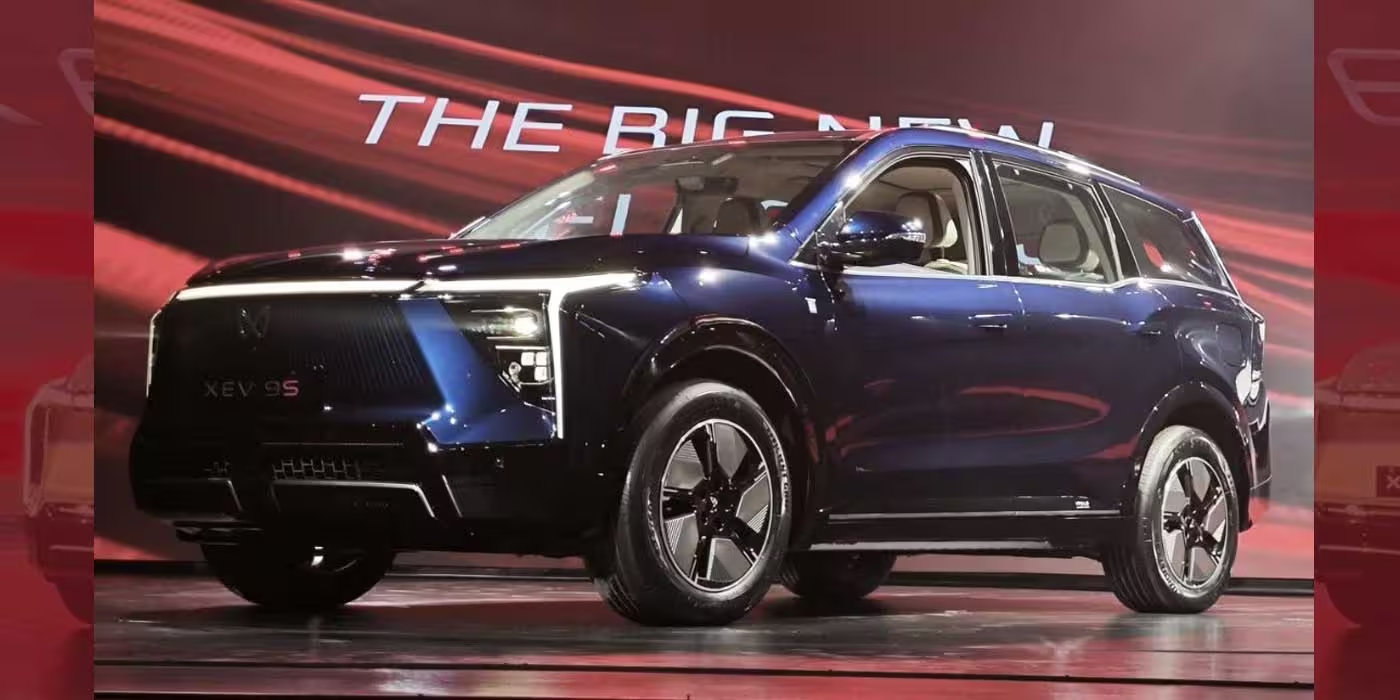
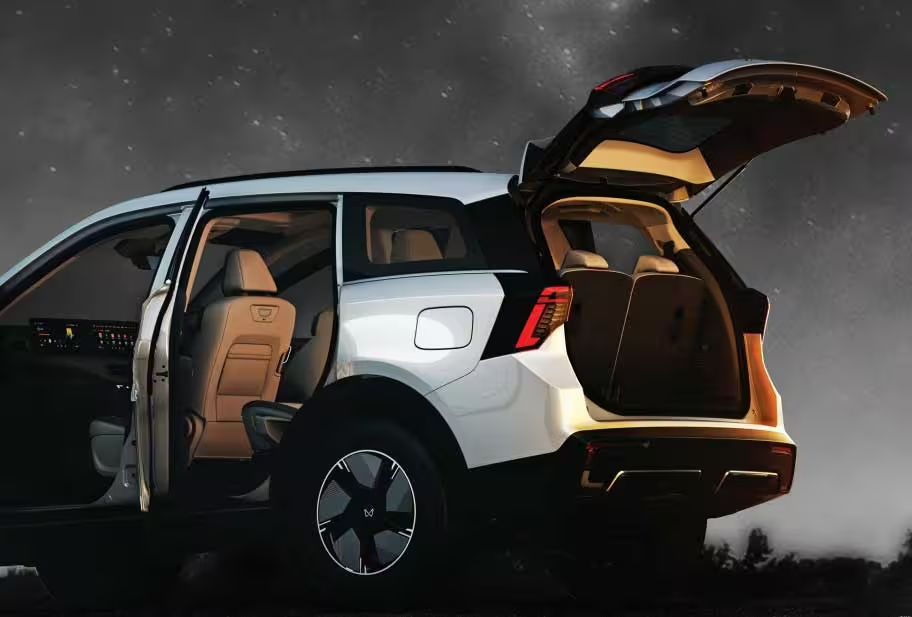
Mahindra XEV 9S electric 7-seater SUV launch in India

Mahindra XEV 9S becomes India’s first mass-market 7-seater electric SUV

11
SHARES
133
VIEWS
Share on FacebookShare on Twitter

Mahindra XEV 9S is India’s latest seven-seater electric SUV launched at ₹19.95 lakh.

Here’s something genuinely unexpected in India’s rapidly evolving EV landscape: a proper seven-seater electric SUV starting below Rs 20 lakh. Mahindra just unveiled the XEV 9S, and the pricing structure alone is bold enough to make competitors nervous. Starting at Rs 19.95 lakh (ex-showroom), this electric SUV undercuts its five-seater sibling by nearly two lakh rupees while offering more seating. That’s either brilliant market strategy or a gamble on volume sales offsetting slimmer margins.

You might also like

Hyundai Lounge Edition Launched: The Alcazar Now Costs Rs 90,000 More With Two Fewer Seats

Maruti Suzuki Baleno Facelift First Look: Fewer Cylinders, Less Power, And Why That Trade Works

MG ADAPT Platform Unveiled: Why MG Showed A Chassis When Everyone Expected An SUV

What makes this launch particularly significant is timing. India’s electric passenger vehicle market crossed 107,000 units in FY25, marking 18% annual growth, and family SUVs are driving much of this expansion. The XEV 9S arrives when buyers want space, range, and features without the traditional EV premium. Whether Mahindra can deliver on all three promises while maintaining build quality remains the critical question.
Platform Engineering That Actually Matters

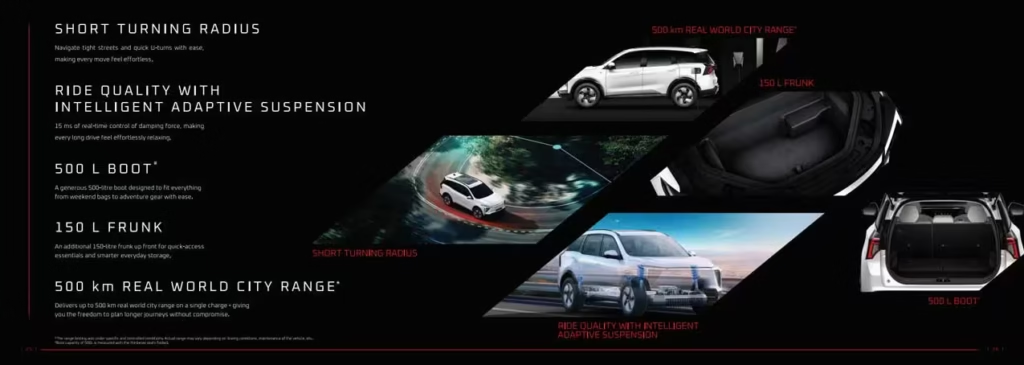
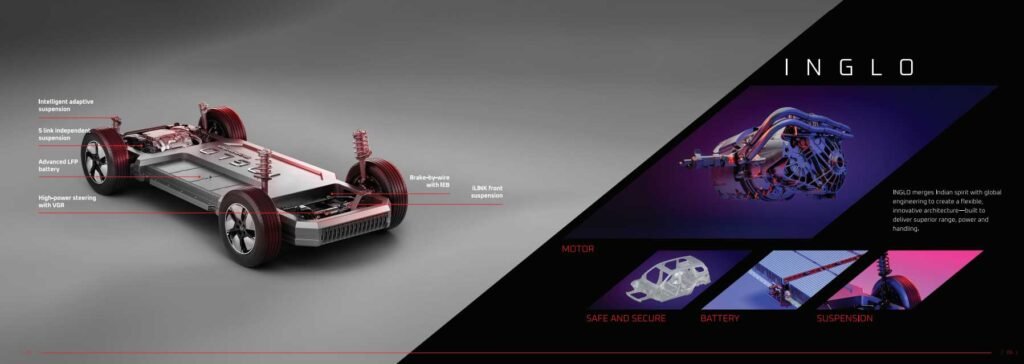
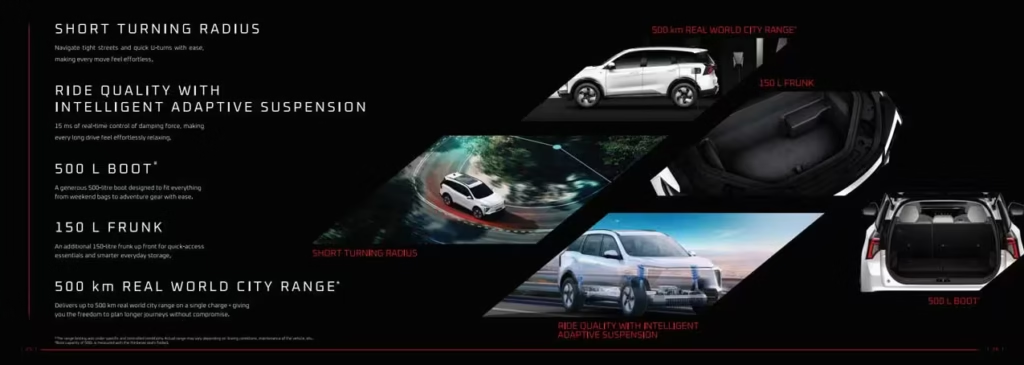
The XEV 9S sits on Mahindra’s INGLO skateboard architecture, their purpose-built electric platform rather than an adapted ICE chassis. This isn’t marketing fluff. The flat battery pack positioned beneath the floor creates tangible advantages: completely level cabin flooring without transmission tunnels, genuinely impressive 4,076 litres of combined front and second-row volume, proper 527 litres boot space with third row folded, and a functional 150-litre front trunk that actually holds luggage.

Dimensionally, we’re looking at 4,737mm length, 1,900mm width, 1,747mm height, and a crucial 2,762mm wheelbase. That wheelbase number particularly matters because it determines whether the third row becomes usable seating or marketing fiction. Ground clearance measures 205mm overall, with 219mm at the battery pack itself, which should handle Indian road conditions without constant scraping anxiety.

The INGLO platform also enables better weight distribution, improving handling dynamics compared to front-heavy ICE conversions. The low-mounted battery pack lowers the centre of gravity, reducing body roll during cornering. These engineering fundamentals matter more than flashy features when you’re regularly carrying seven passengers.
Battery Configurations and Range Reality Check

Mahindra offers three battery options, and refreshingly, they’re being somewhat honest about real-world range expectations rather than hiding behind optimistic ARAI numbers.

The 59kWh variant produces 228 bhp and 380 Nm torque. ARAI claims 542km range; expect closer to 400km in mixed driving. The 70kWh battery (new to Mahindra’s lineup) bumps power to 245 bhp while maintaining 380 Nm torque. Claims stretch to 600km; realistic expectation sits around 450km. The range-topping 79kWh configuration delivers 282 bhp and the same 380 Nm torque, with ARAI rating of 679km translating to approximately 500km real-world range.

Performance figures show 0-100 km/h acceleration between 7.0-7.7 seconds depending on battery size, with top speed electronically limited at 202 km/h. Not thrilling, but adequate for overtaking heavily loaded trucks on highways and merging into fast-moving traffic.

All variants support DC fast charging up to 175kW, enabling 20-80% charge in roughly 20 minutes. That’s competitive with current market offerings and makes long-distance family trips feasible rather than theoretical. Home charging equipment costs extra: Rs 50,000 for 7.2kW charger, Rs 75,000 for 11.2kW unit. Factor these costs into your purchase decision because relying solely on public charging infrastructure in India remains impractical for daily use.

Interior Tech That Balances Gimmicks and Usefulness

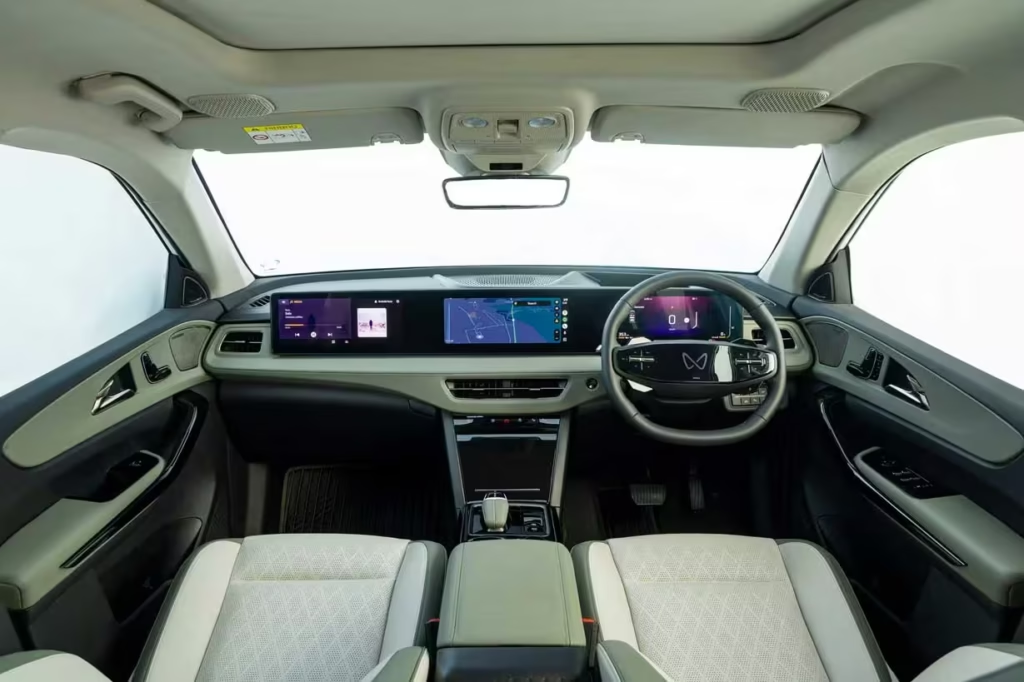
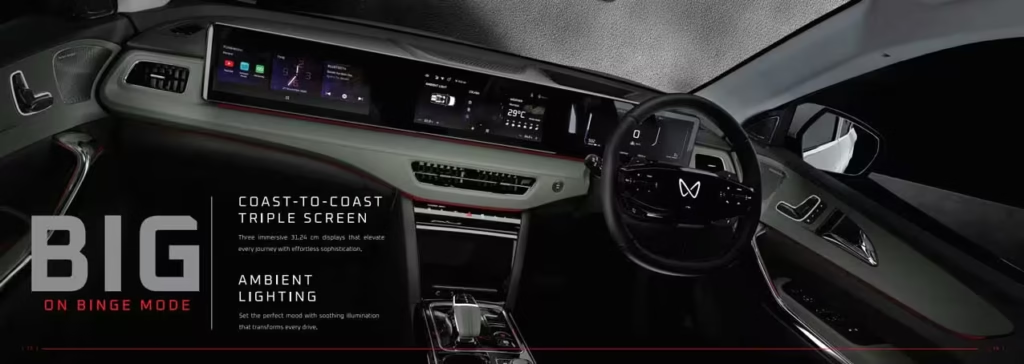
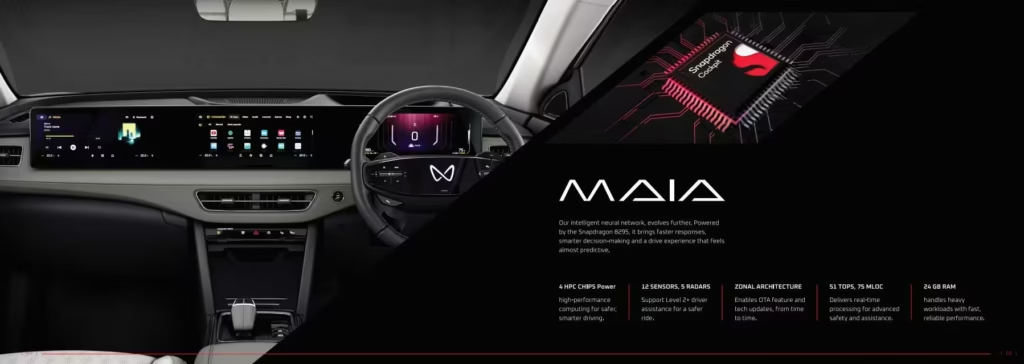
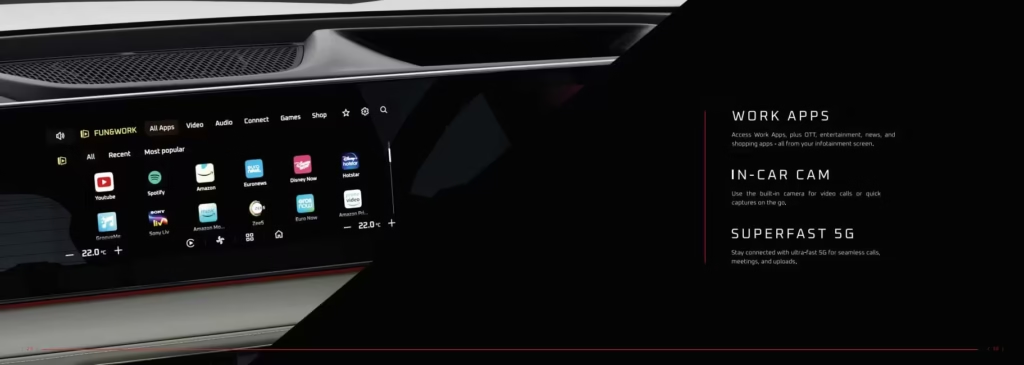
Step inside and Mahindra’s triple-screen dashboard dominates: digital instrument cluster, central infotainment touchscreen, and dedicated passenger display. Second-row passengers get entertainment screens plus BYOD tablet mounts. The setup looks impressive in photos but real-world usability depends on software responsiveness and interface logic, aspects we’ll need extended testing to properly evaluate.

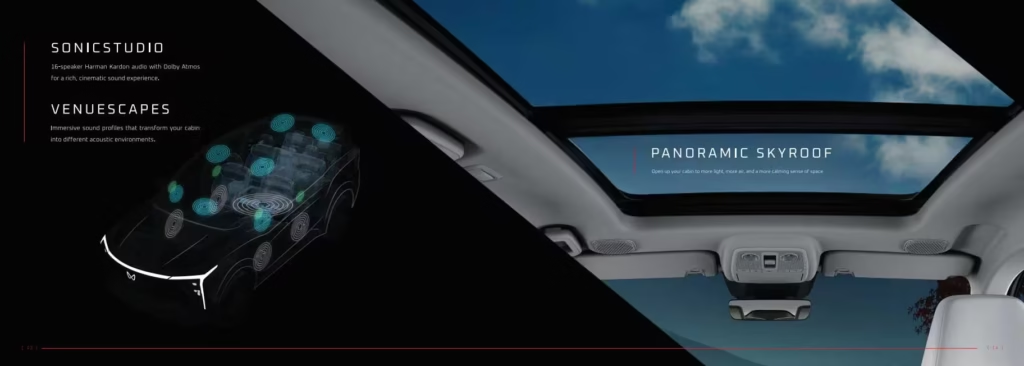
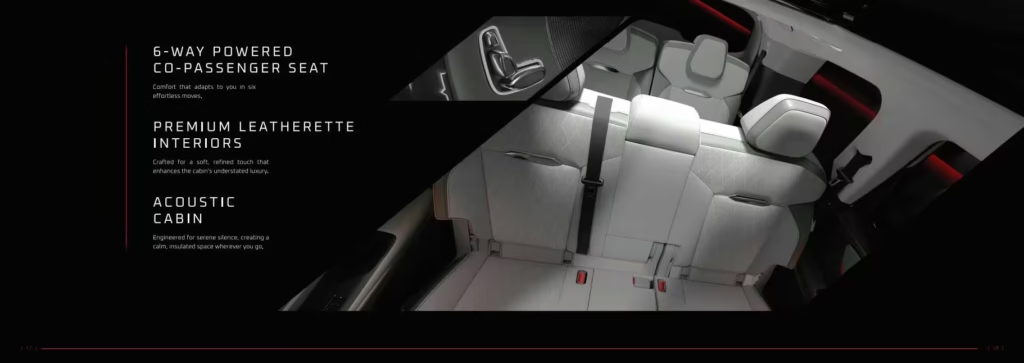
The panoramic sunroof actually opens, unlike the XEV 9e’s fixed glass panel. Small detail, significant difference for buyers who value ventilation over aesthetics. The 16-speaker Harman Kardon audio system with Dolby Atmos appears on higher variants, and laminated acoustic glass keeps cabin noise pleasantly subdued even at highway speeds.

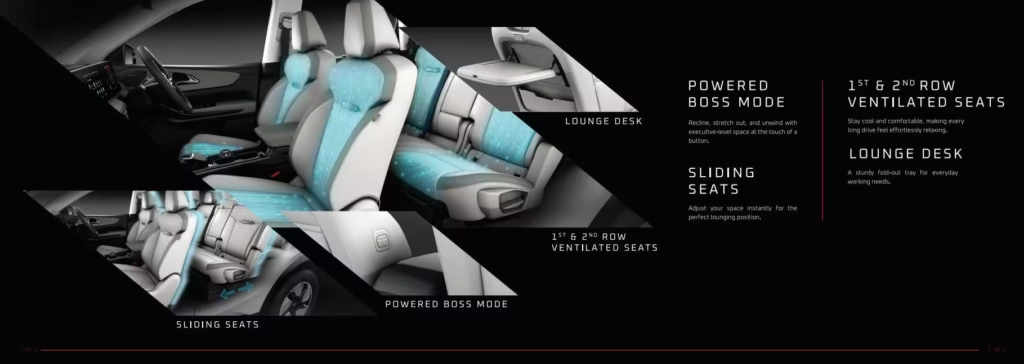
Six-way power-adjustable front seats include memory function. Both first and second rows offer ventilation, absolutely essential in Indian summer conditions. Boss Mode enhances rear passenger comfort on top trims. Wireless charging handles modern smartphones, and multiple USB-C ports include a 65W fast charger for laptops.

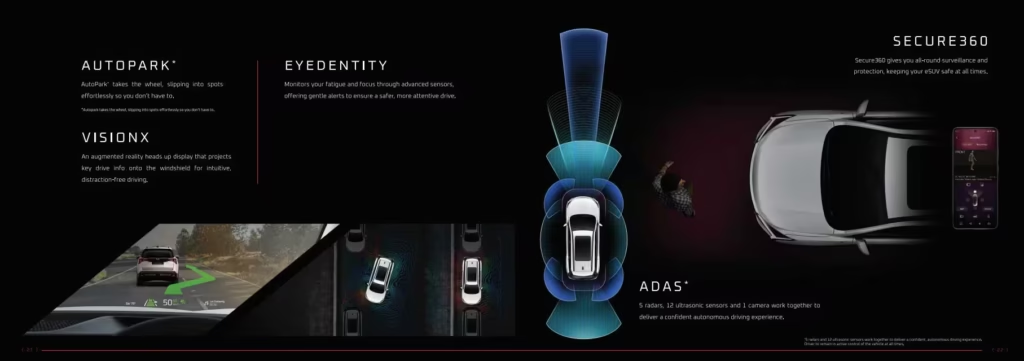
The MAIA AI system manages voice commands for climate, infotainment, and navigation. Over 140 connected features include digital key support, live security monitoring, and remote diagnostics. The VisionX augmented reality heads-up display projects critical information onto the windscreen on higher variants, though whether this proves genuinely useful or merely distracting remains to be determined through real-world testing.
Safety Equipment Deserves Serious Examination

Standard safety features include up to seven airbags (driver knee airbag on higher trims), electronic parking brake with auto-hold, TPMS with live pressure monitoring, and drowsiness detection. The body structure emphasizes high stiffness for improved crash protection.

Pack Two variants introduce Level 2 ADAS with radar and vision cameras: adaptive cruise control, lane-keep assist, forward collision warning, and 360-degree camera. Pack Three upgrades to Level 2+ ADAS with five radars and one camera, adding lane centering, emergency steering assist, driver-initiated auto lane changes, blind spot monitoring, cross-traffic alerts, and AutoPark Assist.

The XEV 9S shares its INGLO platform with the XEV 9e, which achieved a perfect 32/32 adult occupant protection score from Bharat NCAP, the highest rating any vehicle has received in that testing program. That suggests strong structural integrity, though the seven-seater variant’s additional weight and different crash dynamics mean we shouldn’t simply assume identical performance until independent testing confirms it.
Driving Dynamics and Practical Considerations

Four driving modes address different scenarios. Default Mode balances performance and efficiency. Range Mode maximizes distance by limiting power delivery. Race Mode unleashes full performance (though why you’d need this in a family SUV remains questionable). Everyday Mode provides comfortable commuting characteristics.

Regenerative braking offers five adjustment levels including proper one-pedal driving. Higher variants receive intelligent adaptive dampers and five-link rear suspension, theoretically maintaining ride quality even with all seven seats occupied. The second-row seats slide and recline rather than being fixed benches. The third row features 50:50 split folding for cargo flexibility.

Climate control includes Camp Mode and Keep Mode, maintaining interior comfort when parked. Useful for waiting in parking lots during Indian summers without running the entire powertrain.
Pricing Breakdown and Value Analysis

Pack One Above 59kWh: Rs 19.95 lakh
Pack One Above 79kWh: Rs 21.95 lakh
Pack Two Above 70kWh: Rs 24.45 lakh
Pack Two Above 79kWh: Rs 25.45 lakh
Pack Three 79kWh: Rs 27.35 lakh
Pack Three Above 79kWh: Rs 29.45 lakh

The entry variant at Rs 19.95 lakh includes triple-screen setup, panoramic sunroof, 18-inch alloys, LED lighting, electronic parking brake, six airbags, and reclining second-row seats. That’s genuinely competitive feature packaging, though whether build quality matches the specification list requires hands-on evaluation.

The pricing strategy appears designed to undercut potential competitors before they establish market presence. The Tata Harrier EV offers similar pricing but only five seats. The BYD eMax 7 provides seven seats but MPV styling rather than SUV proportions that Indian buyers prefer. The Kia Carens Clavis EV will offer another MPV alternative.

Market Context and Competitive Landscape

India’s electric passenger vehicle market is experiencing genuine momentum. August 2025 saw 17,298 units sold, representing 155% year-on-year growth. Tata Motors maintained 41% market share despite increasing competition from JSW MG Motor (27.51%) and Mahindra (20%). The luxury EV segment also expanded 170% year-on-year, indicating growing acceptance across price brackets.

The broader EV market is projected to expand from $54.41 billion in 2025 to $110.7 billion by 2029, growing at 19.44% CAGR. SUVs are gaining particular traction due to Indian consumer preference for higher ground clearance and commanding driving positions. The XEV 9S enters this expanding market with unique positioning: genuine seven-seat SUV utility without the traditional three-row premium.

First-mover advantage matters significantly here. By the time competitors launch rival products, Mahindra will have established market presence, refined manufacturing processes, and gathered real-world feedback for improvements. Whether they can execute this advantage depends entirely on production quality and service infrastructure reliability.

Design Language Without Marketing Hyperbole

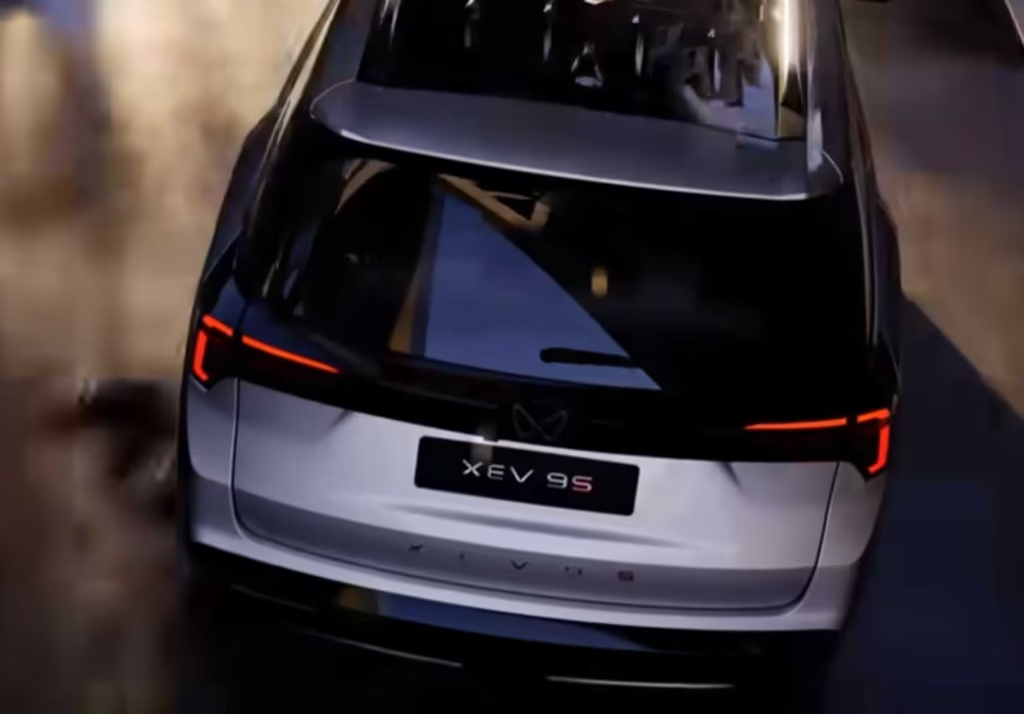
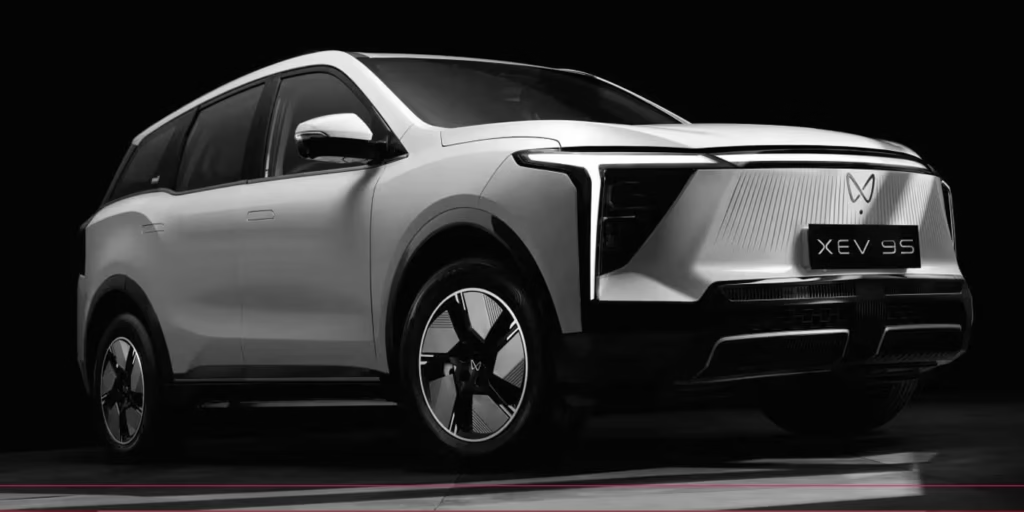
The XEV 9S borrows heavily from the XEV 9e’s design philosophy. Connected LED DRLs form an inverted L-shape. Triangular LED headlamps sit below the DRL strip. Blanked-off grille features an illuminated Mahindra logo. Flush-fitting door handles reduce aerodynamic drag. The 19-inch wheels balance aesthetics with efficiency. Muscular body lines echo the XUV700 without directly copying it. Smoked LED tail lamps and Mahindra’s new butterfly emblem complete the styling.

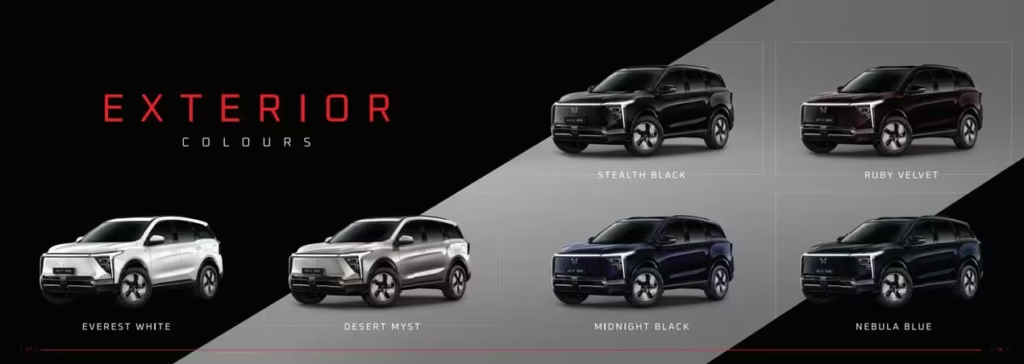
Six colour options provide adequate choice: Stealth Black, Ruby Velvet (dark red), Everest White, Desert Myst (silver-gold), Midnight Black (navy blue), and Nebula Blue. Nothing groundbreaking here, just competent execution of current electric vehicle design trends.

Timeline for Actual Buyers

Test drives begin January 5, 2026. Bookings open January 14, 2026. Deliveries commence January 23, 2026. This phased approach makes sense for a segment-first product where buyers need reassurance through actual experience rather than just reading specifications and watching promotional videos.

Who Should Genuinely Consider This

The XEV 9S makes most sense for families currently driving seven-seater ICE SUVs (XUV700, Safari, Hector Plus) who want to switch to electric without compromising practicality. If you regularly carry more than five passengers, need legitimate cargo space, want competitive range for daily commutes plus occasional long trips, and appreciate modern tech features without requiring absolute luxury, this vehicle deserves serious consideration.

It’s also worth examining if you’re tired of paying escalating fuel costs for a three-row SUV, value the lower operating costs of electric powertrains, and have reliable home charging capability or access to workplace charging infrastructure.

However, if you prioritize absolute build quality refinement, need proven long-term reliability data, require extensive service network coverage beyond major cities, or want cutting-edge autonomous driving features, waiting for more established alternatives might prove wiser.

Complete Specifications Reference

SpecificationDetails
Dimensions
Length4,737 mm
Width1,900 mm
Height1,747 mm
Wheelbase2,762 mm
Ground Clearance205 mm (219 mm at battery)
Capacity
Seating7 (2+3+2 configuration)
Boot Space527 litres (third row folded)
Frunk150 litres
Cabin Volume4,076 litres (front + second row)
Powertrain
Battery Options59 kWh / 70 kWh / 79 kWh
Power Output228 bhp / 245 bhp / 282 bhp
Torque380 Nm (all variants)
DrivetrainRWD (Rear-Wheel Drive)
Performance
0-100 km/h7.0-7.7 seconds
Top Speed202 km/h (limited)
Range
ARAI Claimed542 km / 600 km / 679 km
Real-World Estimate400 km / 450 km / 500 km
Charging
DC Fast Charging20-80% in 20 minutes (175 kW)
AC Charging7.2 kW / 11.2 kW (optional)
Features
InfotainmentTriple 12.3″ screens
Audio System16-speaker Harman Kardon
SunroofPanoramic (opening)
Climate ZonesMulti-zone automatic
Safety7 airbags, Level 2+ ADAS
Connectivity140+ connected features

Frequently Asked Questions

What makes the XEV 9S different from other electric SUVs?
It’s India’s first mass-market seven-seater electric SUV on a dedicated EV platform rather than an ICE conversion. The INGLO architecture enables genuine three-row practicality without major compromises in cargo space, range, or features while maintaining competitive pricing.

Is the third row actually comfortable for adults?
For average-height adults on short journeys (under 2 hours), yes. For long highway trips or taller passengers, the third row works better for children or teenagers. The raised seating position improves comfort compared to typical third-row packaging, but physics still limits legroom compared to the second row.

How accurate are the claimed range figures?
Mahindra quotes ARAI figures of 542-679 km but honestly suggests expecting 400-500 km in real-world conditions. City driving with regenerative braking achieves better range than sustained highway speeds. Actual range varies significantly based on climate control usage, driving style, payload weight, and terrain.

Can I charge this at regular public charging stations?
Yes, all variants support standard DC fast charging (CCS2 connector) up to 175 kW. Most public charging stations in major cities offer compatible connectors. However, charging infrastructure remains limited in smaller towns, making home charging capability essential for practical daily use.

What’s the total cost including home charger installation?
Add Rs 50,000-75,000 for home charging equipment beyond the vehicle price. Installation costs vary by location and electrical panel capacity. Some buyers may need electrical panel upgrades, adding further expense. Factor these costs into your budget planning beyond the ex-showroom price.

How does it compare to the Tata Harrier EV?
The Harrier EV offers similar pricing (Rs 21.49 lakh starting) but only five seats. It provides dual-motor AWD option with quicker acceleration (6.3 seconds 0-100 km/h) and slightly different feature packaging. The XEV 9S trades AWD capability for genuine seven-seat practicality and marginally better range from the 79kWh battery.

Will Mahindra offer all-wheel-drive variants later?
Mahindra hasn’t confirmed AWD versions at launch, though the INGLO platform technically supports dual-motor configurations. Current lineup uses rear-wheel drive across all battery options. Whether they introduce AWD variants depends on market demand and competitive pressure from rivals.

When can deliveries actually begin?
Official deliveries start January 23, 2026, following test drive availability from January 5 and booking commencement on January 14. However, initial production volumes may limit immediate availability. Mahindra’s recent EV launches experienced delivery delays, so patience may be required despite announced timelines.

Final Assessment Without Marketing Spin

The XEV 9S represents Mahindra’s most strategically important EV launch. By combining genuine seven-seat utility, competitive pricing below Rs 20 lakh, and real-world range credibility, it addresses the primary barriers preventing family SUV buyers from switching to electric vehicles: inadequate space, affordability concerns, and range anxiety.

Success depends less on the product itself and more on execution. Can Mahindra deliver consistent build quality across volume production? Will service infrastructure handle the inevitable teething issues? Can they maintain adequate inventory without multi-month waiting periods? The XEV 9e launch generated significant interest but also revealed production constraints and delivery challenges. This time, they need to execute better.

For buyers genuinely considering the electric transition, the XEV 9S removes traditional excuses. It offers the space families require, range eliminating daily charging anxiety, features justifying premium positioning, and safety credentials providing peace of mind. Whether that’s sufficient to overcome lingering concerns about battery longevity, uncertain resale values, and charging infrastructure gaps depends on individual risk tolerance and practical circumstances.

What’s undeniable: Mahindra has created a category-defining product that could either accelerate EV adoption among family SUV buyers or become a cautionary tale about overambitious pricing strategies. The next six months will determine which narrative prevails. Indian roads will provide the ultimate verdict, not marketing presentations or specification sheets.

Also Read: Mahindra BE Rall E Teased Ahead of November 26 Launch: What The Production Model Really Looks Like

Previous Post

Royal Enfield Bullet 650 Makes India Debut at Motoverse 2025: The Legend Gets Twin Power

Next Post

2025 Tata Sierra Complete Guide: ARGOS Platform, Engine Details, AWD Launch, Gearbox Specifications & Pricing

Yogesh B

Yogesh B

Editor at Motors77 with nearly a decade of experience in automotive content. Specializes in vehicle launches, market analysis, and performance evaluations across segments.

Related Posts

# Hyundai Lounge Edition Launched: The Alcazar Now Costs Rs 90,000 More With Two Fewer Seats The Hyundai Lounge Edition has arrived across the Creta, Creta Electric and Alcazar, and most of the coverage is leading with the 11.6 inch screen bolted to the back of the front seats. Fair enough. But the number worth pausing on sits in the Alcazar's price list. The Alcazar Lounge Edition costs Rs 21.81 lakh, ex-showroom. That is Rs 71,000 more than the six seat Signature it is based on, and Rs 90,000 more than the seven seat Signature. And the Lounge Edition has five seats. Hyundai is charging you almost a lakh extra to take the third row out of a three row SUV. That sounds absurd until you understand why it might be the smartest thing in this entire launch. ## Hyundai Lounge Edition price, model by model The Hyundai Lounge Edition is a features and styling package applied to the top trim of each SUV. Nothing mechanical changes anywhere in the range. | Creta Lounge Edition | Price, ex-showroom | | --- | --- | | 1.5 petrol iVT | Rs 19.22 lakh | | 1.5 petrol iVT, dual tone | Rs 19.37 lakh | | 1.5 diesel AT | Rs 20.31 lakh | | 1.5 diesel AT, dual tone | Rs 20.46 lakh | | Alcazar and Creta Electric | Price, ex-showroom | | --- | --- | | Alcazar Lounge, 1.5 diesel AT | Rs 21.81 lakh | | Alcazar Lounge, dual tone | Rs 21.96 lakh | | Creta Electric Lounge | From Rs 24.34 lakh | | Creta Electric Lounge, top configuration | Rs 25.22 lakh | Each Hyundai Lounge Edition sits on a specific donor trim. The Creta version is built on the King trim and comes only with automatics, either the 1.5 litre MPi petrol with the iVT or the 1.5 litre CRDi diesel with a torque converter. The Alcazar Lounge is based on the Signature trim and is diesel automatic only. The Creta Electric Lounge uses the Excellence Long Range variant with the 51.4 kWh battery, and can be had with or without the home charger. The premiums tell you what Hyundai thinks each Hyundai Lounge Edition package is worth. The Creta Lounge asks Rs 53,000 over the equivalent King variant, the same on both powertrains. The Creta Electric Lounge asks Rs 67,000 over the Excellence Long Range. The Alcazar asks Rs 71,000 over the six seater and Rs 90,000 over the seven seater. Every figure above is ex-showroom. On road prices will land considerably higher once road tax, registration and insurance are added, and by how much depends heavily on your state, so treat these as the base of the calculation rather than the total. ## What the money buys The centrepiece of every Hyundai Lounge Edition is a 29.46 cm, or 11.6 inch, rear seat entertainment screen. This is not a mirrored display for the front infotainment. It runs OTT video streaming, gaming and apps through a certified app store, and supports phone mirroring on top. Audio runs through the existing eight speaker Bose system with a front centre speaker and a subwoofer. Inside, the Hyundai Lounge Edition adds an all black dashboard with silver inserts on the air conditioning vents, Moonwhite ambient lighting, a new seat upholstery pattern and rear headrest cushions with Lounge branding. Outside, every Hyundai Lounge Edition gets a new Golden Bronze paint option and a blacked out treatment covering the front and rear skid plates, side sill garnish, rear spoiler, roof rails, C-pillar garnish and mirrors. The Creta and Alcazar get 18 inch matte black alloys, the Creta Electric 17 inch black aero wheels. Two models get something extra. The Alcazar Lounge adds a voice enabled smart panoramic sunroof alongside its five seat layout. The Creta Electric Lounge adds a factory fitted dashcam and a rear wireless charger. ## Why does this matter? Here is the gap between the launch messaging and the fuller picture. Hyundai is presenting the Hyundai Lounge Edition as a rear seat entertainment package. The screen is the hero of every press image. But the screen is available on all three SUVs, which makes it the least interesting thing here. The Alcazar's missing third row is the actual news. Think about the third row in a compact three row SUV. It eats boot capacity permanently in exchange for seating that adults generally find cramped and that many owners use only occasionally. For a buyer drawn to the Alcazar's larger footprint, road presence and second row space rather than its seat count, that trade has never been a good one. Hyundai has now built exactly that car and priced it accordingly. The Alcazar Hyundai Lounge Edition is the result. Removing the third row frees genuine luggage space, and the second row becomes the focus rather than a waypoint. Add the panoramic sunroof, the rear screen and the ambient lighting, and the Alcazar Lounge is aimed squarely at the buyer who sits in the back, or who has a family of four and wants space rather than seat count. That is a meaningful read of the Indian market. The rear seat focused buyer, whether chauffeur driven or simply someone whose family lives in the back, has generally had to look at more expensive SUVs for this kind of package. Hyundai is now serving that customer at Rs 21.81 lakh, ex-showroom, in a familiar badge. The Rs 90,000 premium over the seven seater is not really a charge for removing seats. It is the price of the equipment, and the seat deletion is what makes the equipment make sense. There is a second, less comfortable consequence of the Hyundai Lounge Edition strategy. A five seat Alcazar competes directly with Hyundai's own Creta. The Creta Lounge Edition costs Rs 19.22 lakh with the same rear screen, the same interior treatment and the same blacked out styling. Spend Rs 2.59 lakh more and you get a longer car with more rear legroom, more boot space and the sunroof, but the same number of seats and the same basic experience. Hyundai has created a genuine internal decision for buyers, and how that plays out will be interesting to watch in the monthly numbers. ## The equipment question nobody is asking Worth being clear about what the Hyundai Lounge Edition does not change. There is no mechanical revision anywhere. The 1.5 litre petrol and diesel engines carry over exactly as they are, the Creta Electric keeps its 51.4 kWh battery and long range tune, and suspension, brakes and steering are untouched across all three. Every Hyundai Lounge Edition also sits on a top trim, which means the safety and driver assistance equipment is whatever those trims already carried. Nothing has been added on that front, and nothing has been taken away. If you were hoping a premium edition might bring extra active safety hardware down the range, this is not that launch. For the money, the rear screen is a substantial piece of kit rather than a token. An 11.6 inch display with independent app and streaming capability is genuinely useful on long drives with children, and it is the sort of feature that has until recently belonged to cars costing considerably more. Whether it is worth Rs 53,000 on a Creta depends entirely on how often your back seat is occupied. ## Quick Pros and Cons **Pros** - Five seat Alcazar finally answers buyers who wanted space over seat count - Genuinely capable 11.6 inch rear screen with streaming, gaming and app support - Paired with the existing eight speaker Bose system rather than a cheaper setup - New Golden Bronze paint and a well judged blacked out exterior treatment - Creta Electric Lounge adds a factory dashcam and rear wireless charger - Alcazar Lounge gains a voice enabled smart panoramic sunroof **Cons** - Rs 90,000 more than a seven seat Alcazar Signature, with two fewer seats - No mechanical, safety or driver assistance improvements anywhere - Restricted to the top trims and automatic powertrains only - The five seat Alcazar competes closely with Hyundai's own Creta Lounge - Creta Lounge Edition is not offered with a manual gearbox ## Frequently Asked Questions **1. What is the Hyundai Lounge Edition price?** The Creta Lounge Edition starts at Rs 19.22 lakh, the Alcazar Lounge Edition at Rs 21.81 lakh and the Creta Electric Lounge Edition at Rs 24.34 lakh. The range tops out at Rs 25.22 lakh, all ex-showroom. **2. Why does the Alcazar Lounge Edition have only five seats?** Hyundai has removed the third row to prioritise second row space and luggage capacity. The regular Alcazar continues to be offered in six and seven seat layouts, so the five seat configuration is exclusive to the Lounge Edition. **3. How much more does the Lounge Edition cost?** The Creta Lounge is Rs 53,000 above the equivalent King variant, the Creta Electric Lounge is Rs 67,000 above the Excellence Long Range, and the Alcazar Lounge is Rs 71,000 above the six seat Signature or Rs 90,000 above the seven seat Signature. **4. What is the rear seat entertainment system?** An 11.6 inch screen for second row passengers that supports OTT video streaming, gaming, phone mirroring and apps through a certified app store. It works with the existing eight speaker Bose audio system. **5. Which engines are offered?** The Creta Lounge gets the 1.5 litre petrol with iVT or the 1.5 litre diesel automatic. The Alcazar Lounge is diesel automatic only. The Creta Electric Lounge uses the 51.4 kWh Excellence Long Range powertrain. **6. Is there any performance change?** No. Every Hyundai Lounge Edition carries over its powertrain unchanged from the donor variant, with no revisions to suspension, brakes or steering. **7. What colour options are there?** A new Golden Bronze shade joins the palette on every Hyundai Lounge Edition, with the existing colours continuing. Dual tone versions are offered at a premium of roughly Rs 15,000. ## Motors77 Verdict The Hyundai Lounge Edition is being sold as a screen, and it should be sold as a seat count. The 11.6 inch rear display is good, and putting real streaming and app capability in the second row of a Rs 19 lakh SUV is a genuine step forward. But it appears on all three models, which makes it a feature rather than a story. The story is that Hyundai looked at its three row SUV, concluded that a meaningful chunk of buyers never wanted the third row, and built them a version without it. That is a confident piece of product thinking. The five seat Alcazar Lounge occupies a space above the Creta Lounge that nothing else in the range covers, pairing a larger body and more generous rear quarters with a panoramic sunroof and a boot no longer compromised by folded seats. It lands at Rs 21.81 lakh, ex-showroom, in a market where that kind of rear seat focus usually costs more. If Hyundai has read demand correctly, this variant could outperform expectations. The reservations are straightforward. Paying Rs 90,000 above a seven seat Alcazar to receive five seats will look strange on a showroom board no matter how sound the logic underneath, and Hyundai will need its salespeople to explain the equipment rather than the arithmetic. There is no mechanical or safety upgrade to soften the premium. And the Creta Lounge sitting Rs 2.59 lakh below with much the same cabin experience means Hyundai is now competing with itself in a way it will have to manage. If your back seat is regularly occupied, the Hyundai Lounge Edition makes a strong case, and the Alcazar version makes the strongest one. If it is not, you are paying a considerable premium for a screen nobody will watch. --- ## RankMath SEO Block **Focus Keyword:** Hyundai Lounge Edition **SEO Title:** Hyundai Lounge Edition Launched: Creta, Creta Electric And Alcazar Prices, Features **Permalink/URL:** hyundai-lounge-edition-creta-alcazar-price-features **Meta Description:** Hyundai Lounge Edition launched for Creta, Creta Electric and Alcazar from Rs 19.22 lakh. Full prices, the 11.6 inch rear screen and the new five seat Alcazar explained. **Tags:** Hyundai Lounge Edition, Hyundai Creta price, Alcazar five seater, Creta Electric, rear seat entertainment, Hyundai India, Creta Lounge Edition, Alcazar Lounge Edition **Category:** Car News, New Launches --- ## WordPress Banner Image Block **Alt Text:** Hyundai Lounge Edition launched for Creta, Creta Electric and Alcazar with an 11.6 inch rear seat entertainment screen **Title:** Hyundai Lounge Edition Launched For Creta, Creta Electric And Alcazar **Caption:** The Hyundai Lounge Edition brings an 11.6 inch rear screen, blacked out styling and a new five seat Alcazar layout, priced from Rs 19.22 lakh. **Description:** Hyundai Motor India has launched the Lounge Edition across the Creta, Creta Electric and Alcazar, priced from Rs 19.22 lakh to Rs 25.22 lakh, ex-showroom. Every version gains a 29.46 cm rear seat entertainment screen with OTT streaming and gaming, Moonwhite ambient lighting, Lounge branded upholstery, a new Golden Bronze paint option and blacked out exterior detailing. The Alcazar Lounge Edition is the most significant, swapping the six and seven seat layouts for an exclusive five seat configuration with a voice enabled smart panoramic sunroof.

Hyundai Lounge Edition Launched: The Alcazar Now Costs Rs 90,000 More With Two Fewer Seats

by Vyom Patil
September 10, 2026
0

The Hyundai Lounge Edition has arrived across the Creta, Creta Electric and Alcazar, and most of the coverage is leading...

Maruti Suzuki Baleno facelift 2026 launched in India at Rs 6.10 lakh with a new Z12E three cylinder engine and Level 2 ADAS

Maruti Suzuki Baleno Facelift First Look: Fewer Cylinders, Less Power, And Why That Trade Works

by Vyom Patil
September 8, 2026
0

The Baleno facelift has arrived at Rs 6.10 lakh, ex-showroom, and buried inside the launch is a fact Maruti has...

MG ADAPT platform unveiled in India, a multi energy architecture supporting EV, hybrid, plug in hybrid and range extender powertrains

MG ADAPT Platform Unveiled: Why MG Showed A Chassis When Everyone Expected An SUV

by Vyom Patil
July 17, 2026
0

Everyone watching JSW MG Motor India on 16 July 2026 expected a car. Spy shots of the Starlight based EV...

Renault Duster Adventure Edition in Stealth Black with Leh coordinate contour decals, launched in India at Rs 12.99 lakh

Renault Duster Adventure Edition Launched At Rs 12.99 Lakh: Renault Just Quietly Deleted The Techno

by Vyom Patil
July 14, 2026
0

The Renault Duster Adventure Edition has been launched in India at Rs 12.99 lakh, ex-showroom, and on the surface it...

Next Post
2025 Tata Sierra

2025 Tata Sierra Complete Guide: ARGOS Platform, Engine Details, AWD Launch, Gearbox Specifications & Pricing

Related Post

Ford’s-$30,000-Electric-Pickup-Truck

Ford’s $30,000 (approximately ₹25 lakh) Electric Pickup Truck: Revolutionizing EVs in 2027

October 14, 2025
Renault Duster 2026 launch in India on March 17 banner showing SUV on mountain road

Renault To Launch Duster In India On March 17: Price, Specs, Features and Everything You Need To Know

February 25, 2026
Suzuki Vision e-Sky BEV Concept

Suzuki Vision e-Sky BEV Concept: The Future of Compact Electric Mobility

October 14, 2025

Category

  • Bike
  • BIKES
  • Car
  • CARS
  • ELECTRIC
  • Electric Bikes
  • Electric Cars
  • Features
  • India Bike News
  • India Car News
  • International Bike News
  • International Car News
  • New Bike Launches
  • New Car Launches
  • REVIEWS
  • Upcoming Bikes
  • Upcoming Cars

Tags

acti.ev+ Avinya Bajaj Triumph Baleno 2026 Baleno ADAS Baleno facelift Baleno price Bonneville 400 price Hyundai Creta Electric Mahindra BE 6 Maruti Suzuki Baleno premium hatchback India retro motorcycle Royal Enfield Classic 350 Safari EV Sierra EV Tata EV Tata EV portfolio Tata Motors Tata Motors FY31 Tata new cars Tata Sierra EV Tata Sierra EV price Tata Sierra EV variants Triumph 400 series Triumph Bonneville 400 Z12E engine

About

Motors77.com Brings You the Latest Automotive News, Expert Reviews, and Market Insights. Explore Cars, Bikes, and EV Trends | Driving Your Passion for Motoring Forward.

Categories

  • BIKES
    • India Bike News
    • International Bike News
    • New Bike Launches
    • Upcoming Bikes
  • CARS
    • India Car News
    • International Car News
    • New Car Launches
    • Upcoming Cars
  • ELECTRIC
    • Electric Bikes
    • Electric Cars
  • REVIEWS
    • Bike
    • Car
    • Features

Browse by Tag

acti.ev+ Avinya Bajaj Triumph Baleno 2026 Baleno ADAS Baleno facelift Baleno price Bonneville 400 price Hyundai Creta Electric Mahindra BE 6 Maruti Suzuki Baleno premium hatchback India retro motorcycle Royal Enfield Classic 350 Safari EV Sierra EV Tata EV Tata EV portfolio Tata Motors Tata Motors FY31 Tata new cars Tata Sierra EV Tata Sierra EV price Tata Sierra EV variants Triumph 400 series Triumph Bonneville 400 Z12E engine

Recent Posts

  • Hyundai Lounge Edition Launched: The Alcazar Now Costs Rs 90,000 More With Two Fewer Seats
  • Maruti Suzuki Baleno Facelift First Look: Fewer Cylinders, Less Power, And Why That Trade Works
  • Home
  • About US
  • Contact Us
  • Privacy Policy
  • Terms & Conditions

Copyright © 2026 Motors77. All rights reserved.

No Result
View All Result
  • Home
  • CARS
    • India Car News
    • International Car News
    • New Car Launches
    • Upcoming Cars
  • BIKES
    • India Bike News
    • International Bike News
    • New Bike Launches
    • Upcoming Bikes
  • ELECTRIC
    • Electric Cars
    • Electric Bikes
  • REVIEWS
    • Bike
    • Car
    • Features
    • Fuel Cost Calculator

Copyright © 2026 Motors77. All rights reserved.

This website uses cookies to improve your experience. By continuing to use this website, you consent to the use of cookies. Visit our Privacy and Cookie Policy.