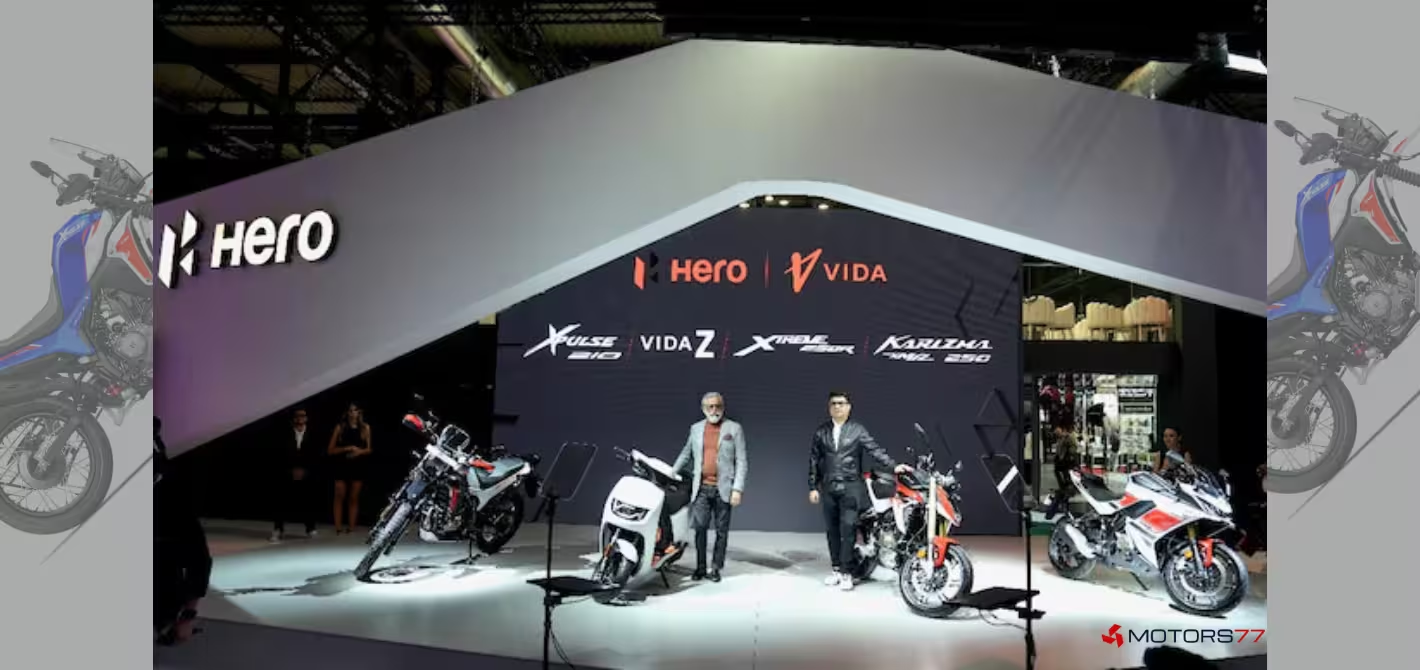
Hero MotoCorp’s EICMA 2025, Milan — showcase made a strategic statement, unveiling an ambitious electric mobility vision through its Vida sub-brand unveiling an ambitious electric mobility vision through its Vida sub-brand. Moving beyond conventional electric scooters, the Indian two-wheeler giant presented a comprehensive electric portfolio spanning motorcycles, dirt bikes, and innovative urban mobility solutions that signal the company’s intent to lead India’s electric revolution. The Hero MotoCorp EICMA 2025 unveiling highlighted how the company plans to expand its Vida electric portfolio beyond scooters.
Hero MotoCorp EICMA 2025: Vida Electric Motorcycle Lineup
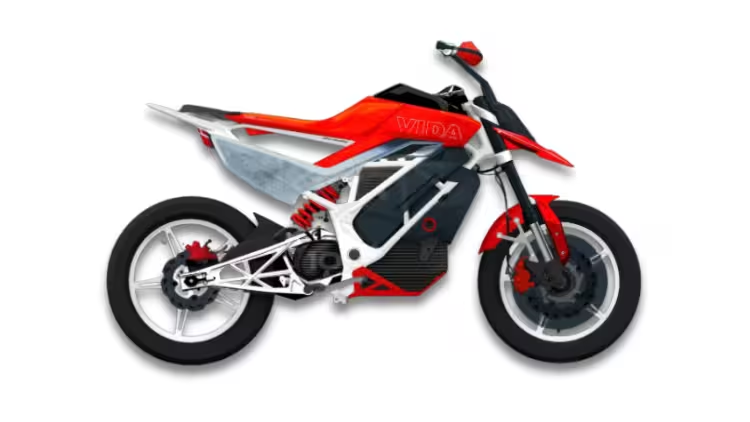
Vida Ubex – Urban Electric Supermoto
The Vida Ubex concept represents Hero’s first serious foray into the electric motorcycle segment, designed specifically for urban exploration. Drawing inspiration from supermoto styling, the Ubex addresses a critical gap in India’s electric two-wheeler market—the absence of performance-oriented electric motorcycles that appeal to enthusiast riders rather than just commuters.
Design and Engineering Philosophy
The Ubex features a distinctive supermoto-inspired design with aggressive proportions and purposeful stance. The mid-mounted electric motor configuration ensures optimal weight distribution, while the belt drive transmission delivers smooth, maintenance-free power delivery. Upside-down telescopic front forks signal serious performance intentions, suggesting the Ubex will offer genuine sporting credentials rather than just urban practicality.
Hero’s design team has focused on creating a motorcycle that looks desirable first and electric second—a crucial consideration for winning over traditional motorcycle enthusiasts skeptical of electric powertrains. The exposed frame elements and minimal bodywork celebrate the mechanical aspects of the design while emphasizing the bike’s urban agility credentials.
Target Market and Positioning
The Ubex concept targets young urban riders seeking emission-free performance without compromising on style or riding dynamics. This demographic values environmental responsibility but refuses to accept bland, appliance-like transportation. By offering supermoto styling and genuine performance, Hero aims to make electric motorcycles aspirational rather than purely practical purchases.
The production version, expected within 18-24 months, will likely compete in the premium electric motorcycle segment, positioning Hero against established players while leveraging the company’s extensive distribution network and competitive pricing capabilities inherited from parent company Hero MotoCorp.
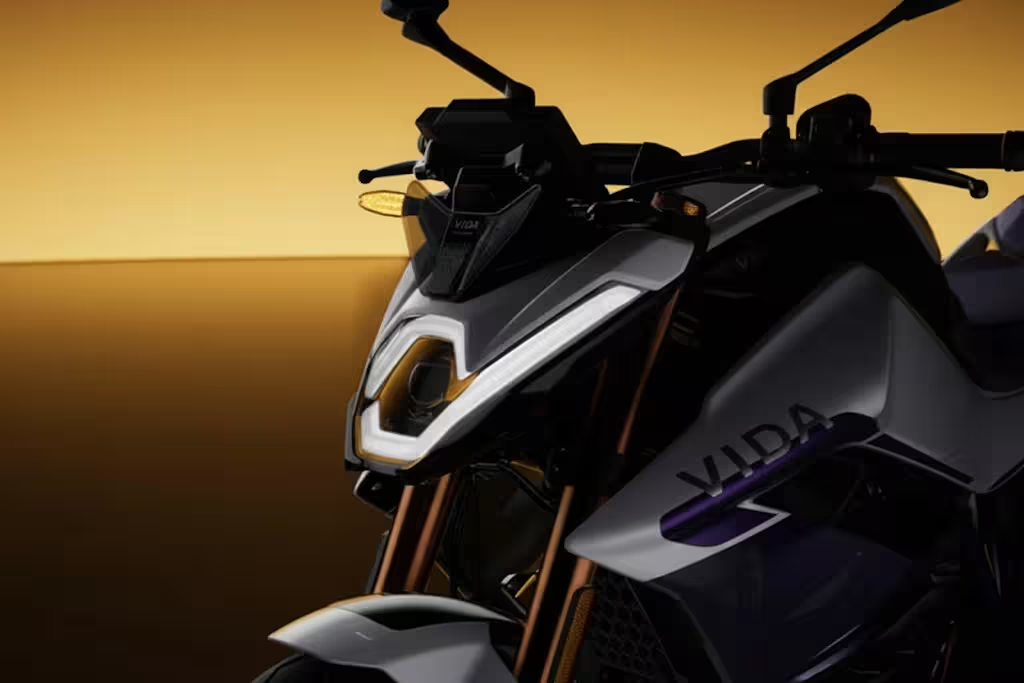
Vida VXZ – Zero Motorcycles Partnership
Perhaps the most significant announcement at EICMA 2025 was the Vida VXZ, developed in collaboration with Zero Motorcycles—the American company widely regarded as the global leader in electric motorcycle technology. This partnership represents a strategic alliance that combines Zero’s decade-plus experience in electric motorcycle development with Hero’s manufacturing scale and deep understanding of Asian markets.
Strategic Significance
The Zero Motorcycles collaboration provides Hero with immediate access to proven electric motorcycle technology, bypassing years of independent development. Zero’s expertise in battery management systems, motor control electronics, and thermal management will significantly accelerate Hero’s learning curve in the performance electric motorcycle segment.
For Zero Motorcycles, this partnership offers access to India’s massive two-wheeler market and Hero’s manufacturing capabilities, potentially enabling more competitive pricing than Zero could achieve independently. The relationship mirrors successful automotive partnerships where established manufacturers collaborate to share development costs while accessing complementary capabilities.
Expected Specifications and Timeline
While Hero has not disclosed detailed specifications for the VXZ, Zero Motorcycles’ existing platform suggests the bike will likely feature premium battery capacity delivering over 150 kilometers of real-world range, performance-oriented power delivery with multiple riding modes, and fast-charging capability compatible with Hero’s expanding charging infrastructure. Advanced electronics including traction control and ABS will be standard, alongside connected features with smartphone integration.
Production timeline remains undisclosed, but industry observers expect the VXZ to reach Indian markets by late 2026 or early 2027, following localization of components and regulatory approvals.
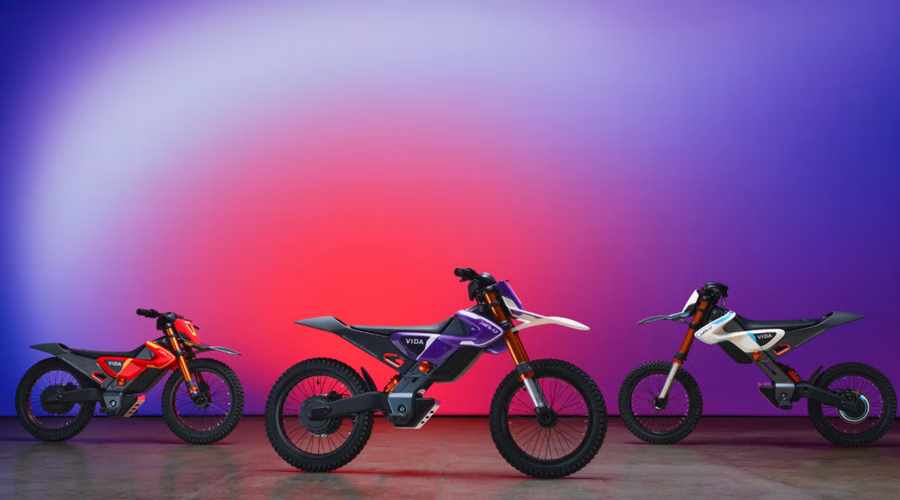
Vida Dirt-E Series: Democratizing Electric Off-Road Riding
Hero’s electric dirt bike concepts represent an entirely new category for the Indian market, where off-road motorcycling remains a niche pursuit despite growing interest in adventure riding.
Dirt-E K3 – Electric Dirt Bike for Young Riders
The Dirt-E K3 addresses the children’s electric dirt bike segment with thoughtful engineering designed to accommodate growing riders. The adjustable wheelbase and customizable rider triangle allow the bike to adapt as young riders develop their skills and physical dimensions, extending the product’s useful lifespan and improving value proposition for parents.
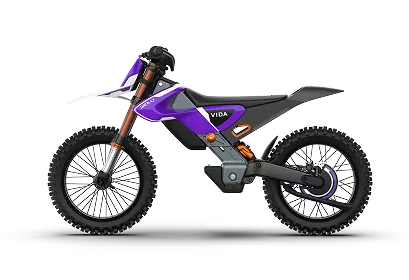
Market Opportunity
India’s growing middle class increasingly seeks recreational activities for children beyond traditional sports. Electric dirt bikes offer several compelling advantages over petrol-powered alternatives for young riders. The quieter operation reduces noise complaints and expands potential riding locations, while instant torque delivery simplifies rider skill development. Lower maintenance requirements and operating costs make ownership more practical, and adjustable power delivery enables progressive skill building as riders gain confidence. The zero-emissions operation addresses environmental concerns that matter to today’s parents.
The K3 targets riders aged 4-10 years, positioning itself as an introduction to motorcycling that builds skills and confidence in a controlled, safe manner. Expected pricing will be crucial—Hero must balance quality components with affordability to achieve meaningful market penetration.
Dirt-E MX7 – Full-Size Electric Dirt Bike
The MX7 represents Hero’s vision for adult electric off-road motorcycling, featuring lightweight carbon fiber frame construction that addresses one of electric motorcycles’ primary challenges—weight management. Carbon fiber construction, while expensive, delivers the structural rigidity required for aggressive off-road riding while minimizing overall mass.
Technical Considerations
Electric powertrains offer significant advantages for off-road riding that traditional combustion engines cannot match. The instant torque delivery improves traction on loose surfaces, while silent operation enables riding in noise-sensitive areas where traditional dirt bikes face restrictions. Eliminating clutch operation simplifies technical terrain navigation, allowing riders to focus on line choice and body positioning. Consistent power delivery regardless of altitude proves particularly valuable in mountainous terrain, and reduced mechanical complexity improves reliability in harsh off-road conditions.
However, challenges remain, including battery range limitations during extended trail rides and limited charging infrastructure in remote riding areas. Hero’s solution likely involves swappable battery technology, enabling riders to carry spare battery packs for extended adventures.

Vida Novus: Redefining Urban Mobility
Hero’s most radical EICMA 2025 concepts appeared under the Vida Novus sub-brand, showcasing the company’s ambitions beyond traditional two-wheelers.
Nex 1 – Smart Backpack Scooter
The Nex 1 portable electric scooter addresses last-mile connectivity challenges in India’s congested urban centers. The backpack-portable format enables seamless multimodal commuting—users can ride public transportation for the bulk of their journey, then deploy the Nex 1 for the final distance to their destination.
This concept targets professionals, students, and urban commuters seeking flexible mobility solutions that adapt to varying daily needs. The compact form factor and lightweight construction make it practical for apartment living and office storage, addressing space constraints common in Indian cities.
Nex 2 – Electric Trike
The three-wheeled electric scooter combines stability with urban manoeuvrability, potentially appealing to older riders, those with physical limitations, or riders seeking additional confidence in challenging traffic conditions. The trike configuration offers inherent stability that traditional two-wheelers cannot match, potentially expanding the addressable market to include demographics that find conventional motorcycles intimidating.
Nex 3 – Electric City Car
Hero’s most ambitious concept, the Nex 3 electric city car represents expansion beyond two-wheelers into four-wheeled micro-mobility. This tiny electric vehicle addresses urban congestion and parking challenges while providing weather protection and cargo capacity that two-wheelers cannot offer.
While production feasibility remains uncertain, the concept demonstrates Hero’s willingness to explore adjacent mobility categories. Success would require navigating automotive regulatory frameworks significantly more complex than two-wheeler regulations, and competing against established four-wheeler manufacturers with greater resources and expertise.
Strategic Implications for Hero MotoCorp
The Hero MotoCorp EICMA 2025 presentation made clear that Hero is positioning itself as a technology-driven mobility leader.
Market Leadership Positioning
By presenting a full spectrum of electric concepts—from children’s dirt bikes to performance motorcycles to urban mobility solutions—Hero signals its intention to lead India’s electric two-wheeler transformation rather than simply participate. This comprehensive approach contrasts with competitors focusing narrowly on electric scooters, potentially establishing Hero as the default electric mobility provider for Indian families seeking multiple electric vehicle solutions.
Technology Development Acceleration
The Zero Motorcycles partnership and diverse concept portfolio suggest Hero is aggressively investing in electric vehicle capabilities across battery technology, motor control systems, charging infrastructure, and vehicle integration. These investments position Hero to leverage economies of scale across multiple product lines, reducing per-unit development costs and enabling competitive pricing.
Infrastructure Commitment
Hero’s expanding charging network—currently exceeding 3,600 fast-charging stations across 100+ Indian cities—provides competitive advantage that startup electric vehicle manufacturers cannot match. This infrastructure investment addresses the primary consumer concern regarding electric vehicle adoption: charging availability and convenience.
Challenges and Execution Risks
Despite the impressive concept showcase, Hero faces significant challenges translating vision into market success.
Production Timeline Uncertainty
Concept vehicles often face extended development timelines before reaching production. Hero must balance thoroughness in development against market timing—delayed launches risk allowing competitors to establish positions in emerging segments.
Pricing Pressures
Indian consumers demonstrate extreme price sensitivity. Hero must deliver advanced technology at price points significantly below international markets, requiring aggressive localization and manufacturing efficiency improvements.
Consumer Acceptance
Electric motorcycles face skepticism from traditional motorcycle enthusiasts regarding range, performance, and riding experience. Hero must overcome these perceptions through exceptional products and extensive demonstration programs.
Charging Infrastructure Gaps
While Hero’s charging network is impressive, coverage remains concentrated in major urban centers. Expanding infrastructure to smaller cities and rural areas requires continued investment and partnership development.
Conclusion: Hero’s Electric Ambitions Take Shape
Hero MotoCorp’s EICMA 2025 presence establishes the company as a serious contender in India’s electric mobility transformation. The Vida brand evolution from electric scooter manufacturer to comprehensive electric mobility provider demonstrates strategic vision and commitment to leading market development rather than following competitors.
The success of these initiatives will depend on Hero’s execution capabilities—translating compelling concepts into production vehicles that deliver on performance promises while maintaining the affordability that Indian consumers demand. The Zero Motorcycles partnership, diverse product portfolio, and charging infrastructure investments provide Hero with advantages that position the company favorably against both established manufacturers and electric vehicle startups.
As India’s electric vehicle market matures, Hero’s comprehensive approach may prove prescient—offering families complete electric mobility solutions across use cases from children’s recreation to urban commuting to performance motorcycles. The EICMA 2025 showcase represents not just product launches, but Hero’s declaration of intent to shape India’s electric future.
Key Highlights from EICMA 2025:
The Vida Ubex electric supermoto targets urban performance riders seeking emission-free excitement, while the Vida VXZ developed with Zero Motorcycles brings proven global EV expertise to Indian markets. Hero’s Dirt-E K3 and MX7 electric dirt bikes expand recreational riding opportunities, and the innovative Vida Novus sub-brand introduces portable scooters, trikes, and micro cars for diverse urban needs. Supporting this ambitious portfolio is Hero’s network of over 3,600 charging stations, with production timelines expected between 2026 and 2027 for key models.
Note: For more updates from EICMA 2025, check out our full coverage of TVS Motor’s global debut with six revolutionary models at EICMA 2025