
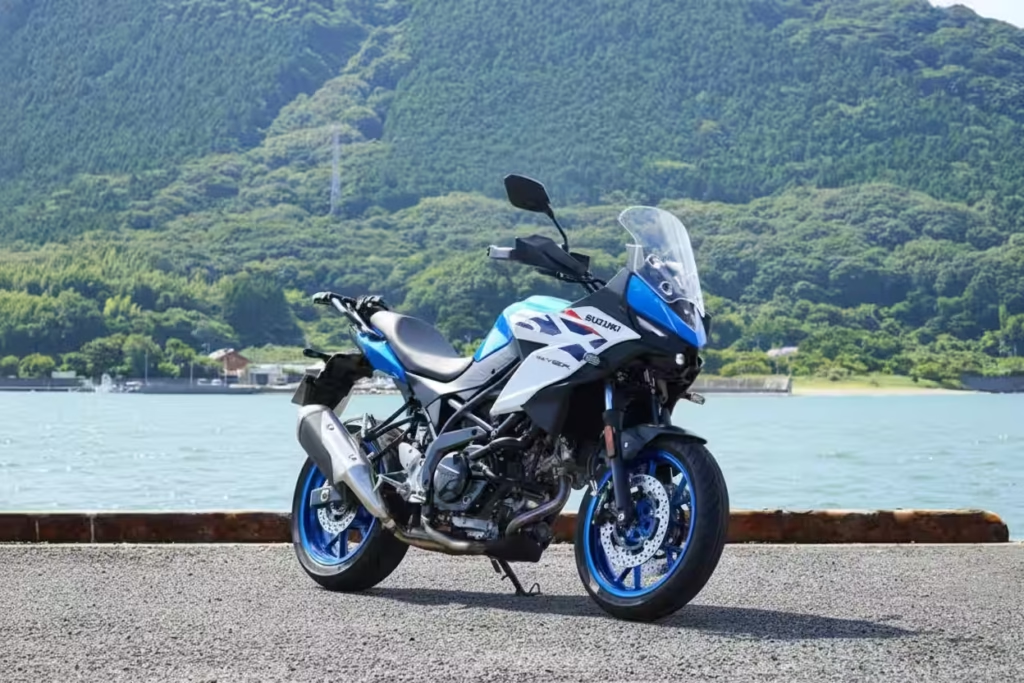
Suzuki SV-7GX: Milan, November 2025 – At EICMA 2025, Suzuki unveiled the SV-7GX, a middleweight crossover that makes a bold countercultural statement in an industry increasingly dominated by parallel-twin efficiency. By retaining the cherished 645cc V-twin engine from the legendary SV650 lineage while adding modern electronics and genuine touring capability, Suzuki has created something increasingly rare: a motorcycle with authentic character that doesn’t sacrifice contemporary expectations.
The Strategic Rationale Behind the Suzuki SV-7GX V-Twin Decision
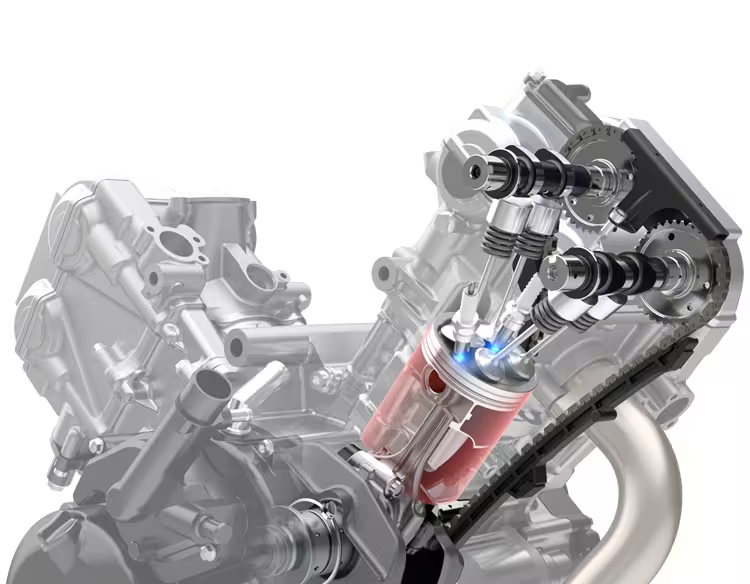
While competitors like Yamaha’s Tracer 7 and Honda’s NC750X have migrated toward parallel-twin configurations prioritizing efficiency and packaging, Suzuki recognized an opportunity in authenticity. The 90-degree V-twin’s uneven firing intervals create a mechanical character that resonates emotionally with riders in ways that smoothly efficient parallel twins cannot replicate. This decision reflects deeper understanding: in an increasingly homogenized market where algorithm-tuned performance profiles dominate, genuine mechanical personality offers competitive advantage.
The 645cc displacement represents deliberate positioning rather than arbitrary choice. This capacity delivers sufficient torque for confident highway cruising and spirited backroad riding while remaining accessible to developing riders and maintaining reasonable insurance classifications across global markets. The liquid-cooled architecture updated for Euro 5+ compliance produces 72 bhp at 8,500 rpm and 64 Nm at 6,800 rpm—figures that appear modest until understanding the torque delivery characteristics that define real-world performance.
Engineering Philosophy: Substance Over Specifications
Engineering Philosophy: Substance Over Specifications
Suzuki’s approach with the SV-7GX prioritizes usable performance over headline numbers. The four-stroke, two-cylinder, liquid-cooled 645cc DOHC engine with 81.0mm bore and 62.6mm stroke delivers 54 kW (72 bhp) at 8,500 rpm and 64 Nm at 6,800 rpm. The 11.2:1 compression ratio combined with fuel injection and transistorized electronic ignition ensures efficient combustion meeting Euro 5+ emissions standards at 97 g/km CO2.
The six-speed constant mesh transmission features a 2.088 primary reduction ratio (71/34) and 3.066 final reduction ratio (46/15). The bi-directional quickshifter enables clutchless up and down shifts. The slip-and-assist clutch prevents rear wheel hop during aggressive downshifts while reducing clutch lever effort.
Suzuki claims 23.8 km/l (4.2 L/100 km) under WMTC testing conditions with the 17.4-liter fuel tank. The 3.0-liter oil capacity uses wet sump lubrication.
Chassis Dynamics: Proven Architecture With Purpose
The steel trellis frame represents pragmatic engineering prioritizing real-world performance over exotic materials marketing. This architecture provides sufficient rigidity for spirited cornering while maintaining manageable weight distribution, with the 211 kg curb weight (465 lbs) positioning the SV-7GX as genuinely accessible—lighter than many adventure bikes yet substantial enough for stable highway cruising and two-up riding with luggage.
The overall dimensions measure 2,160mm length, 910mm width, and 1,295mm height, with the 1,445mm wheelbase striking an ideal balance between stability and agility. The 795mm seat height remains accessible for average-height riders while providing adequate ground clearance of 135mm for varied road conditions.
Suspension geometry reflects touring intent without sacrificing responsive handling. The telescopic, coil spring, oil-damped front fork and link-type rear monoshock with coil spring, oil damping, and spring preload adjustability constitute honest, proven hardware rather than electronically adjustable complexity. The 25-degree rake combined with 106mm trail creates neutral steering characteristics that inspire confidence across varying speeds and surface conditions.
Braking duties fall to twin disc front brakes paired with a single rear disc, providing progressive stopping power with excellent feel and modulation. The 17-inch wheel sizing offers compelling advantages: more nimble than 18-inch alternatives common on larger adventure bikes, yet providing better bump absorption and tire availability than 16-inch configurations. Factory-fitted 120/70ZR17M/C (58W) tubeless front and 160/60ZR17M/C (69W) tubeless rear tires deliver impressive grip longevity and wet-weather confidence appropriate for mixed touring duties.
Electronics Suite: Modern Without Overwhelming
The Suzuki Intelligent Ride System (S.I.R.S.) package elevates the SV-7GX’s appeal significantly without overwhelming riders seeking mechanical engagement. Three power modes adjust throttle response for varying road conditions and rider confidence levels, while the three-level traction control system (plus full-off option) represents careful calibration providing safety intervention without intrusive nanny-state behavior that disconnects riders from the experience.
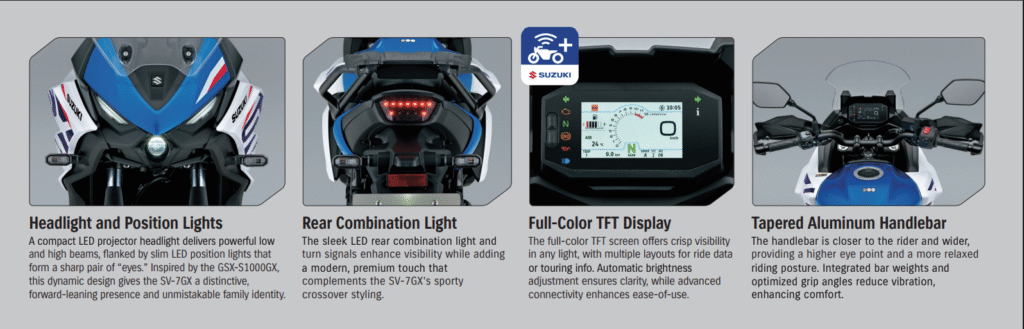
The 4.2-inch full-color TFT display provides crisp visibility across lighting conditions, while Suzuki Ride Connect+ smartphone integration offers navigation, call and message management, and real-time performance telemetry. USB-C charging addresses a practical gap many competitors overlook, ensuring modern connectivity standards without requiring aftermarket solutions. Six-axis ABS incorporating brake-by-wire technology optimizes stopping power distribution across varying surface conditions and lean angles.
Design Language: Purposeful Aggression Meets Approachability
Aesthetically, the SV-7GX borrows muscular cues from Suzuki’s larger GSX-S1000GX while maintaining approachability through proportions that communicate capability without intimidation. The compact LED projector headlight flanked by slim LED position lights forms a sharp “eyes” inspired design that creates an unmistakable family identity. The dynamic design gives the SV-7GX a distinctive forward-leaning presence establishing visual authority in its segment.
The sleek LED rear combination light and turn signals enhance visibility while adding a modern premium touch that complements the crossover styling. The sculpted fuel tank delivers purposeful silhouette without sacrificing ergonomic comfort, while the 795mm seat height remains accessible for average-height riders. The slim midsection and 795mm seat height ensure easy reach to the ground, while thicker contoured cushioning enhances comfort for both rider and passenger on longer journeys.
The tapered aluminum handlebar positions closer to the rider and wider than traditional sport bikes, providing a higher eye point and more relaxed riding posture. Integrated bar weights and optimized grip angles reduce vibration while enhancing comfort during extended riding sessions. Integrated knuckle covers enhance comfort and style while deflecting wind and debris, while the three-position 50mm adjustable windscreen allows tailored wind protection for various riders.
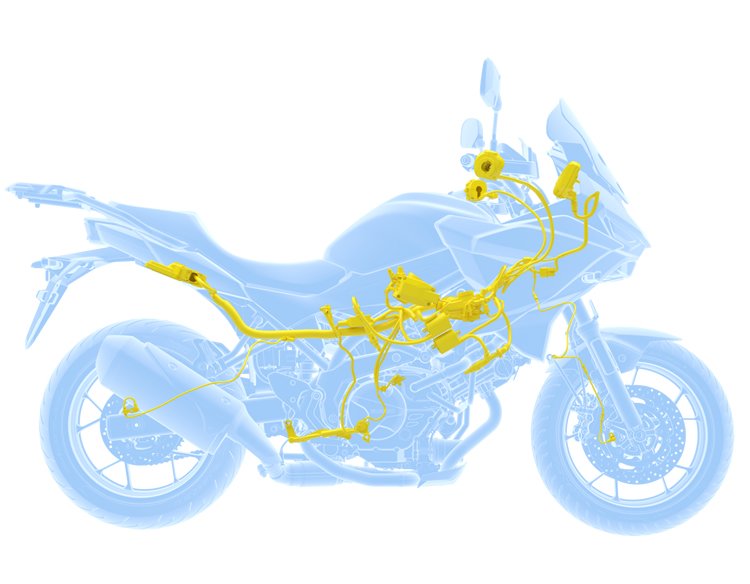
Crucially, Suzuki resisted modern tendencies toward excessive height and weight. The proportions feel intentional rather than compromised—a motorcycle designed for genuine all-day utility rather than aspirational posturing. The standard rear carrier with integrated grab rails adds touring utility and passenger comfort, while thoughtful cable routing accommodates aftermarket accessories, suggesting Suzuki’s understanding of how riders actually customize and use middleweight motorcycles beyond showroom specifications.
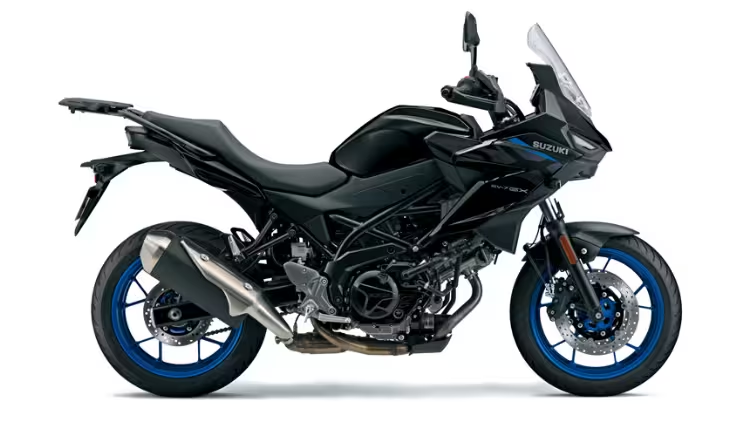
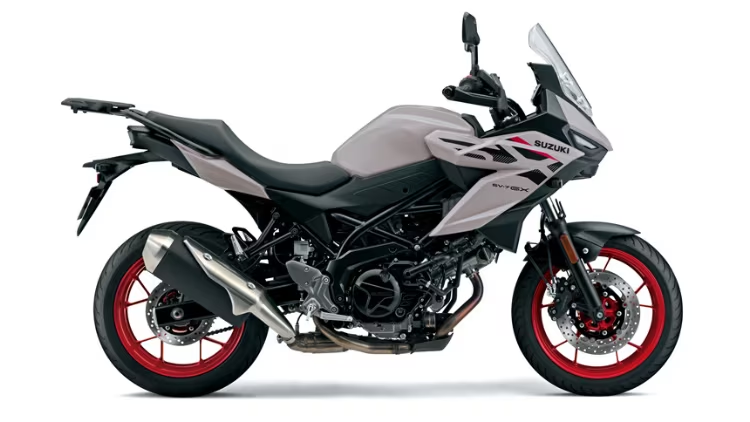
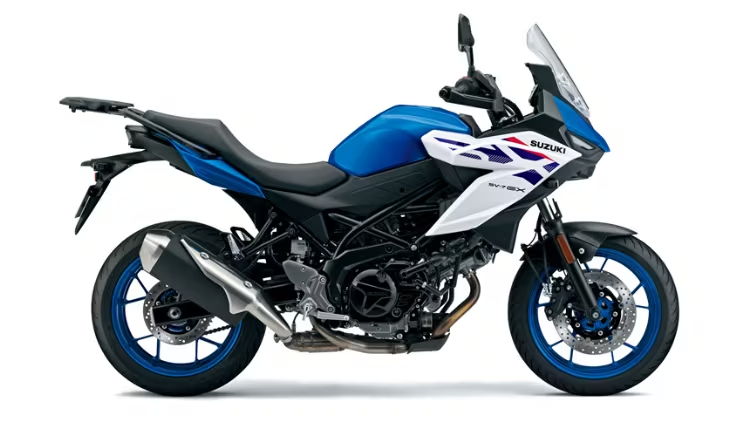
Suzuki SV-7GX Colors
Touring Credentials: Genuine Distance Capability
Unlike aesthetic adventure bikes offering token touring provisions, the SV-7GX commits meaningfully to distance riding. The three-position 50mm adjustable windscreen provides measurable buffeting reduction rather than cosmetic protection, while the ergonomic seat with thicker contoured padding balances reasonable cushioning with supportive geometry preventing premature fatigue during extended riding. The slim midsection combined with the 795mm seat height ensures easy ground reach while maintaining comfort.
The tapered aluminum handlebar positioning closer to the rider and wider than sport bikes creates a higher eye point with more relaxed riding posture. Integrated bar weights and optimized grip angles reduce vibration, enhancing comfort during long highway stretches. The integrated knuckle covers enhance comfort and style while deflecting wind and debris—thoughtful details that improve the touring experience without adding complexity.
The standard rear carrier with integrated grab rails accommodates top boxes and side bags without structural compromise or visual awkwardness, adding genuine touring utility and passenger comfort. These practical considerations combined with the 17.4-liter fuel capacity, modest 211 kg weight, and V-twin engine’s torque characteristics create a motorcycle genuinely capable of multi-day journeys without requiring dedicated adventure bike dimensions or compromised sporting intent.
The full-color TFT screen offers crisp visibility in any light with multiple layouts for ride data or touring information. Automatic brightness adjustment ensures clarity while advanced connectivity enhances ease-of-use. The SV-7GX doesn’t pretend to be an off-road capable adventure machine—it honestly presents as a sport-touring crossover optimized for tarmac confidence with reasonable capability on maintained gravel roads.
Competitive Positioning and Market Context
The middleweight crossover segment has become intensely competitive, with manufacturers recognizing the growing demographic seeking versatile motorcycles balancing sporting engagement with practical touring capability. Against the Yamaha Tracer 7, the SV-7GX offers superior mechanical character and more intuitive handling dynamics at competitive pricing. Versus the Honda NC750X, it delivers genuine sporting intent and emotional engagement the Honda’s efficiency-focused parallel twin cannot match. Against the Kawasaki Versys 650, it provides comparable capability while maintaining more accessible ergonomics and contemporary electronics.
The SV-7GX isn’t positioned for riders seeking cutting-edge electronically adjustable suspension, exotic materials, or maximum displacement bragging rights. Rather, it targets the demographic that originally embraced the SV650: enthusiasts valuing engagement, honest design, and practical performance over specification sheet theater or brand prestige positioning.
India Launch Prospects: Analyzing Feasibility
For Indian enthusiasts, the SV-7GX represents compelling prospects based on multiple favorable factors. Suzuki’s established middleweight presence through the V-Strom 650XT demonstrates manufacturing capability and dealer network readiness, while growing appetite for authentic sport-touring machines creates receptive market conditions. The motorcycle’s accessible positioning—expected pricing aligning with ₹8.5-9.5 lakh ex-showroom territory based on V-Strom 650XT pricing precedent—would undercut pure adventure bikes while offering genuine sporting engagement absent in most mass-market offerings.
Manufacturing considerations favor localization through CKD assembly via Suzuki’s existing Indian facilities, reducing import tax burden and enabling competitive pricing. The V-Strom 650XT’s market acceptance proves Indian buyer appetite for middleweight touring motorcycles, while the SV-7GX’s sportier positioning and more accessible ergonomics could expand addressable demographics beyond adventure bike enthusiasts.
Suzuki’s official communications reference sequential global launches prioritizing North America and Europe for calendar year 2026. Indian regulatory approval timelines typically align with European certification schedules, suggesting Q4 2026 or Q1 2027 launch feasibility. The variable isn’t manufacturing capability or regulatory compliance—it’s commercial prioritization balancing global demand against production capacity constraints during initial rollout phases.
However, considering India’s strategic importance to Suzuki’s two-wheeler business and the SV-7GX’s alignment with premium segment growth trends, Indian launch probability sits comfortably above 70 percent within 18 months following initial global market introduction. The combination of favorable market conditions, existing infrastructure, and product-market fit creates compelling business case for Indian market entry.
Comparative Analysis: Key Specifications
Understanding the SV-7GX’s competitive positioning requires context against direct segment rivals:
Engine Configuration: The SV-7GX’s 645cc 90-degree V-twin contrasts with the Tracer 7’s 689cc parallel twin, NC750X’s 755cc parallel twin, and Versys 650’s 649cc parallel twin. While competitors offer marginal displacement advantages, the V-twin’s torque characteristics and mechanical character provide qualitative differentiation.
Weight and Dimensions: At 211 kg, the SV-7GX matches or undercuts most competitors while maintaining the 17.4-liter fuel capacity and 795mm seat height that balance accessibility with capability. The 1,445mm wheelbase positions between sport-focused and touring-optimized alternatives.
Electronics Package: The S.I.R.S. system with three power modes, three-level traction control, bi-directional quickshifter, and comprehensive connectivity matches or exceeds competitor offerings while maintaining intuitive operation avoiding overwhelming complexity.
Real-World Riding Considerations
Beyond specifications and feature lists, the SV-7GX’s appeal centers on experiential qualities difficult to quantify. The V-twin engine’s character creates emotional connection during everyday riding that parallel twins often lack despite superior efficiency metrics. The accessible ergonomics accommodate diverse rider sizes and experience levels without compromising sporting intent. The proven chassis architecture delivers predictable handling building rider confidence across varying road conditions and skill development stages.
For Indian riding conditions specifically, the ground clearance accommodates deteriorating road surfaces common outside major highways, while the suspension tuning balances comfort for passenger and luggage accommodation with adequate stiffness for spirited riding. The fuel capacity and efficiency combination suits India’s highway infrastructure where fuel station spacing can vary significantly, while the modest weight facilitates urban maneuvering through congested traffic patterns.
Conclusion: Authenticity in the Modern Middleweight Segment
The Suzuki SV-7GX succeeds because it understands fundamental truth: not all advancement involves additional cylinders, exotic materials, or maximum displacement. Sometimes evolution means refining proven architecture, integrating electronics where they genuinely improve experience, and respecting rider engagement above specification sheet positioning.
For motorcyclists inhabiting the premium middleweight space globally and particularly in India, the SV-7GX represents accessible aspiration—genuine sporting capability, authentic mechanical character, and practical touring provision without excessive complexity or unjustifiable cost. The question isn’t whether the SV-7GX deserves consideration in middleweight hierarchies—it demonstrably does. For Indian enthusiasts, the relevant question is timing: when rather than whether Suzuki will recognize and capitalize on this market opportunity.
The motorcycle’s credentials, market appetite, and Suzuki’s infrastructure all suggest affirmative answer. The SV-7GX embodies what middleweight crossovers should deliver: honest performance, genuine character, and practical versatility without pretension or compromise. In an increasingly homogenized market, that authenticity carries premium value.
Suzuki SV-7GX Complete Specifications:
Engine:
- Type: 4-stroke, 2-cylinder, liquid-cooled, DOHC
- Displacement: 645 cm³ (39.4 cu. in)
- Bore × Stroke: 81.0mm × 62.6mm (3.2 in × 2.5 in)
- Compression Ratio: 11.2:1
- Maximum Output: 54 kW/8500 rpm (72 bhp @ 8,500 rpm)
- Maximum Torque: 64 Nm/6800 rpm
- Fuel System: Fuel Injection
- Ignition System: Transistorized electronic ignition
- Starter System: Electric
- Lubrication System: Wet sump
Drivetrain:
- Transmission: 6-speed constant mesh
- Primary Reduction Ratio: 2.088 (71/34)
- Final Reduction Ratio: 3.066 (46/15)
Dimensions:
- Overall Length: 2,160mm (85.0 in)
- Overall Width: 910mm (35.8 in)
- Overall Height: 1,295mm (51.0 in)
- Wheelbase: 1,445mm (56.9 in)
- Ground Clearance: 135mm (5.3 in)
- Seat Height: 795mm (31.3 in)
- Curb Weight: 211 kg (465 lbs)
Chassis:
- Suspension Front: Telescopic, coil spring, oil damped
- Suspension Rear: Link type, coil spring, oil damped, spring preload adjustable
- Rake/Trail: 25° / 106mm (4.2 in)
- Brakes Front: Disc, twin
- Brakes Rear: Disc
- Tires Front: 120/70ZR17M/C (58W), tubeless
- Tires Rear: 160/60ZR17M/C (69W), tubeless
Capacities:
- Fuel Tank Capacity: 17.4 L (4.5/3.8 US/Imp gal)
- Oil Capacity (overhaul): 3.0 L (3.2/2.6 US/Imp qt)
- Fuel Consumption: 23.8 km/L (4.2 L/100 km) in WMTC
- CO2 Emissions: 97 g/km
Colors Available:
- Pearl Brilliant White / Metallic Triton Blue (BQJ)
- Pearl Matte Greige (Q2A)
- Glass Sparkle Black (YVB)
Expected India Pricing: ₹8.5-9.5 lakh (ex-showroom, estimated based on CKD assembly)
Expected India Launch: Q4 2026 or Q1 2027
Source: Suzuki Motor Corporation | EICMA 2025 Official Unveiling
Also read: BMW F 450 GS unveiled at EICMA 2025 – full specifications and global launch details to see how BMW’s all-new single-cylinder adventure bike compares in performance and design focus.