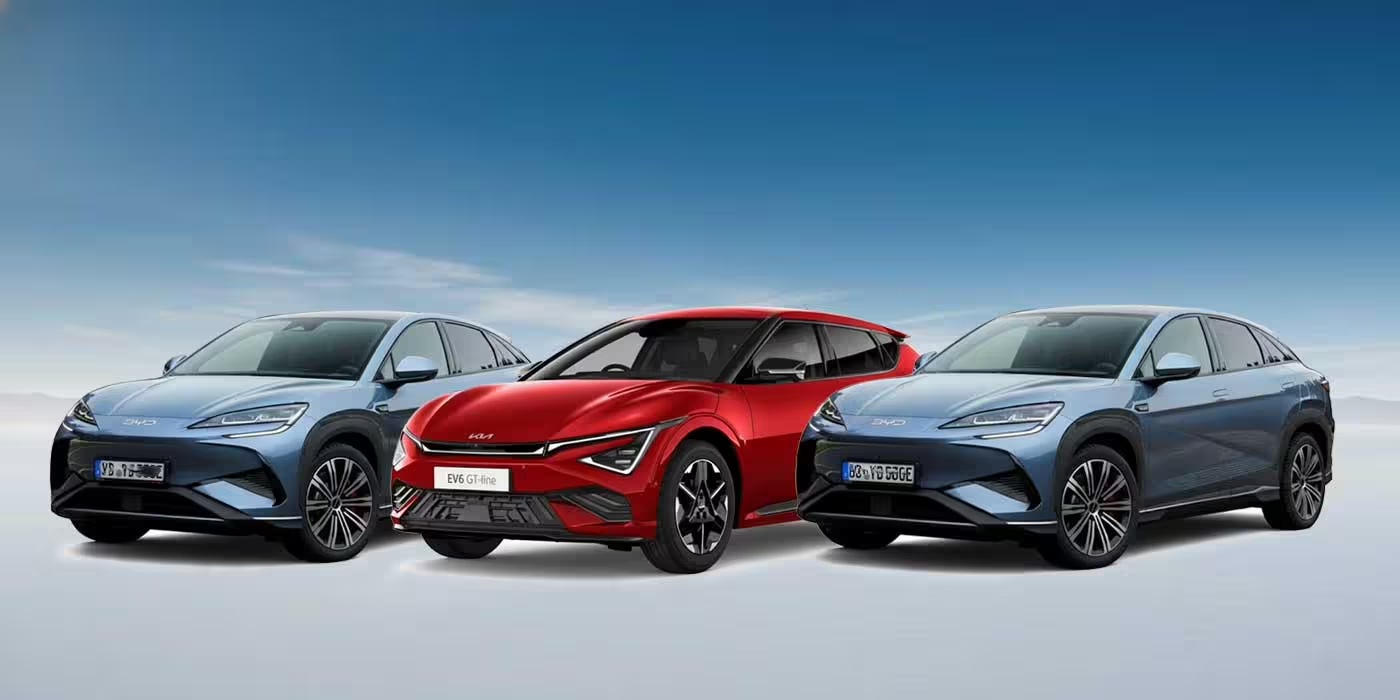
BYD Sealion 7 vs Kia EV6 vs Hyundai Ioniq 5 – this comparison shows how these three premium electric SUVs stack up in pricing, features, and real-world performance.
India’s electric SUV market is getting crowded, and that’s excellent news if you’re shopping with ₹45-65 lakh burning a hole in your pocket. Three names keep popping up in premium EV conversations: the newcomer BYD Sealion 7, the established Kia EV6, and the design-forward Hyundai Ioniq 5. Each brings something different to the table, and honestly, picking between them isn’t as straightforward as you’d think.
Let me be upfront here. The Indian EV market grew 58% in April 2025 alone, crossing 12,330 units. We’re not talking about some niche segment anymore. This is mainstream territory now, with proper competition forcing brands to sharpen their pencils. And when three compelling electric SUVs sit within ₹20 lakh of each other, things get interesting.
What’ll It Cost You?
Here’s where your wallet takes the first hit, and the numbers tell an interesting story. The Hyundai Ioniq 5 starts at ₹46.05 lakh, making it the most affordable entry point. The BYD Sealion 7 ranges between ₹48.90-54.90 lakh for its Premium and Performance variants. The Kia EV6 sits at the top, commanding ₹65.97 lakh.
That’s nearly ₹20 lakh separating the cheapest from the priciest. Think about what that money represents. The price gap between the Ioniq 5 and EV6 could fund a decent hatchback. Yet these are platform siblings sharing the same E-GMP architecture. Makes you wonder what justifies that premium, doesn’t it?
The Sealion 7’s positioning feels calculated. BYD’s sliding in just above Hyundai while undercutting Kia by over ₹11 lakh. Smart move for a Chinese brand still building trust in India. Even the top-spec Performance variant of the Sealion 7 costs ₹6 lakh less than the base EV6. That’s not pocket change.
Size, Space, and Presence: BYD Sealion 7 vs Kia EV6 vs Hyundai Ioniq 5
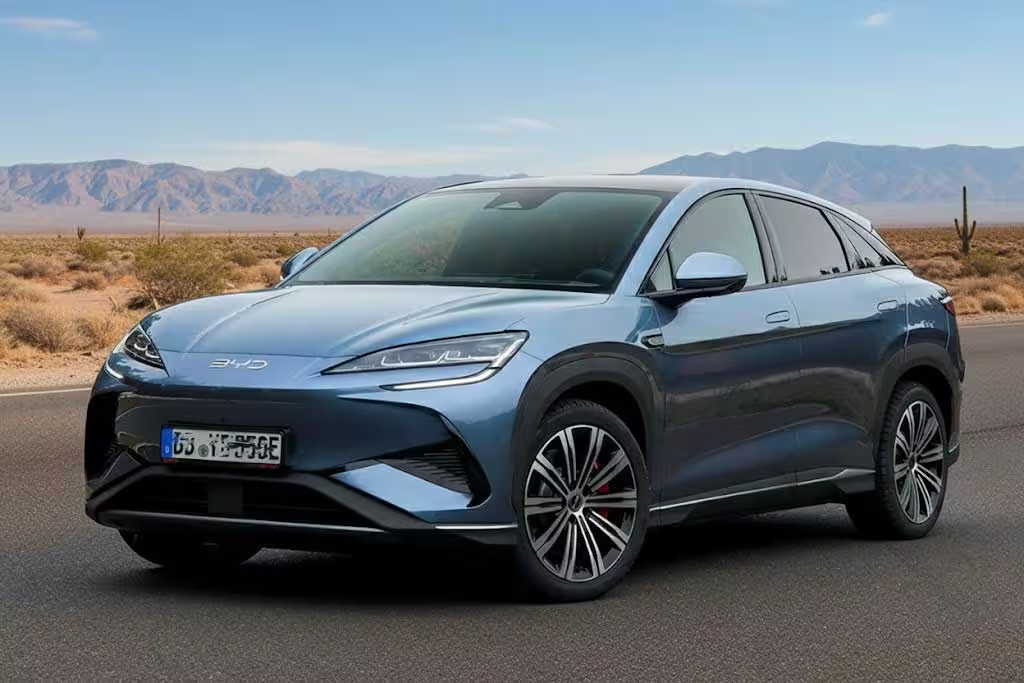
Numbers on paper never tell the full story, but they’re a starting point. The Sealion 7 stretches longest and widest at 4,830mm length and 1,925mm width. It exceeds the Ioniq 5 by 195mm in length and both rivals by 35mm in width. When you park these three together, the BYD looks properly substantial.
But here’s the twist. The Ioniq 5 has the longest wheelbase at 3,000mm, followed by the Sealion 7 at 2,930mm and the EV6 at 2,900mm. Wheelbase matters more than overall length for rear legroom, and Hyundai’s stretched those rear seats beautifully. If you’re frequently chauffeured or have tall teenagers, this detail matters.
Ground clearance brings another consideration. The Sealion 7 sits at 170mm, while the EV6 offers 178mm. Not massive differences, but Indian roads being what they are, every millimeter helps when you’re navigating that badly maintained stretch near your home.
Boot space? The Ioniq 5 and EV6 both offer 520 liters, while the Sealion 7 provides 500 liters. Marginal differences that won’t matter unless you’re regularly hauling furniture. All three handle weekend luggage comfortably.
Power Games: Who’s Quickest?
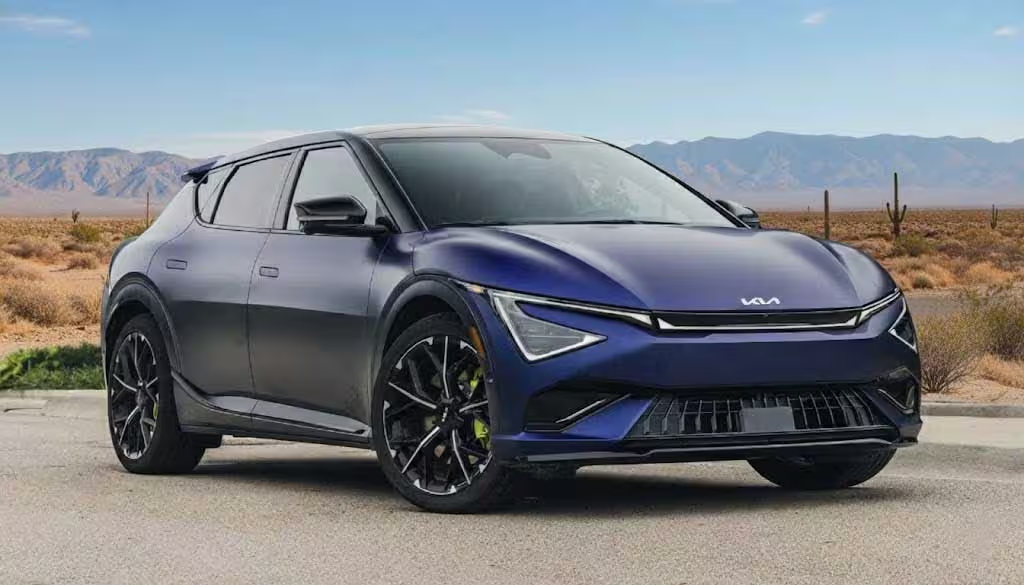
This is where things get properly interesting. The Sealion 7’s Performance variant with its 82.56kWh battery and dual-motor setup produces 530hp and 690Nm, rocketing from 0-100kph in just 4.43 seconds. That’s genuinely quick. Supercar-embarrassing quick. The shove-you-back-in-your-seat kind of acceleration that makes EV skeptics grin involuntarily.
The Kia EV6’s dual-motor AWD configuration delivers 325PS and manages 0-100kph in 5.3 seconds. Still rapid by any conventional measure, though clearly a step behind the Chinese newcomer. The EV6 feels more composed and mature in its power delivery, less dramatic but more daily-drivable.
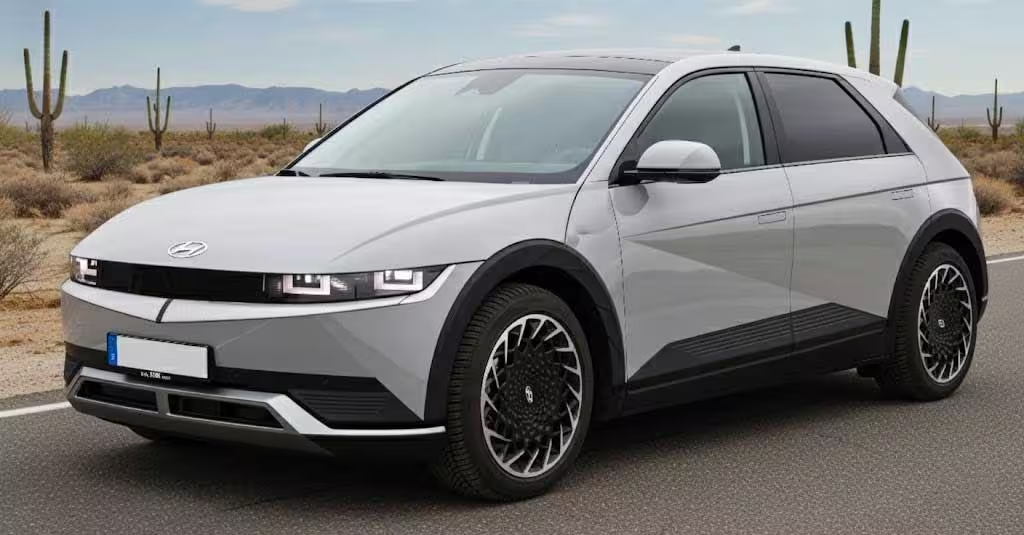
Now the Ioniq 5 takes a different approach entirely. It only comes in RWD configuration with 217PS, completing the sprint in 7.6 seconds. That’s nearly 3 seconds slower than the Sealion 7. In the real world, 7.6 seconds still feels brisk. But if outright acceleration thrills matter to you, the Ioniq 5 isn’t playing that game.
Here’s my take: unless you’re regularly launching at traffic lights, the Ioniq 5’s performance suffices. It’s quick enough for every practical scenario. The Sealion 7’s Performance variant exists for those who want their electric SUV to embarrass sports cars at the lights. Different strokes.
Battery and Range: The Numbers That Actually Matter
Range anxiety remains real, even as charging infrastructure improves. The EV6 leads with 663km from its 84kWh battery, followed by the Ioniq 5’s 631km from a 72.6kWh pack. The Sealion 7 manages 456-482km from its 82.56kWh battery.
Wait, hold on. The Sealion 7 has the second-largest battery but the shortest range? That’s the AWD performance penalty and WLTP vs MIDC testing cycle differences at play. Real-world figures will vary anyway depending on your driving style, climate control usage, and whether you’re stuck in Mumbai traffic or cruising on the expressway.
All three support 800V architecture and fast charging. The EV6 and Ioniq 5 can charge from 10-80% in just 18 minutes with a 350kW charger. The Sealion 7 supports up to 150kW charging, managing 10-80% in 24 minutes. Six minutes longer isn’t deal-breaking. Finding a 350kW charger in India? That’s the actual challenge. Most fast chargers max out around 60-120kW anyway.
Efficiency-wise, the Ioniq 5 impresses by extracting 631km from just 72.6kWh. That’s smart battery management and aerodynamics working together. If you’re conscious about energy consumption and charging costs, this matters.
Tech, Features, and Daily Living: BYD Sealion 7 vs Kia EV6 vs Hyundai Ioniq 5
Step inside, and each cabin tells a different story about priorities and philosophy.
The Sealion 7 dominates with its massive 15.6-inch rotating touchscreen, flanked by a 10.25-inch digital cluster. It packs a 12-speaker Dynaudio system, 4-way powered lumbar adjustment, genuine leather seats, and NFC card key. That rotating screen is a party trick initially, then becomes genuinely useful. Portrait mode for navigation, landscape for media. Clever.
The Ioniq 5 and EV6 both sport dual 12.3-inch screens. The EV6 adds a 14-speaker Meridian premium audio system, 10-way adjustable seats with memory, heated steering wheel, and 64-color ambient lighting. The Kia feels more polished, more premium in its execution. Everything works smoothly, and the interface responds instantly.
The Ioniq 5 gets an 8-speaker Bose system, heated ORVMs, heated rear seats, panoramic sunroof, and that quirky vehicle-to-load function. The V2L feature turns your car into a 3.6kW power outlet. Camping trips, outdoor events, emergency power during outages. It’s more useful than you’d initially think.
All three offer Level 2 ADAS suites with adaptive cruise control, lane-keeping assist, collision mitigation, and parking assistance. Safety tech is comprehensive across the board. But here’s where BYD flexes: 11 airbags in the Sealion 7 versus 8 in the EV6 and 6 in the Ioniq 5. More isn’t always better, but it signals commitment to occupant protection.
Real-World Ownership Reality
Let’s talk about the stuff brochures don’t emphasize. BYD India sold 2,448 units in the first six months of 2025, growing 137% year-on-year. Their network is expanding, though still limited compared to Hyundai and Kia. Service centers matter when something goes wrong. Finding a BYD workshop in smaller cities remains challenging.
Hyundai and Kia benefit from established networks. You’re never far from an authorized service center. Resale value? The Korean twins hold value better simply because buyers trust known quantities. The BYD badge still carries some skepticism in Indian minds, fairly or not.
Range in actual conditions deserves honest discussion. Expect about 400-450km from any of these in mixed driving. Highways with gentle right foot? You’ll approach claimed figures. Mumbai traffic with AC blasting? Cut those numbers by 25-30%. That’s just EV reality, not specific to these models.
Specifications Comparison Table: BYD Sealion 7 vs Kia EV6 vs Hyundai Ioniq 5
| Specification | BYD Sealion 7 | Kia EV6 | Hyundai Ioniq 5 |
|---|---|---|---|
| Price | ₹48.90-54.90 L | ₹65.97 L | ₹46.05 L |
| Dimensions (L×W×H) | 4830×1925×1620mm | 4695×1890×1570mm | 4635×1890×1625mm |
| Wheelbase | 2930mm | 2900mm | 3000mm |
| Battery | 82.56 kWh | 84 kWh | 72.6 kWh |
| Range | 456-482 km | 663 km | 631 km |
| Power (RWD) | 308 bhp | 229 PS | 217 PS |
| Power (AWD) | 523 bhp | 325 PS | Not Available |
| 0-100 kph | 4.43s (AWD) | 5.3s | 7.6s |
| Fast Charging | 150 kW | 350 kW | 350 kW |
| Boot Space | 500 L | 520 L | 520 L |
| Airbags | 11 | 8 | 6 |
| Infotainment | 15.6″ rotating | Dual 12.3″ | Dual 12.3″ |
| Audio System | 12-speaker Dynaudio | 14-speaker Meridian | 8-speaker Bose |
| Sunroof | Standard | Standard | Panoramic Glass Roof |
| ADAS | Level 2 | Level 2 | Level 2 |
Who Should Actually Buy What?
Let’s cut through the marketing speak. The Sealion 7 offers the most value for buyers wanting performance, features, and presence. It combines power, technology, and competitive pricing. You’re getting supercar acceleration, extensive features, and distinctive styling. The catch? BYD’s network isn’t as mature, and long-term reliability remains unproven in Indian conditions. Buy this if you’re comfortable being an early adopter and have service access nearby.
The EV6 costs significantly more but delivers the longest 663km range, 800V ultra-fast charging capability, and Kia’s reputation for quality. You’re paying ₹11-20 lakh extra for peace of mind, established service network, and better resale prospects. Makes sense if you’re doing frequent long drives, can afford the premium, and want the luxury experience without compromise.
The Ioniq 5 at ₹46.05 lakh represents the smartest buy for most buyers, offering excellent efficiency, practical features, unique design, and established brand support. Sure, it’s slower and RWD-only. But it’s also ₹20 lakh cheaper than the EV6 while sharing the same fundamental architecture. That money saved funds a lot of charging sessions or even a second vehicle.
The Market Context Nobody Talks About
India’s premium EV segment is exploding. Electric passenger vehicle sales jumped 53% to 74,539 units in the first half of 2025. Luxury EV sales specifically grew 66% to 2,027 units. This isn’t some distant future. It’s happening now.
What’s driving this? Government reduced GST on EVs to 5%, charging infrastructure expanded nearly fivefold from FY22 to FY25, and automakers launched compelling products. The ecosystem is maturing rapidly. Range anxiety is becoming less of a concern as charging points multiply.
But here’s the reality check: India’s EV sales penetration remains around 2-4% of total vehicle sales. We’re still in early adopter territory. Buying a premium electric SUV today means accepting some compromises. Charging takes longer than filling fuel. Road trips require planning. Extreme temperatures affect range noticeably.
The flip side? You’re future-proofing your purchase. Petrol prices only go one direction. Emission norms tighten constantly. Several cities are discussing congestion charges with EV exemptions. Early adoption has advantages beyond the environmental angle.
FAQs
Which is the cheapest among these three electric SUVs? The Hyundai Ioniq 5 at ₹46.05 lakh is the most affordable, making it ₹2.85 lakh cheaper than the base Sealion 7 and nearly ₹20 lakh less than the Kia EV6.
Which EV offers the longest driving range? The Kia EV6 leads with 663km ARAI-certified range from its 84kWh battery, followed by the Ioniq 5 at 631km and the Sealion 7 at 456-482km depending on variant.
Which electric SUV is the most powerful? The BYD Sealion 7 Performance AWD variant produces 523 bhp and 690 Nm, making it significantly more powerful than both Korean rivals. It accelerates from 0-100kph in just 4.43 seconds.
How long does it take to charge these EVs? With compatible fast chargers, the EV6 and Ioniq 5 charge from 10-80% in 18 minutes using 350kW chargers. The Sealion 7 takes 24 minutes with 150kW charging. Real-world charging speeds depend on available infrastructure.
Which has the best safety features? The BYD Sealion 7 offers 11 airbags, the highest in this segment. All three include comprehensive Level 2 ADAS suites with collision mitigation, lane-keeping, and adaptive cruise control.
Are service networks adequate for these EVs? Hyundai and Kia have established networks across India with hundreds of service centers. BYD’s network is expanding but currently limited to major cities, which may concern buyers in smaller towns.
What’s the real-world range I can expect? Expect 400-450km in mixed driving conditions with AC usage. Highway cruising with a gentle right foot can approach claimed figures. City traffic with climate control reduces range by 25-30%.
Which EV offers the best value for money? The Hyundai Ioniq 5 provides the best value proposition with competitive pricing, solid range, comprehensive features, and established brand support. The Sealion 7 offers better value in terms of performance and features per rupee spent, while the EV6 justifies its premium with longest range and luxury positioning.
Also Read: Tata Sierra vs Hyundai Creta: Can the Reborn Icon Dethrone the Segment King?