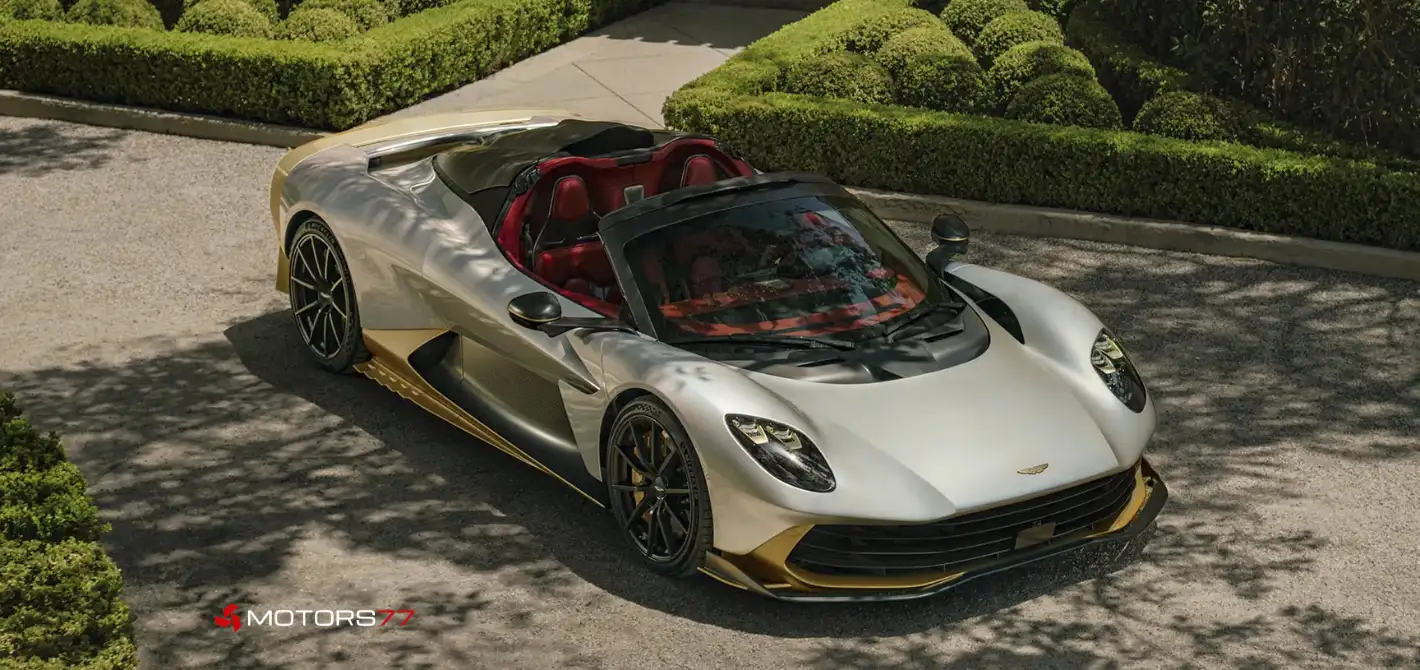
The Aston Martin Valhalla Spider is the fastest open cockpit car Gaydon has ever built, and it reaches its 350 km/h electronically limited top speed with the roof removed. Revealed on 28 October 2026 ahead of its public debut at the Concours at Wynn Las Vegas, the open version of the Valhalla keeps the coupe’s 1,079PS plug in hybrid powertrain, its carbon fibre tub and its active aerodynamics. Customer deliveries begin in Q3 2027.
Key takeaways
- The Aston Martin Valhalla Spider produces 1,079PS and 1,100 Nm, identical to the Valhalla Coupe.
- Top speed is 350 km/h roof off or with the optional carbon fibre hard top; the standard fabric roof is rated for up to 200 km/h.
- Downforce exceeds 600 kg with the roof fitted.
- Deliveries start in Q3 2027.
Full Top Speed, No Roof Required
Most convertibles ask the buyer to accept a trade: the roof comes off and the top speed quietly falls. Aston Martin’s own Valkyrie Spider followed that rule: its official top speed is over 350 km/h with the roof on, but over 300 km/h with the roof removed.
The Aston Martin Valhalla Spider breaks that pattern. Aston Martin states that the car can reach its full 350 km/h Vmax with nothing above the occupants’ heads. That single claim is the most important number in the announcement.
What Exactly Is the Aston Martin Valhalla Spider?
Valhalla Coupe deliveries began in Q4 2025 and continued through 2026. The Coupe arrived as a string of firsts for the brand: the first production mid engined Aston Martin, the first plug in hybrid, the first to use the bespoke flat plane crank V8, and the first with the new 8 speed dual clutch transmission. The Aston Martin Valhalla Spider adds one more first to that list. It is the company’s first mid engined open cockpit production supercar.
Development again involved Aston Martin Performance Technologies (AMPT), the consulting arm of the Aston Martin Aramco Formula 1 Team, which contributed to dynamics, aerodynamics and materials. Aston Martin says the technical differences between Spider and Coupe are limited to specific changes in the active aerodynamics and the stability control calibration.
Aston Martin Valhalla Spider Specifications
All figures below are from Aston Martin’s official Valhalla Spider release and the official Valhalla Coupe data with which the Spider shares its powertrain.
| Specification | Aston Martin Valhalla Spider |
|---|---|
| Layout | Mid engined, open cockpit, two seater |
| Engine | 4.0 litre twin turbo V8, flat plane crank |
| Engine output | 828PS |
| Electric motors | Three (two on front e-axle, one at the transmission) |
| Electric contribution | 251PS |
| System output | 1,079PS (793 kW) |
| System torque | 1,100 Nm |
| Specific output (engine) | 207 bhp per litre |
| Transmission | 8 speed DCT |
| Drive | All wheel drive via front e-axle and rear axle with e-diff |
| Top speed (roof off or carbon hard top) | 350 km/h (electronically limited) |
| Top speed (fabric roof fitted) | Up to 200 km/h |
| Maximum downforce | In excess of 600 kg (roof fitted) |
| Structure | Carbon fibre tub by AMPT |
| Doors | Carbon fibre dihedral, frameless |
| Deliveries | From Q3 2027 |
The Powertrain: Shared, and Still the Headline
The Aston Martin Valhalla Spider uses exactly the same plug in hybrid system as the coupe. At its centre is the 828PS 4.0 litre twin turbo V8 with a flat plane crankshaft. Aston Martin quotes a specific output of 207 bhp per litre, the highest of any combustion engine the company has produced.
Three electric motors and a High Performance Battery add a further 251PS. Two motors drive the front e-axle and provide full Electric Torque Vectoring, while the third sits alongside the 8 speed DCT and assists the V8 in driving the rear axle and its electronic differential. There is no mechanical link between the front and rear axles, so torque to each wheel is managed by Aston Martin’s Integrated Vehicle Dynamics Control (IVC) system, which monitors suspension, braking, steering, aerodynamics and powertrain together.
| Powertrain Detail | Figure |
|---|---|
| V8 output | 828PS |
| E-motor output (combined) | 251PS |
| Total output | 1,079PS |
| Total torque | 1,100 Nm |
| Driver selectable modes | Four; Coupe modes are Pure EV, Sport, Sport+, Race |
| Pure EV range (Coupe figure, shared powertrain) | Up to 14 km |
| Pure EV top speed (Coupe figure, shared powertrain) | 140 km/h |
| Pure EV drive (Coupe data) | Front axle only |
Roof Engineering: Three Ways to Cover the Cockpit
This is where the Aston Martin Valhalla Spider becomes genuinely interesting. Rather than a single folding roof, Aston Martin has designed a roof system with distinct roles.
| Roof Option | Status | Top Speed |
|---|---|---|
| Black fabric roof, removable and stowable | Standard in most markets | Up to 200 km/h |
| Carbon fibre hard top | Optional (market dependent) | 350 km/h |
| No roof, wind deflector fitted | Always available | 350 km/h |
| Rain cover | Supplied | For static use only |
Aston Martin describes the fabric roof’s 200 km/h ceiling as class leading. The carbon hard top is the choice for owners who want the full 350 km/h with the cabin closed.
The Wind Deflector and Taller Snorkel
With the roof removed, a wind deflector clips onto the windscreen header. It performs two jobs at once: it pulls cooling air down into the engine snorkel and lifts air over the occupants for comfort. When the roof goes back on, the deflector folds into three parts and stows in new 15 litre storage spaces inside the sills.
The snorkel itself is bespoke to the Spider. Aston Martin has reprofiled it and raised it by 35 mm, because the airflow it receives is different once the roof is gone.
Aerodynamics and Stability: The Real Engineering Work
The Valhalla’s active aerodynamic system uses moving surfaces at both the front and rear, along with managed underbody airflow. It adds downforce for grip or cuts drag, depending on the drive mode. Having active elements on both axles lets the car control how downforce is split between front and rear, which is central to high speed stability.
For the Aston Martin Valhalla Spider, Aston Martin recalibrated both the active aerodynamics and the Electronic Stability Programme so they recognise and adapt to roof on and roof off airflow. The aim is consistent balance in both states. Maximum downforce remains in excess of 600 kg with the roof fitted, matching the headline figure of the coupe.
Cabin and Doors: Built for Daily Entry, Not Just Track Days
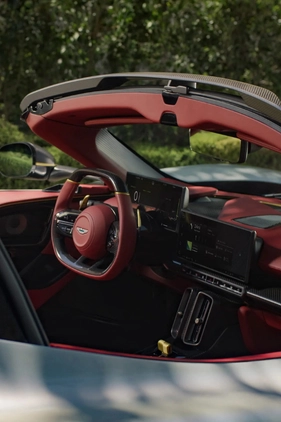
Inside, the Valhalla keeps its driver focused layout, but the Spider gets a new carbon fibre Touring Seat as standard. Aston Martin says it improves comfort and makes getting in and out easier when the roof is fitted. Buyers who prefer the more supportive seat from the coupe can keep it at no extra cost.
The carbon fibre dihedral doors stay. They now use refined kinematics for smoother movement and switch to a frameless design. A slightly increased curvature at the top edge of the door glass further helps entry and exit with the roof in place.
Aston Martin Valhalla Spider vs Valhalla Coupe vs Valkyrie Spider
| Parameter | Valhalla Spider | Valhalla Coupe | Valkyrie Spider |
|---|---|---|---|
| Engine | 4.0 litre twin turbo V8 hybrid | 4.0 litre twin turbo V8 hybrid | 6.5 litre V12 hybrid |
| System output | 1,079PS | 1,079PS | 1,155PS |
| Top speed, roof on | 350 km/h (hard top) / 200 km/h (fabric) | 350 km/h | Over 350 km/h |
| Top speed, roof off | 350 km/h | Not applicable | Over 300 km/h |
| Downforce | Over 600 kg (roof fitted) | Over 600 kg | Not compared |
| Roof type | Removable fabric or carbon | Fixed | Removable carbon |
The table explains the “fastest open cockpit Aston Martin” claim clearly. The Valkyrie Spider is more powerful and more extreme, but it gives up speed when its roof comes off. The Valhalla Spider does not.
Why Does the Aston Martin Valhalla Spider Matter?
First, it puts the carbon tub in the spotlight. The Spider uses a version of the Coupe’s AMPT designed tub, built with resin transfer moulding and autoclave processes. Aston Martin has not detailed what, if any, structural changes the open version required. What it does state is that the technical variance between the two cars is limited to aerodynamic and stability calibration.
Second, it shifts the convertible conversation from looks to capability. Matching roof off top speed is a usable performance claim, not a styling exercise. In a segment where open versions are often treated as lifestyle variants, Aston Martin is positioning the Spider as a full performance equal.
Third, it broadens the Valhalla family. A second body style gives buyers who prioritise open air driving a route into the same hardware, without asking them to accept a slower car.
Finally, it signals the plug in hybrid path. A mid engined V8 hybrid that offers a silent electric mode and still runs at 350 km/h with no roof shows how Aston Martin intends to keep emotion alive while electrifying its flagship performance cars.
Aston Martin Valhalla Spider and Indian Buyers
Aston Martin retails its range in India through official dealerships, but the company has not announced India plans or pricing for the Valhalla Spider. For Indian enthusiasts, the car’s significance lies in the technology it previews for future Aston Martin models.
Quick Pros & Cons
Pros
- Reaches its full 350 km/h with the roof removed, a first for an open Aston Martin
- No power penalty versus the Coupe
- Flexible roof system with a stowable fabric roof and optional carbon hard top
- More comfortable Touring Seat as standard, with the coupe seat at no cost
- Frameless dihedral doors improve entry and exit
Cons
- Standard fabric roof is rated for up to 200 km/h
- Pricing not announced at reveal
- Deliveries begin only in Q3 2027
- Pure EV range is short, at 14 km on the shared Coupe powertrain
Frequently Asked Questions
1. What is the Aston Martin Valhalla Spider? It is the open cockpit version of the Valhalla mid engined plug in hybrid supercar, revealed on 28 October 2026 and described by Aston Martin as its fastest open cockpit car ever.
2. How powerful is the Aston Martin Valhalla Spider? It produces 1,079PS and 1,100 Nm, the same as the Valhalla Coupe.
3. What is the top speed of the Aston Martin Valhalla Spider? 350 km/h (electronically limited) roof off or with the carbon hard top; up to 200 km/h with the fabric roof fitted.
4. What roof options does the Valhalla Spider offer? A stowable black fabric roof is standard in most markets, a carbon fibre hard top is optional, and a rain cover is supplied for static use.
5. How much downforce does the Valhalla Spider produce? Aston Martin quotes maximum downforce in excess of 600 kg with the roof fitted.
6. When will deliveries of the Aston Martin Valhalla Spider start? Customer deliveries start in Q3 2027.
7. What is the price of the Aston Martin Valhalla Spider? Aston Martin did not announce official pricing at the reveal.
8. Will the Aston Martin Valhalla Spider come to India? Aston Martin has not announced India plans for the Valhalla Spider.
Motors77 Verdict
The Aston Martin Valhalla Spider succeeds where convertibles usually compromise. Its defining achievement is roof off 350 km/h capability, made possible by Spider specific airflow management: the wind deflector, the taller snorkel and recalibrated active aerodynamics and stability control. Unannounced pricing and a 2027 delivery start are the caveats. The open Valhalla is not a lesser sibling but an equal one.