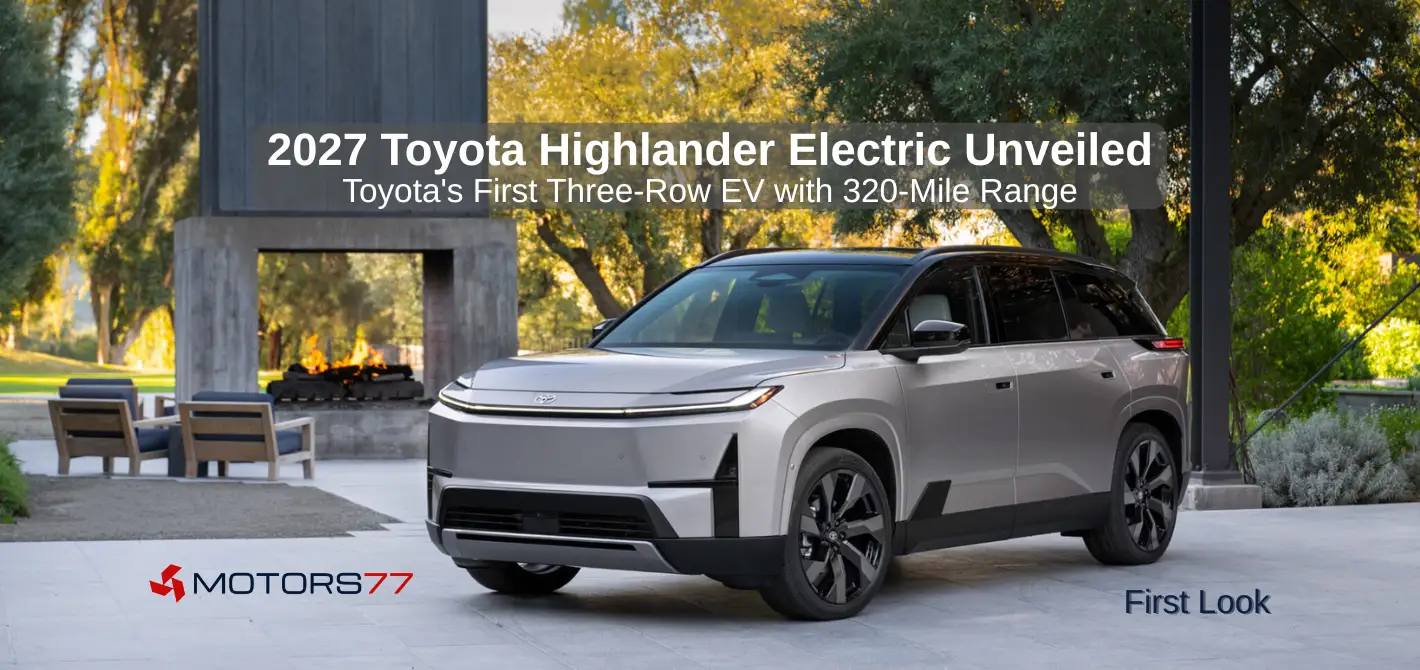
Toyota Highlander enters the electric era with a bold transformation that redefines what families can expect from a battery-powered three-row SUV. The Japanese automaker unveiled the 2027 Toyota Highlander in Ojai, California on February 10, 2026, marking a pivotal moment in the brand’s electrification journey.
This is not merely an electrified version of an existing model. Toyota has completely reimagined the Highlander from the ground up, creating the first three-row battery electric vehicle in its American lineup and the first EV manufactured on US soil by the company.
Why the Toyota Highlander Electric Matters
The three-row electric SUV segment has been dominated by Korean rivals for nearly two years. Hyundai’s Ioniq 9 and Kia’s EV9 established themselves as benchmarks, offering families practical electric transportation without compromising on space.
Toyota’s entry changes competitive dynamics significantly. The company sold over 3.6 million Highlander units since 2001, building substantial brand equity among family buyers. Converting this loyal customer base to electric propulsion could accelerate mainstream EV adoption considerably.
Toyota Highlander Electric Specifications Overview
| Specification | XLE FWD | XLE AWD | Limited AWD |
|---|---|---|---|
| Battery Capacity | 77.0 kWh | 77.0/95.8 kWh | 95.8 kWh |
| Estimated Range | 287 miles | 270/320 miles | 320 miles |
| Horsepower | 221 hp | 338 hp | 338 hp |
| Torque | 198 lb-ft | 323 lb-ft | 323 lb-ft |
| Drive Type | Front-Wheel | All-Wheel | All-Wheel |
| DC Fast Charging | 10-80% in ~30 min | 10-80% in ~30 min | 10-80% in ~30 min |
Quick Pros and Cons
Pros:
- Industry-competitive 320-mile range on AWD models with larger battery
- Vehicle-to-Load (V2L) capability, a first for Toyota in the US
- NACS charging port for Tesla Supercharger network access
- Made in America with domestically sourced batteries
- Comprehensive Toyota Safety Sense 4.0 suite standard
- Three-row seating for up to seven passengers
Cons:
- Pricing not yet announced, creating buyer uncertainty
- Cargo space behind third row (15.9 cu ft) trails competitors
- Only two trim levels at launch limits choice
- No performance variant announced initially
Toyota Highlander Electric Design Philosophy
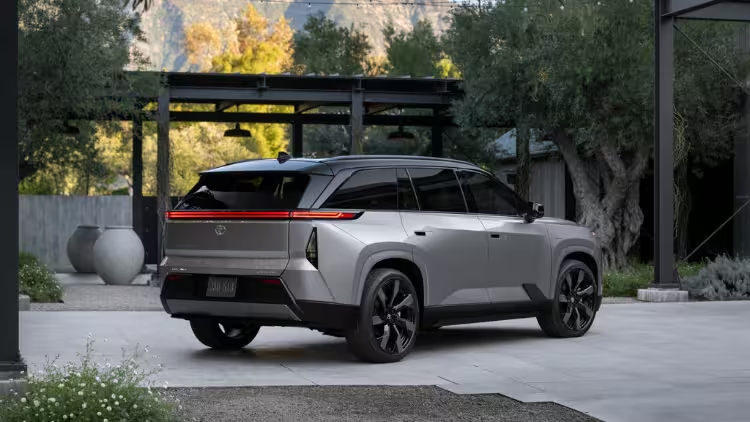
The fifth-generation Highlander represents a complete design departure. Chief Designer Masayuki Yamada explained the team pursued robust SUV proportions while capturing sophisticated aesthetics appropriate for electric performance.
Toyota lowered overall height to 67.3 inches while increasing width to 78.3 inches, creating a more planted stance. The wheelbase extends to 120.1 inches, positioning wheels closer to corners for improved handling dynamics.
Exterior Dimensions Comparison
| Measurement | 2027 Highlander EV | Hyundai Ioniq 9 | Kia EV9 |
|---|---|---|---|
| Length | 198.8 in | 199.2 in | 197.2 in |
| Width | 78.3 in | 77.9 in | 77.4 in |
| Height | 67.3 in | 68.5 in | 69.4 in |
| Wheelbase | 120.1 in | 122.0 in | 122.0 in |
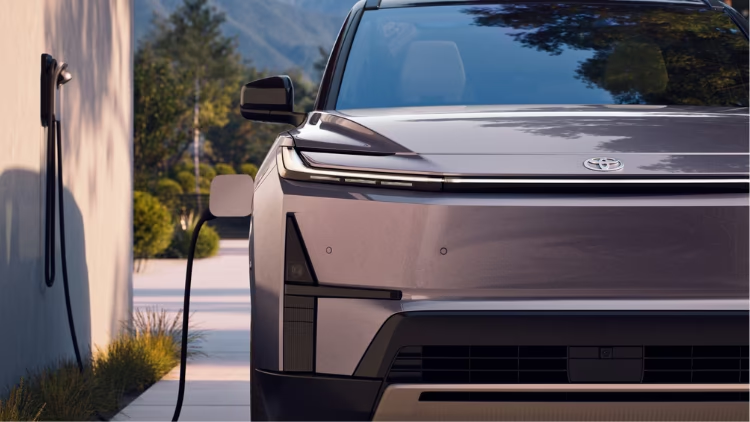
The front fascia emphasizes Toyota’s hammerhead design with slim daytime running lights separated from main headlamps. Flush door handles with electronic latches improve aerodynamic efficiency.
Toyota Highlander Interior and Technology
A 14-inch touchscreen runs the latest Toyota Audio Multimedia system with AT&T 5G connectivity. Voice commands activate through “Hey Toyota” prompts with faster response times than previous systems.
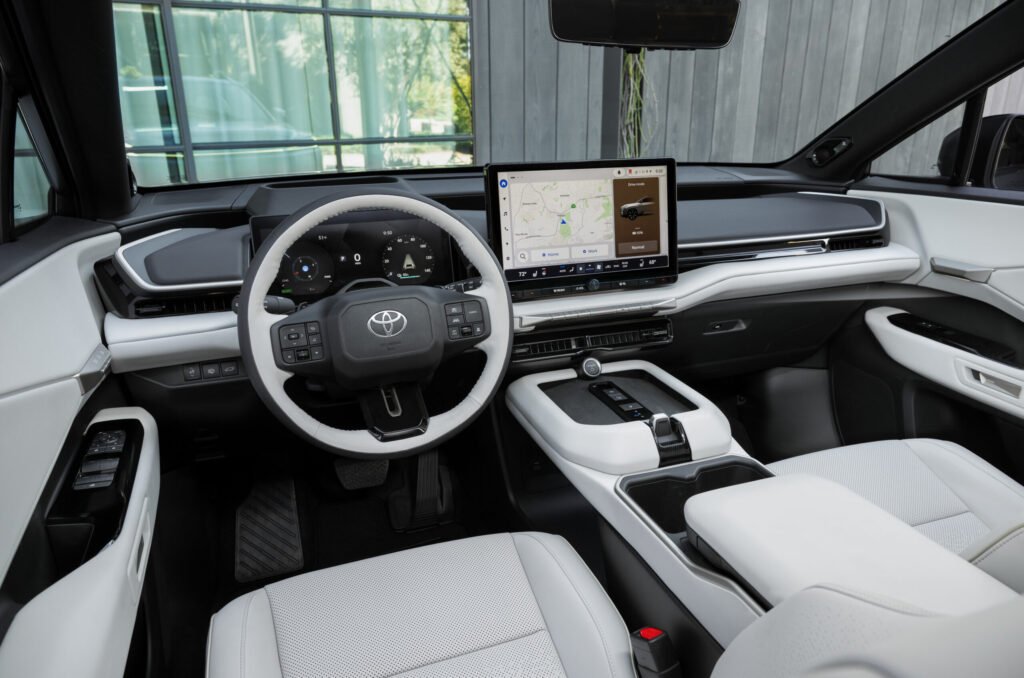
Interior Features by Trim
| Feature | XLE | Limited |
|---|---|---|
| Display Size | 14-inch touchscreen | 14-inch touchscreen |
| Digital Cluster | 12.3-inch | 12.3-inch |
| Head-Up Display | Not Available | Standard |
| Ambient Lighting | 64 colors | 64 colors |
| Heated Front Seats | Standard | Standard |
| Ventilated Front Seats | Not Available | Standard |
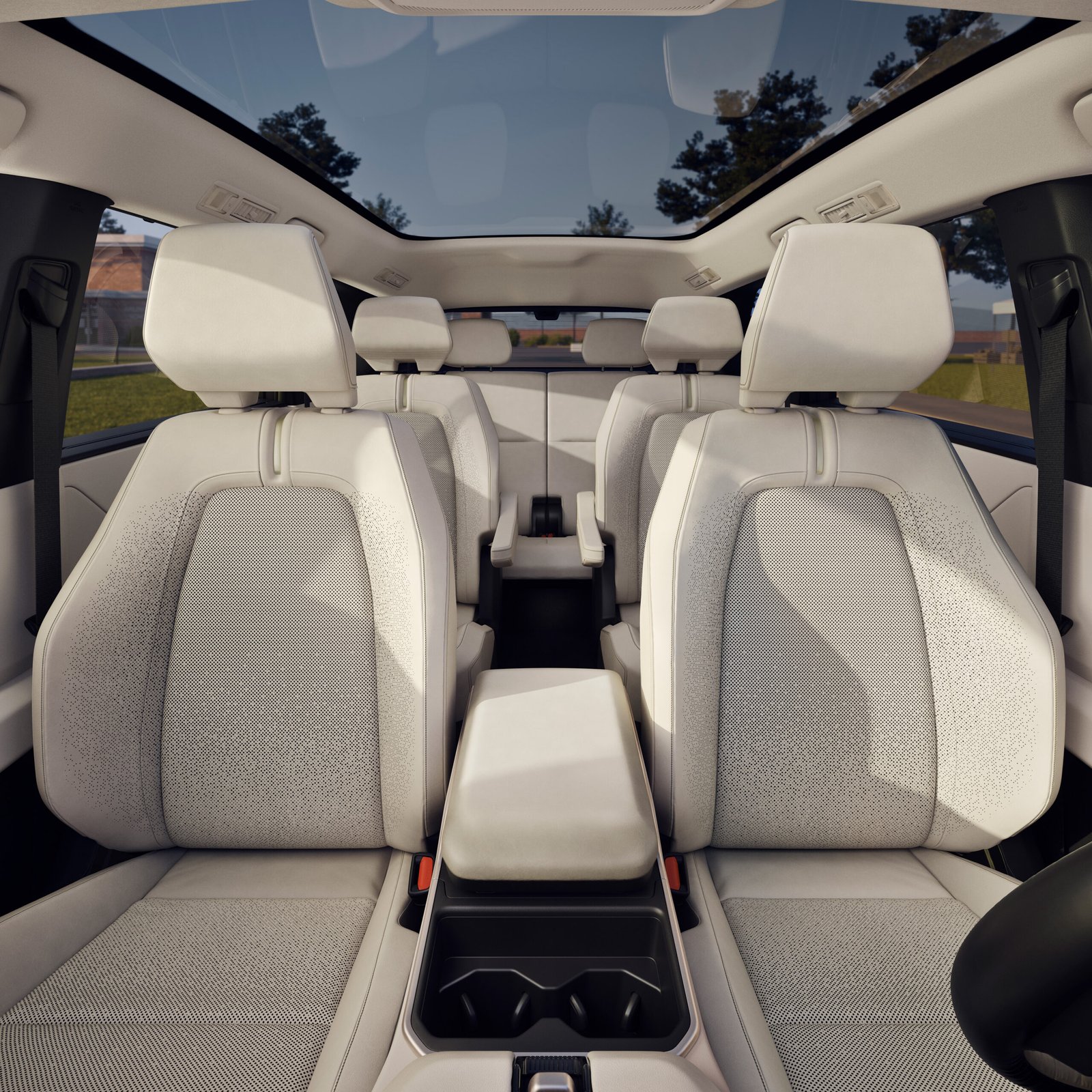
| Heated Second Row | Not Available | Standard |
| Panoramic Roof | Available | Available |
Storage includes 18 cup holders, USB-C ports in all three rows, and dual wireless charging. The center console incorporates multiple compartments for everyday items.
Toyota Highlander Electric Powertrain
Chief Engineer Yoshinori Futonagane stated the goal was creating a BEV that fits customers’ lives while providing sharp acceleration and quiet operation.
The all-wheel-drive configuration produces 338 combined horsepower and 323 lb-ft of torque. Front-wheel-drive variants make 221 horsepower, adequate for everyday driving but potentially underpowered when fully loaded.
Battery and Range Options
| Configuration | Battery | Est. Range | Power |
|---|---|---|---|
| XLE FWD | 77.0 kWh | 287 miles | 221 hp |
| XLE AWD | 77.0 kWh | 270 miles | 338 hp |
| XLE AWD | 95.8 kWh | 320 miles | 338 hp |
| Limited AWD | 95.8 kWh | 320 miles | 338 hp |
The NACS charging port provides Tesla Supercharger access alongside thousands of other DC fast charging stations. Battery preconditioning activates automatically when navigating to charging stations.
Vehicle-to-Load Technology
The 2027 Toyota Highlander becomes the first Toyota sold in America to offer Vehicle-to-Load capability. This technology allows the battery to power external devices for camping, tailgates, or emergency backup power. Toyota will offer bi-directional accessories separately.
Toyota Highlander Safety Features
Toyota Safety Sense 4.0 comes standard across all variants with updated hardware and improved detection capabilities.
Standard Safety Equipment
| Feature | Description |
|---|---|
| Pre-Collision System | Detects vehicles, pedestrians, bicyclists, motorcyclists |
| Dynamic Radar Cruise | Full-speed range adaptive cruise control |
| Lane Departure Alert | Steering assist for lane-keeping |
| Lane Tracing Assist | Centers vehicle in lane |
| Road Sign Assist | Recognizes speed limits and stop signs |
| Proactive Driving Assist | Gentle braking for distance control |
Limited models add Traffic Jam Assist, Front Cross Traffic Alert, Lane Change Assist, and Panoramic View Monitor.
Toyota Highlander vs Competition
Competitive Comparison
| Specification | Toyota Highlander | Hyundai Ioniq 9 | Kia EV9 |
|---|---|---|---|
| Max Range (AWD) | 320 miles | 320 miles | 304 miles |
| Max Horsepower | 338 hp | 422 hp | 379 hp |
| Battery Size | 95.8 kWh | 110.3 kWh | 99.8 kWh |
| Cargo (3rd row up) | 15.9 cu ft | 21.9 cu ft | 20.2 cu ft |
| Cargo (3rd row down) | 45.6 cu ft | 46.7 cu ft | 43.5 cu ft |
| Starting Price | TBA | $58,955 | $54,900 |
Toyota’s range figures match the Ioniq 9 despite using a smaller battery, demonstrating superior efficiency. However, cargo space behind the third row trails competitors noticeably.
Pricing and Availability
Toyota has not announced pricing, stating details will come closer to the on-sale date. Sales are expected in late 2026, continuing into early 2027.
The vehicle will be assembled at Toyota Motor Manufacturing Kentucky, with batteries sourced from Toyota Battery Manufacturing North Carolina and LG Energy Solution.
All models include ToyotaCare coverage and an eight-year or 100,000-mile warranty on electric powertrain components.
Frequently Asked Questions
When will the 2027 Toyota Highlander Electric go on sale? Toyota expects sales in late 2026, continuing into early 2027.
How much will the Toyota Highlander Electric cost? Pricing is not announced. Competitors start at $54,900 (Kia EV9) and $58,955 (Hyundai Ioniq 9).
What is the range of the Toyota Highlander Electric? XLE FWD offers 287 miles, XLE AWD provides 270-320 miles depending on battery, and Limited AWD achieves 320 miles.
Can the Toyota Highlander Electric charge at Tesla Superchargers? Yes. The NACS charging port provides direct Supercharger access without adapters.
How many passengers can the Toyota Highlander Electric seat? Up to seven with the available second-row bench seat.
Does the Toyota Highlander Electric qualify for federal tax credits? As a US-manufactured vehicle with domestic batteries, it should qualify pending price and income requirements.
What is Vehicle-to-Load? V2L allows the battery to power external devices. The 2027 Highlander is the first Toyota in America with this feature.
How long does charging take? DC fast charging replenishes 10-80% in approximately 30 minutes.
Motors77 Verdict
The 2027 Toyota Highlander Electric represents a calculated and competitive entry into the three-row electric SUV segment. Toyota avoided rushing to market with a compromised product, developing a vehicle that matches rivals in range while bringing unique capabilities like Vehicle-to-Load technology.
The efficiency figures deserve praise. Achieving 320 miles from a 95.8 kWh battery demonstrates engineering excellence compared to competitors requiring larger packs for similar results.
However, challenges exist. Cargo space behind the third row falls noticeably short of Korean competitors. The lack of announced pricing creates uncertainty that may push shoppers toward known alternatives. Limited launch trims constrain buyer choice compared to more diverse competitor lineups.
For Toyota loyalists seeking electric three-row transportation, the Highlander Electric should prove excellent. The brand’s reliability reputation, combined with American manufacturing, presents a compelling package. The true test comes when pricing is announced. Competitive positioning could disrupt a segment Korean manufacturers have dominated.
Rating: 4 out of 5 stars (pending final pricing)
Source: Toyota USA Newsroom