Motors77 | Latest Auto News - Cars, Bikes & EV Updates
  • Home
  • CARS
    • India Car News
    • International Car News
    • New Car Launches
    • Upcoming Cars
  • BIKES
    • India Bike News
    • International Bike News
    • New Bike Launches
    • Upcoming Bikes
  • ELECTRIC
    • Electric Cars
    • Electric Bikes
  • REVIEWS
    • Bike
    • Car
    • Features
    • Fuel Cost Calculator
No Result
View All Result
Motors77 | Latest Auto News - Cars, Bikes & EV Updates
No Result
View All Result
Home CARS

Aston Martin Valhalla Spider Unveiled: 1,079PS Hybrid Takes Off Its Roof and Keeps Its 350 km/h

Vyom Patil by Vyom Patil
October 28, 2026
in CARS, International Car News
0
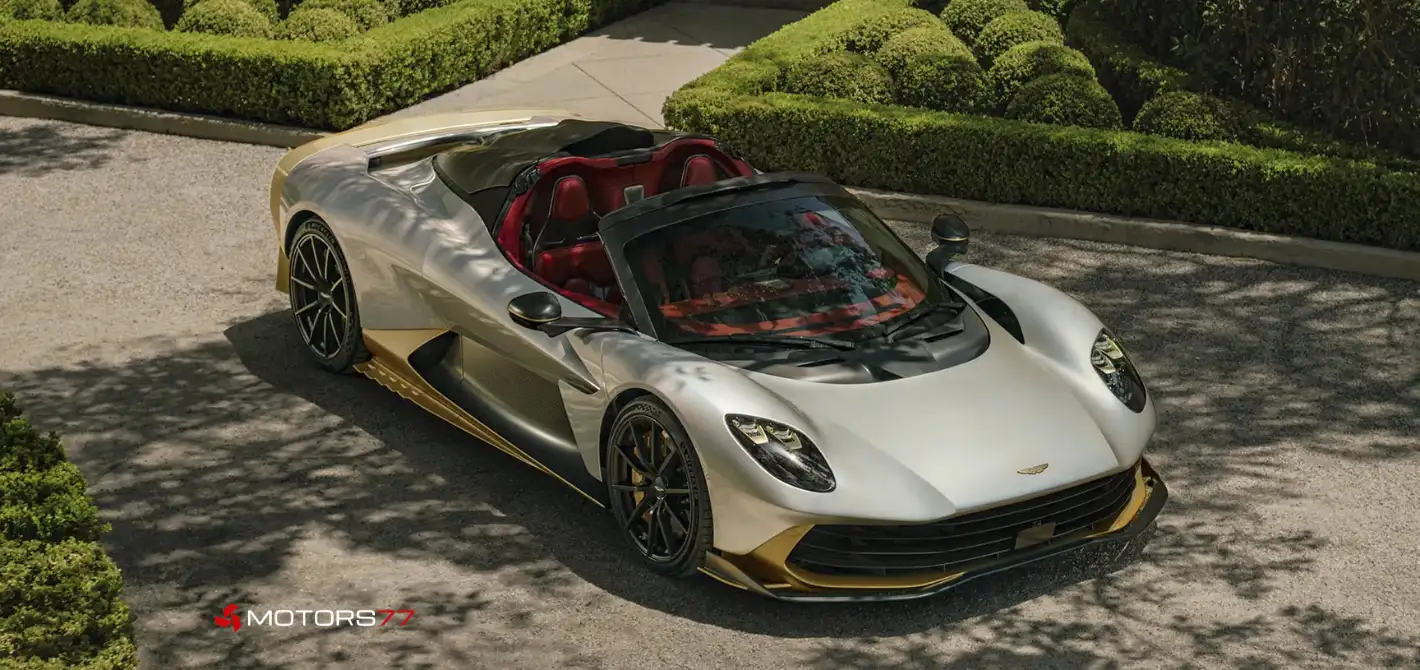
Aston Martin Valhalla Spider open cockpit hybrid supercar front three quarter view

The Aston Martin Valhalla Spider reaches 350 km/h with the roof removed, making it the fastest open cockpit Aston Martin ever.

8
SHARES
100
VIEWS
Share on FacebookShare on Twitter

The Aston Martin Valhalla Spider is the fastest open cockpit car Gaydon has ever built, and it reaches its 350 km/h electronically limited top speed with the roof removed. Revealed on 28 October 2026 ahead of its public debut at the Concours at Wynn Las Vegas, the open version of the Valhalla keeps the coupe’s 1,079PS plug in hybrid powertrain, its carbon fibre tub and its active aerodynamics. Customer deliveries begin in Q3 2027.

Key takeaways

  • The Aston Martin Valhalla Spider produces 1,079PS and 1,100 Nm, identical to the Valhalla Coupe.
  • Top speed is 350 km/h roof off or with the optional carbon fibre hard top; the standard fabric roof is rated for up to 200 km/h.
  • Downforce exceeds 600 kg with the roof fitted.
  • Deliveries start in Q3 2027.

Full Top Speed, No Roof Required

Most convertibles ask the buyer to accept a trade: the roof comes off and the top speed quietly falls. Aston Martin’s own Valkyrie Spider followed that rule: its official top speed is over 350 km/h with the roof on, but over 300 km/h with the roof removed.

You might also like

Assembled Near Pune, Now From Rs 99 Lakh: Defender 110 Price Cut of Up to Rs 34 Lakh Explained

Hybrid Cars In India Are About To Boom: Why Every Carmaker Is Now Joining The Race

Honda Elevate Facelift Bookings Open At Rs 21,000: The One Thing It Still Will Not Get

The Aston Martin Valhalla Spider breaks that pattern. Aston Martin states that the car can reach its full 350 km/h Vmax with nothing above the occupants’ heads. That single claim is the most important number in the announcement.

What Exactly Is the Aston Martin Valhalla Spider?

Valhalla Coupe deliveries began in Q4 2025 and continued through 2026. The Coupe arrived as a string of firsts for the brand: the first production mid engined Aston Martin, the first plug in hybrid, the first to use the bespoke flat plane crank V8, and the first with the new 8 speed dual clutch transmission. The Aston Martin Valhalla Spider adds one more first to that list. It is the company’s first mid engined open cockpit production supercar.

Development again involved Aston Martin Performance Technologies (AMPT), the consulting arm of the Aston Martin Aramco Formula 1 Team, which contributed to dynamics, aerodynamics and materials. Aston Martin says the technical differences between Spider and Coupe are limited to specific changes in the active aerodynamics and the stability control calibration.
Aston Martin Valhalla Spider Specifications

All figures below are from Aston Martin’s official Valhalla Spider release and the official Valhalla Coupe data with which the Spider shares its powertrain.

SpecificationAston Martin Valhalla Spider
LayoutMid engined, open cockpit, two seater
Engine4.0 litre twin turbo V8, flat plane crank
Engine output828PS
Electric motorsThree (two on front e-axle, one at the transmission)
Electric contribution251PS
System output1,079PS (793 kW)
System torque1,100 Nm
Specific output (engine)207 bhp per litre
Transmission8 speed DCT
DriveAll wheel drive via front e-axle and rear axle with e-diff
Top speed (roof off or carbon hard top)350 km/h (electronically limited)
Top speed (fabric roof fitted)Up to 200 km/h
Maximum downforceIn excess of 600 kg (roof fitted)
StructureCarbon fibre tub by AMPT
DoorsCarbon fibre dihedral, frameless
DeliveriesFrom Q3 2027

The Powertrain: Shared, and Still the Headline

The Aston Martin Valhalla Spider uses exactly the same plug in hybrid system as the coupe. At its centre is the 828PS 4.0 litre twin turbo V8 with a flat plane crankshaft. Aston Martin quotes a specific output of 207 bhp per litre, the highest of any combustion engine the company has produced.

Three electric motors and a High Performance Battery add a further 251PS. Two motors drive the front e-axle and provide full Electric Torque Vectoring, while the third sits alongside the 8 speed DCT and assists the V8 in driving the rear axle and its electronic differential. There is no mechanical link between the front and rear axles, so torque to each wheel is managed by Aston Martin’s Integrated Vehicle Dynamics Control (IVC) system, which monitors suspension, braking, steering, aerodynamics and powertrain together.

Powertrain DetailFigure
V8 output828PS
E-motor output (combined)251PS
Total output1,079PS
Total torque1,100 Nm
Driver selectable modesFour; Coupe modes are Pure EV, Sport, Sport+, Race
Pure EV range (Coupe figure, shared powertrain)Up to 14 km
Pure EV top speed (Coupe figure, shared powertrain)140 km/h
Pure EV drive (Coupe data)Front axle only

Roof Engineering: Three Ways to Cover the Cockpit

This is where the Aston Martin Valhalla Spider becomes genuinely interesting. Rather than a single folding roof, Aston Martin has designed a roof system with distinct roles.

Roof OptionStatusTop Speed
Black fabric roof, removable and stowableStandard in most marketsUp to 200 km/h
Carbon fibre hard topOptional (market dependent)350 km/h
No roof, wind deflector fittedAlways available350 km/h
Rain coverSuppliedFor static use only

Aston Martin describes the fabric roof’s 200 km/h ceiling as class leading. The carbon hard top is the choice for owners who want the full 350 km/h with the cabin closed.

The Wind Deflector and Taller Snorkel

With the roof removed, a wind deflector clips onto the windscreen header. It performs two jobs at once: it pulls cooling air down into the engine snorkel and lifts air over the occupants for comfort. When the roof goes back on, the deflector folds into three parts and stows in new 15 litre storage spaces inside the sills.

The snorkel itself is bespoke to the Spider. Aston Martin has reprofiled it and raised it by 35 mm, because the airflow it receives is different once the roof is gone.

Aerodynamics and Stability: The Real Engineering Work

The Valhalla’s active aerodynamic system uses moving surfaces at both the front and rear, along with managed underbody airflow. It adds downforce for grip or cuts drag, depending on the drive mode. Having active elements on both axles lets the car control how downforce is split between front and rear, which is central to high speed stability.

For the Aston Martin Valhalla Spider, Aston Martin recalibrated both the active aerodynamics and the Electronic Stability Programme so they recognise and adapt to roof on and roof off airflow. The aim is consistent balance in both states. Maximum downforce remains in excess of 600 kg with the roof fitted, matching the headline figure of the coupe.

Cabin and Doors: Built for Daily Entry, Not Just Track Days

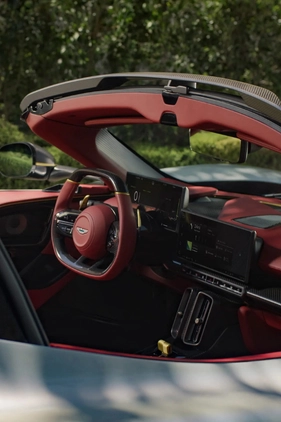
Inside, the Valhalla keeps its driver focused layout, but the Spider gets a new carbon fibre Touring Seat as standard. Aston Martin says it improves comfort and makes getting in and out easier when the roof is fitted. Buyers who prefer the more supportive seat from the coupe can keep it at no extra cost.

The carbon fibre dihedral doors stay. They now use refined kinematics for smoother movement and switch to a frameless design. A slightly increased curvature at the top edge of the door glass further helps entry and exit with the roof in place.

Aston Martin Valhalla Spider vs Valhalla Coupe vs Valkyrie Spider

ParameterValhalla SpiderValhalla CoupeValkyrie Spider
Engine4.0 litre twin turbo V8 hybrid4.0 litre twin turbo V8 hybrid6.5 litre V12 hybrid
System output1,079PS1,079PS1,155PS
Top speed, roof on350 km/h (hard top) / 200 km/h (fabric)350 km/hOver 350 km/h
Top speed, roof off350 km/hNot applicableOver 300 km/h
DownforceOver 600 kg (roof fitted)Over 600 kgNot compared
Roof typeRemovable fabric or carbonFixedRemovable carbon

The table explains the “fastest open cockpit Aston Martin” claim clearly. The Valkyrie Spider is more powerful and more extreme, but it gives up speed when its roof comes off. The Valhalla Spider does not.

Why Does the Aston Martin Valhalla Spider Matter?

First, it puts the carbon tub in the spotlight. The Spider uses a version of the Coupe’s AMPT designed tub, built with resin transfer moulding and autoclave processes. Aston Martin has not detailed what, if any, structural changes the open version required. What it does state is that the technical variance between the two cars is limited to aerodynamic and stability calibration.

Second, it shifts the convertible conversation from looks to capability. Matching roof off top speed is a usable performance claim, not a styling exercise. In a segment where open versions are often treated as lifestyle variants, Aston Martin is positioning the Spider as a full performance equal.

Third, it broadens the Valhalla family. A second body style gives buyers who prioritise open air driving a route into the same hardware, without asking them to accept a slower car.

Finally, it signals the plug in hybrid path. A mid engined V8 hybrid that offers a silent electric mode and still runs at 350 km/h with no roof shows how Aston Martin intends to keep emotion alive while electrifying its flagship performance cars.

Aston Martin Valhalla Spider and Indian Buyers

Aston Martin retails its range in India through official dealerships, but the company has not announced India plans or pricing for the Valhalla Spider. For Indian enthusiasts, the car’s significance lies in the technology it previews for future Aston Martin models.

Quick Pros & Cons

Pros

  • Reaches its full 350 km/h with the roof removed, a first for an open Aston Martin
  • No power penalty versus the Coupe
  • Flexible roof system with a stowable fabric roof and optional carbon hard top
  • More comfortable Touring Seat as standard, with the coupe seat at no cost
  • Frameless dihedral doors improve entry and exit

Cons

  • Standard fabric roof is rated for up to 200 km/h
  • Pricing not announced at reveal
  • Deliveries begin only in Q3 2027
  • Pure EV range is short, at 14 km on the shared Coupe powertrain

Frequently Asked Questions

1. What is the Aston Martin Valhalla Spider? It is the open cockpit version of the Valhalla mid engined plug in hybrid supercar, revealed on 28 October 2026 and described by Aston Martin as its fastest open cockpit car ever.

2. How powerful is the Aston Martin Valhalla Spider? It produces 1,079PS and 1,100 Nm, the same as the Valhalla Coupe.

3. What is the top speed of the Aston Martin Valhalla Spider? 350 km/h (electronically limited) roof off or with the carbon hard top; up to 200 km/h with the fabric roof fitted.

4. What roof options does the Valhalla Spider offer? A stowable black fabric roof is standard in most markets, a carbon fibre hard top is optional, and a rain cover is supplied for static use.

5. How much downforce does the Valhalla Spider produce? Aston Martin quotes maximum downforce in excess of 600 kg with the roof fitted.

6. When will deliveries of the Aston Martin Valhalla Spider start? Customer deliveries start in Q3 2027.

7. What is the price of the Aston Martin Valhalla Spider? Aston Martin did not announce official pricing at the reveal.

8. Will the Aston Martin Valhalla Spider come to India? Aston Martin has not announced India plans for the Valhalla Spider.

Motors77 Verdict

The Aston Martin Valhalla Spider succeeds where convertibles usually compromise. Its defining achievement is roof off 350 km/h capability, made possible by Spider specific airflow management: the wind deflector, the taller snorkel and recalibrated active aerodynamics and stability control. Unannounced pricing and a 2027 delivery start are the caveats. The open Valhalla is not a lesser sibling but an equal one.
Previous Post

Assembled Near Pune, Now From Rs 99 Lakh: Defender 110 Price Cut of Up to Rs 34 Lakh Explained

Vyom Patil

Vyom Patil

Founder & Editor-in-Chief at Motors77. A Pune-based automotive enthusiast with over 10 years of experience following the auto industry. Vyom leads Motors77's editorial direction, ensuring accurate, well-researched coverage of cars, bikes, and EVs for Indian readers.

Related Posts

Assembled Near Pune, Now From Rs 99 Lakh: Defender 110 Price Cut of Up to Rs 34 Lakh Explained

Assembled Near Pune, Now From Rs 99 Lakh: Defender 110 Price Cut of Up to Rs 34 Lakh Explained

by Vyom Patil
October 27, 2026
0

The Defender 110 price cut announced by JLR India on October 27, 2026 is one of the largest single price...

Hybrid cars in India set for a boom as more carmakers join the strong hybrid race

Hybrid Cars In India Are About To Boom: Why Every Carmaker Is Now Joining The Race

by Vyom Patil
October 20, 2026
0

For years, buying a strong hybrid SUV in India meant choosing between badges rather than technologies. The Maruti Grand Vitara,...

Honda Elevate facelift teased ahead of its 6 October 2026 India launch with bookings open at Rs 21,000

Honda Elevate Facelift Bookings Open At Rs 21,000: The One Thing It Still Will Not Get

by Vyom Patil
October 2, 2026
0

Honda has opened bookings for the Honda Elevate facelift at Rs 21,000, with prices to be announced on 6 October...

# Hyundai Lounge Edition Launched: The Alcazar Now Costs Rs 90,000 More With Two Fewer Seats The Hyundai Lounge Edition has arrived across the Creta, Creta Electric and Alcazar, and most of the coverage is leading with the 11.6 inch screen bolted to the back of the front seats. Fair enough. But the number worth pausing on sits in the Alcazar's price list. The Alcazar Lounge Edition costs Rs 21.81 lakh, ex-showroom. That is Rs 71,000 more than the six seat Signature it is based on, and Rs 90,000 more than the seven seat Signature. And the Lounge Edition has five seats. Hyundai is charging you almost a lakh extra to take the third row out of a three row SUV. That sounds absurd until you understand why it might be the smartest thing in this entire launch. ## Hyundai Lounge Edition price, model by model The Hyundai Lounge Edition is a features and styling package applied to the top trim of each SUV. Nothing mechanical changes anywhere in the range. | Creta Lounge Edition | Price, ex-showroom | | --- | --- | | 1.5 petrol iVT | Rs 19.22 lakh | | 1.5 petrol iVT, dual tone | Rs 19.37 lakh | | 1.5 diesel AT | Rs 20.31 lakh | | 1.5 diesel AT, dual tone | Rs 20.46 lakh | | Alcazar and Creta Electric | Price, ex-showroom | | --- | --- | | Alcazar Lounge, 1.5 diesel AT | Rs 21.81 lakh | | Alcazar Lounge, dual tone | Rs 21.96 lakh | | Creta Electric Lounge | From Rs 24.34 lakh | | Creta Electric Lounge, top configuration | Rs 25.22 lakh | Each Hyundai Lounge Edition sits on a specific donor trim. The Creta version is built on the King trim and comes only with automatics, either the 1.5 litre MPi petrol with the iVT or the 1.5 litre CRDi diesel with a torque converter. The Alcazar Lounge is based on the Signature trim and is diesel automatic only. The Creta Electric Lounge uses the Excellence Long Range variant with the 51.4 kWh battery, and can be had with or without the home charger. The premiums tell you what Hyundai thinks each Hyundai Lounge Edition package is worth. The Creta Lounge asks Rs 53,000 over the equivalent King variant, the same on both powertrains. The Creta Electric Lounge asks Rs 67,000 over the Excellence Long Range. The Alcazar asks Rs 71,000 over the six seater and Rs 90,000 over the seven seater. Every figure above is ex-showroom. On road prices will land considerably higher once road tax, registration and insurance are added, and by how much depends heavily on your state, so treat these as the base of the calculation rather than the total. ## What the money buys The centrepiece of every Hyundai Lounge Edition is a 29.46 cm, or 11.6 inch, rear seat entertainment screen. This is not a mirrored display for the front infotainment. It runs OTT video streaming, gaming and apps through a certified app store, and supports phone mirroring on top. Audio runs through the existing eight speaker Bose system with a front centre speaker and a subwoofer. Inside, the Hyundai Lounge Edition adds an all black dashboard with silver inserts on the air conditioning vents, Moonwhite ambient lighting, a new seat upholstery pattern and rear headrest cushions with Lounge branding. Outside, every Hyundai Lounge Edition gets a new Golden Bronze paint option and a blacked out treatment covering the front and rear skid plates, side sill garnish, rear spoiler, roof rails, C-pillar garnish and mirrors. The Creta and Alcazar get 18 inch matte black alloys, the Creta Electric 17 inch black aero wheels. Two models get something extra. The Alcazar Lounge adds a voice enabled smart panoramic sunroof alongside its five seat layout. The Creta Electric Lounge adds a factory fitted dashcam and a rear wireless charger. ## Why does this matter? Here is the gap between the launch messaging and the fuller picture. Hyundai is presenting the Hyundai Lounge Edition as a rear seat entertainment package. The screen is the hero of every press image. But the screen is available on all three SUVs, which makes it the least interesting thing here. The Alcazar's missing third row is the actual news. Think about the third row in a compact three row SUV. It eats boot capacity permanently in exchange for seating that adults generally find cramped and that many owners use only occasionally. For a buyer drawn to the Alcazar's larger footprint, road presence and second row space rather than its seat count, that trade has never been a good one. Hyundai has now built exactly that car and priced it accordingly. The Alcazar Hyundai Lounge Edition is the result. Removing the third row frees genuine luggage space, and the second row becomes the focus rather than a waypoint. Add the panoramic sunroof, the rear screen and the ambient lighting, and the Alcazar Lounge is aimed squarely at the buyer who sits in the back, or who has a family of four and wants space rather than seat count. That is a meaningful read of the Indian market. The rear seat focused buyer, whether chauffeur driven or simply someone whose family lives in the back, has generally had to look at more expensive SUVs for this kind of package. Hyundai is now serving that customer at Rs 21.81 lakh, ex-showroom, in a familiar badge. The Rs 90,000 premium over the seven seater is not really a charge for removing seats. It is the price of the equipment, and the seat deletion is what makes the equipment make sense. There is a second, less comfortable consequence of the Hyundai Lounge Edition strategy. A five seat Alcazar competes directly with Hyundai's own Creta. The Creta Lounge Edition costs Rs 19.22 lakh with the same rear screen, the same interior treatment and the same blacked out styling. Spend Rs 2.59 lakh more and you get a longer car with more rear legroom, more boot space and the sunroof, but the same number of seats and the same basic experience. Hyundai has created a genuine internal decision for buyers, and how that plays out will be interesting to watch in the monthly numbers. ## The equipment question nobody is asking Worth being clear about what the Hyundai Lounge Edition does not change. There is no mechanical revision anywhere. The 1.5 litre petrol and diesel engines carry over exactly as they are, the Creta Electric keeps its 51.4 kWh battery and long range tune, and suspension, brakes and steering are untouched across all three. Every Hyundai Lounge Edition also sits on a top trim, which means the safety and driver assistance equipment is whatever those trims already carried. Nothing has been added on that front, and nothing has been taken away. If you were hoping a premium edition might bring extra active safety hardware down the range, this is not that launch. For the money, the rear screen is a substantial piece of kit rather than a token. An 11.6 inch display with independent app and streaming capability is genuinely useful on long drives with children, and it is the sort of feature that has until recently belonged to cars costing considerably more. Whether it is worth Rs 53,000 on a Creta depends entirely on how often your back seat is occupied. ## Quick Pros and Cons **Pros** - Five seat Alcazar finally answers buyers who wanted space over seat count - Genuinely capable 11.6 inch rear screen with streaming, gaming and app support - Paired with the existing eight speaker Bose system rather than a cheaper setup - New Golden Bronze paint and a well judged blacked out exterior treatment - Creta Electric Lounge adds a factory dashcam and rear wireless charger - Alcazar Lounge gains a voice enabled smart panoramic sunroof **Cons** - Rs 90,000 more than a seven seat Alcazar Signature, with two fewer seats - No mechanical, safety or driver assistance improvements anywhere - Restricted to the top trims and automatic powertrains only - The five seat Alcazar competes closely with Hyundai's own Creta Lounge - Creta Lounge Edition is not offered with a manual gearbox ## Frequently Asked Questions **1. What is the Hyundai Lounge Edition price?** The Creta Lounge Edition starts at Rs 19.22 lakh, the Alcazar Lounge Edition at Rs 21.81 lakh and the Creta Electric Lounge Edition at Rs 24.34 lakh. The range tops out at Rs 25.22 lakh, all ex-showroom. **2. Why does the Alcazar Lounge Edition have only five seats?** Hyundai has removed the third row to prioritise second row space and luggage capacity. The regular Alcazar continues to be offered in six and seven seat layouts, so the five seat configuration is exclusive to the Lounge Edition. **3. How much more does the Lounge Edition cost?** The Creta Lounge is Rs 53,000 above the equivalent King variant, the Creta Electric Lounge is Rs 67,000 above the Excellence Long Range, and the Alcazar Lounge is Rs 71,000 above the six seat Signature or Rs 90,000 above the seven seat Signature. **4. What is the rear seat entertainment system?** An 11.6 inch screen for second row passengers that supports OTT video streaming, gaming, phone mirroring and apps through a certified app store. It works with the existing eight speaker Bose audio system. **5. Which engines are offered?** The Creta Lounge gets the 1.5 litre petrol with iVT or the 1.5 litre diesel automatic. The Alcazar Lounge is diesel automatic only. The Creta Electric Lounge uses the 51.4 kWh Excellence Long Range powertrain. **6. Is there any performance change?** No. Every Hyundai Lounge Edition carries over its powertrain unchanged from the donor variant, with no revisions to suspension, brakes or steering. **7. What colour options are there?** A new Golden Bronze shade joins the palette on every Hyundai Lounge Edition, with the existing colours continuing. Dual tone versions are offered at a premium of roughly Rs 15,000. ## Motors77 Verdict The Hyundai Lounge Edition is being sold as a screen, and it should be sold as a seat count. The 11.6 inch rear display is good, and putting real streaming and app capability in the second row of a Rs 19 lakh SUV is a genuine step forward. But it appears on all three models, which makes it a feature rather than a story. The story is that Hyundai looked at its three row SUV, concluded that a meaningful chunk of buyers never wanted the third row, and built them a version without it. That is a confident piece of product thinking. The five seat Alcazar Lounge occupies a space above the Creta Lounge that nothing else in the range covers, pairing a larger body and more generous rear quarters with a panoramic sunroof and a boot no longer compromised by folded seats. It lands at Rs 21.81 lakh, ex-showroom, in a market where that kind of rear seat focus usually costs more. If Hyundai has read demand correctly, this variant could outperform expectations. The reservations are straightforward. Paying Rs 90,000 above a seven seat Alcazar to receive five seats will look strange on a showroom board no matter how sound the logic underneath, and Hyundai will need its salespeople to explain the equipment rather than the arithmetic. There is no mechanical or safety upgrade to soften the premium. And the Creta Lounge sitting Rs 2.59 lakh below with much the same cabin experience means Hyundai is now competing with itself in a way it will have to manage. If your back seat is regularly occupied, the Hyundai Lounge Edition makes a strong case, and the Alcazar version makes the strongest one. If it is not, you are paying a considerable premium for a screen nobody will watch. --- ## RankMath SEO Block **Focus Keyword:** Hyundai Lounge Edition **SEO Title:** Hyundai Lounge Edition Launched: Creta, Creta Electric And Alcazar Prices, Features **Permalink/URL:** hyundai-lounge-edition-creta-alcazar-price-features **Meta Description:** Hyundai Lounge Edition launched for Creta, Creta Electric and Alcazar from Rs 19.22 lakh. Full prices, the 11.6 inch rear screen and the new five seat Alcazar explained. **Tags:** Hyundai Lounge Edition, Hyundai Creta price, Alcazar five seater, Creta Electric, rear seat entertainment, Hyundai India, Creta Lounge Edition, Alcazar Lounge Edition **Category:** Car News, New Launches --- ## WordPress Banner Image Block **Alt Text:** Hyundai Lounge Edition launched for Creta, Creta Electric and Alcazar with an 11.6 inch rear seat entertainment screen **Title:** Hyundai Lounge Edition Launched For Creta, Creta Electric And Alcazar **Caption:** The Hyundai Lounge Edition brings an 11.6 inch rear screen, blacked out styling and a new five seat Alcazar layout, priced from Rs 19.22 lakh. **Description:** Hyundai Motor India has launched the Lounge Edition across the Creta, Creta Electric and Alcazar, priced from Rs 19.22 lakh to Rs 25.22 lakh, ex-showroom. Every version gains a 29.46 cm rear seat entertainment screen with OTT streaming and gaming, Moonwhite ambient lighting, Lounge branded upholstery, a new Golden Bronze paint option and blacked out exterior detailing. The Alcazar Lounge Edition is the most significant, swapping the six and seven seat layouts for an exclusive five seat configuration with a voice enabled smart panoramic sunroof.

Hyundai Lounge Edition Launched: The Alcazar Now Costs Rs 90,000 More With Two Fewer Seats

by Vyom Patil
September 10, 2026
0

The Hyundai Lounge Edition has arrived across the Creta, Creta Electric and Alcazar, and most of the coverage is leading...

Related Post

TVS Orbiter Launches at ₹99,900 – The Smart Electric Scooter for City Rides

TVS Orbiter Launches at ₹99,900 – The Smart Electric Scooter for City Rides

October 14, 2025
Mahindra Auto September 2025 Sales

Mahindra Auto September 2025 Sales: 1 Lakh Vehicles Sold, 16% Growth

October 1, 2025
ALL NEW HYUNDAI VENUE 2025

ALL NEW HYUNDAI VENUE 2025 – OFFICIALLY REVEALED

October 24, 2025

Category

  • Bike
  • BIKES
  • Car
  • CARS
  • ELECTRIC
  • Electric Bikes
  • Electric Cars
  • Features
  • India Bike News
  • India Car News
  • International Bike News
  • International Car News
  • New Bike Launches
  • New Car Launches
  • REVIEWS
  • Upcoming Bikes
  • Upcoming Cars

Tags

acti.ev+ Avinya Bajaj Triumph Baleno 2026 Baleno ADAS Baleno facelift Baleno price Bonneville 400 price Hyundai Creta Electric Mahindra BE 6 Maruti Suzuki Baleno premium hatchback India retro motorcycle Royal Enfield Classic 350 Safari EV Sierra EV Tata EV Tata EV portfolio Tata Motors Tata Motors FY31 Tata new cars Tata Sierra EV Tata Sierra EV price Tata Sierra EV variants Triumph 400 series Triumph Bonneville 400 Z12E engine

About

Motors77.com Brings You the Latest Automotive News, Expert Reviews, and Market Insights. Explore Cars, Bikes, and EV Trends | Driving Your Passion for Motoring Forward.

Categories

  • BIKES
    • India Bike News
    • International Bike News
    • New Bike Launches
    • Upcoming Bikes
  • CARS
    • India Car News
    • International Car News
    • New Car Launches
    • Upcoming Cars
  • ELECTRIC
    • Electric Bikes
    • Electric Cars
  • REVIEWS
    • Bike
    • Car
    • Features

Browse by Tag

acti.ev+ Avinya Bajaj Triumph Baleno 2026 Baleno ADAS Baleno facelift Baleno price Bonneville 400 price Hyundai Creta Electric Mahindra BE 6 Maruti Suzuki Baleno premium hatchback India retro motorcycle Royal Enfield Classic 350 Safari EV Sierra EV Tata EV Tata EV portfolio Tata Motors Tata Motors FY31 Tata new cars Tata Sierra EV Tata Sierra EV price Tata Sierra EV variants Triumph 400 series Triumph Bonneville 400 Z12E engine

Recent Posts

  • Aston Martin Valhalla Spider Unveiled: 1,079PS Hybrid Takes Off Its Roof and Keeps Its 350 km/h
  • Assembled Near Pune, Now From Rs 99 Lakh: Defender 110 Price Cut of Up to Rs 34 Lakh Explained
  • Home
  • About US
  • Contact Us
  • Privacy Policy
  • Terms & Conditions

Copyright © 2026 Motors77. All rights reserved.

No Result
View All Result
  • Home
  • CARS
    • India Car News
    • International Car News
    • New Car Launches
    • Upcoming Cars
  • BIKES
    • India Bike News
    • International Bike News
    • New Bike Launches
    • Upcoming Bikes
  • ELECTRIC
    • Electric Cars
    • Electric Bikes
  • REVIEWS
    • Bike
    • Car
    • Features
    • Fuel Cost Calculator

Copyright © 2026 Motors77. All rights reserved.

This website uses cookies to improve your experience. By continuing to use this website, you consent to the use of cookies. Visit our Privacy and Cookie Policy.