Maruti Suzuki car prices went up again on Sunday, 22 November 2026, and this time the change arrived quietly. India’s largest carmaker told the stock exchanges that it has raised prices of select models, with an estimated volume weighted average increase of around 0.31 percent. It did not name the models, and it did not publish a revised price list.
For a buyer standing in a showroom this week, that leaves an obvious question: is my car affected, and by how much? The short answer is that the impact on most cars will be small in rupee terms. The longer answer explains why this latest change in Maruti Suzuki car prices matters more than its size suggests.
Maruti Suzuki Car Prices: What the Company Actually Announced
The announcement came through a regulatory filing to the BSE and NSE. In it, Maruti said that “in view of the sustained cost pressures, the company has decided to increase prices of select models, effective 22nd November 2026.”
The company also said it has tried to absorb rising costs through cost reduction, and that it is passing on only part of the increase while keeping the impact on customers as low as possible.
| Detail | What Maruti Disclosed |
|---|---|
| Effective date | 22 November 2026 |
| Scope | Select models only, not the full range |
| Size of increase | Around 0.31 percent, volume weighted average |
| Models named | None |
| Official variant wise price list | Not published |
| Reason given | Sustained cost pressures |
The phrase “volume weighted average” is important. It means the 0.31 percent figure is weighted by how many units of each model Maruti sells. It describes the overall effect on Maruti’s sales mix, not the hike on any single car. Some variants may see a larger increase, others none at all.
The Fourth Revision to Maruti Suzuki Car Prices in 2026
This is not a one off. It is the fourth time in six months that Maruti has raised prices, all citing input costs.
| Effective From | Scope | Size of Increase |
|---|---|---|
| June 2026 | Across the range | Up to Rs 30,000 |
| August 2026 | Across the range | Up to Rs 30,000 |
| September 2026 | Select models | Up to Rs 20,000 |
| 22 November 2026 | Select models | Around 0.31 percent (volume weighted average) |
Two patterns stand out. First, Maruti usually raises prices once at the start of the year. In 2026 it deferred a January increase, then made up for it with a run of mid year revisions. Second, the format has changed. The earlier hikes were announced with a rupee ceiling. The November change is stated only as a percentage average, which makes it harder for buyers to work out their own exposure until dealers update their price lists.
Why Maruti Suzuki Car Prices Keep Rising: The Cost Picture
The most useful evidence comes from Maruti’s own results for July to September 2026, released on 27 October.
| Metric (Q2 FY2026-27) | Q2 FY2026-27 | Q2 FY2025-26 | Change |
|---|---|---|---|
| Total sales volume | 696,654 units | 550,874 units | Up 26.5% |
| Net sales | Rs 50,615.5 crore | Rs 40,135.8 crore | Up 26.1% |
| Operating EBIT | Rs 2,803.7 crore | Rs 3,382.0 crore | Down 17.1% |
| Net profit | Rs 2,414.9 crore | Rs 3,302.8 crore | Down 26.9% |
| Exports | 108,119 units | 110,487 units | Down 2.1% |
This is the central tension. Maruti posted its highest ever quarterly sales volume, and net sales rose by more than a quarter. Yet operating profit fell. The company attributed the drop in EBIT to commodity price increases linked to the West Asia conflict. Net profit was also hit by mark to market losses on its invested surplus, which is a separate, non operating issue.
There is one encouraging sign. Operating EBIT grew 10.8 percent compared with the April to June quarter, and on the earnings call management said operating EBITDA had improved to 9.4 percent of net sales, from 8.6 percent in the first quarter. CFO Arnab Roy told analysts the company had already taken three tranches of price increases “amounting to little over 1%”.
In simple terms, record volumes did not shield operating profit from higher commodity costs, even as margins recovered from the first quarter. Maruti’s stated reason for higher Maruti Suzuki car prices is sustained cost pressure, and its results show where that pressure landed. The price revisions are its attempt to close that gap without slowing demand.
What the Rise in Maruti Suzuki Car Prices Means in Rupees
The table below applies the 0.31 percent average to typical price points. It is a simple calculation, not Maruti’s price list.
| Ex Showroom Price | 0.31 Percent of That Price |
|---|---|
| Rs 5 lakh | Rs 1,550 |
| Rs 7.5 lakh | Rs 2,325 |
| Rs 10 lakh | Rs 3,100 |
| Rs 12.5 lakh | Rs 3,875 |
| Rs 15 lakh | Rs 4,650 |
| Rs 20 lakh | Rs 6,200 |
| Rs 25 lakh | Rs 7,750 |
Your on road cost will rise slightly more than the ex showroom change, because road tax and insurance are typically calculated on the vehicle’s value.
Individual variants can sit well above or below these figures. The bigger effect is cumulative: four revisions in six months mean Maruti Suzuki car prices today sit noticeably above where they began the financial year.
Which Models Are Affected by the New Maruti Suzuki Car Prices?
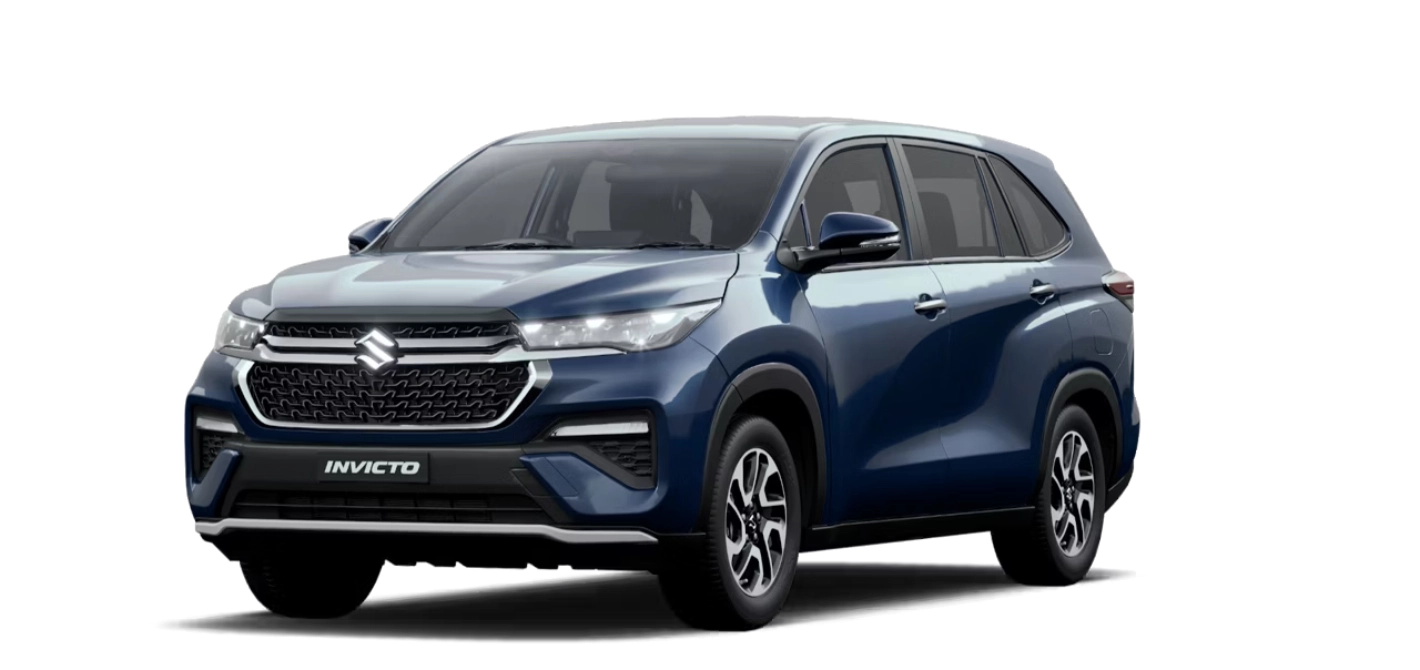
Maruti’s filing does not name the models covered, and the company has not published an official variant wise revised price list. Media reports have since listed changes on two NEXA models:
| Model | Reported Change | Approx. Share of Ex Showroom Price |
|---|---|---|
| Invicto (strong hybrid MPV) | Up to Rs 25,000 | About 0.9 to 1.0 percent |
| XL6 (MPV) | Up to Rs 5,000 | About 0.3 to 0.4 percent |
Motors77 has not been able to confirm these figures against Maruti’s own price list. The price pages on Maruti’s NEXA website do not show variant prices, and their summary ranges date from September, so they cannot yet confirm the revision either way.
If the reported figures hold, they are revealing. The XL6 change sits close to the 0.31 percent average, while the Invicto’s is about three times higher. That is how a volume weighted average works: a lower volume, higher priced model can take a bigger increase, while high volume hatchbacks see little or none. Motors77 will add confirmed Maruti Suzuki car prices for key models once they are published.
How Buyers Should Respond to Higher Maruti Suzuki Car Prices
The hike is small, but paperwork still matters.
If you have already booked a car:
- Check whether your booking terms include price protection. With most carmakers, the price that applies is the one in force at invoicing, not at booking.
- If your car was invoiced before 22 November, the revision should not apply to you.
If you are still deciding:
- Get a fresh, dated quotation for your exact variant, colour and fuel type.
- Compare the full on road figure, not just the ex showroom price.
- Ask about current offers. A small list price increase can be offset, or outweighed, by dealer or year end benefits, which vary by city and dealer.
If you are planning to buy next year:
- Factor in the possibility of further revisions. Maruti has raised prices four times since June, and the cost pressures behind them have not gone away.
Why Does This Matter? The Motors77 Analysis
On its own, a 0.31 percent average increase is a minor event. Its importance lies in what it says about the market.
The cost squeeze is not over. The West Asia conflict has pushed up commodity costs for the whole industry. Maruti has said clearly that it is absorbing part of the burden and passing on part. On the October earnings call, the CFO said “calibrated actions on the pricing front will be taken for H2”, meaning October 2026 to March 2027. The November revision is the first of those actions.
Small, frequent hikes are a deliberate choice. Maruti’s buyers are among the most price sensitive in India, especially in the entry level hatchback segment. A series of small, selective revisions is less likely to disrupt demand than one large increase. It also lets the company target models where demand is strongest, while protecting the ones where buyers are most likely to walk away.
Strong demand gives Maruti room to act. Domestic volumes rose sharply in the first half of FY2026-27, helped by festive buying and the affordability gains from earlier GST revisions. When order books are healthy, a carmaker can raise prices with less risk of losing customers. That is exactly the window Maruti is using.
Rivals face the same pressure. Tata Motors, Mahindra and Hyundai have all announced price increases in 2026. Buyers comparing brands should not assume a competitor’s price will stay where it is. Because Maruti held 40.8 percent of the domestic passenger vehicle market in Q2, according to its management, movements in Maruti Suzuki car prices tend to set the tone for the wider mass market.
Quick Pros and Cons
Pros (for buyers)
- Average increase of around 0.31 percent is modest in rupee terms
- Applies only to select models, so some variants may be unaffected
- Dealer offers can still offset the change
Cons (for buyers)
- No official variant wise revised price list from Maruti yet
- Fourth Maruti price increase since June 2026
- On road costs rise slightly more than the ex showroom change
- Cost pressures suggest further increases are possible
FAQs on Maruti Suzuki Car Prices
1. When did the latest increase in Maruti Suzuki car prices take effect? On 22 November 2026, according to the company’s regulatory filing.
2. How much have Maruti Suzuki car prices gone up? Maruti estimates a volume weighted average increase of around 0.31 percent across the affected models. Individual variants may differ.
3. Which Maruti models are affected? Maruti’s filing does not name them. Media reports point to increases of up to Rs 25,000 on the Invicto and up to Rs 5,000 on the XL6, which are yet to be confirmed against an official Maruti price list.
4. Will my booked car cost more? It depends on your variant and booking terms. Generally, the price at invoicing applies, so confirm with your dealer.
5. Why is Maruti raising prices again? The company cites sustained cost pressures. Its Q2 FY2026-27 results showed operating EBIT down 17.1 percent year on year, which it attributed to commodity price increases linked to the West Asia conflict, and management has said further calibrated pricing actions will follow in the second half of the financial year.
6. How many times has Maruti raised prices in 2026? Four times: in June, August and September, and now from 22 November.
7. Do the new Maruti Suzuki car prices apply to cars already invoiced? Generally, no. Price revisions apply to cars invoiced from the effective date, but confirm this with your dealer.
Motors77 Verdict
The 22 November revision is Maruti’s fourth increase this year and the least transparent. The earlier hikes were stated as maximum rupee amounts, this one as a sales weighted percentage, so the four are not directly comparable. A 0.31 percent average tells investors how revenue will move. It tells individual buyers little until an official variant wise price list is available.
Individual increases will vary. Reported changes range from Rs 5,000 on the XL6 to Rs 25,000 on the Invicto, and some models may not change at all. The bigger story is the trend. Maruti is selling more cars than ever, yet its own results show commodity costs eating into operating profit. As long as that remains true, buyers should expect Maruti Suzuki car prices to keep moving up in small steps rather than settling.
For buyers close to a decision, the checklist above still applies, whichever way Maruti Suzuki car prices move next. Waiting is unlikely to bring prices down.