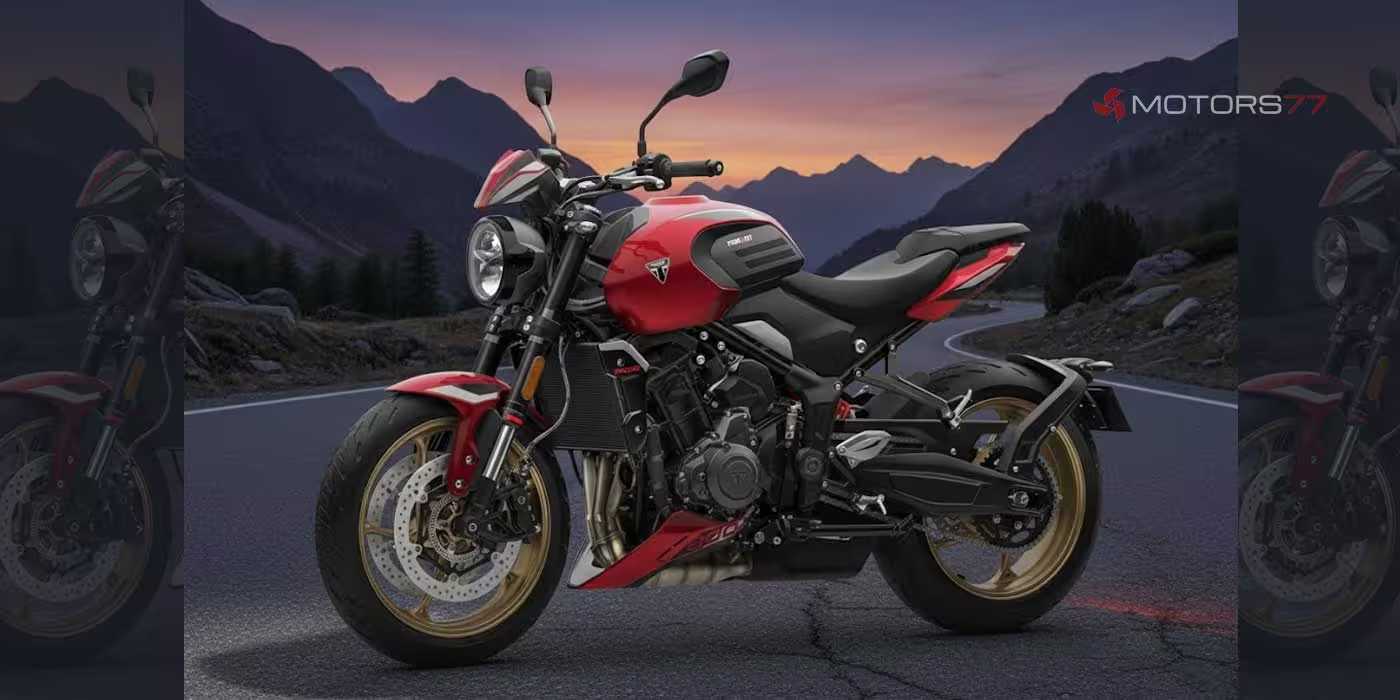
FIRST LOOK: 2026 Triumph Trident 800: After conquering global markets with the Trident 660, Triumph is back with a middleweight weapon that could reshape India’s premium motorcycle segment. We analyze whether the 2026 Trident 800 has what it takes to dominate both international and Indian roads.
THE MIDDLEWEIGHT MASTERSTROKE
Triumph Motorcycles has just unveiled what could be the most significant middleweight naked bike launch of 2026 – the all-new Trident 800. This isn’t just another displacement bump or cosmetic refresh. Instead, the British manufacturer has engineered a motorcycle that bridges the gap between accessibility and serious performance, creating something that could be particularly relevant for India’s evolving premium motorcycle market.
The strategic positioning is fascinating. The Trident 800 effectively fills the void left by the Street Triple 765 R, offering comparable performance at a more attractive price point while maintaining the approachable character that made the original Trident 660 a global success story. For Indian riders who found the 660 a bit too mild but weren’t ready for the aggressive pricing and track-focused nature of the Street Triple RS, this new middleweight could be the perfect solution.
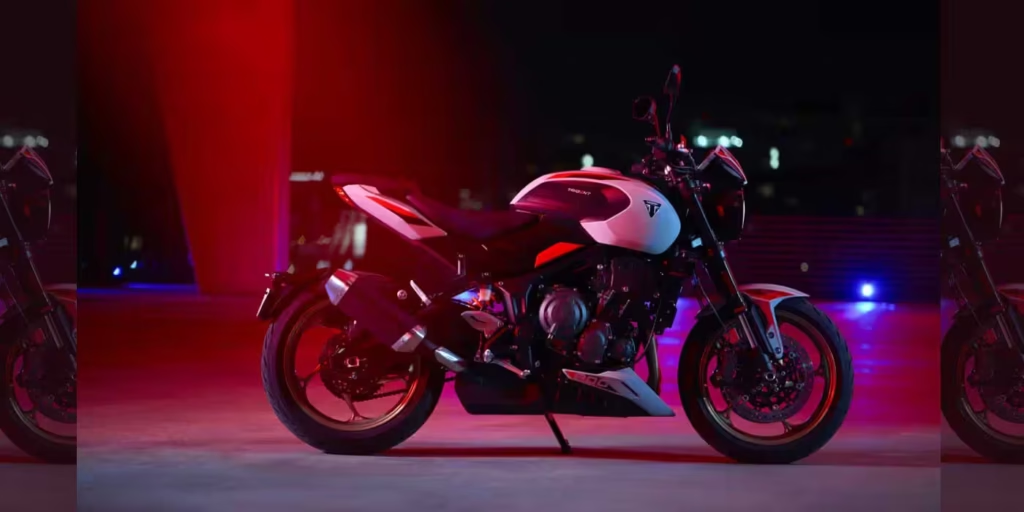
GROUND-UP 798CC TRIPLE ENGINE: ENGINEERING EXCELLENCE
At the core of the 2026 Trident 800 beats an entirely new 798cc inline-triple engine. This deserves emphasis – Triumph didn’t simply bore out the 660’s powerplant or detune a Street Triple motor. They’ve created a ground-up design that showcases their commitment to the middleweight segment.
Technical Specifications Deep Dive
Core Engine Architecture:
- Type: Liquid-cooled, inline 3-cylinder, 12 valve, DOHC configuration
- Displacement: 798cc (perfectly positioned for India’s >650cc premium segment)
- Bore x Stroke: 78mm x 55.9mm creating a balanced square configuration
- Compression Ratio: 13.2:1 (high-strung for maximum efficiency)
- Maximum Power: 113 HP (84.6 kW) @ 10,750 rpm
- Peak Torque: 84 Nm (62 lb-ft) @ 8,500 rpm
- Redline: 11,500 rpm (proper screamer territory)
Fuel & Transmission:
- Bosch electronic fuel injection with ride-by-wire throttle
- 6-speed gearbox with optimized ratios
- Wet multi-plate slip-and-assist clutch
- X-ring chain final drive
- Stainless steel 3-into-1 exhaust system
Why This Engine Matters for Indian Conditions
The power delivery characteristics of the upcoming 798 cc triple are expected to be one of its biggest strengths, particularly in Indian riding conditions. Unlike some middleweight nakeds that can feel breathless at the top end or lack punch at low speeds, the Trident 800’s triple-cylinder configuration is engineered to provide a broad and accessible powerband—ideal for everything from Mumbai’s stop-and-go traffic to long Leh-Ladakh highway stretches.
With a claimed 84 Nm arriving around 8,500 rpm, the engine should deliver strong mid-range punch, making highway overtakes confident and effortless. Whether navigating slow-moving trucks on NH-44 or climbing out of Pune’s pothole-ridden inclines, that muscular torque curve is expected to keep power always on tap.
The projected 113 horsepower output positions the Trident 800 competitively against segment rivals like the Yamaha MT-09 (117 hp) and Kawasaki Z900 (125 hp), while its distinctive triple-cylinder soundtrack promises a character and note that inline-fours and parallel-twins simply cannot replicate.
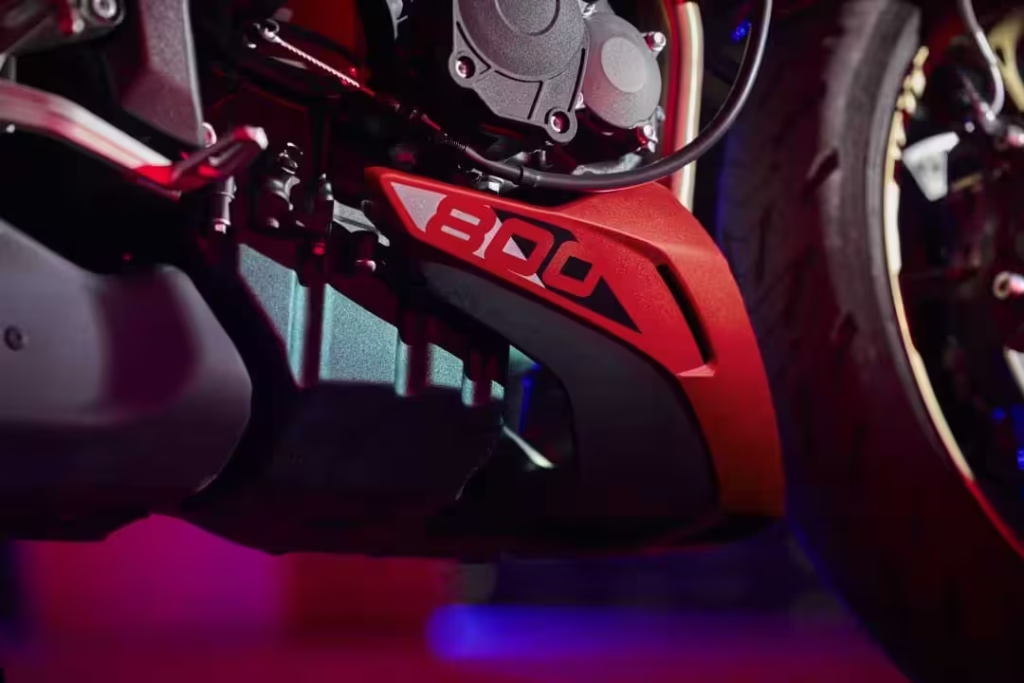
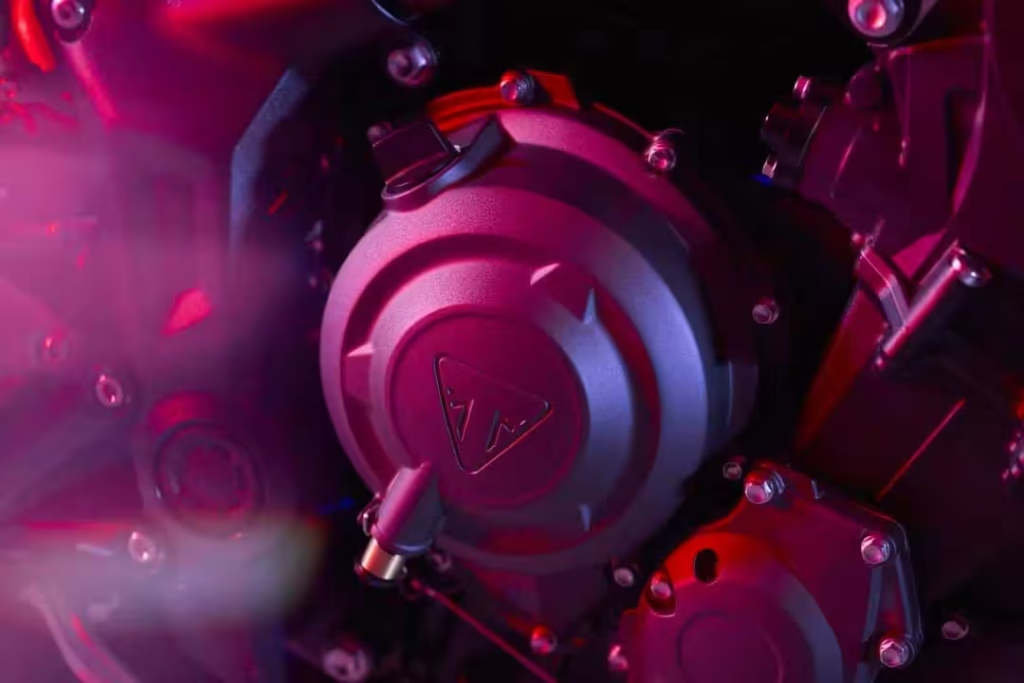
Triple Throttle Bodies: The Responsiveness Advantage
Triple Throttle Bodies: The Responsiveness Advantage
One of the standout features on the upcoming Trident 800 is the implementation of triple throttle bodies—one dedicated unit for each cylinder. This setup, a hallmark of Triumph’s three-cylinder architecture, is expected to deliver sharp and intuitive throttle response, especially beneficial in dense urban Indian traffic where split-second throttle control matters.
The new 798 cc triple engine is designed to react immediately to throttle inputs, creating the signature “connected” feel Triumph triples are known for. With Bosch electronic fuel injection and ride-by-wire throttle control, the system is engineered to offer:
- Instant, predictable throttle response for confident highway overtakes
- Eager corner-exit acceleration ideal for twisty ghat sections
- Consistent fueling across India’s diverse climates and altitudes
- A heart-racing soundtrack featuring that distinctive Triumph triple growl
The high 13.2:1 compression ratio extracts maximum efficiency from every drop of fuel – particularly important given India’s fuel prices – while contributing to the engine’s responsive character. The six perfectly-spaced gear ratios keep the engine in its sweet spot for uninterrupted acceleration, whether you’re navigating Bangalore’s Electronic City traffic or enjoying the twisties near Lonavala.
CHASSIS DYNAMICS: WHERE BRITISH ENGINEERING MEETS INDIAN REALITY
Frame Architecture and Geometry
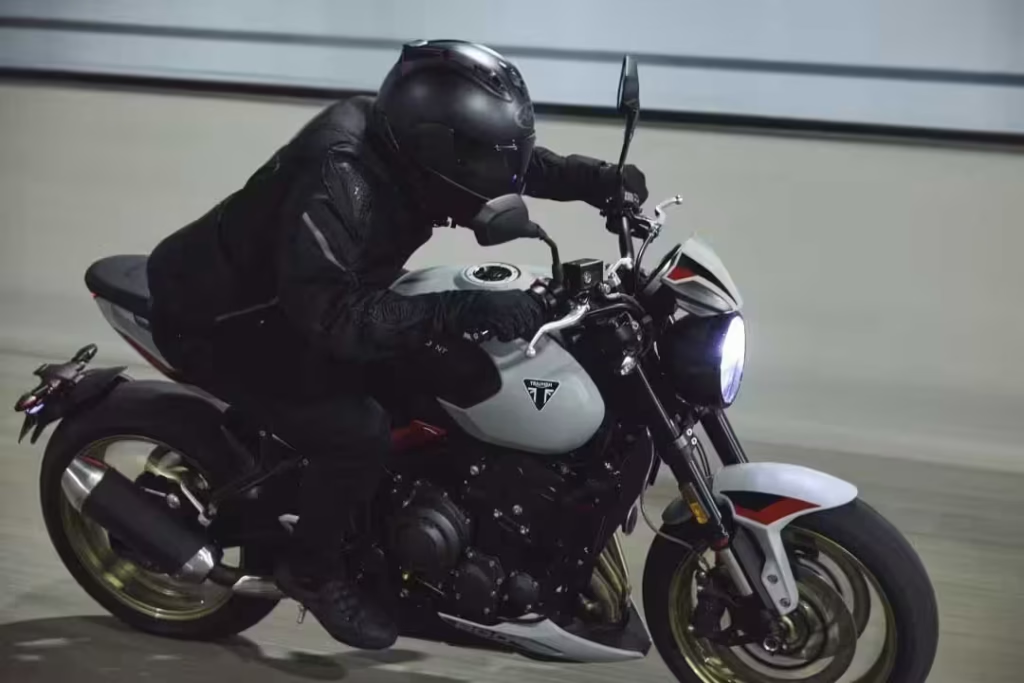
The Trident 800 utilizes a tubular steel perimeter frame that prioritizes the balance between rigidity and rider feedback. Triumph’s engineers have specifically tuned the chassis geometry to suit the increased power output while maintaining the nimble, confidence-inspiring handling that defined the 660.
Critical Chassis Specifications:
- Frame Type: Tubular steel perimeter design
- Swingarm: Twin-sided fabricated steel construction
- Wheelbase: 1,389 mm (54.7 inches) – extended for stability (preliminary international spec)
- Rake/Trail: 24.5° / 107 mm (4.2 inches)
- Seat Height: 803 mm (31.6 inches) – accessible for most Indian riders (Triumph preliminary figure; final India spec may vary slightly)
- Wet Weight: ~192 kg (~423 lbs) – impressively light (claimed ready-to-ride figure; subject to final homologation)
- Overall Width: 808 mm (31.8 inches)
- Overall Height: 1,077 mm (42.4 inches)
The slightly extended wheelbase compared to the 660 provides enhanced high-speed stability on Indian highways (crucial for those long expressway runs from Delhi to Jaipur or Mumbai to Goa) without sacrificing the quick-turning nature that makes naked bikes so enjoyable in urban environments and twisty ghat roads.
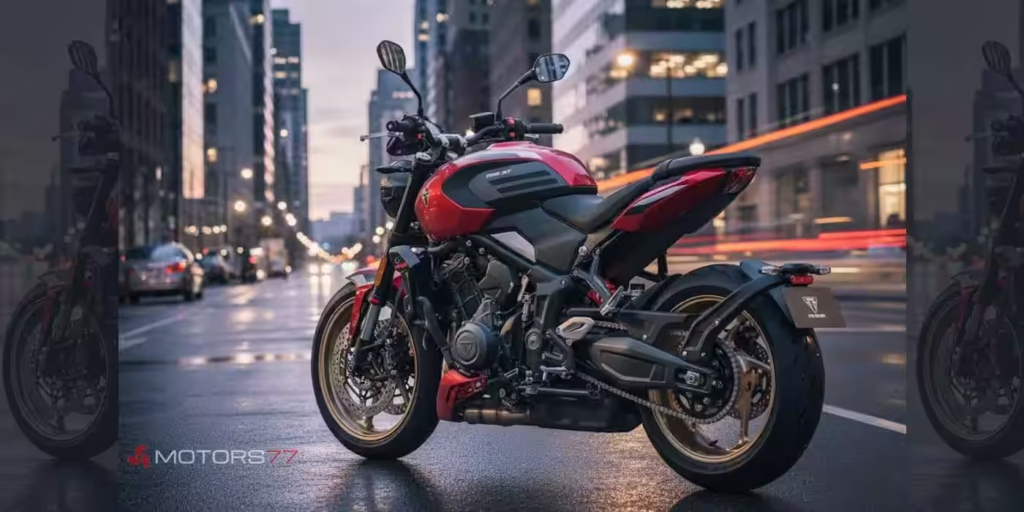
Premium Showa Suspension: Fully Adjustable Everything
Here’s where the Trident 800 truly differentiates itself from its 660 sibling and justifies its positioning as a more serious performance machine. Both front and rear suspension units are fully adjustable Showa components – a significant upgrade that’s particularly valuable for Indian conditions where road quality varies dramatically.
Front Suspension Deep Dive:
- 41mm Showa upside-down SFF-BP (Separate Function Big Piston) forks
- Fully adjustable compression damping (crucial for adapting to Indian road conditions)
- Fully adjustable rebound damping
- 120mm of wheel travel
- Premium separate-function damping technology for precise control
Rear Suspension Configuration:
- Showa RSU monoshock with piggyback reservoir
- Adjustable preload (important for riding with pillion or luggage)
- Adjustable rebound damping
- 130mm of wheel travel
- Easy-access adjusters for quick setup changes
Why Fully Adjustable Matters in India:
Indian roads present unique challenges. You might encounter glass-smooth expressway sections, then suddenly hit crater-sized potholes, followed by rough rural highways. The ability to adjust compression damping (front) and rebound damping (front and rear) means you can optimize the suspension for:
- City commuting: Softer compression for pothole absorption
- Highway touring: Firmer settings for high-speed stability and loaded riding
- Ghat road carving: Balanced setup for maximum feedback and control
- Pillion riding: Increased preload to handle extra weight
The premium Showa suspension uses separate-function damping technology where compression and rebound are handled independently, allowing for precise tuning. Together, the front and rear components deliver a controlled, composed ride that stays settled even on poor surfaces (think Mumbra bypass or Hosur Road) while maintaining lightning-quick turn-in response when you hit those perfect ghat sections.
Wheels, Tyres, and Contact Patch Quality
Wheel Specifications:
- Front: Cast aluminum alloy 5-spoke, 17 x 3.5 inches with bold gold-painted finish
- Rear: Cast aluminum alloy 5-spoke, 17 x 5.5 inches with bold gold-painted finish
- Front Tire: Michelin Road 5, 120/70 R17 (fitment shown on pre-production bikes; final tyre brand may vary by market)
- Rear Tire: Michelin Road 5, 180/55 R17 (fitment shown on pre-production bikes; final tyre brand may vary by market)
The bold gold-painted wheels aren’t just for show – they’re a visual statement that screams performance while complementing all three color schemes. More importantly, Triumph has fitted premium Michelin Road 5 tires as standard equipment on display/demo bikes, not budget rubber. For Indian conditions, this matters enormously.
The Michelin Road 5 range is specifically engineered for:
- Predictable grip in both wet and dry conditions (critical during monsoon season)
- Excellent wear characteristics for high-mileage Indian touring
- Reassuring feedback during quick direction changes
- Strong performance even as the tires age
These tires typically cost ₹18,000-22,000 for a set in India, so having them as standard equipment adds significant value.
COMPREHENSIVE ELECTRONICS: MODERN RIDER AIDS WITHOUT COMPLEXITY
Instrument Cluster and Connectivity
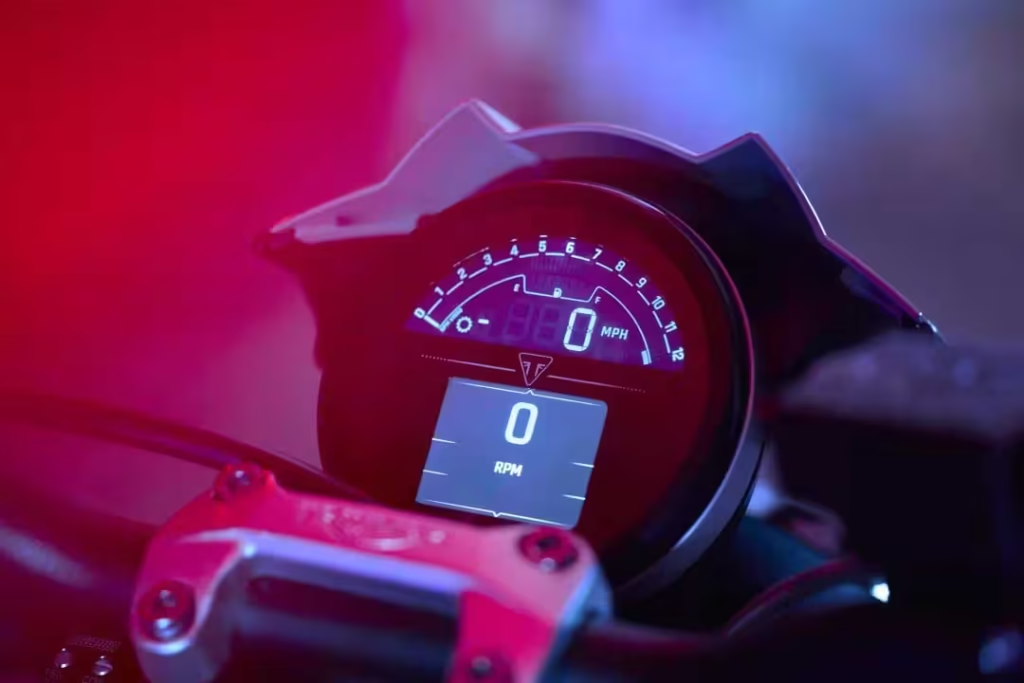
The 2026 Trident 800 features a classic round instrument cluster that combines a large LCD display for core riding data with an integrated color TFT screen for menus and navigation prompts. The interface is clear, the controls are intuitive, and the systems remain unobtrusive, allowing riders to keep their focus on the road ahead.
MyTriumph Connectivity System:
Stay connected without distraction through Triumph’s MyTriumph connectivity system. Simply pair your smartphone via Bluetooth to access:
- Turn-by-turn navigation displayed directly on the dash (no more phone mounts)
- Call control and notifications without touching your phone
- Media/music playback control from handlebar switches
- All functions commanded from the intuitive left-hand switch cube
For Indian riders navigating unfamiliar cities or exploring new routes, having integrated navigation without relying on phone mounts (which can overheat in Indian summers) is genuinely useful. Your route and playlist remain always in view, keeping you on track without taking your hands off the bars or eyes off the road.
Advanced Rider Aids: Safety Meets Performance
Modern motorcycles live or die by their electronics suite, and Triumph has equipped the Trident 800 with a comprehensive package that’s particularly relevant for Indian riding conditions:
Standard Electronic Features:
1. Three Riding Modes (Sport, Road, Rain):
Each mode adjusts throttle response and traction control intervention to match conditions and rider preference. In Indian context:
- Sport Mode: Minimal intervention for spirited ghat riding or track days
- Road Mode: Balanced performance for highway touring and daily commuting
- Rain Mode: Maximum intervention for monsoon conditions on slippery roads
2. OCABS (Optimally Controlled ABS):
IMU-assisted lean-sensitive anti-lock braking that adjusts braking performance based on lean angle. This means confident stopping power even while cornering in traffic or on wet roads – a genuine safety advantage in unpredictable Indian traffic conditions.
3. Lean-Sensitive Traction Control:
Switchable traction control that monitors rear wheel slip based on lean angle. Unlike basic systems that kill power indiscriminately, this sophisticated setup allows controlled slides while preventing dangerous highsides. Can be completely disabled for experienced riders who want total control.
4. Bi-Directional Quickshifter:
Clutchless upshifts AND downshifts as standard equipment – not an optional extra. This allows seamless gear changes without using the clutch or closing the throttle, enhancing both performance riding and everyday usability in traffic.
5. Cruise Control:
One-press activation for effortless speed maintenance on longer rides (think Mumbai-Goa or Delhi-Chandigarh runs). Easily disengaged by throttle, clutch, or brakes. This feature alone can reduce fatigue significantly on India’s long highway stretches.
6. Self-Canceling Indicators:
Added everyday convenience that’s genuinely useful in heavy traffic where you might forget to cancel indicators manually.
7. Full LED Lighting:
Bright, efficient LEDs throughout including:
- Distinctive LED headlight with eye-catching DRL (better visibility in traffic)
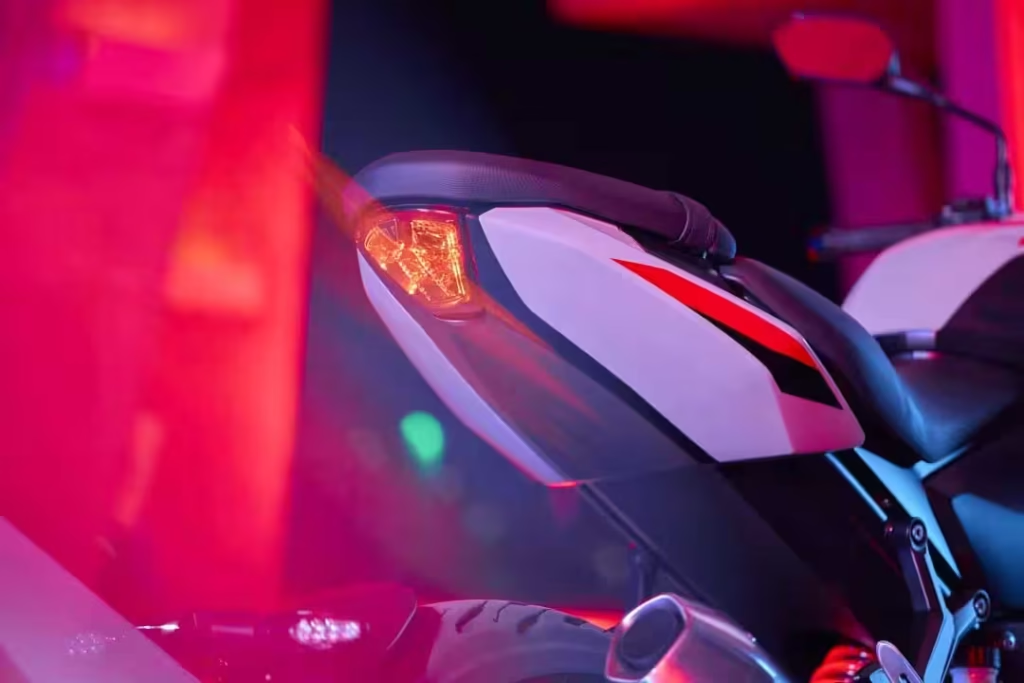
- LED tail light with integrated brake light
- LED turn signals
- Improved visibility with lower power draw
Braking System: Progressive Power with Safety
Front Braking:
- Twin 310mm (12.20 inch) floating discs
- 4-piston radial-mount calipers (Triumph preliminary spec; final India homologation may confirm caliper supplier and piston count)
- Stainless steel braided lines (better lever feel, fade resistance)
- OCABS lean-sensitive ABS
Rear Braking:
- Single rear disc with single-piston sliding caliper
- OCABS lean-sensitive ABS
The radial-mounted front calipers provide strong, progressive braking with reassuring lever feel. The OCABS system uses an Inertial Measurement Unit (IMU) to monitor lean angle in real-time and adjust braking performance accordingly, ensuring confident stopping power even while cornering – critical when navigating India’s unpredictable traffic situations.
The bi-directional quickshifter deserves special emphasis. Many competitors charge ₹15,000-30,000 extra for this feature or only include upshifts. Triumph has made full bi-directional shifting standard on the Trident 800, allowing you to bang through gears without touching the clutch in both directions.
2026 Color Schemes: Three Distinct Personalities
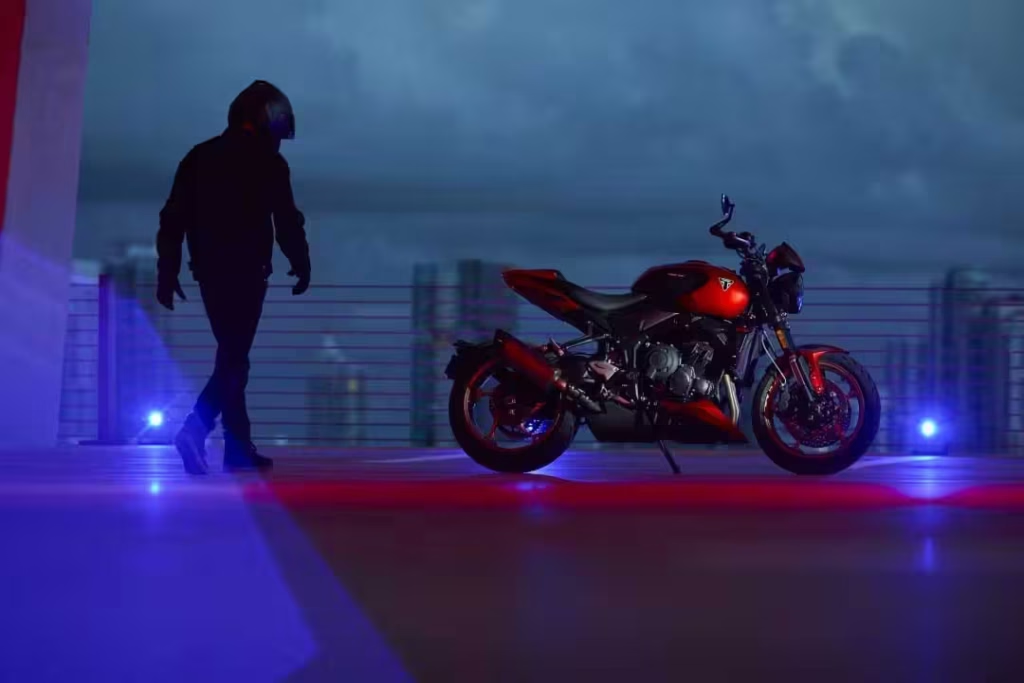
1. Ash Grey with Diablo Red:
Clean and contemporary with bold red detailing that creates striking contrast. This scheme offers modern sophistication with aggressive accents – perfect for riders who want contemporary style without being overtly flashy.
2. Carnival Red with Graphite:
Refined style with a sports edge. The red and graphite combination delivers classic sports bike aesthetics with mature execution. This is the choice for riders who appreciate traditional performance bike colors executed with premium finish quality.
3. Jet Black:
Darker, moodier vibe for those seeking understated aggression. The all-black treatment creates a menacing presence while remaining elegant. Perfect for riders who prefer stealth aesthetics and versatility (black hides dust better in Indian conditions).
Each color scheme is meticulously executed with attention to detail, and the Trident 800 rewards close inspection with its premium finishes throughout. The paint quality appears to be the same high standard we’ve seen on higher-priced Triumph models.
GLOBAL COMPETITIVE ANALYSIS: HOW IT STACKS UP
The middleweight naked segment is fiercely competitive globally, and understanding where the Trident 800 fits helps contextualize its value proposition. Let’s examine how it compares to established players:
Yamaha MT-09 (2025)
Specifications:
- 890cc inline-three engine
- 117 hp peak power
- Global pricing: ~$10,199 USD
- India availability: Not officially sold
Known For:
Torquey CP3 triple engine character, excellent electronics package with six-axis IMU, mature platform with proven reliability, strong dealer network globally.
Trident 800 Advantages:
- Better suspension adjustability (MT-09 has only preload-adjustable rear)
- More refined finish quality and premium materials
- Premium Michelin Road 5 tires as standard (MT-09 uses Bridgestone Battlax)
- Better overall value when you factor in standard equipment
- More comfortable ergonomics for all-day riding
Kawasaki Z900 (2025)
Specifications:
- 948cc inline-four engine
- 125 hp peak power
- Global pricing: ~$9,399 USD
- India price: ₹8,69,000 (ex-showroom)
Known For:
Raw power delivery, aggressive styling, inline-four smoothness, strong brand presence in India, established dealer network with good parts availability.
Trident 800 Advantages:
- Superior low-end and mid-range torque characteristics
- Distinctive triple-cylinder character and soundtrack
- Significantly better electronics package (Z900 has basic ABS only)
- Fully adjustable suspension vs Z900’s basic setup
- Better fuel efficiency for lower running costs
- More sophisticated rider aids
Ducati Monster (2024)
Specifications:
- 937cc L-twin engine
- 111 hp peak power
- Global pricing: ~$11,895 USD
- India price: ₹11,96,323 (ex-showroom)
Known For:
Italian design excellence, Ducati prestige and heritage, iconic Monster lineage dating back to 1993, distinctive L-twin character with that signature Ducati soundtrack.
Trident 800 Advantages:
- Significantly lower pricing (approximately $1,900 less globally, potentially ₹2,00,000+ less in India if Triumph hits projected pricing)
- Better practicality for daily use and touring
- Three-cylinder versatility vs twin-cylinder character
- Standard cruise control (not available on Monster)
- Lower service costs and longer service intervals
- Better fuel economy for reduced running costs
- More accessible ergonomics
KTM 890 Duke R
Specifications:
- 890cc parallel-twin engine
- 121 hp peak power
- Global pricing: ~$11,699 USD
- India availability: Not officially sold (790 Duke available)
Known For:
Track-focused performance, aggressive ergonomics optimized for spirited riding, lightweight construction, sharp handling dynamics, distinctive Austrian character.
Trident 800 Advantages:
- More user-friendly character for varied riding conditions
- Triple smoothness vs parallel-twin vibration
- Better touring capability with more comfortable ergonomics
- Approximately $1,700 lower pricing globally
- Standard cruise control for highway comfort
- More refined electronics integration
- Better wind protection with standard flyscreen
INDIAN MARKET CONTEXT: WHAT TO EXPECT
Projected India Pricing and Positioning
While Triumph hasn’t officially announced India pricing yet, we can make educated projections based on their global pricing strategy and current India lineup:
Global Price (target): $9,995 USD
Trident 660 India Price: ₹7,45,000 (ex-showroom)
Street Triple R India Price: ₹9,25,000 (ex-showroom)
Street Triple RS India Price: ₹11,13,000 (ex-showroom)
Projected Trident 800 India Price: ₹8,50,000 – ₹8,95,000 (ex-showroom, estimated)
This positioning would place it perfectly between the Trident 660 and Street Triple R, undercutting the Kawasaki Z900 (₹8,69,000) while offering significantly more features and better components.
Why the Indian Market Needs the Trident 800
India’s premium motorcycle segment (above 500cc) has been growing consistently at 15-20% annually. Riders are increasingly looking for performance motorcycles that can handle diverse Indian conditions while offering premium features. The Trident 800 addresses several gaps in the current market:
1. The Missing Middleweight:
Currently, riders jump from 400-500cc bikes directly to 750-900cc machines. The Trident 800 fills this gap perfectly, offering accessible performance without overwhelming power.
2. Affordable Premium:
Unlike European competitors priced at ₹11-15 lakhs, the Trident 800 could deliver premium features at ₹8-9 lakhs, making it accessible to a broader audience of enthusiasts.
3. Versatility for Indian Conditions:
Most performance bikes are either too track-focused (uncomfortable for daily use) or too touring-oriented (boring for spirited rides). The Trident 800’s balance suits India’s varied riding landscape perfectly.
4. Triumph Brand Appeal:
Triumph has strong brand equity in India with a growing dealer network and improving after-sales support. The Trident 660 has been a success story, and the 800 builds on that foundation.
Competitive Landscape in India
The Trident 800 would compete directly against:
Kawasaki Z900 (₹8,69,000):
Currently dominates this segment in India with strong sales and brand recognition. The Trident 800 could challenge this dominance with better electronics and suspension.
Triumph Street Triple R (₹9,25,000):
Triumph’s own product, but positioned more aggressively. The 800 offers 90% of the performance at potentially ₹30,000-50,000 less (projected).
Ducati Monster (₹11,96,323):
Premium option with Italian cachet but significantly more expensive. The Trident 800 offers better value and practicality.
Future Competition:
Yamaha MT-09 (if officially launched), KTM 890 Duke (if introduced), Honda CB750 Hornet (if it reaches India).
INDIA-SPECIFIC CONSIDERATIONS AND EXPECTATIONS
Dealership Network and After-Sales Support
Triumph India has been steadily expanding its dealership network with an increasing number of full-service locations across major metros and Tier-1 cities, and a growing footprint in Tier-2 hubs (as per Triumph’s official dealer list). This includes:
Current Presence (verified Triumph India dealer network):
- Delhi NCR
- Mumbai / Thane / Navi Mumbai
- Bangalore (multiple locations)
- Pune
- Ahmedabad
- Kochi
- Hyderabad
- Chennai
- Kolkata
- Plus expanding coverage in cities like Nagpur, Indore, Coimbatore, Guwahati, etc.
Service Infrastructure:
Triumph India has been improving its after-sales support with:
- Trained technicians at authorized service centers
- Genuine parts availability improving (though still slower than Japanese brands)
- Extended warranty options available
- Roadside assistance programs
- Mobile service options in select cities
Expected Trident 800 Support:
Given the Trident 660’s success in India, we expect:
- Good parts availability for common service items
- Shared component philosophy with the 660 reducing parts complexity
- Reasonable service costs following 660’s pricing structure
- Adequate technician training before launch
Competitive Pricing Strategy for India
For Triumph India to make the Trident 800 a success, pricing will be critical. Here’s our analysis:
If priced at ₹8,50,000-₹8,75,000 (projected):
- Extremely competitive against Z900 (₹8,69,000)
- Significantly undercuts Street Triple R (₹9,25,000)
- Offers better value than Monster (₹11,96,323)
- Strong value proposition with standard features
- Likely outcome: Strong sales, market disruption
If priced at ₹8,75,000-₹9,25,000:
- Still competitive but less aggressive
- Competes directly with Z900 on features vs price
- Marginal savings vs Street Triple R
- Value proposition depends on standard equipment
- Likely outcome: Moderate success, niche appeal
If priced above ₹9,25,000:
- Difficult to justify vs Street Triple R
- Loses value advantage over Z900
- Premium pricing without premium positioning
- May struggle to find buyers
- Likely outcome: Disappointing sales
Our prediction: Triumph India will price it between ₹8,50,000-₹8,95,000 to maximize volume and establish market dominance.
EXPECTED INDIA LAUNCH TIMELINE AND AVAILABILITY
Global Launch vs India Arrival
Global Timeline (as communicated so far):
- Official unveiling: October 2025 (completed)
- International deliveries: April 2026 (targeted timeline)
- Global dealer availability: May-June 2026 (targeted timeline)
India Timeline (Projected):
- Official India announcement: February-March 2026 (likely at India Bike Week)
- Price announcement: March-April 2026
- Dealership availability: June-August 2026 (projected)
- First customer deliveries: July-September 2026 (projected)
Reasoning for Delay:
Triumph India typically launches new models 2-4 months after global availability due to:
- Homologation and ARAI certification requirements
- Building initial inventory for nationwide distribution
- Dealer training on new model
- Marketing campaign preparation
- Pricing strategy finalization based on import duties and taxes
MOTORS77 VERDICT: IS IT THE STREET TRIPLE KILLER?
After analyzing every aspect of the 2026 Triumph Trident 800, from its ground-up engineered 798cc triple to its comprehensive electronics package and strategic pricing, we can confidently say this motorcycle represents a watershed moment in the middleweight naked segment.
What Makes It Special: The Complete Picture
The Engine is the Star:
That all-new 798cc triple isn’t just a displacement number – it’s a carefully engineered powerplant that delivers instant throttle response, muscular mid-range torque (84 Nm), thrilling top-end power (113 HP), and that unmistakable triple howl. Competitors’ parallel-twins and inline-fours simply cannot replicate this addictive character.
Chassis and Suspension Excellence:
At just ~192 kg wet (~423 lbs, manufacturer claim), the Trident 800 is genuinely lightweight. Combined with fully adjustable Showa suspension front and rear, it delivers lightning-quick turn-in with high-speed stability and composure over rough surfaces – the perfect combination for Indian roads.
Electronics That Actually Help:
IMU-assisted lean-sensitive ABS and traction control, three riding modes including Sport, bi-directional quickshifter, cruise control, and MyTriumph connectivity – all standard, not optional extras. This is equipment that enhances riding without overwhelming you.
The Value Proposition is Unbeatable:
At $9,995 globally (projected, Triumph target pricing) and a projected ₹8,50,000-₹8,95,000 in India, the Trident 800 undercuts the Street Triple 765 R by over $1,000 (₹30,000-50,000) while offering comparable performance and superior standard features. When competitors charge hundreds extra for quickshifters and cruise control, Triumph includes them as standard.
Design That Commands Attention:
Rebellious yet refined with muscular stance, premium finishes, bold gold wheels, and signature LED lighting. The attention to detail rewards close inspection, and the three color schemes offer distinct personalities.
Practical for Indian Reality:
- Exceptional ~50 mpg (21 km/l) fuel economy (manufacturer claim)
- 16,000 km service intervals (based on current Triumph middleweight practice)
- Manageable ~31.6-inch seat height
- Adequate ground clearance for Indian roads
- ~14-liter tank for reasonable range
- Fully adjustable suspension for varying conditions
Is It Really a Street Triple Killer?
In terms of value? Absolutely yes. The Trident 800 delivers 90-95% of Street Triple R performance at significantly lower cost with better standard equipment. For most riders, this is the smarter choice.
In terms of outright performance? No. The Street Triple RS remains Triumph’s track-focused weapon with Öhlins suspension, Brembo Stylema brakes, and more aggressive setup. But that’s not what most buyers need.
The real answer: The Trident 800 doesn’t kill the Street Triple – it perfects the formula for real-world riders. It’s the bike the Street Triple 765 R should have been: accessible performance with premium features at sensible pricing.
YOUR QUESTIONS ANSWERED: TRIDENT 800 FAQ FOR INDIAN BUYERS
Q: When will the Trident 800 be available in India?
A: While not officially confirmed, based on Triumph India’s typical launch patterns, expect availability between June-August 2026, approximately 2-3 months after the global April 2026 launch (projected timeline).
Q: What will be the on-road price in major cities?
A: Based on projected ex-showroom price of ₹8,50,000-₹8,95,000 (estimated):
- Delhi/NCR: ₹10,25,000-10,75,000
- Mumbai: ₹10,50,000-11,00,000
- Bangalore: ₹11,00,000-11,50,000
- Pune: ₹10,75,000-11,25,000
(Prices vary based on state taxes, RTO charges, and insurance)
Q: Should I wait for the 800 or buy the Trident 660 now?
A: If you want more performance and can wait 6-8 months, the 800 is worth waiting for. If you need a bike immediately, the 660 remains excellent value at ₹7,45,000. The 800 offers ~70% more power for approximately ₹1 lakh more (projected pricing gap).
Q: How does it compare to the Kawasaki Z900?
A: The Z900 has more peak power (125 hp vs 113 hp) but the Trident 800 offers better mid-range torque, fully adjustable suspension, comprehensive electronics, better fuel economy, and distinctive triple character at similar projected pricing.
Q: Will service and maintenance be expensive?
A: Based on Trident 660 ownership costs, expect ₹7,000-10,000 per annual service with 16,000 km intervals. This is comparable to Japanese bikes but service intervals are longer, reducing frequency and hassle.
Q: Can it handle Indian roads and conditions?
A: Yes. The fully adjustable suspension, adequate ground clearance, upswept exhaust, and proven Trident platform design make it well-suited for Indian roads. The 660 has been handling Indian conditions well for years.
Q: Is premium fuel mandatory?
A: With 13.2:1 compression, Triumph will likely recommend 95+ octane fuel. Using lower octane may cause knocking and reduce performance. Factor in ₹5-10/liter extra for premium fuel in running costs.
Q: How reliable is Triumph after-sales in India?
A: Improving but still behind Japanese brands. If you have a Triumph dealership within reasonable distance with good reputation, after-sales experience should be acceptable. Remote areas may face longer wait times for parts.
Q: Can I use it for daily commuting?
A: Absolutely. The upright position, smooth engine, self-canceling indicators, cruise control, and manageable weight make it an excellent commuter that happens to be thrilling on weekends.
Q: What about resale value?
A: Triumph bikes historically have lower resale value than Japanese competitors in India (typically 50-60% after 3 years vs 65-75% for Japanese bikes). However, the Trident platform’s popularity may improve this.
Q: Is it suitable for touring with pillion and luggage?
A: Yes, with accessories. The comfortable ergonomics, cruise control, good fuel economy, and available luggage options make it capable for touring. Adjust rear suspension preload when carrying pillion or luggage.