
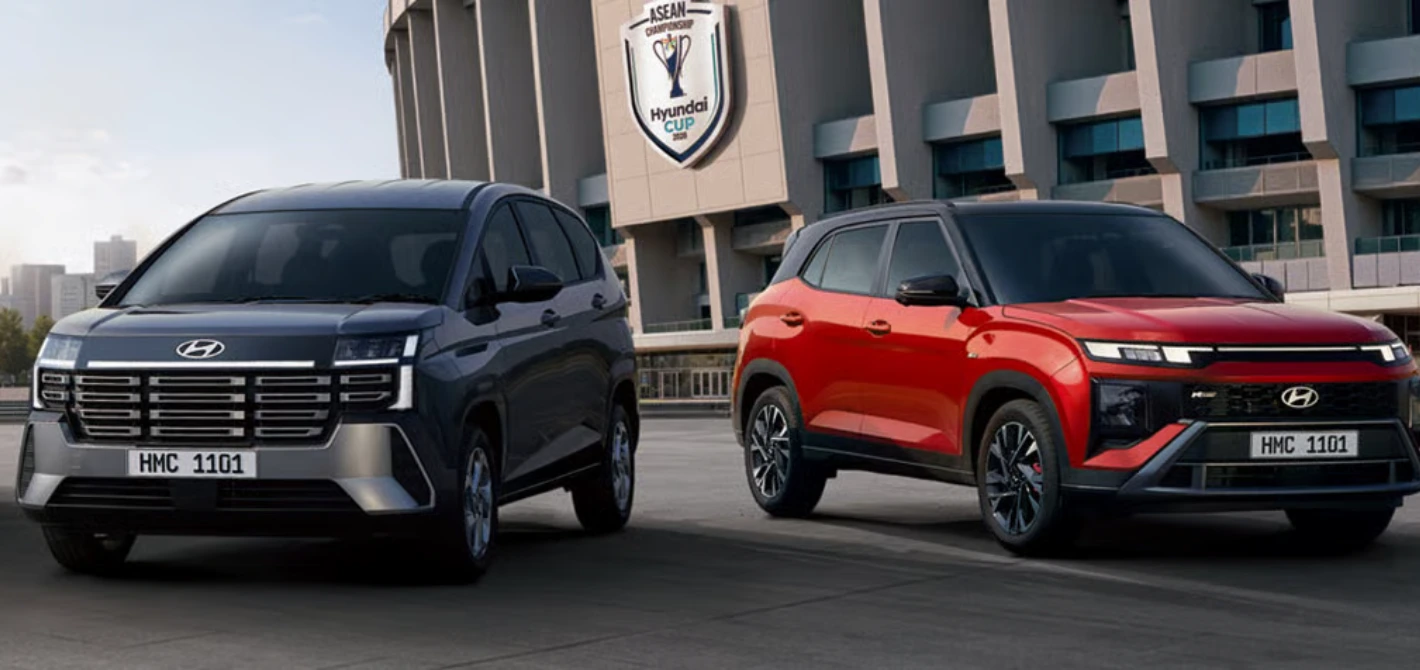
The Hyundai price hike announced this week gives car buyers a very short window. Hyundai Motor India Limited (HMIL) will raise prices on select models and variants by up to ₹8,000, effective December 1, 2026. Buyers should ask their dealer how the invoicing date affects the price they pay.
The company announced the Hyundai price hike on Tuesday, November 24, 2026, and attributed it mainly to a steep increase in input costs. The exact increase will vary by model and trim. Hyundai has not yet published a list of affected models or a variant wise breakdown, which means buyers will need to confirm the revised figure with their dealer.
On its own, ₹8,000 sounds modest. But this is Hyundai’s fourth price revision of 2026, and it arrives as the company reports record sales alongside sharply lower quarterly profit. That context explains more about this Hyundai price hike than the headline number does.
Hyundai Price Hike: What Has Been Announced
| Detail | Information |
|---|---|
| Company | Hyundai Motor India Limited (HMIL) |
| Announcement date | November 24, 2026 |
| Effective date | December 1, 2026 |
| Maximum increase | Up to ₹8,000 |
| Scope | Select models and variants only |
| Reason cited | Steep increase in input costs |
| Model wise list | Not published yet |
| Revision number in 2026 | Fourth |
Unlike Hyundai’s earlier revisions this year, the December increase is not portfolio wide. It applies only to selected models and trims, and it is capped as a fixed rupee amount rather than a percentage. Hyundai has said it absorbed a large share of rising costs through internal efficiency improvements and cost optimisation before passing part of the burden on to customers.
Which Models Does the Hyundai Price Hike Cover
Hyundai has not named the models covered by the December revision. Its main Indian models are listed below for reference only. Inclusion in this table does not mean a model’s price will rise.
| Model | Body Type |
|---|---|
| Grand i10 Nios | Hatchback |
| i20 | Premium hatchback |
| Aura | Compact sedan |
| Exter | Micro SUV |
| Venue | Compact SUV |
| Bayon | Compact SUV |
| Verna | Midsize sedan |
| Creta | Midsize SUV |
| Creta Electric | Electric midsize SUV |
| Alcazar | Three row SUV |
| Ioniq 5 | Electric SUV |
Motors77 will update this article if Hyundai or its dealers publish a model wise breakdown before or after December 1.
Hyundai Price Hike History: Fourth Revision of 2026
This Hyundai price hike is part of a pattern that has run through the entire year. Each revision has cited costs, and each has been framed as partial rather than full recovery.
| Effective Date | Increase | Scope | Reason Cited |
|---|---|---|---|
| January 1, 2026 | Weighted average of about 0.6% | Entire range | Precious metals and commodity costs (per regulatory filing) |
| June 1, 2026 | Up to ₹12,800 | Across models | Input costs (announced in April, initially planned for May) |
| September 2026 | Up to 1% (announced cap) | Entire portfolio | Input and commodity costs, operating expenses, geopolitical and macroeconomic uncertainty |
| December 1, 2026 | Up to ₹8,000 | Select models and trims | Steep increase in input costs |
Two shifts stand out. First, the size of the increase has narrowed. The September revision allowed up to 1 percent across every model, while the December move caps the rise at ₹8,000 on select variants only. Second, Indian carmakers have commonly revised prices in January and April. Hyundai has made four revisions in 2026, more often than that pattern.
Why the Hyundai Price Hike Is Happening: Record Sales, Falling Margins
Hyundai’s Q2 FY27 results provide useful context for the Hyundai price hike, although the company itself has cited rising input costs, not demand, as the reason for the revision.
Q2 FY27 Results (July to September 2026, Consolidated)
| Metric | Q2 FY27 | Q2 FY26 | Change |
|---|---|---|---|
| Revenue from operations | ₹20,696 crore | ₹17,461 crore | Up 18.5% |
| EBITDA | ₹1,974 crore | ₹2,428 crore | Down 18.7% |
| EBITDA margin | 9.5% | 13.9% | Down 4.4 percentage points |
| Net profit | ₹1,196 crore | ₹1,572 crore | Down 23.9% |
| Total vehicle sales | 219,072 units | 190,921 units | Up about 15% |
Revenue crossed ₹20,000 crore in a quarter for the first time and volumes reached a quarterly record, yet net profit fell 23.9 percent. Hyundai said elevated commodity costs weighed on the quarter’s profitability, and it expects cost pressures to persist. The 9.5 percent margin is a single quarter figure; it does not by itself indicate how the full financial year will end.
Record Monthly Sales
| Month | Total Sales | Domestic | Exports |
|---|---|---|---|
| September 2026 | 77,916 units | 57,166 units | 20,750 units |
| October 2026 | 82,299 units | 62,799 units | 19,500 units |
October 2026 was Hyundai Motor India’s highest ever month, with total sales up 17.7 percent year on year and domestic sales up 16.7 percent. The Venue posted its best ever domestic month at 13,017 units.
Hyundai has not linked the revision to demand. Read together, however, the figures show the increase arriving during a period of strong sales, and its small, selective size limits the effect on year end buyers.
What the Hyundai Price Hike Means at Different Price Points
Because the cap is a fixed amount, its impact as a percentage falls as the vehicle price rises. Buyers of Hyundai’s entry level cars will feel the maximum increase more than buyers of its SUVs, if their chosen variant is included.
| Ex Showroom Price | ₹8,000 as % of Price |
|---|---|
| ₹6 lakh | 1.33% |
| ₹8 lakh | 1.00% |
| ₹10 lakh | 0.80% |
| ₹15 lakh | 0.53% |
| ₹20 lakh | 0.40% |
| ₹25 lakh | 0.32% |
These figures assume the full ₹8,000 applies. Many variants may see a smaller increase, and some may see none.
The Real Cost on Road and on EMI
The increase does not stop at the ex showroom price. Road tax in most states is linked to the vehicle price, so a higher ex showroom figure lifts the on road price slightly further. As an illustrative assumption only, a 10 percent road tax applied to the full increase would add roughly ₹800 more. Actual state rates and slabs differ.
Illustratively, at an assumed 9 percent interest rate, financing the full ₹8,000 adds roughly ₹166 to a five year EMI, or about ₹129 to a seven year EMI.
Hyundai Price Hike Versus Other Carmakers
The Hyundai price hike is not an isolated move. The largest manufacturers in the market have moved prices within days of each other.
| Manufacturer | Effective Date | Reported Increase |
|---|---|---|
| Maruti Suzuki | November 22, 2026 | About 0.31% volume weighted average, select models |
| Hyundai | December 1, 2026 | Up to ₹8,000, select models and trims |
| Tata Motors Passenger Vehicles | December 1, 2026 | About 0.5% average, entire portfolio including EVs |
| Audi India | January 1, 2027 | Up to 2% |
Maruti Suzuki’s stock exchange filing cites sustained cost pressures, while Tata Motors’ filing says input costs continue to remain elevated. Maruti Suzuki, Tata Motors and Hyundai have each announced several price revisions during 2026, while Audi’s increase is timed for January. Hyundai’s capped rupee approach is one of the more restrained in the group.
Should You Buy Before the Hyundai Price Hike?
For buyers who have already chosen a model and variant, buying early can make sense, but with one important check.
Booking terms vary between dealers, so buyers should read theirs carefully. Booking on November 30 does not by itself guarantee the current price. Ask the dealer which price will apply to your invoice, and get any price protection confirmed in writing.
Weigh the Hike Against Year End Offers
Dealers may run year end offers in December. If an offer is available on your chosen variant, compare its value against the revised price. Before invoicing, also check the specific vehicle’s manufacture date on its documents, and weigh that against any discount.
A Simple Decision Guide
| Your Situation | Suggested Approach |
|---|---|
| Variant chosen, stock available | Ask which price will apply to your invoice |
| Car arriving after December 1 | Request written price protection |
| Still comparing models | Compare December offers after the revision |
| Considering a December offer | Check the vehicle’s manufacture date and weigh it against the discount |
Why This Hyundai Price Hike Matters
The deeper story is not ₹8,000. It is the direction of the Indian car market. Several manufacturers are reporting strong volumes while citing elevated input costs in their filings, and each has announced more than one price revision this year.
Hyundai’s answer this time is targeted and restrained: select variants, a capped rupee amount and timing just ahead of the December sales month. Hyundai has said it expects cost pressures to persist, so further revisions in 2027 cannot be ruled out.
Quick Pros and Cons
Pros (for buyers)
- Increase is capped at ₹8,000 and limited to select models and trims
- Small impact on EMIs, around ₹129 to ₹166 per month on typical loan tenures
- Revised prices do not take effect until December 1
- Year end offers may offset the increase on some variants
Cons (for buyers)
- Fourth Hyundai price revision of 2026
- No model wise list published yet, making planning harder
- Entry level buyers feel the largest percentage impact
- On road prices rise slightly more due to price linked road tax
- Further revisions are possible if cost pressure continues
Frequently Asked Questions
1. How much is the Hyundai price hike in December 2026? Hyundai will raise prices by up to ₹8,000 on select models and variants. The exact increase varies by model and trim.
2. When does the Hyundai price hike come into effect? The revised prices take effect on December 1, 2026.
3. Which Hyundai models are affected? Hyundai has not published the list of affected models yet. Buyers should confirm the revised price of their chosen variant with an authorised dealer.
4. Why is Hyundai increasing prices? Hyundai has cited a steep increase in input costs. The company said it absorbed much of the rise through efficiency improvements before passing part of it on.
5. Is this the first Hyundai price hike of 2026? No. It is Hyundai’s fourth revision of the year, following increases in January, June and September.
6. Will booking before December 1 protect me from the increase? Not necessarily. Booking terms vary. Ask your dealer which price will apply to your invoice and get any price protection in writing.
7. Are other carmakers raising prices too? Yes. Maruti Suzuki revised prices from November 22, Tata Motors from December 1 and Audi India from January 1, 2027.
8. How much will the increase add to my EMI? Illustratively, at an assumed 9 percent interest rate, the full ₹8,000 adds roughly ₹166 per month over five years or about ₹129 per month over seven years.
Motors77 Verdict
This Hyundai price hike is small in rupees but significant in what it reveals. Hyundai Motor India has just reported its highest ever quarterly and monthly sales, alongside a sharp fall in quarterly profit that it attributes to elevated commodity costs. A capped, selective increase of up to ₹8,000 is a measured response that limits the impact on buyers.
For buyers facing the Hyundai price hike, the practical advice is simple. If your model and variant are decided and the car is in stock, ask the dealer which price will apply to your invoice and get any price protection in writing. If you are still undecided, there is no need to rush; compare any December offer against the revised price. Further increases remain possible if cost pressures continue, though Hyundai has not announced a 2027 hike.