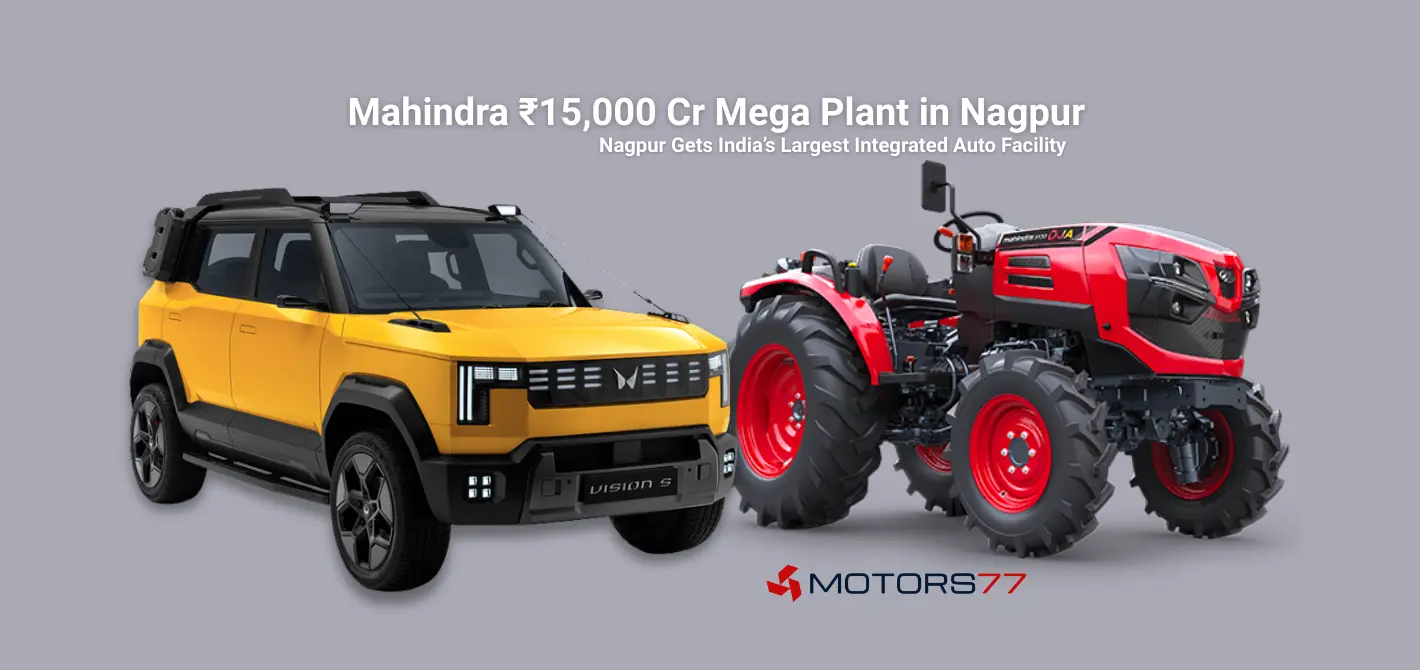
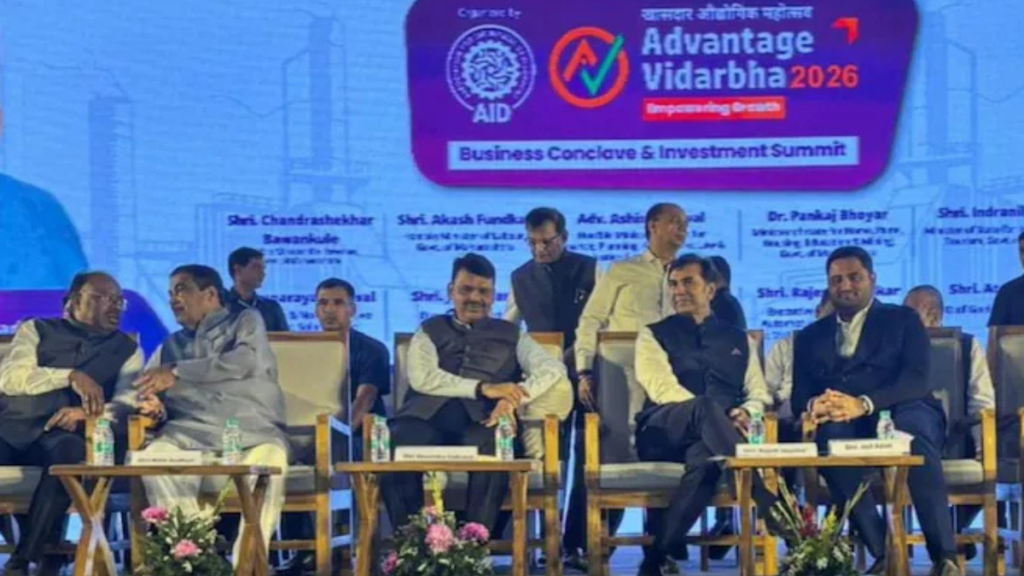
Mahindra announces ₹15,000 Cr for new plant in Maharashtra, and with this single declaration, the automaker has drawn a line in the sand. This is Mahindra & Mahindra telling the world it intends to build India’s largest integrated automobile and tractor manufacturing facility in the heart of Vidarbha. Announced at the Advantage Vidarbha summit in Nagpur on February 6, 2026, this investment will reshape the manufacturing landscape of the entire Indian automotive sector.
What exactly is Mahindra building, why does it need such staggering capacity, and what does this mean for Indian automaking globally?
Quick Summary: Mahindra is investing ₹15,000 crore to build a 1,500-acre integrated plant in Nagpur its largest ever. Capacity: 5 lakh+ vehicles and 1 lakh tractors annually from 2028, on the multi-energy NU_IQ platform. A Sambhajinagar supplier park and Igatpuri engine expansion complete the strategy.
What Exactly Has Mahindra Announced? The ₹15,000 Crore Nagpur Mega Plant
When Mahindra announces ₹15,000 Cr for new plant, the numbers demand attention. The company has committed ₹15,000 crore over ten years in Maharashtra, with the centrepiece being a state-of-the-art integrated facility in Nagpur spanning 1,500 acres in Vidarbha. This will manufacture automobiles and tractors under one roof Mahindra’s largest manufacturing footprint anywhere in India.
Nagpur Facility-Key Investment Details
Parameter
Details
Total Investment
₹15,000 Crore over 10 years
Primary Location
Nagpur, Vidarbha, Maharashtra
Facility Area
1,500 Acres
Supplier Park
150 Acres in Sambhajinagar
Annual Vehicle Capacity
5,00,000+ vehicles
Annual Tractor Capacity
1,00,000+ tractors
Production Start
Expected 2028
Total Land Acquisition
2,000+ Acres across 3 locations
Platform Supported
NU_IQ (Next-Gen Multi-Energy Architecture)
Powertrain Coverage
ICE, Electric, and Future Technologies
Target Markets
Domestic and Global Export
Event
Advantage Vidarbha, Nagpur
The announcement was made in the presence of Maharashtra Chief Minister Devendra Fadnavis and Union Minister Nitin Gadkari. Rajesh Jejurikar, Executive Director and CEO of Mahindra’s Auto and Farm Sector, described the project as “a bold step forward in Mahindra’s manufacturing journey.” According to the official Mahindra Group press release filed with stock exchanges, the facility will commence production in 2028.
Why Does Mahindra Need Such Massive Capacity? Understanding the Strategic Logic
A legitimate question arises with this ₹15,000 crore mega investment why does one company need capacity to produce over 5 lakh vehicles and 1 lakh tractors from a single site?
The answer lies in Mahindra’s trajectory. The company’s SUV market share surged from 11 per cent to 27 per cent in recent years. It overtook Hyundai in calendar year 2025 to become India’s second-largest carmaker by volume. Order books remain full, and waiting periods on the XUV700, Thar, and Scorpio-N routinely extend months. Even with Chakan’s brownfield expansion adding 2.4 lakh units under the NU_IQ architecture, current infrastructure is stretched.
The Nagpur facility with its 5 lakh vehicle capacity is not excess ambition it is a calculated preparation for what Mahindra sees coming: a total passenger vehicle capacity exceeding 1 million units by FY28, powered by three manufacturing ecosystems Chakan, Nashik-Igatpuri, and now Nagpur.
The Igatpuri Expansion – Strengthening the Engine Behind Mahindra’s Growth
The Nagpur announcement does not exist in isolation. Mahindra will acquire approximately 350 acres in the Igatpuri-Nashik region to expand its existing engine and powertrain capacity. The Igatpuri plant already serves as Mahindra’s dedicated engine facility, and this expansion will support the production surge across all three hubs while fuelling the Advanced Technology business encompassing electric drivetrains and next-generation powertrain development.
Brownfield expansion to ~7.5 lakh units; dedicated EV factory with 1,000+ robots
Nashik-Igatpuri
Engine, Powertrain & LCV Hub
350-acre land acquisition for engine capacity and Advanced Technology growth
Nagpur, Vidarbha
Largest Integrated Facility
1,500-acre greenfield plant for vehicles + tractors; production from 2028
Sambhajinagar
Supplier Park
150-acre park supplying components to Nagpur, Chakan, and Nashik
The supplier park in Sambhajinagar centralises component manufacturing for all three hubs, reducing logistics costs and improving localisation.
The NU_IQ Platform-The Technology That Demands a New Factory
A critical detail: the Nagpur plant will support Mahindra’s next-generation NU_IQ vehicle architecture a modular, multi-energy platform designed for a new range of SUVs launching from 2027. The NU_IQ architecture offers what Mahindra calls “fungibility” the same production line manufactures ICE, electric, and future powertrain vehicles without separate setups. This flexibility is precisely why Nagpur needs such scale.
The plant will feature advanced automation, digital manufacturing systems, and sustainability-focused processes building on standards set at Chakan’s EV facility, which runs entirely on renewable energy with over 1,000 robots.
Largest integrated auto and tractor facility in India adds massive production headroom
NU_IQ multi-energy platform ensures flexibility across ICE, EV, and future powertrains
Strategic Vidarbha location with Samruddhi Expressway and rail connectivity
150-acre Sambhajinagar supplier park reduces supply chain costs
Significant job creation and regional development for eastern Maharashtra
Cons:
10-year investment horizon means full capacity is a long-term bet
Environmental impact of 1,500-acre development needs careful assessment
Execution risk on large-scale greenfield projects remains a factor
Local infrastructure must scale in parallel (housing, utilities, training)
How Indian Manufacturers Are Commanding Global Attention
This Nagpur mega factory joins a broader wave that the global automotive industry cannot ignore. India’s automobile exports surged 19 per cent in FY25, crossing 5.3 million units. The country is now the world’s third-largest vehicle manufacturer, behind only the United States and China, with an industry valued at approximately $250 billion.
India’s Automotive Manufacturing-Global Snapshot
Parameter
India
Global Manufacturing Ranking
3rd Largest
Auto Exports (FY25)
5.3 Million+ units (19% YoY growth)
Industry Valuation
~$250 Billion
FDI Inflow (2000–2025)
$37 Billion+
Operational Cost Advantage
10–25% vs Europe & Latin America
Global automakers are reportedly pouring capital into India. Toyota and Suzuki have committed a combined $11 billion to expand Indian production. Ford is investing $370 million to revamp its Chennai plant for export engines. Tesla has opened its first dealerships in Delhi and Mumbai, as per industry reports. Skoda Volkswagen is committing ₹10,000 crore locally.
Mahindra itself just secured its largest-ever export order 35,000 Scorpio Pik Up units to Indonesia, exceeding its entire FY25 export volume in a single deal. The company is also planning EV-first launches in the UK and South Africa from 2027. Indian manufacturers are engineering world-class products, and the world is paying attention.
What This Means for Maharashtra and Vidarbha
Chief Minister Devendra Fadnavis described Mahindra’s investment as “a strong endorsement of the state’s robust industrial ecosystem.” The state is acquiring approximately 5,000 acres in Nagpur to develop it as a manufacturing hub, and the Mahindra facility anchors this vision. At the Advantage Vidarbha event, MoUs worth over ₹48,000 crore were signed across sectors. For Vidarbha, which has historically lagged behind western Maharashtra industrially, this represents a genuine inflection point backed by Samruddhi Expressway connectivity and robust rail infrastructure. For thousands of engineering graduates in the region, this could mean quality jobs close to home reversing the long-standing migration to Pune and Mumbai for manufacturing careers.
Frequently Asked Questions (FAQs)
Q1. How much is Mahindra investing? ₹15,000 crore over 10 years in Maharashtra, with the Nagpur integrated facility as the centrepiece.
Q2. What will the Nagpur plant produce? Automobiles (ICE, electric, and future-tech vehicles) and tractors on the NU_IQ architecture.
Q3. What is the production capacity? Over 5 lakh vehicles and 1 lakh tractors annually when fully operational.
Q4. When will production begin? Initial production is expected in 2028.
Q5. What is the NU_IQ platform? Mahindra’s modular, multi-energy architecture supporting ICE, electric, and future powertrains on a single flexible line.
Q6. What is the Igatpuri expansion? A ~350-acre land acquisition to expand engine capacity and support Mahindra’s Advanced Technology business.
Q7. Will it manufacture EVs? Yes the facility supports multi-powertrain production for domestic and export markets.
Q8. What is the Sambhajinagar supplier park? A 150-acre component hub supplying Nagpur, Chakan, and Nashik plants.
Motors77 Perspective
With this ₹15,000 crore Nagpur commitment, Mahindra is placing the largest single manufacturing wager in its 81-year history. And the timing is sharp.
Mahindra’s SUV dominance in India is uncontested the country’s SUV leader, world’s largest tractor manufacturer by volume, and with the 35,000-unit Indonesian export deal, a serious international player. What it lacked was factory capacity to match its ambitions. Nagpur, paired with Igatpuri and Sambhajinagar, closes that gap.
The NU_IQ platform’s built-in flexibility between ICE, EV, and future powertrains is the smartest aspect of this investment. In a world where emission policies shift overnight and consumer preferences oscillate between electric and combustion each quarter, a factory that can pivot without retooling is a significant competitive advantage.
That said, risk exists. If India’s EV adoption slows due to charging infrastructure gaps, battery cost volatility, or policy uncertainty a facility of this scale could face underutilisation on its electric lines. Mahindra’s fungible architecture mitigates this, but a decade is a long horizon in an industry where technology cycles compress rapidly.
For Vidarbha, this is a catalytic anchor investment. For Maharashtra, it reinforces the state’s position as India’s premier automotive corridor. For the Indian automotive industry, it sends a clear signal Indian manufacturers are building world-scale infrastructure to compete globally, not just regionally.
Whether Mahindra can execute on this magnitude and schedule remains the open question. But looking at Chakan a renewable-energy-powered, 1,000-robot EV factory built in record time the capability exists. Motors77 will track every development as this moves from blueprint to production line.
Founder & Editor-in-Chief at Motors77. A Pune-based automotive enthusiast with over 10 years of experience following the auto industry. Vyom leads Motors77's editorial direction, ensuring accurate, well-researched coverage of cars, bikes, and EVs for Indian readers.
This website uses cookies to improve your experience. By continuing to use this website, you consent to the use of cookies. Visit our Privacy and Cookie Policy.