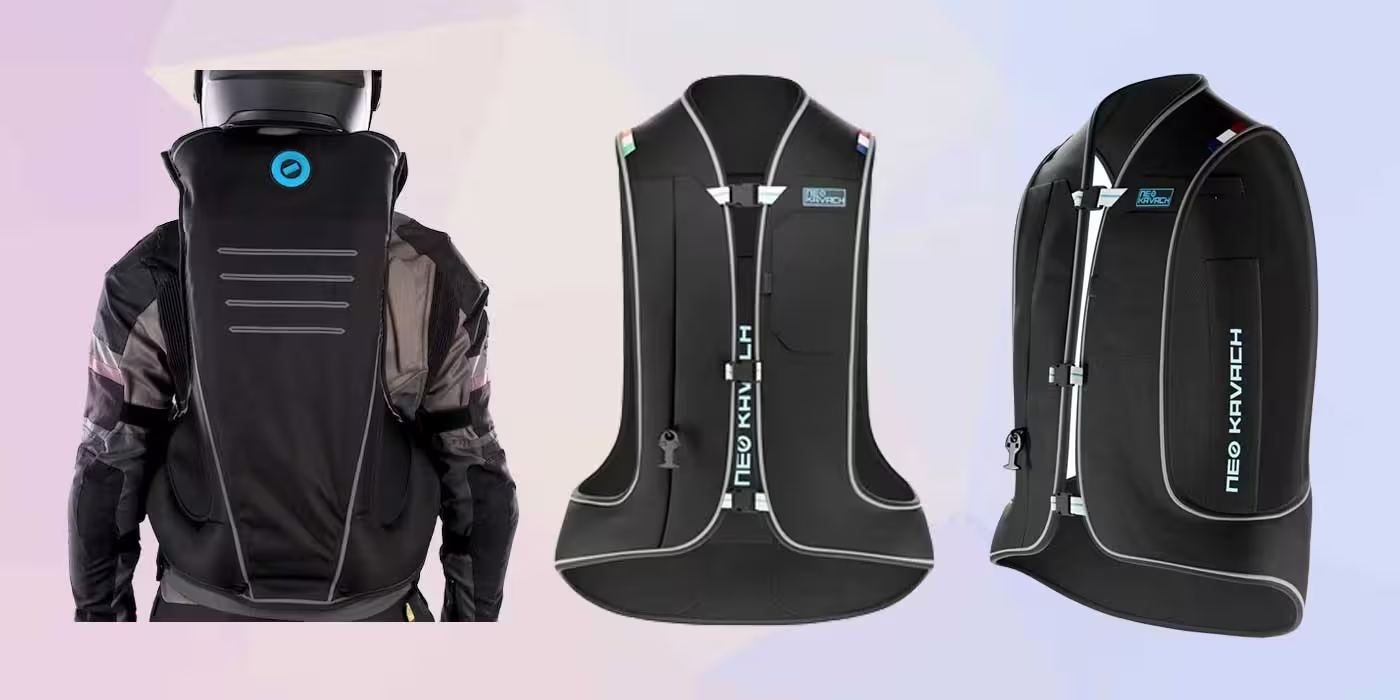
NeoKavach Wearable Airbag Vest: Can This Indo French Innovation Actually Save Lives on Indian Roads.
India has a motorcycle safety problem that most people refuse to acknowledge. Everyone talks about helmets and drunk driving, but very few are ready to discuss the brutal truth that most fatal injuries among riders occur below the chin. Chest, ribs, spine, neck muscles, collarbone, kidneys and internal organs are usually the first to take the hit during an impact. Helmets help, but they cannot save everything. That uncomfortable gap between head protection and body vulnerability is exactly where the NeoKavach airbag vest tries to step in.
Some riders will call this overkill. Some will laugh. Some may even say they have never crashed so they do not need it. But the numbers paint a very different picture. Motorcyclists in India face exponentially higher risk compared to car occupants. Even well skilled riders have zero control once they are airborne after a crash. At that moment protection becomes probability.
So let us find out whether this new Indo French airbag vest is a genuine safety breakthrough or just another expensive accessory trying to ride the wave of fear based marketing.
Why Body Protection Matters More Than We Admit
Most Indian riders invest heavily in top end helmets. Good choice. Some upgrade to jackets and gloves. Some stretch further into riding pants and boots. But torso protection is still a neglected category. A sudden impact to the chest or back, even at moderate speeds, can cause internal bleeding, collapsed lungs, spinal cord injury or organ damage. These are often the hidden killers that do not look dramatic from outside but turn fatal inside.
Traffic in India is unpredictable. Stray animals, sudden braking, potholes, wet patches, speed breakers and distracted drivers can trigger crashes at speeds that seem harmless until the body hits something solid.
The Indo French Development Story
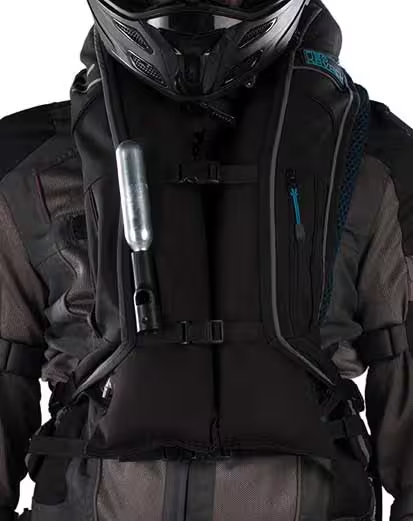
NeoKavach is built by combining French inflatable protection technology with Indian design, pricing and usability requirements. The idea sounds simple. Bring proven airbag expertise and manufacture it at scale in India to make it affordable and suitable for our climate and riding behavior. The result is a tether based mechanical airbag system for motorcyclists which does not depend on electronics, sensors, apps or battery charging.
For Indian consumers who are suspicious of complicated tech and subscription style business models, this simplicity might actually be a strength.
How the Airbag Mechanism Works in Real Life
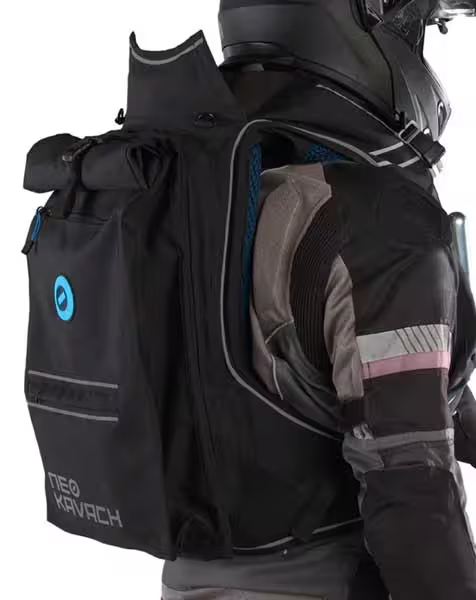
The system uses a physical pull cord that connects the vest to the motorcycle. The cord stays ready but does not interfere with riding movements. If the rider is thrown off the motorcycle, the tether pulls and instantly triggers a mechanical device that releases a CO2 charge inside the vest. The airbag fills in under one tenth of a second and expands to form a protective cushion around critical body areas.
No battery anxiety. No software failures. No firmware updates. No monthly fees. No pairing issues. It is almost like a parachute. If you detach from the bike with force, it activates.
Some riders worry that it could deploy accidentally while getting off the bike. It is possible, but you would need a sharp pull with enough force. It is more a habit issue than a technology flaw.
Who Should Realistically Consider Using It
This product is not only for hardcore track riders or superbike owners. In fact, urban commuters are possibly the best candidates because most real crashes happen below high highway speeds. Even a fall at 30 or 40 kilometers per hour can cause serious chest and back trauma. Riders on scooters, commuters, delivery executives, weekend tourers, city motorcyclists, cafe racer owners, adventure riders and long distance tourers can all benefit.
However, if you only ride within a gated society or take out your motorcycle once a month at walking speeds, you may not feel the value.
Detailed Specification and Features
| Feature | Description |
|---|---|
| Activation Type | Mechanical tether trigger |
| Deployment Time | Under 100 milliseconds |
| Airbag Volume | Approximately 28 litres |
| Reusability | Replaceable CO2 cartridge |
| Battery Requirement | None |
| Coverage Zones | Chest, spine, shoulders, neck, ribs, hips, kidneys and vital organs |
| Protection Layer | Airbag combined with CE Level 2 back protector |
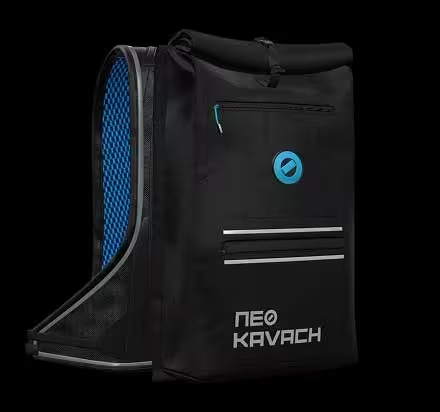
| Ventilation | 3D breathable mesh for hot weather |
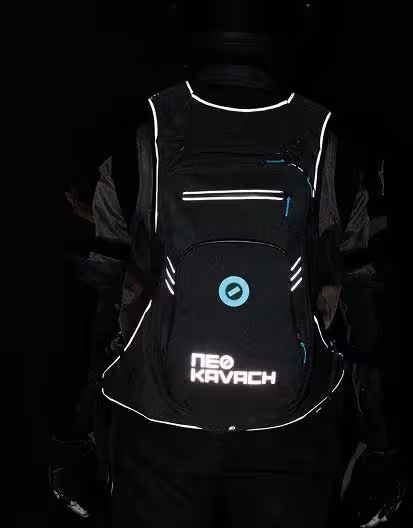
| Visibility | Reflective elements around the vest |
| Fit Type | Can be worn over normal riding jacket |
| Reset Time | Very quick with cartridge replacement |
| Weight | Lightweight design for daily use |
| Price Range | Around mid to high premium riding gear category |
The Turtle style protection concept places a hard back protector above the airbag so that energy spreads across a larger surface instead of directly pressing into the inflated bladder. This offers a dual safety effect similar to a helmet with multi layer shell.
Real World Advantages
The biggest advantage is the ability to reduce the severity of injury in common accident scenarios. Low to medium speed crashes, side falls, sudden throws, rear impacts or uncontrolled slides are common in Indian conditions. Protecting the spine from hyperflexion and protecting the ribs from blunt force could be the difference between walking away or entering long term rehabilitation.
There is also a psychological benefit. When riders feel more secure, they ride smoother instead of tense. However, it should not be treated as permission to ride faster than usual.
Limitations and Honest Concerns
No protective gear can guarantee survival in very high speed impacts or collisions involving heavy vehicles. Riders must have realistic expectations. This vest can significantly reduce injury probability but it cannot rewrite physics.
Another concern is forming a habit of connecting the tether every time. Forgetting to attach it results in zero protection. Forgetting to detach can cause accidental deployment.
Some riders may also find the price heavy if they are not yet investing in full gear like riding boots and pants. In that case a helmet and certified jacket should stay first priority.
Indian Market Context and Timing
Premium motorcycle sales are growing. Riders now travel longer distances. Adventure motorcycles and sport tourers are becoming mainstream. Safety culture is slowly improving and manufacturers are realising that Indian consumers are willing to pay for quality safety gear if value is clear.
This airbag concept arrives at a time where India needs innovation that matches international safety standards but still respects local price sensitivity.
Who Should Definitely Buy
Riders who commute daily in unpredictable traffic
People who ride highways for long distances
Touring and adventure motorcyclists
Superbike riders who already use full safety gear
Riders who frequently carry family members on two wheelers
Anybody who understands cost vs injury recovery reality
Who Might Skip for Now
Low speed leisure riders
Very rare weekend users
Students with extremely low budgets
People unwilling to build safety habits
Final Opinion
After analysing the idea, mechanism, practicality, price and real world use cases, the NeoKavach airbag vest looks like a meaningful safety upgrade. It is not marketing fluff and not a futuristic gimmick. It sits somewhere between proven science and practical real world usefulness. If you view riding safety as a layered system rather than a one product solution, then this vest adds a valuable layer that Indian riders have been missing for years.
Safety gear should never be purchased after a crash. The decision is strongest when made before anything goes wrong. If your motorcycle gives you freedom, this vest might give your family some peace.
FAQs
1. Is the NeoKavach airbag vest reusable after deployment
Yes it can be used again after replacing the CO2 cartridge and resetting the system, so buyers do not need to replace the vest each time.
2. Does it require charging or any electronic pairing
No it works fully mechanically through a tether pull so there are no batteries, charging routines or sensor based dependencies.
3. Will it deploy accidentally while getting off the bike
It only deploys when the tether experiences a strong pull so normal dismounting with awareness should not cause accidental activation.
4. Can it be worn over any normal riding jacket
Yes the design allows it to be worn over existing jackets which helps riders keep their current gear and still add extra protection.
5. Is it suitable for daily commuting inside cities
It is particularly useful for urban and mixed traffic riding because most real crashes happen at moderate speeds where airbags can help most.
6. Does it add extra weight or reduce comfort while riding
The vest is lightweight and ventilated with mesh panels so it is designed for long duration use even in Indian heat.
7. What type of riders will gain the most value from it
Regular commuters, highway tourers, adventure riders and people who prioritise spine safety will see the highest benefit.
8. Does it replace the need for other safety gear
No it is an additional layer and should be combined with a good helmet, gloves, jacket, pants and boots for maximum protection.
Also Read: Bharat NCAP: Driving a New Era of Car Safety in India