Motors77 Analysis
Introduction: The Game-Changing Anglo-Indian Partnership
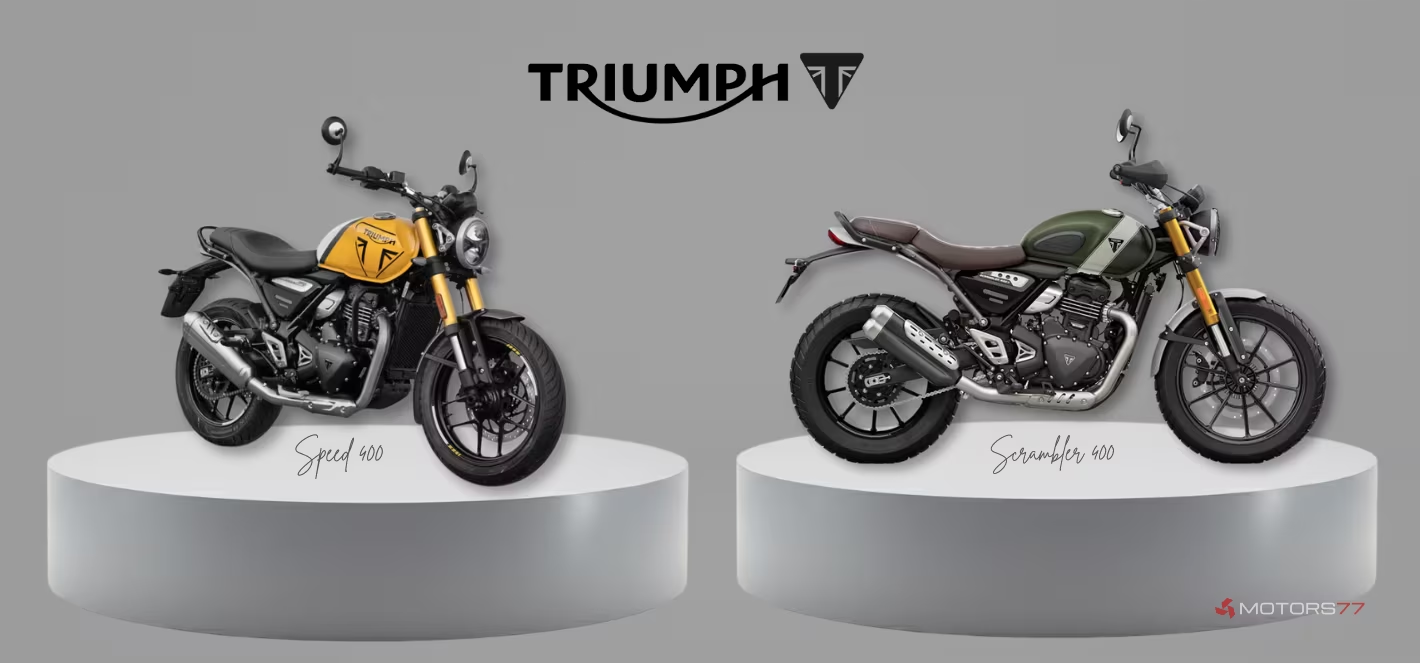
The Indian motorcycle market witnessed a significant shift when Triumph Motorcycles partnered with Bajaj Auto to introduce the TR 400 platform. This collaboration has produced two exceptional motorcycles Speed 400 and Scrambler 400X that combine British engineering excellence with Indian manufacturing expertise. Both models deliver premium motorcycle experiences at prices that resonate with Indian buyers, making Triumph ownership more accessible than ever.
In this comprehensive review, we explore every aspect of these motorcycles from an Indian perspective specifications, real-world performance, pricing, and whether they represent good value for money in 2025.
What Is the TR 400 Platform?
The TR 400 platform is Triumph’s strategic entry into India’s competitive 300–400 cc segment. The two motorcycles share the same fundamental components a 398 cc liquid-cooled single-cylinder engine, robust chassis, and modern electronics but are styled and tuned differently for distinct rider preferences.
- Speed 400 embodies Triumph’s modern roadster philosophy with subtle retro cues. It’s ideal for urban commuting and spirited weekend rides.
- Scrambler 400X adopts an adventure-ready persona with taller suspension, a 19-inch front wheel, and enhanced mixed-terrain capability.
Speed 400: The Urban Performance Machine
Design and Styling
The Speed 400’s clean, purposeful design draws inspiration from the larger Speed Twin. A teardrop-shaped tank, compact proportions, and minimalist bodywork emphasise the mechanical components. Full LED lighting adds a modern touch while the exposed engine and frame keep the classic British roadster aesthetic alive. Paint quality, panel alignment, and switchgear feel are excellent for the price.
Engine Performance and Characteristics
At the heart of the Speed 400 is a 398.15 cc, liquid-cooled, DOHC, four-valve single producing 40 PS (39.5 bhp) at 8,000 rpm and 37.5 Nm at 6,500 rpm. Careful balancing and a counter-balancer shaft keep vibrations in check. Throttle response is crisp via Bosch electronic fuel injection with ride-by-wire. The 6-speed gearbox shifts smoothly, and the slip-and-assist clutch reduces lever effort while preventing rear-wheel hop on downshifts.
On Indian roads, the Speed 400 delivers:
- City riding: Excellent maneuverability with confident overtakes.
- Highway cruising: Comfortable at 100–110 km/h with vibrations well controlled.
- Fuel efficiency: ~35–40 km/l in mixed conditions.
- Top speed: ~145–150 km/h (actual road conditions).
Handling and Dynamics
A hybrid spine/perimeter tubular-steel frame provides rigidity without excess weight. At 179 kg (wet), the Speed 400 feels light in traffic yet stable on highways. Suspension comprises 43 mm USD Big Piston forks (140 mm travel) and a gas monoshock with external reservoir (120 mm travel)—a balanced tune that soaks up potholes and speed breakers yet stays composed in fast corners.
The 17-inch wheels (110/80 front, 150/70 rear) give confident grip in wet and dry. A relatively short 1,386 mm wheelbase adds agility. Braking is strong with a 300 mm front disc and four-piston radial caliper, plus a 230 mm rear disc; dual-channel ABS intervenes unobtrusively.
Ergonomics and Comfort
The upright riding position, 803 mm seat height, and 829 mm handlebar width create a neutral, relaxed triangle. Footpeg placement keeps the knees comfortable; reach to the bars is natural. The seat is firm but supportive for medium distances, and pillion space is adequate for short to medium rides.
Features and Technology
An analogue speedometer is paired with a clear multi-function LCD showing trip data, fuel gauge, gear position, clock, average and real-time economy, and service prompts. All lighting is LED. The control quality and overall fit-finish reflect Triumph’s premium intent.
SPEED 400 MY25: Complete Technical Specifications
| Category | Feature | Details |
|---|---|---|
| Price | Ex-Showroom | From ₹ 2,33,754.00 |
| Engine & Transmission | Type | Liquid-cooled, 4-valve, DOHC, single-cylinder |
| Capacity | 398.15 cc | |
| Bore | 89.0 mm | |
| Stroke | 64.0 mm | |
| Compression Ratio | 12 : 1 | |
| Max Power | 40 PS / 39.5 bhp (29.4 kW) @ 8,000 rpm | |
| Max Torque | 37.5 Nm @ 6,500 rpm | |
| Fuel System | Bosch electronic fuel injection with electronic throttle control | |
| Exhaust | Stainless twin-skin header system with stainless steel silencer | |
| Final Drive | X-ring chain | |
| Clutch | Wet, multi-plate, slip & assist | |
| Gearbox | 6-speed | |
| Chassis | Frame | Hybrid spine/perimeter tubular steel with bolt-on rear subframe |
| Swingarm | Twin-sided cast aluminium alloy | |
| Front Wheel | Cast aluminium 10-spoke 17 × 3 in | |
| Rear Wheel | Cast aluminium 10-spoke 17 × 4 in | |
| Front Tyre | 110/80 R17 | |
| Rear Tyre | 150/70 R17 | |
| Front Suspension | 43 mm upside-down Big Piston forks (140 mm wheel travel) | |
| Rear Suspension | Gas monoshock RSU with external reservoir & pre-load adjustment (120 mm travel) | |
| Front Brakes | 300 mm fixed disc, 4-piston radial caliper, ABS | |
| Rear Brakes | 230 mm fixed disc, floating caliper, ABS | |
| Instrument Display | Analogue speedometer with integrated multi-function LCD screen | |
| Dimensions & Weights | Width (Handlebars) | 829 mm |
| Height (Without Mirrors) | 1,096 mm | |
| Seat Height | 803 mm | |
| Wheelbase | 1,386 mm | |
| Rake Angle | 25.1° | |
| Fuel Tank Capacity | 13 L | |
| Wet Weight | 179 kg | |
| Fuel Consumption & Emissions | CO₂ Emissions | 83.8 g/km (EURO 5 compliant) |
| Note | Measured per Regulation 168/2013/EC; test figures are for comparison and may not reflect real-world results. | |
| Service | Interval | 10,000 miles (16,000 km) / 12 months (whichever comes first) |
Scrambler 400X: Adventure-Ready Versatility
Design Philosophy and Styling
The Scrambler 400X embraces modern scrambler styling with a tough stance high-mounted front fender, upswept exhaust look, broader bars, and mixed-terrain tyres. Despite its rugged posture, the design stays true to Triumph’s clean lines and premium finishes. It looks equally at home outside a café in Mumbai or on trails in the Western Ghats.
Engine and Performance
Sharing the 398.15 cc powerplant with the Speed 400, the Scrambler 400X also produces 40 PS at 8,000 rpm and 37.5 Nm at 6,500 rpm. Different ergonomics and suspension tuning shape a more relaxed, tractable feel on uneven surfaces. The 6-speed gearbox is well spaced for both touring and technical riding.
On Indian roads, the Scrambler 400X delivers:
- City riding: Commanding view and easy leverage from wide bars.
- Highway touring: Composed at cruising speeds, relaxed posture reduces fatigue.
- Mixed terrain: Smooth power delivery aids traction on gravel and broken tarmac.
- Fuel efficiency: ~33–38 km/l in mixed use.
Chassis and Handling Characteristics
Key geometry and hardware changes distinguish the Scrambler 400X:
- 19-inch front / 17-inch rear wheels with 100/90-19 and 140/80-17 tyres improve rollover on potholes and rough patches and add stability on loose surfaces.
- Long-travel suspension (150 mm front & rear)—10 mm more than the Speed—softens initial stroke for comfort off-road while remaining controlled on tarmac.
- Longer wheelbase (1,418 mm) and taller seat (835 mm) enhance straight-line stability and ground clearance.
Weight rises slightly to 185 kg (wet), but balance remains neutral. Braking upgrades include a larger 320 mm front disc, with switchable ABS and switchable traction control for mixed terrain.
Ergonomics and Long-Distance Comfort
The wider handlebar, extra legroom, and upright stance create a comfortable cockpit for long days in the saddle. Taller riders appreciate the roomier triangle; standing on the pegs feels natural on rough roads. The seat is firm yet supportive over distance, and pillion accommodation is reasonable with solid grab points.
Off-Road Capability Assessment
The Scrambler 400X is not a hardcore enduro, but it is remarkably capable for India’s varied conditions. It handles dirt roads, gravel, light trails, and broken highways confidently. Ground clearance, tyre footprint, and suspension travel are well judged for real-world adventure touring and poor road infrastructure.
SCRAMBLER 400 X-Complete Technical Specifications
| Category | Feature | Details |
|---|---|---|
| Price | Ex-Showroom | From ₹ 2,67,731.00 |
| Engine & Transmission | Type | Liquid-cooled, 4-valve, DOHC, single-cylinder |
| Capacity | 398.15 cc | |
| Bore | 89.0 mm | |
| Stroke | 64.0 mm | |
| Compression Ratio | 12 : 1 | |
| Max Power | 40 PS / 39.5 bhp (29.4 kW) @ 8,000 rpm | |
| Max Torque | 37.5 Nm @ 6,500 rpm | |
| Fuel System | Bosch electronic fuel injection with electronic throttle control | |
| Exhaust | Stainless twin-skin header system with stainless steel silencer | |
| Final Drive | X-ring chain | |
| Clutch | Wet, multi-plate, slip & assist | |
| Gearbox | 6-speed | |
| Chassis | Frame | Hybrid spine/perimeter tubular steel with bolt-on rear subframe |
| Swingarm | Twin-sided cast aluminium alloy | |
| Front Wheel | Cast aluminium 10-spoke 19 × 2.5 in | |
| Rear Wheel | Cast aluminium 10-spoke 17 × 3.5 in | |
| Front Tyre | 100/90-19 | |
| Rear Tyre | 140/80-17 | |
| Front Suspension | 43 mm upside-down Big Piston forks (150 mm wheel travel) | |
| Rear Suspension | Gas monoshock RSU with external reservoir & pre-load adjustment (150 mm travel) | |
| Front Brakes | 320 mm fixed disc, 4-piston radial caliper, ABS | |
| Rear Brakes | 230 mm fixed disc, ByBre™ single-piston floating caliper, ABS | |
| Instrument Display | Analogue speedometer with integrated multi-function LCD screen | |
| Dimensions & Weights | Width (Handlebars) | 901 mm |
| Height (Without Mirrors) | 1,169 mm | |
| Seat Height | 835 mm | |
| Wheelbase | 1,418 mm | |
| Rake Angle | 23.2° | |
| Trail | 108 mm | |
| Fuel Tank Capacity | 13 L | |
| Wet Weight | 185 kg | |
| Fuel Consumption & Emissions | CO₂ Emissions | 83.8 g/km (EURO 5 compliant) |
| Note | Measured per Regulation 168/2013/EC; test figures are for comparison and may not reflect real-world results. | |
| Service | Interval | 10,000 miles (16,000 km) / 12 months (whichever comes first) |
The Indian Context: Why the TR 400 Matters
Pricing Strategy and Value Proposition
Ex-showroom pricing places the Speed 400 at ₹2,33,754 and the Scrambler 400X at ₹2,67,731. Against segment rivals Royal Enfield Hunter 350 and Himalayan, KTM 390 Duke/Adventure, Honda CB300R, and BMW G 310 R the TR 400 platform hits a sweet spot: modern engineering and premium build quality at aggressive pricing.
- Hunter 350: Lower priced but older tech and dynamics.
- Himalayan: Strong touring/off-road creds; the Scrambler 400X offers a more premium, road-friendly balance.
- KTM 390: Sharper performance and higher price; Triumph counters with refinement and comfort.
- Japanese options: Excellent reliability at higher prices; Triumph undercuts while delivering premium feel.
Built in India, for India (and the World)
Manufactured at Bajaj’s Chakan facility to Triumph’s standards, these bikes are not rebadged exercises but genuine co-developments. Indian riders benefit from:
- Wider service reach and trained technicians
- Faster parts availability and competitive maintenance costs
- Shorter delivery timelines
- Stronger resale confidence
Real-World Ownership Experience in India
Urban Riding: Light weight, tractable power, accessible seat heights, and controlled heat make both bikes easy daily companions.
Highway Touring: Comfortable at 100–110 km/h; 13-litre tanks give practical ranges with sensible fuel stops.
Rough Roads: Scrambler 400X excels with extra suspension travel and 19-inch front wheel; Speed 400 handles bad sections but prefers cleaner lines.
Service & Costs: Service intervals at 16,000 km/12 months reduce running costs. Typical periodic service bills are competitive, with consumables and common parts widely available.
Competitive Analysis: How They Stack Up
Versus Royal Enfield
Hunter 350 vs Speed 400: Hunter wins on price and community; Speed 400 brings stronger performance, braking, handling, and finish.
Himalayan vs Scrambler 400X: Himalayan remains a dedicated tourer/ADV; Scrambler 400X delivers a premium, road-biased versatility with modern electronics.
Versus KTM 390 Series
KTM 390 Duke/Adventure deliver extra peak performance and razor handling. Triumph offers greater refinement, everyday usability, comfort, and value—especially with the Speed 400’s price advantage.
Versus Japanese Competition
Honda CB300R and Kawasaki Z400 (where available) are renowned for reliability and smoothness but command higher prices. Triumph’s balance of price, finish, and ride quality is compelling.
Living With the TR 400: Ownership Insights
Fuel Efficiency and Running Costs
Typical real-world fuel-economy ranges:
- Speed 400: 30–35 km/l (city), 38–42 km/l (highway), 35–38 km/l (mixed).
- Scrambler 400X: 28–33 km/l (city), 36–40 km/l (highway), 33–37 km/l (mixed).
Indicative running items over two years / 20,000 km: engine oil + filter, air filter, chain care, brake pads, and tyres are all reasonably priced for the segment. Insurance lands in the typical middle bracket for premium 400 cc singles.
Common Concerns and Notes
- Vibrations: Present at certain RPMs (single-cylinder trait) but well controlled.
- Heat: Noticeable in peak summer idling; acceptable while moving.
- Seat Firmness: Long hauls may prompt an upgrade or cushion.
- Handlebar Buzz: Minor at some cruising speeds; bar-end weights help.
- Parts: Good availability overall; specific trim pieces may require short lead times.
Accessories & Personalization
Popular additions include engine guards, pannier mounts, comfort seats, auxiliary lights, phone mounts, luggage solutions, fork gaiters (Scrambler), and slip-on exhausts. The ecosystem is growing steadily.
Which One Should You Buy?
Choose the Speed 400 if:
- Your riding is largely on paved roads and in the city.
- You prioritise agility, lower weight, and an accessible 803 mm seat.
- You want the sharpest value without sacrificing quality or fun.
- You prefer the modern roadster aesthetic.
Choose the Scrambler 400X if:
- You tour often and encounter mixed or poor roads.
- You’re taller and want roomier ergonomics (835 mm seat).
- You value longer suspension travel, a 19-inch front wheel, and switchable ABS/TC.
- You want one bike to handle city, highway, and light trails.
Motors77 Final Verdict
Speed 400-The Smart Choice for Most Riders
Rating: 4.5/5
Why it wins: Outstanding value, refined engine, quality suspension and brakes, premium finish, accessible ergonomics, and low running effort.
Where it could improve: Seat comfort on very long rides, wind protection, and extra connectivity options.
Scrambler 400X-The Versatile Adventurer
Rating: 4.3/5
Why it wins: Real-world versatility, longer travel suspension, commanding ergonomics, switchable ABS/TC, and confident manners on rough roads.
Where it could improve: Taller seat height limits accessibility, slightly heavier feel in congested traffic, and a price that nudges into tougher competition.
The TR 400 Platform: Game-Changer Status Confirmed
Triumph and Bajaj have delivered properly engineered motorcycles that just happen to be affordable. The 398 cc engine is tuned for India’s realities; build quality and finish punch above price; and service infrastructure meaningfully improves premium ownership. Connectivity and wind protection are areas for growth, but the fundamentals are right.
Big picture: The TR 400 platform democratizes premium motorcycling, proving world-class quality can be built in India at competitive prices and that riders don’t need to compromise to access a storied brand.
Final Recommendations
- First-time premium buyers: Speed 400 the perfect entry to Triumph ownership.
- Experienced riders downsizing or seeking simplicity: Either model pick by terrain.
- Daily commuters with weekend ambitions: Speed 400.
- Budget adventure-touring seekers: Scrambler 400X.
- Upgraders from Royal Enfield: Noticeably better dynamics, braking, and refinement.
Long-Term Ownership Perspective
- Reliability & Support: Proven engineering, local manufacturing, and a wide service network inspire confidence.
- Resale Value: Strong brand pull should aid retention.
- Community: Owner groups and ride circles are growing quickly, enhancing the experience.
Price-to-Value Snapshot
Speed 400 (₹2,33,754): British styling, modern 398 cc single, USD forks + reservoir monoshock, dual-channel ABS, LED lighting, slip-and-assist clutch, premium finish, broad service reach, 3-year/unlimited-km warranty. Value Score: 9/10.
Scrambler 400X (₹2,67,731): Adds 19-inch front wheel, 150/150 mm suspension, switchable ABS/TC, adventure ergonomics, better clearance, and stronger mixed-terrain composure. Value Score: 8.5/10.
The Verdict by Riding Profile
- Urban commuter (80% city): Speed 400
- Weekend twisties (50/50): Speed 400
- Long-distance tourer (70% highway): Scrambler 400X
- Explorer (60% mixed terrain): Scrambler 400X
- Budget-minded enthusiast: Speed 400
- Taller rider (6 ft+): Scrambler 400X
Frequently Asked Questions (FAQs)
1) What is the on-road price?
Typically ₹25,000–35,000 above ex-showroom for registration and insurance, varying by state. That places Speed 400 around ₹2.58–2.68 lakh and Scrambler 400X around ₹2.92–3.02 lakh.
2) What is the real-world fuel efficiency?
Speed 400: ~35–40 km/l (mixed). Scrambler 400X: ~33–38 km/l (mixed).
3) Are these bikes suitable for beginners?
Yes—predictable power delivery, light clutch action, balanced chassis, and sensible ergonomics.
4) How is after-sales service?
Coverage is strong in metros and Tier-1 cities and expanding in Tier-2 towns, with trained technicians and ready availability of common consumables.
5) Can I install aftermarket exhausts?
Yes—choose options compliant with local noise and emission norms. Triumph also offers official slip-ons.
6) Which has better resale value?
Both should hold value well; the Speed 400’s lower entry price may widen buyer interest.
7) Is a 13-litre tank enough for touring?
Yes—practical ranges of 400–500 km with planned fuel stops.
8) Monsoon performance?
ABS and quality tyres provide confidence; the Scrambler’s pattern and ground clearance help on slush and rough patches.
9) Two-up touring comfort?
Comfortable for medium distances; consider comfort seats for long hauls.
10) Major differences between the two?
17/17 vs 19/17 wheels, 140/120 mm vs 150/150 mm suspension travel, 803 mm vs 835 mm seat height, electronics (switchable ABS/TC on Scrambler), and roughly ₹34,000 price gap.
Disclaimer: Prices, specifications, and features are accurate as of October 2025 and may change. Real-world performance and economy vary with riding style and conditions. Always verify current details with authorised Triumph–Bajaj dealerships.
About Motors77: Motors77 is committed to comprehensive, unbiased motorcycle reviews for Indian riders, focused on how bikes perform in real Indian conditions.