2026 Ducati Monster V2 Introduction
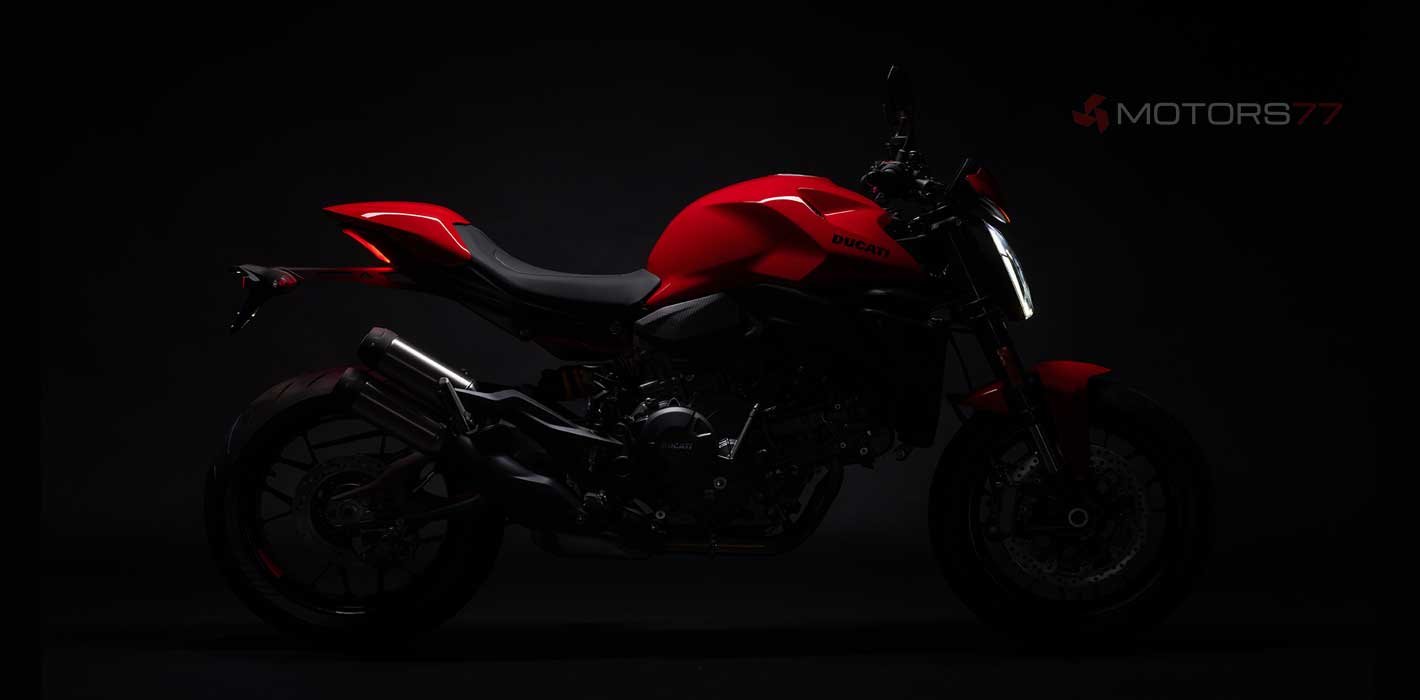
Ducati has officially unveiled the 2026 Monster V2, marking a significant evolution for the Italian marque’s most accessible naked sportbike. Launched as part of the Ducati World Premiere 2026 series on October 23, 2025, the new Monster brings substantial changes under the skin while retaining the essential character that has made the Monster nameplate legendary since 1993.
The headline news is the switch from the 937cc Testastretta engine to Ducati’s modern 890cc V2 powerplant, the same unit powering the Panigale V2, Streetfighter V2, and Multistrada V2. But this isn’t just an engine swap. Ducati has comprehensively redesigned the Monster with new styling, improved ergonomics, enhanced electronics, and most significantly, abandoned the Desmodromic valve system that has defined Ducati engines for decades.
For riders considering the Monster V2, this represents both evolution and revolution. The bike retains the essential Monster DNA, minimalist design, commanding riding position, and visceral V-twin character, while incorporating modern technology and easier maintenance. Here’s everything you need to know about Ducati’s reborn icon.
The New 890 cc V2- More Than Just Displacement
The most significant change to the 2026 Monster is the adoption of Ducati’s 890cc V2 engine, replacing the long-serving 937cc Testastretta unit. While the displacement reduction might initially seem like a downgrade, the reality is far more nuanced and ultimately positive for most riders.
The new 890cc V2 produces 111 HP at 9,000 rpm and 91.1 Nm of torque at 7,250 rpm. These figures are nearly identical to the outgoing Monster’s output, but the new engine achieves peak power 250 rpm earlier, suggesting improved mid-range punch and potentially better real-world performance.
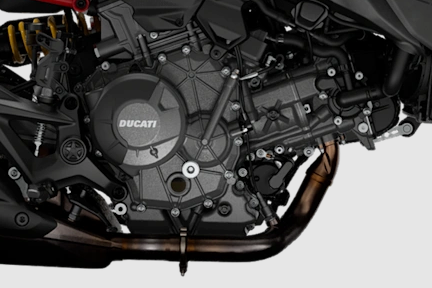
The engine features a 90-degree V-twin configuration with four valves per cylinder and an intake variable valve timing system. Liquid cooling ensures consistent performance, while the electronic fuel injection system with full ride-by-wire throttle provides precise power delivery and enables the comprehensive suite of electronic riding aids.
What makes this engine particularly interesting is the bore and stroke dimensions: 96mm x 61.5mm. This oversquare configuration (bore larger than stroke) typically favors high-rpm power delivery, which seems counterintuitive for a naked bike. However, the variable valve timing helps fill in the torque curve across the rev range, providing both low-end grunt for city riding and top-end excitement for spirited riding.
The compression ratio of 13.1:1 is relatively high, requiring premium fuel but contributing to the engine’s efficiency and crisp throttle response. The 2-1-2 exhaust system routes gases efficiently while meeting Euro 5+ emissions standards and producing the characteristic Ducati V-twin soundtrack.
- Outputs: 111 hp @ 9,000 rpm and 91.1 Nm @ 7,250 rpm deliver flexible thrust with earlier peak power for stronger mid-range.
- Architecture: 90° V-twin, 4 valves/cyl, liquid-cooled, intake VVT for a fuller torque curve.
- Oversquare build (96 mm × 61.5 mm): likes to rev, yet VVT fattens the bottom/mid for city work.
- 13.1:1 compression & 2-1-2 exhaust: crisp response, compliance with current emissions, and a proper Ducati soundtrack.
- Ride-by-wire: enables nuanced throttle maps and fine control of rider aids.
Why riders should care
You get the character and soundtrack people buy Monsters for, now with cleaner fueling, broader torque, and the kind of effortless roll-on urge that makes everyday riding better—without chasing headline dyno numbers.
Goodbye Desmo (on this engine) – Hello Lower Maintenance
Perhaps the most significant technical change is Ducati’s decision to abandon Desmodromic valve actuation for the Monster V2. For decades, Desmo valves have been a defining Ducati characteristic, using mechanical closure rather than valve springs to enable higher rpm and more precise valve control.
However, Desmo systems require specialized maintenance and more frequent valve service intervals, adding to ownership costs. The new Monster V2 uses conventional DOHC (Double Overhead Cam) valve actuation with springs, dramatically extending service intervals and simplifying maintenance.
The valve clearance check interval has been extended to 45,000 km (28,000 miles), compared to much shorter intervals on previous Desmo-equipped Monsters. This single change transforms the Monster’s ownership proposition, making it significantly more practical and less expensive to maintain over the long term.
Oil service intervals are now 15,000 km (9,000 miles) or 24 months, while annual services remain at 12-month intervals. These extended service intervals bring Ducati ownership costs closer to Japanese competitors while maintaining the performance and character that makes Ducati special.
For purists who view Desmodromic valves as essential to the Ducati experience, this change may feel like a loss. But for the vast majority of riders, particularly those new to the brand, reduced maintenance complexity and cost make the Monster V2 a more compelling proposition without sacrificing performance.
The new engine weighs just 54.4 kg, contributing to the Monster V2’s impressive power-to-weight ratio and agile handling characteristics.
- Valve-clearance checks: 45,000 km (28,000 mi)
- Oil service: 15,000 km / 24 months
- Annual check: every 12 months
Result: dramatically lower running cost and more saddle time—without the complexity that used to scare away first-time Ducati buyers.
Styling & Ergonomics – Muscular Minimalism
Ducati’s design team has given the Monster V2 a comprehensive styling refresh that makes the bike look more purposeful and athletic while retaining the minimalist naked bike aesthetic that defines the Monster lineage.
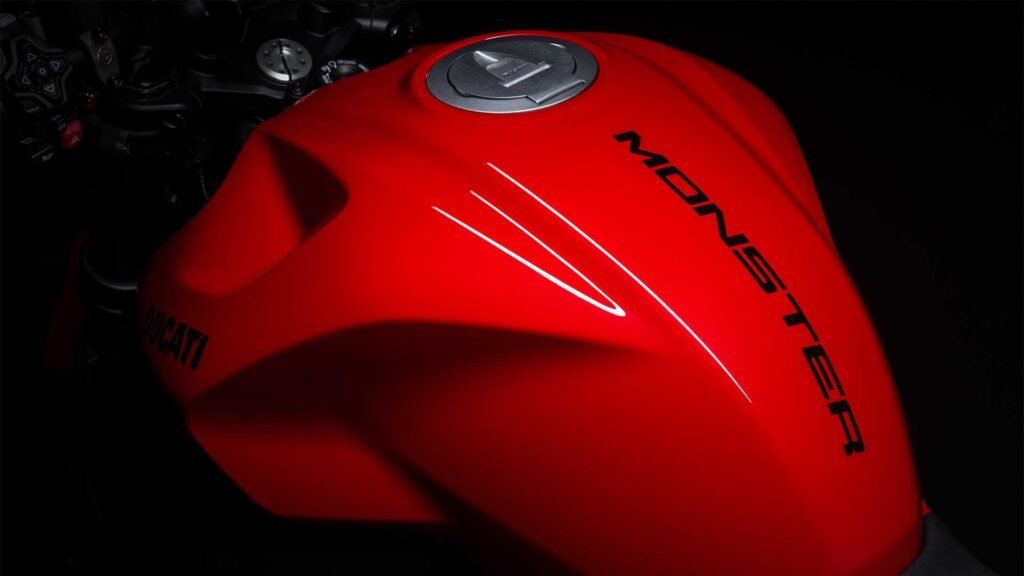
The most noticeable change is the fuel tank, which features more angular, muscular lines compared to the softer forms of the outgoing model. The new tank shape creates visual tension and emphasizes the bike’s width, giving it a more planted, aggressive stance. The capacity remains 14 liters (3.7 US gallons), providing decent range for a naked sportbike.
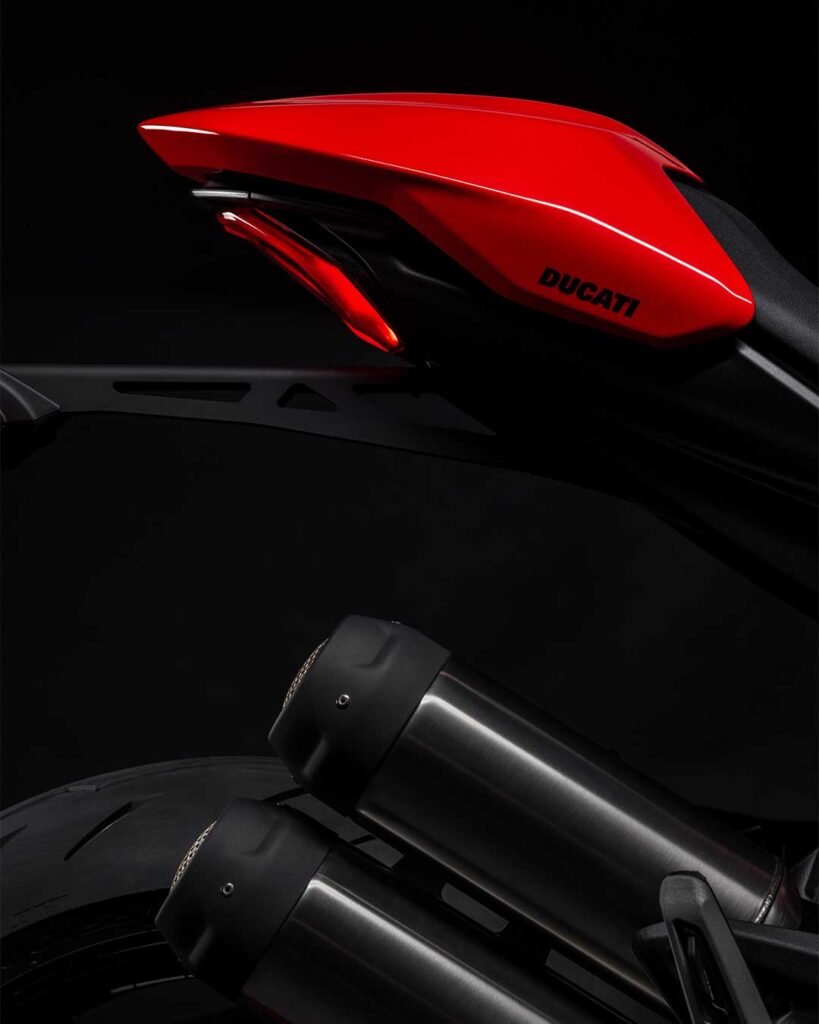
The tail section has been redesigned with a distinctive M-shaped profile, a clever visual reference to the Monster name while improving the bike’s proportions. The new tail is more compact and integrates seamlessly with the redesigned seat and subframe.
The seat itself is slimmer and flatter than before, dropping the seat height from 820mm to 815mm. This 5mm reduction may seem minor, but combined with the narrower seat profile, it significantly improves ground reach for shorter riders. Ducati offers additional options: a low seat accessory drops the height to 795mm, while combining the low seat with a low suspension kit achieves 775mm, making the Monster V2 accessible to a wide range of rider heights.
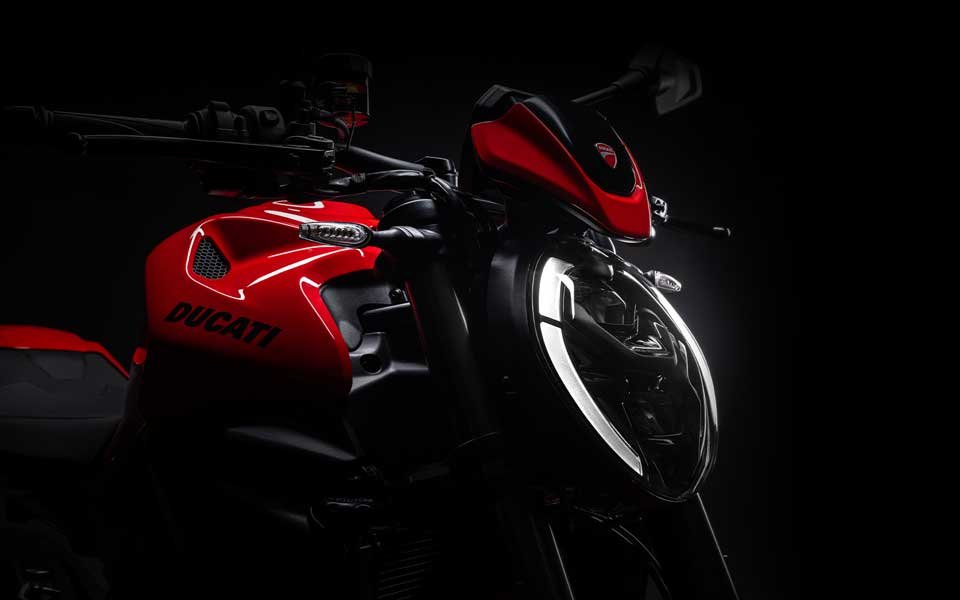
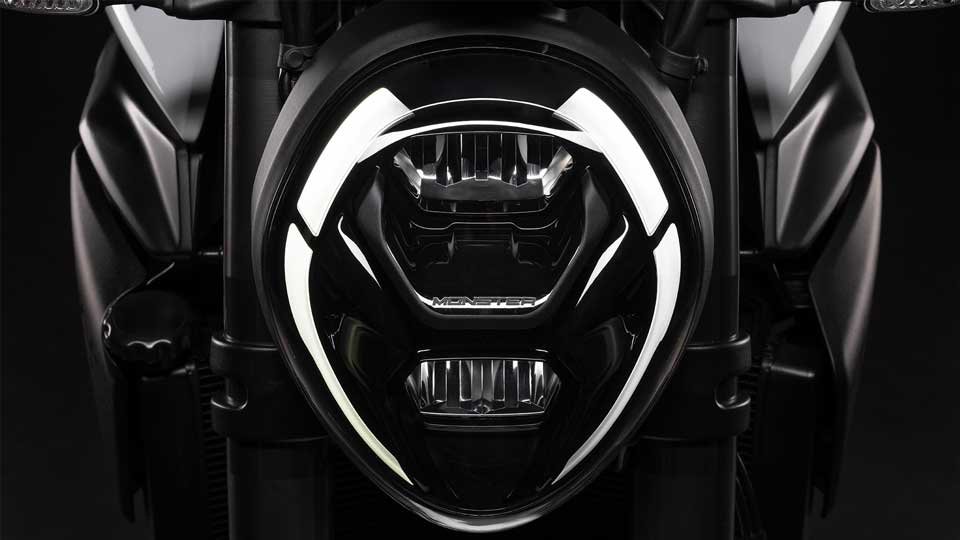
The front end retains the Monster’s signature round headlight, a design element that has defined the model since 1993. However, the headlight is now full LED with integrated Daytime Running Lights (DRL) that create a distinctive visual signature. The lighting performance is substantially improved over older halogen units, providing better visibility for night riding.
Dynamic turn indicators, which illuminate sequentially, add a modern touch while improving visibility to other road users. These self-cancelling indicators represent a quality-of-life improvement over traditional turn signals.
The handlebars have been repositioned slightly higher and more forward, improving rider comfort without compromising the sporty riding position. The new bar position should reduce wrist strain during longer rides while maintaining control and feel for aggressive riding.
The digital instrumentation has been upgraded to a larger 5-inch full-color TFT display (up from 4.3 inches) with 800 x 480 pixel resolution and 16:9 aspect ratio. The larger screen improves readability and allows Ducati to display more information simultaneously, including riding mode, traction control settings, gear position, and comprehensive trip data.
The Monster V2 launches in two classic Ducati colors: traditional Ducati Red with black wheels, and Iceberg White with striking red wheels. Both colorways emphasize the bike’s Italian heritage while offering distinct personalities. The white and red wheel combination is particularly eye-catching and gives the Monster V2 a unique presence.
- A sharper, more muscular tank evokes the original’s stance.
- A compact, tidier tail improves proportions and hints at agility.
- Round full-LED headlamp with DRL keeps the family face modern.
- Bars are subtly re-positioned for better leverage and reduced wrist load; the slimmer, flatter seat improves ground reach.
- Seat height: 815 mm standard, with optional kits to go lower.
- Colors: Ducati Red (black wheels) or Iceberg White (red wheels).
On the move, it reads as light and precise—quick to turn yet composed in fast sweepers, exactly how a street-first Ducati naked should feel.
Electronics-Comprehensive, Road-Focused
The Monster V2 brings Ducati’s latest rider-aid stack aimed at confidence and control:
- Riding modes with custom Power Modes
- Ducati Traction Control (DTC) with lean-sensitive logic
- Ducati Wheelie Control (DWC)
- Bosch Cornering ABS
- Engine Brake Control (EBC) and Ducati Brake Light (DBL)
- Ducati Quick Shift (DQS) up/down 2.0 (standard)
- Full-LED lighting and a color TFT display with clear readouts
These systems deliver real safety gains in poor grip while preserving the Monster’s mechanical intimacy.
The Monster+ V2 – Factory Practicality
Prefer a bit more versatility and a cleaner solo look? The Monster+ V2 adds:
- Flyscreen to ease highway wind pressure
- Passenger seat cover for a sleek monoposto profile (remove when you take a pillion)
Both parts can be added later to the standard bike, but the + bundle is the tidy from-factory solution.
Official Technical Specifications
Engine
| Component | Specification |
|---|---|
| Type | Ducati V2 engine: 90° V2, 4 valves per cylinder, intake VVT, liquid-cooled |
| Displacement | 890 cc (54.3 cu in) |
| Bore × Stroke | 96 mm × 61.5 mm (3.8 × 2.4 in) |
| Compression Ratio | 13.1:1 |
| Power | 111 hp (81.6 kW) @ 9,000 rpm |
| Torque | 91.1 Nm (67 lb-ft) @ 7,250 rpm |
| Fuel Injection | Electronic fuel injection; one injector per cylinder; full ride-by-wire |
| Exhaust | 2-1-2 system |
Transmission
| Component | Specification |
|---|---|
| Gearbox | 6-speed with Ducati Quick Shift up/down 2.0 |
| Primary Drive | Straight-cut gears; 1.84:1 |
| Final Drive | Chain 520; 16T front / 42T rear |
| Clutch | Hydraulically controlled slipper & self-servo wet multiplate; self-bleeding master cylinder |
| Gear Ratios | 1: 38/14 · 2: 34/17 · 3: 32/20 · 4: 29/22 · 5: 24/21 · 6: 26/25 |
Chassis & Suspension
| Component | Specification |
|---|---|
| Frame | Monocoque Aluminium |
| Front Suspension | Showa Ø43 mm USD fork |
| Rear Suspension | Showa monoshock (preload adjustable); aluminium double-sided swingarm |
| Front Wheel | Cast light alloy, 3.50″ × 17″ |
| Rear Wheel | Cast light alloy, 5.50″ × 17″ |
| Front Tyre | Pirelli Diablo Rosso IV 120/70 ZR17 |
| Rear Tyre | Pirelli Diablo Rosso IV 180/55 ZR17 |
| Wheel Travel (F/R) | 130 mm / 145 mm (5.1 / 5.7 in) |
Brakes
| Component | Specification |
|---|---|
| Front | 2 × Ø320 mm semi-floating discs; Brembo Monobloc M4.32 radial 4-piston calipers; radial master; Cornering ABS |
| Rear | Ø245 mm disc; 2-piston caliper; Cornering ABS |
Note: I’ve kept the spec section strictly to data shown on Ducati’s page/screenshots to ensure 100% accuracy.
Who Should Buy the Monster V2?
- New to Ducati, experienced on bikes: accessible seat height, intuitive electronics, and reduced maintenance make this the friendliest entry to the brand.
- Street-first riders who commute and play: agile, light-steering chassis with real brakes and usable torque.
- Style seekers: Italian design, premium details, and that V-twin pulse you don’t get from triples or fours.
Less ideal for max-attack track addicts (look at Streetfighter/Panigale) or two-up tourers wanting big screens and luggage out of the box.

Motors77 Verdict
Ducati’s decision to debut a non-Desmo 890 cc V2 in the Monster is bold and smart. The spec sheet says “evolution”; the ride should say “modern Ducati made easy.” Power is ample, torque is right where street riders want it, and the supporting cast Showa suspenders, Brembo M4.32s, Cornering ABS, DQS reads premium without inflating complexity.
Most importantly, the ownership proposition improves meaningfully: longer intervals, simpler service, and a bike that feels special every time you thumb the starter. It doesn’t chase segment-topping numbers; it chases the pure, emotional everyday ride the original Monster pioneered. Mission accomplished.
Frequently Asked Questions
When will it reach showrooms?
European deliveries begin in 2026; other markets follow thereafter (timing varies by region).
Is Desmodromic timing gone from Ducati?
Not globally-only this engine uses valve springs. Many Ducatis still use Desmo.
Monster vs. Monster+?
The + adds a flyscreen and passenger seat cover from factory; mechanics are identical.
Can beginners ride it?
It’s friendly for an experienced A2-to-A-step rider, but 111 hp still demands respect.
Note: TVS the parent backing Ducati’s British cousin Norton—also shaped one of India’s most interesting ADV launches. Read: TVS Apache RTX 300: A New Contender in India’s Adventure Touring Segment.