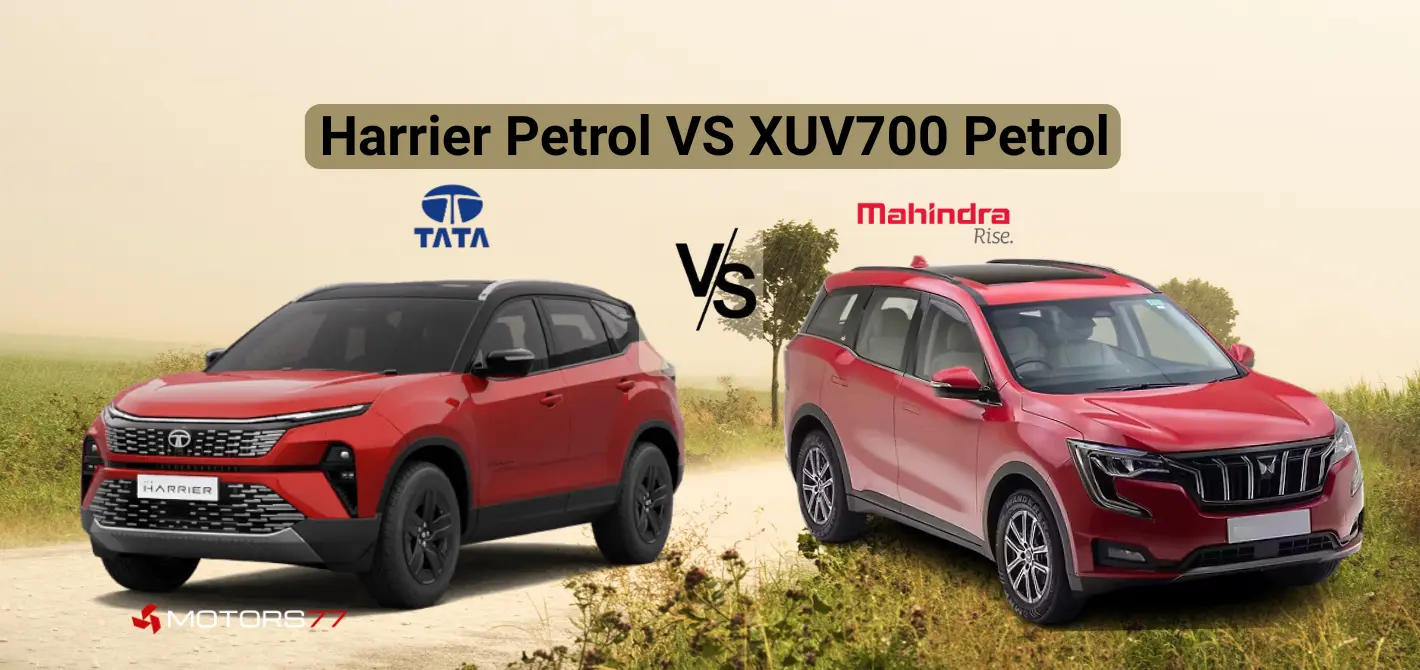
Petrol Harrier vs Petrol XUV700 represents the most significant mid-size SUV rivalry of 2025. With Tata Motors finally introducing a petrol powertrain for its flagship Harrier, buyers now have an exciting choice between two capable turbo-petrol SUVs from India’s most trusted manufacturers. This comprehensive comparison examines every aspect that matters to prospective buyers making this crucial decision.
Why This Petrol Harrier vs Petrol XUV700 Battle Matters
The mid-size SUV segment in India has predominantly favoured diesel powertrains, but shifting market dynamics and tightening emission norms are changing buyer preferences. The Tata Harrier Petrol arrives with a brand-new 1.5-litre Hyperion turbocharged engine, while the Mahindra XUV700 Petrol continues with its proven 2.0-litre mStallion unit. Both vehicles target buyers seeking refined performance without diesel-specific compromises like NVH concerns and higher maintenance costs.
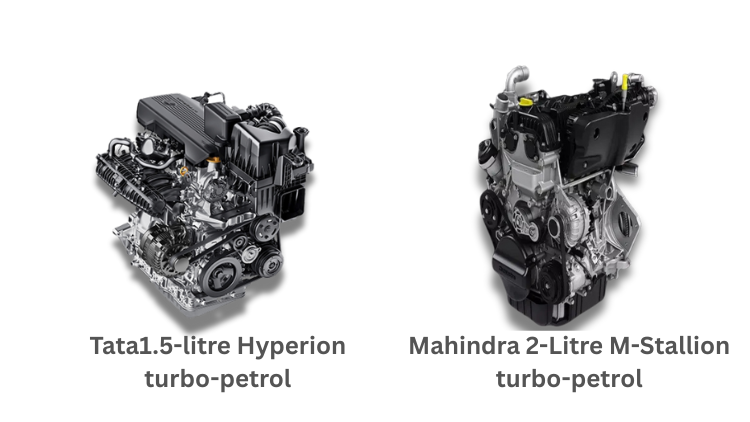
Engine and Performance: Petrol Harrier vs Petrol XUV700
Tata Harrier Petrol Powertrain
The Harrier Petrol debuts Tata’s new 1.5-litre Hyperion turbocharged direct-injection engine, producing 168 bhp and 280 Nm of torque. This powerplant, shared with the Sierra, is tuned specifically for the Harrier’s larger dimensions and premium positioning. Transmission options include a 6-speed manual and a smooth 6-speed torque converter automatic. Notably, Tata claims the petrol variant is approximately 80 kg lighter than its diesel counterpart, which positively impacts handling dynamics and fuel efficiency.
In performance testing, the Harrier Petrol achieves 0-100 kmph in 10.69 seconds in Sport mode, demonstrating competitive straight-line performance. The engine delivers linear power delivery with responsive mid-range performance, making it suitable for both city commuting and highway cruising.
Mahindra XUV700 Petrol Powertrain
The XUV700 employs Mahindra’s 2.0-litre mStallion turbocharged petrol engine, generating an impressive 200 bhp and 380 Nm of torque. This larger displacement unit provides substantial power advantage on paper, paired with either a 6-speed manual or 6-speed torque converter automatic transmission. The XUV700 also offers all-wheel drive capability in select variants, adding versatility for varied driving conditions.
The additional 32 bhp and 100 Nm give the XUV700 noticeable performance advantage, particularly during highway overtakes and when carrying full passenger loads. However, real-world fuel efficiency typically ranges between 8-10 kmpl in mixed driving, compared to the Harrier’s expected 10-12 kmpl.
Quick Specifications Comparison
| Specification | Tata Harrier Petrol | Mahindra XUV700 Petrol |
|---|---|---|
| Engine | 1.5L Turbo Petrol (Hyperion) | 2.0L Turbo Petrol (mStallion) |
| Power | 168 bhp | 200 bhp |
| Torque | 280 Nm | 380 Nm |
| Gearbox | 6-speed MT / 6-speed AT | 6-speed MT / 6-speed AT |
| Mileage (Real) | 10-12 kmpl | 8-10 kmpl |
| Seating | 5-seater only | 5 / 6 / 7-seater options |
| Boot Space | 445 litres | 240 litres (7-seat) |
| Starting Price | ~Rs 14 lakh (expected) | Rs 13.66 lakh |
Dimensions and Practicality: Petrol Harrier vs Petrol XUV700
Examining the Petrol Harrier vs Petrol XUV700 in terms of dimensions reveals interesting differences. The XUV700 measures 4,695 mm in length with a 2,750 mm wheelbase, making it slightly longer than the Harrier’s 4,605 mm length and 2,741 mm wheelbase. This translates to marginally better rear legroom in the Mahindra, particularly beneficial for taller passengers.
The Harrier compensates with superior width at 1,922 mm versus 1,890 mm, creating a more spacious feel across the cabin. Boot space favours the Harrier significantly, offering 445 litres compared to the XUV700’s 240 litres in seven-seat configuration. For buyers prioritising luggage capacity over third-row seating, the Harrier presents a compelling argument.
Features and Technology Comparison
Tata Harrier Petrol Features
The 2025 Harrier Petrol arrives with comprehensive feature updates including a larger 14.5-inch Neo QLED touchscreen with Dolby Atmos support, digital IRVM, memory-equipped ORVMs with auto-dip function, and enhanced Level 2 ADAS capabilities. All Type-C USB ports now deliver 65W output, addressing modern device charging requirements. The signature panoramic sunroof, ventilated front seats, and ambient lighting continue from the diesel variants, ensuring no feature deficit exists between powertrains.
Mahindra XUV700 Petrol Features
The XUV700 counters with its dual 10.25-inch screen setup comprising infotainment and digital instrumentation, AdrenoX connected car technology with Amazon Alexa integration, and segment-first features like driver attention monitoring. The panoramic sunroof, wireless charging, and comprehensive climate control system match buyer expectations at this price point. Mahindra’s ADAS suite, calibrated specifically for Indian driving conditions, includes adaptive cruise control, lane keep assist, and autonomous emergency braking.
Safety Standards: Petrol Harrier vs Petrol XUV700
Safety represents a decisive factor in this Petrol Harrier vs Petrol XUV700 comparison. Both vehicles achieve five-star Global NCAP ratings, demonstrating exemplary occupant protection. The Harrier provides seven airbags (six standard), advanced ESP with 17 functionalities, electronic parking brake with auto-hold, and ISOFIX child seat mounts. Its Land Rover D8 platform derivation contributes to exceptional structural rigidity.
The XUV700 similarly offers seven airbags, advanced ESP, hill descent control, and comprehensive ADAS with Level 1 autonomous capabilities. Mahindra received the Global NCAP Safer Choice award for the XUV700’s electronic stability control performance and pedestrian protection ratings. Both manufacturers prioritise passive and active safety equally, leaving buyers confident regardless of their choice.
Pricing Analysis
The Mahindra XUV700 Petrol starts at Rs 13.66 lakh (ex-showroom) for the MX variant, extending to approximately Rs 20 lakh for fully-loaded AX7 automatic configurations. The Tata Harrier Petrol, launching December 2025, is expected to commence around Rs 14 lakh for base variants, potentially undercutting equivalent diesel pricing by Rs 1-1.5 lakh. This positions both vehicles competitively, though the XUV700 offers seven-seat flexibility that the five-seat-only Harrier cannot match.
Real-World Ownership Considerations
Beyond specifications, long-term ownership experience matters significantly. Both Tata and Mahindra have expanded their service networks substantially, with touchpoints across tier-2 and tier-3 cities. For urban users with moderate annual running, the Harrier’s smaller displacement turbo-petrol offers a simpler drivetrain that could translate to lower ownership stress compared to the XUV700’s higher-output unit. However, highway-focused buyers covering longer distances regularly will appreciate the XUV700’s additional power reserves, which reduce engine strain during sustained high-speed cruising.
Motors77 Verdict: Petrol Harrier vs Petrol XUV700
After thorough analysis of the Petrol Harrier vs Petrol XUV700 rivalry, our verdict acknowledges both vehicles as exceptional choices serving different priorities.
Choose the Tata Harrier Petrol if:
You prioritise design sophistication, superior build quality perception, and enhanced fuel efficiency. The Harrier suits buyers who value a refined driving experience with adequate performance for daily commuting and occasional highway journeys. Its larger boot space makes it ideal for couples or small families who undertake frequent road trips. The lighter kerb weight contributes to better handling dynamics and potentially lower running costs.
Choose the Mahindra XUV700 Petrol if:
Outright performance and family-carrying capability take precedence. The XUV700’s additional power and torque deliver confidence during overtaking manoeuvres and when operating with full passenger loads. The available seven-seat configuration and all-wheel drive option provide versatility unmatched by the Harrier. Tech-focused buyers will appreciate the comprehensive AdrenoX ecosystem and extensive ADAS functionality.
Final Assessment:
The Petrol Harrier vs Petrol XUV700 decision ultimately reflects personal priorities. The Harrier excels in design appeal, efficiency, and cargo practicality, while the XUV700 dominates in performance, seating flexibility, and technology integration. Neither choice disappoints, as both manufacturers deliver exceptional value propositions backed by competitive pricing and comprehensive safety credentials.
For buyers seeking the most engaging driving experience with premium aesthetics, the Harrier Petrol emerges as our recommendation. However, families requiring maximum versatility should strongly consider the XUV700 Petrol for its unmatched combination of power and practicality.
Important Update:
Mahindra will launch the XUV700 facelift on January 5th, 2026, reportedly with the new XUV7xO nameplate. This update promises design revisions and feature enhancements. If you’re considering this Petrol Harrier vs Petrol XUV700 comparison, waiting for the XUV7xO reveal could be worthwhile before finalising your decision.
Tata’s petrol SUV strategy doesn’t stop with the Harrier — the Tata Safari Petrol has already been launched, and it uses the same Hyperion turbocharged engine. Read the full details here: https://www.motors77.com/tata-petrol-safari-launch/