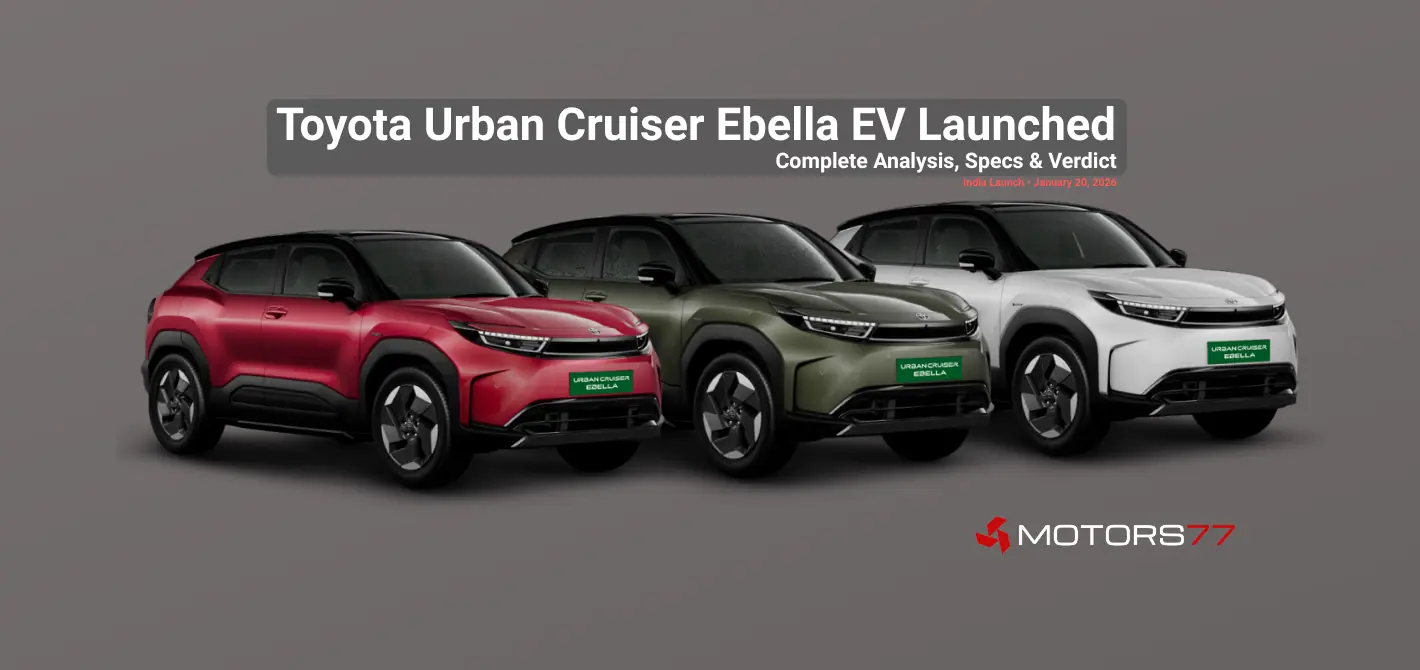
Toyota Urban Cruiser Ebella has officially arrived in India, marking Toyota’s long-awaited entry into the electric vehicle segment. While most publications rushed their coverage on launch day, we at Motors77 deliberately took time to analyse every aspect of this electric SUV before bringing you this comprehensive breakdown. Sometimes, the best stories are worth waiting for.
The Japanese automaker unveiled its first battery electric vehicle for India on January 20, 2026 – a day that will be remembered as a pivotal moment in Toyota’s Indian journey. After years of championing hybrid technology and maintaining a cautious stance on pure EVs, Toyota Kirloskar Motor has finally taken the electric plunge with the Urban Cruiser Ebella.
Why the Toyota Urban Cruiser Ebella Matters More Than You Think
Here’s what makes this launch significant: Toyota isn’t just entering the EV market – it’s doing so with a product developed through its strategic partnership with Maruti Suzuki. The Urban Cruiser Ebella shares its underpinnings with the Maruti e Vitara, yet Toyota has worked to carve out a distinct identity for its electric debut.
This isn’t merely a badge-engineering exercise. Vikram Gulati, Country Head at Toyota Kirloskar Motor, emphasised during the unveiling that the Toyota Urban Cruiser Ebella represents a “born-electric model, not an ICE vehicle re-engineered into a battery electric.” The distinction matters because it signals Toyota’s commitment to purpose-built EV architecture rather than conversion platforms.
Quick Pros & Cons: Toyota Urban Cruiser Ebella
Pros
- 543 km ARAI-certified range – Class-leading range from the 61 kWh battery variant
- 8-year battery warranty – Industry-best coverage with 60% buyback assurance
- 7 airbags standard – Safety not compromised even in base variant
- 45-minute fast charging – 10-80% DC fast charge capability
- Level 2 ADAS suite – Lane keep assist and adaptive cruise control (E3 variant)
- 40:20:40 sliding rear seats – Individual slide and recline for each passenger
- Toyota reliability – Proven after-sales network and brand trust
- BaaS option available – Battery rental programme reduces upfront cost
Cons
- No all-wheel drive option – AWD available globally but not offered in India
- ADAS limited to top variant only – E1 and E2 buyers miss out on safety tech
- Fixed glass roof – Non-openable panel; no true panoramic sunroof experience
- Boot space only 345 litres – Smaller than Creta EV (473L) and Curvv EV (500L)
- Ventilated seats only in E3 – Missing in base and mid variants despite hot Indian climate
- No wireless charger in base variant – Basic feature reserved for higher trims
- Conservative styling – May not appeal to buyers seeking bold EV aesthetics
- Real-world range concerns – ARAI figures typically 20-30% higher than actual driving
Toyota Urban Cruiser Ebella: Design That Speaks Volumes
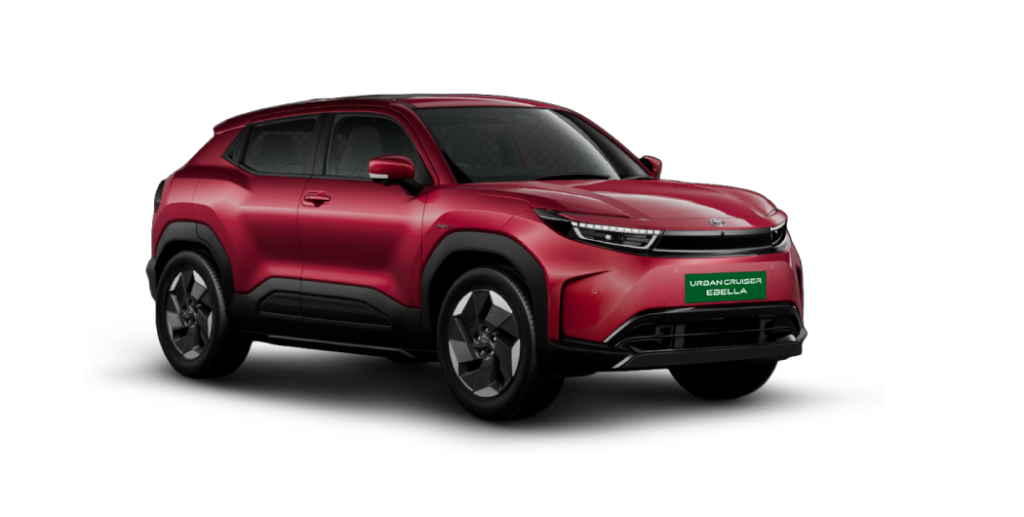
The Toyota Urban Cruiser Ebella adopts the brand’s global ‘Hammerhead’ design language, giving it a distinctly Toyota appearance despite sharing architecture with its Maruti sibling. The front fascia features slim LED headlamps connected by a sleek light bar, with a blanked-off grille housing the Toyota emblem.
Exterior Specifications
| Parameter | Measurement |
|---|---|
| Length | 4,285 mm |
| Width | 1,800 mm |
| Height | 1,640 mm |
| Wheelbase | 2,700 mm |
| Ground Clearance | 180 mm |
| Boot Space | 345 litres |
| Wheel Size | 18-inch aero blade alloys |
The side profile reveals the charging port positioned on the front fender – a practical placement bearing a ‘BEV’ badge. Black cladding runs along the wheel arches and door sills, while the rear door handles cleverly nestle behind the C-pillar, creating the visual illusion of a sportier two-door design.
At the rear, connected LED tail lamps and a chunky bumper with integrated reflectors complete the package. Toyota offers the Urban Cruiser Ebella in nine colour options – five monotone and four dual-tone combinations.
Toyota Urban Cruiser Ebella Colour Options
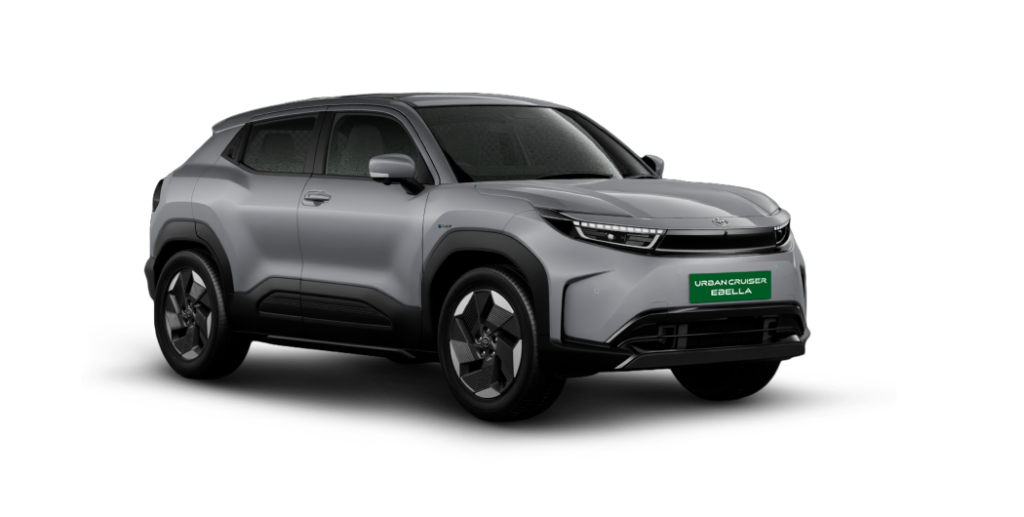
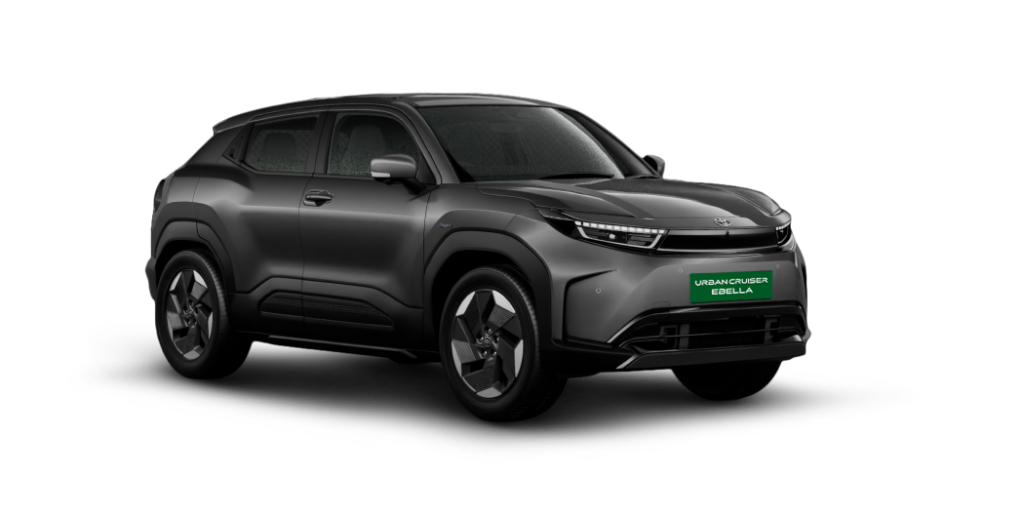
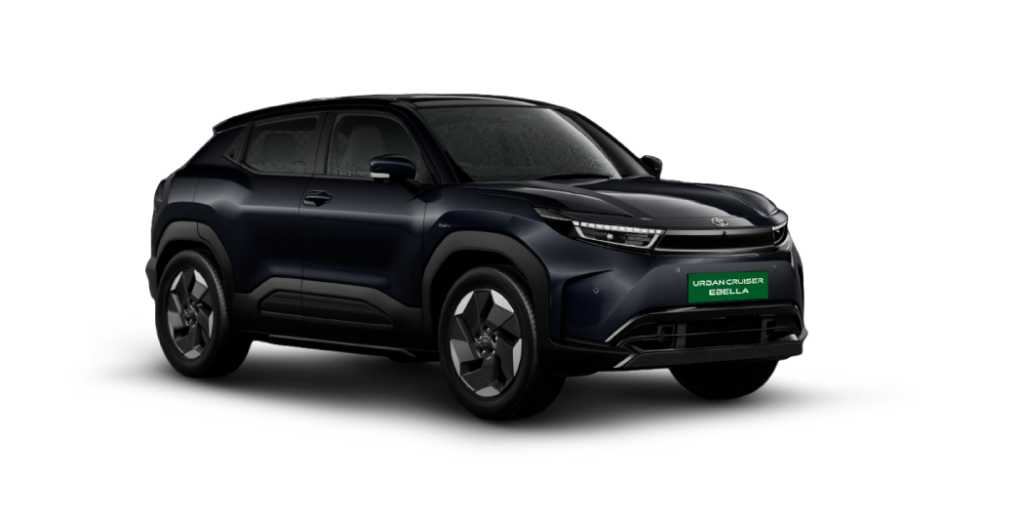
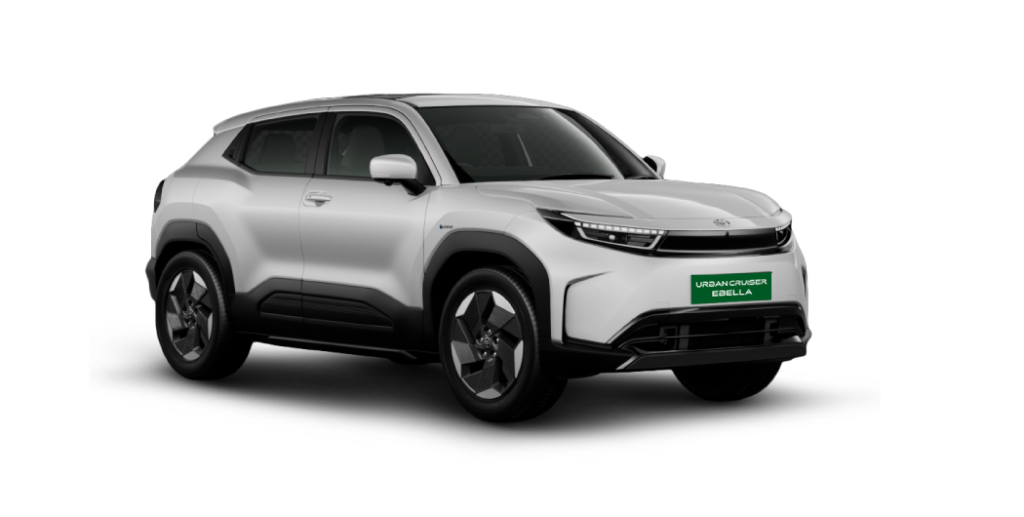
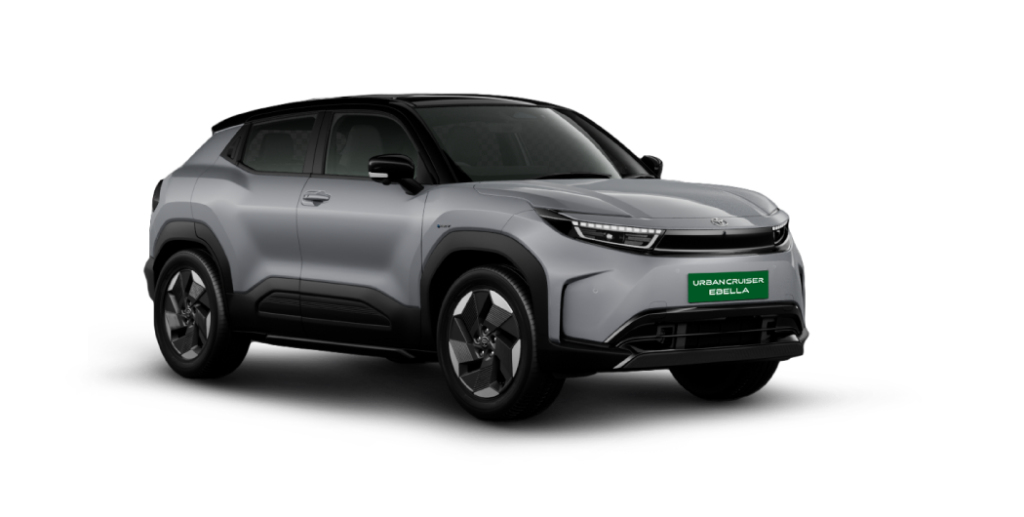
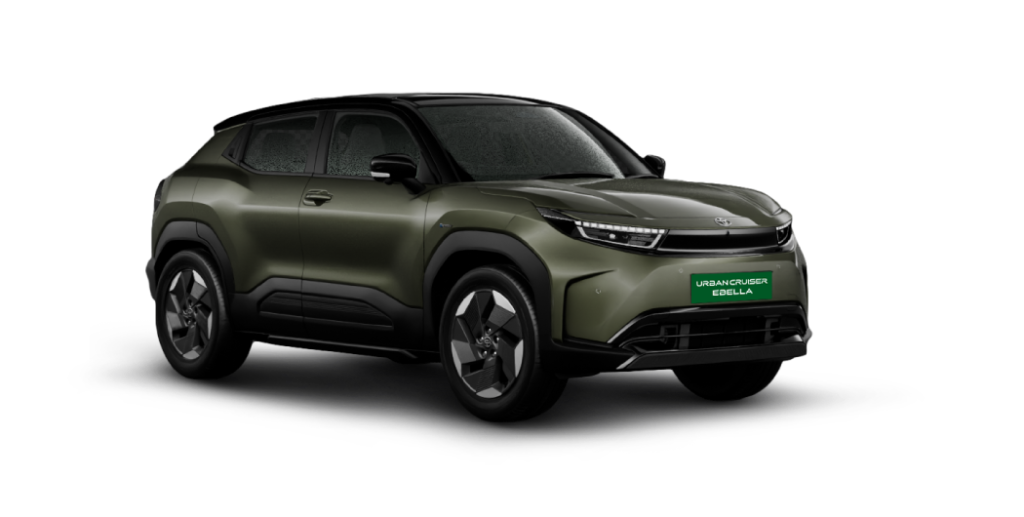
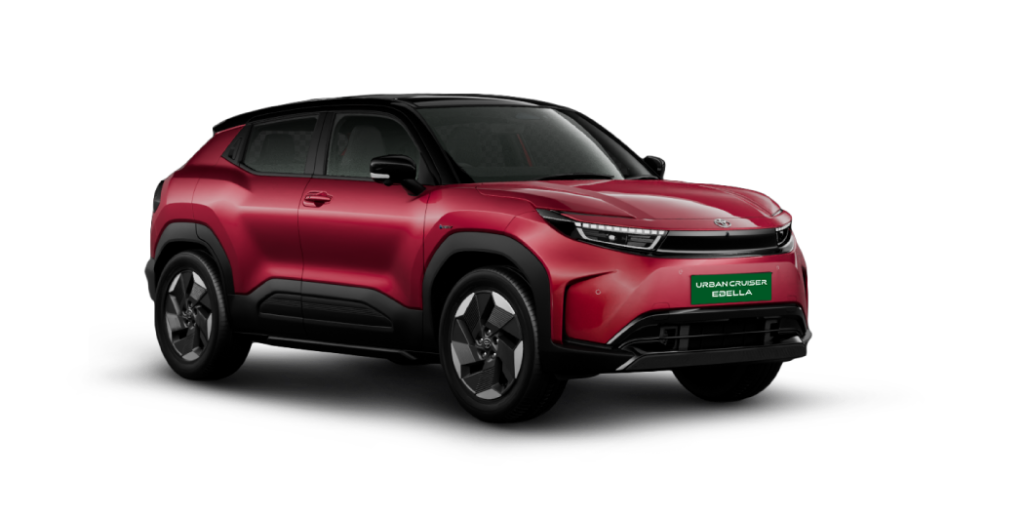
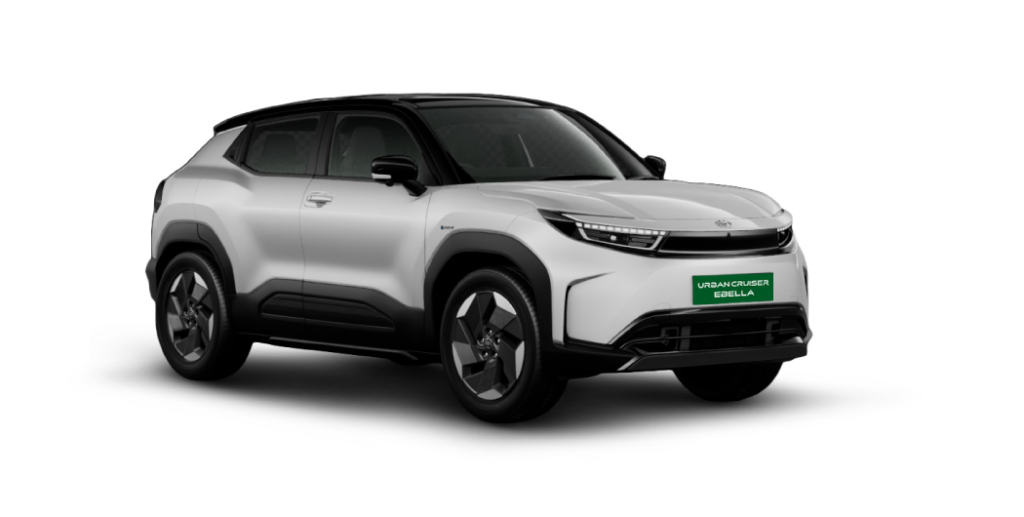
Toyota offers the Ebella in nine exterior shades – five monotone and four dual-tone combinations. The dual-tone variants command an additional premium and are available only on the top E3 variant.
| Monotone Colours | Dual-Tone Colours (Black Roof) |
|---|---|
| Cafe White | Cafe White |
| Bluish Black | Land Breeze Green |
| Gaming Grey | Sportin Red |
| Sportin Red | Enticing Silver |
| Enticing Silver | — |
Monotone Colours
Dual-Tone Colours (Black Roof)
What Powers the Toyota Urban Cruiser Ebella?
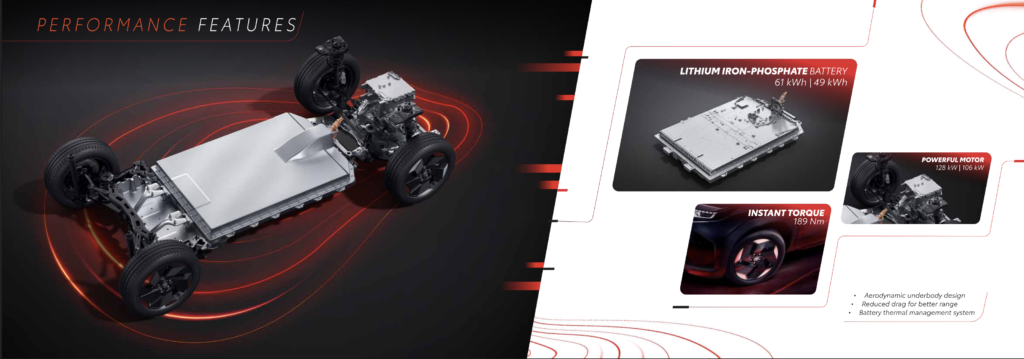
This is where the Ebella demonstrates its engineering credentials. Toyota offers two battery configurations, both utilising Lithium Iron Phosphate (LFP) chemistry known for longevity and thermal stability.
Battery & Powertrain Specifications
| Specification | 49 kWh Variant | 61 kWh Variant |
|---|---|---|
| Battery Capacity | 49 kWh (LFP) | 61 kWh (LFP) |
| Motor Output | 144 hp | 174 hp |
| Torque | 189 Nm | 189 Nm |
| Drive Type | Front-wheel drive | Front-wheel drive |
| ARAI Range | ~345 km | 543 km |
| Fast Charging | 10-80% in 45 minutes | 10-80% in 45 minutes |
The absence of an all-wheel drive option – available globally – is notable. Toyota has opted to keep the India-spec Toyota Urban Cruiser Ebella front-wheel drive only, likely to maintain competitive pricing.
Inside the Toyota Urban Cruiser Ebella: Features That Impress
Step inside, and the Ebella greets you with a dual-tone black and tan cabin that feels contemporary without being overtly futuristic. The dashboard takes an upright stance, housing a twin-screen setup that forms the technological centrepiece.
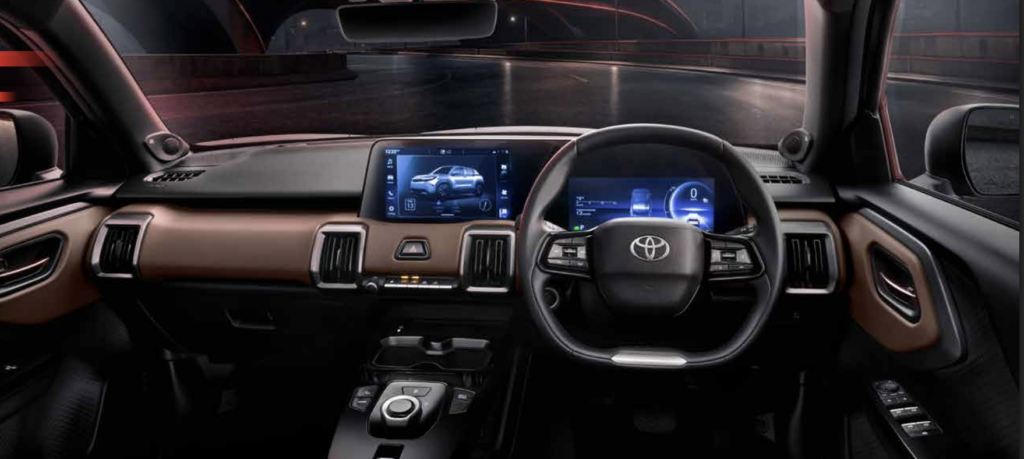
Variant-Wise Feature Breakdown
The Toyota Urban Cruiser Ebella is offered in three variants: E1, E2, and E3. Here’s what each brings:
| Feature | E1 (Base) | E2 (Mid) | E3 (Top) |
|---|---|---|---|
| Battery Options | 49 kWh | 49 & 61 kWh | 61 kWh |
| Digital Display | 10.1-inch driver’s display | ✓ | ✓ |
| Infotainment | 10.25-inch touchscreen | ✓ | ✓ |
| Apple CarPlay/Android Auto | Wireless | ✓ | ✓ |
| Climate Control | Automatic | ✓ | ✓ |
| Ventilated Front Seats | ✗ | ✗ | ✓ |
| Powered Driver Seat | ✗ | ✗ | ✓ |
| Panoramic Fixed Glass Roof | ✗ | ✗ | ✓ |
| Leatherette Upholstery | ✗ | ✗ | ✓ |
| 360-Degree Camera | ✗ | ✗ | ✓ |
| Level 2 ADAS | ✗ | ✗ | ✓ |
| JBL Sound System | ✗ | ✗ | ✓ |
| 12-Colour Ambient Lighting | ✗ | ✓ | ✓ |
| Dual-Tone Exterior Option | ✗ | ✗ | ✓ |
The rear seating arrangement deserves special mention. Toyota has equipped the Urban Cruiser Ebella with a 40:20:40 split-folding configuration where each passenger can independently slide and recline their seat – a practical touch for families.
Safety: Where the Ebella Sets Standards
Toyota’s reputation for safety translates well into its first electric offering. The Ebella comes standard with seven airbags and disc brakes on all four wheels across every variant – a commendable decision in a market where safety features often remain top-variant exclusives.
Safety Specifications
| Safety Feature | E1 | E2 | E3 |
|---|---|---|---|
| Airbags | 7 (Standard) | 7 | 7 |
| Disc Brakes (All Four) | ✓ | ✓ | ✓ |
| Electronic Parking Brake | ✓ | ✓ | ✓ |
| Auto-Hold Function | ✓ | ✓ | ✓ |
| AVAS (Acoustic Alert) | ✓ | ✓ | ✓ |
| Rear Parking Sensors | ✓ | ✓ | ✓ |
| Front Parking Sensors | ✗ | ✓ | ✓ |
| 360-Degree Camera | ✗ | ✗ | ✓ |
| Lane Keep Assist | ✗ | ✗ | ✓ |
| Adaptive Cruise Control | ✗ | ✗ | ✓ |
Ownership Benefits: Toyota’s Confidence Statement
What sets the Toyota Urban Cruiser Ebella apart from competitors is Toyota’s comprehensive ownership package. The company is offering:
- 8-year battery warranty – industry-leading coverage
- Battery as a Service (BaaS) – rental programme reducing upfront costs
- 60% buyback assurance – addressing resale value concerns
These initiatives directly tackle the primary anxieties prospective EV buyers face: battery degradation, high replacement costs, and uncertain resale values. For a brand entering the EV space, this level of commitment speaks volumes about Toyota’s confidence in the Ebella’s engineering.
How Does the Toyota Urban Cruiser Ebella Compare?
The electric SUV segment in India has grown fiercely competitive. Here’s how the Ebella stacks up:
Competitive Comparison
| Parameter | Toyota Urban Cruiser Ebella | Hyundai Creta Electric | Mahindra BE 6 | Tata Curvv EV |
|---|---|---|---|---|
| Max Range (Claimed) | 543 km | 473 km | 556 km | 585 km |
| Battery (Larger) | 61 kWh | 51.4 kWh | 79 kWh | 55 kWh |
| Power (Higher) | 174 hp | 171 hp | 288 hp | 167 hp |
| Fast Charging | 45 min (10-80%) | 58 min (10-80%) | 20 min (20-80%) | 40 min (10-80%) |
| Airbags (Standard) | 7 | 6 | 6 | 6 |
| Expected Starting Price | ₹15.5 lakh* | ₹17.99 lakh | ₹18.90 lakh | ₹17.49 lakh |
*Estimated pricing; official variant-wise prices yet to be announced
The Elephant in the Room: Pricing Strategy
Toyota has unveiled the Toyota Urban Cruiser Ebella but withheld variant-wise pricing – a strategy that’s raised eyebrows. The company has opened bookings, yet customers remain uncertain about exact costs.
Industry estimates suggest pricing between ₹15.5 lakh and ₹22.5 lakh (ex-showroom). If Toyota positions the Ebella competitively against the Maruti e Vitara while leveraging its brand premium, it could capture significant market share.
The delayed pricing announcement might indicate Toyota is watching competitor reactions before finalising numbers – a cautious approach befitting the brand’s measured entry strategy.
What We Wish Toyota Had Done Differently
No launch is perfect, and the Urban Cruiser Ebella has its share of missed opportunities:
All-Wheel Drive Option: The global model offers AWD, which would have given the Ebella an edge over front-wheel-drive competitors.
Sunroof Configuration: The fixed glass roof isn’t a true panoramic sunroof – an expectation at this price point.
Aggressive Styling: The Hammerhead design is conservative compared to rivals like the Mahindra BE 6.
Motors77 Verdict: Should You Wait for the Toyota Urban Cruiser Ebella?
After analysing every facet of the Toyota Urban Cruiser Ebella, we arrive at a nuanced conclusion.
For first-time EV buyers, the Ebella presents a compelling case. Toyota’s reliability heritage, combined with the 8-year battery warranty and 60% buyback assurance, addresses core concerns that prevent many from switching to electric. The 543 km range eliminates range anxiety for most practical scenarios.
For tech enthusiasts, the Ebella might feel slightly underwhelming. The feature set, while comprehensive, doesn’t push boundaries. Competitors offer flashier cabins and more aggressive styling.
For families, this is where the Ebella shines. Seven standard airbags, the practical 40:20:40 rear seat configuration, and Toyota’s trusted after-sales network make it a sensible choice.
The Bottom Line
The Toyota Urban Cruiser Ebella isn’t trying to be the most exciting electric SUV in India – it’s trying to be the most trustworthy. Toyota has built a vehicle for buyers who want electric mobility without compromising on reliability and peace of mind.
In a market flooded with aggressive claims, sometimes a measured, dependable offering is exactly what discerning buyers need. The Ebella won’t win drag races against the BE 6, nor turn heads like the Curvv EV. But when you’re three years into ownership and your battery performs exactly as promised, you’ll understand why Toyota took its time.
Motors77 Rating: 8.0/10
We recommend waiting for official pricing before booking. If Toyota prices the Ebella competitively against the e Vitara while offering its superior ownership package, this could be the EV that brings electric mobility to mainstream India.
Disclaimer: Specifications and features mentioned are based on information available at the time of publication. Final variant-wise pricing and specifications may vary. Motors77 recommends verifying details with authorised Toyota dealerships before purchase decisions.