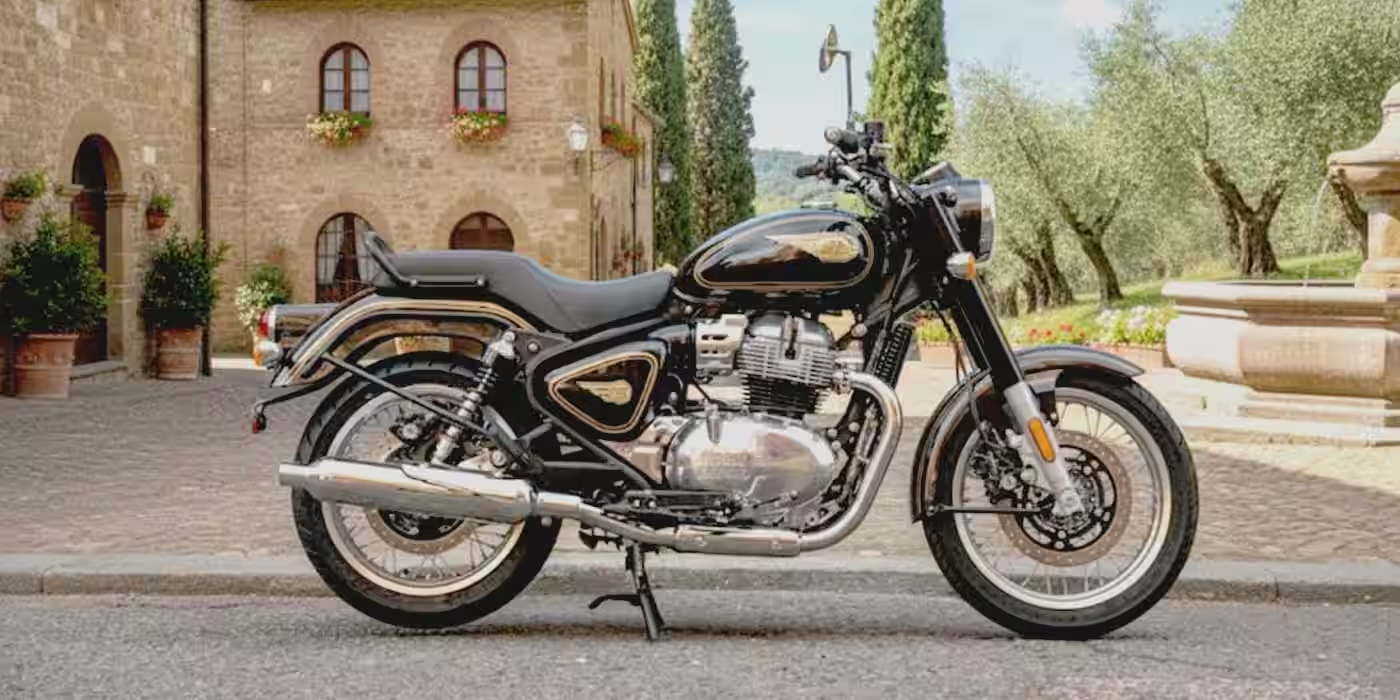
Royal Enfield has officially revealed the all-new Bullet 650 at EICMA 2025 in Milan, a modern classic powered by the 648 cc twin-cylinder engine. Here’s a detailed look at its specs, features, price, rivals, pros & cons, and what it means for India’s retro motorcycle scene.
A New Era for a Timeless Name
There are motorcycles, and then there’s the Royal Enfield Bullet, a name that’s survived wars, generations, and the rise of entire automotive segments. It has always stood for simplicity, endurance, and that unmistakable “thump.”
But at EICMA 2025 in Milan, Royal Enfield turned a page in motorcycling history. The company officially unveiled the Bullet 650, introducing the legendary badge to its 650 cc twin-cylinder family for the first time ever.
For purists, this is a seismic shift. For new-age riders, it’s the perfect evolution.
Royal Enfield says the goal was simple: retain the Bullet’s DNA but elevate its refinement and global appeal. From design to engine, the Bullet 650 walks the fine line between nostalgia and modernity.
Design and Styling: Classic, Not Stuck in the Past
The first thing you notice is how familiar it feels. The round headlamp with those iconic “Tiger Eye” pilot lamps, the upright stance, the old-school fenders, everything screams Bullet. Yet, it’s no copy-paste job from the 350.
The Bullet 650 carries an unmistakable premium aura. The chrome detailing is thicker and glossier, the tank gets hand-painted pinstripes, and even the badges have been reworked with raised metallic fonts that catch the light beautifully.
Royal Enfield has offered two initial shades, Cannon Black and Battleship Blue, both understated yet rich. Unlike the flashier Continental GT or Super Meteor, the Bullet 650 aims for subtle authority, not showmanship.
Small touches show how far Royal Enfield has come:
- The wiring harness is hidden neatly.
- Switchgear quality is on par with Japanese rivals.
- Paintwork looks deep enough to pass the reflection test.
In person, it feels like a motorcycle designed with restraint, and that’s what makes it elegant.
Engine and Performance: The Twin That Changed Everything
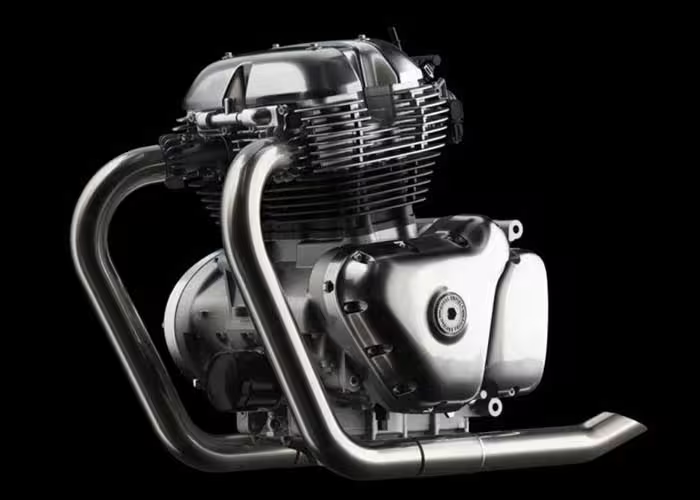
Powering the Bullet 650 is the familiar 648 cc air/oil-cooled parallel-twin engine that we’ve seen on the Interceptor 650, Continental GT 650, and Super Meteor 650.
It produces around 47 PS of power and 52.3 Nm of torque, mated to a 6-speed gearbox with an assist-and-slipper clutch.
On paper, those figures aren’t class-leading, but that’s never been the Bullet’s goal. It’s about character, not spec-sheet drag races.
This motor is buttery smooth at low revs, pulls cleanly through the midrange, and delivers a deep, mellow exhaust note that replaces the traditional “thump” with a richer, more mature rumble.
The company claims new intake and exhaust tuning for a signature Bullet resonance, a tricky balance between heritage and refinement.
For riders used to the 350 cc single, the difference will be night and day. You get effortless highway cruising, reduced vibrations, and far stronger overtaking power.
Ride, Handling, and Comfort
Underneath, the Bullet 650 uses a tubular steel double cradle frame, similar to the Classic 650 but tuned for comfort and composure rather than aggression.
Suspension setup:
- 41 mm front telescopic forks
- Twin rear shock absorbers (preload-adjustable)
Braking:
- 320 mm front disc, 300 mm rear disc
- Dual-channel ABS (standard)
Tyres:
- 19-inch front and 18-inch rear setup with classic spoke rims
The overall geometry favours stability. You sit upright, the handlebar is wide, and the footpegs are mid-mounted, a posture that feels natural whether you’re city cruising or touring.
The seat is thicker than the Interceptor’s and better contoured for long-distance comfort. Pillion space is generous too, making it more practical than the café racer GT or even the Meteor.
While it won’t corner like a naked sport bike, early testers at EICMA noted the bike feels “remarkably balanced” and “surprisingly flickable” for a 240 kg machine.
Technology and Features: Retro with a Modern Brain
Royal Enfield’s design philosophy with the Bullet 650 was “classic feel, modern ease.” You won’t find digital overload here, just tasteful tech that enhances usability.
Feature highlights:
- LED headlamp and indicators
- Semi-digital instrument console with analog speedometer
- Tripper Navigation (optional in some markets)
- USB-C charging port
- Dual-channel ABS
- Slipper clutch
- Hazard warning switch
- Metal body panels
The cluster includes two pods: one analog for speed, and a smaller digital unit for odometer, gear position, fuel gauge, and clock. It’s clean, legible, and far better finished than the 350 series.
No Bluetooth gimmicks or touch screens, just functional tech that respects the retro essence.
Full Specifications: Royal Enfield Bullet 650
| Specification | Detail |
|---|---|
| Engine Type | 648 cc, parallel twin, air/oil-cooled, SOHC |
| Power Output | 47 PS @ 7250 rpm |
| Torque | 52.3 Nm @ 5250 rpm |
| Gearbox | 6-speed, assist & slipper clutch |
| Frame | Tubular steel twin cradle |
| Front Suspension | 41 mm telescopic forks |
| Rear Suspension | Twin shock absorbers (preload adjustable) |
| Front Brake | 320 mm disc |
| Rear Brake | 300 mm disc |
| ABS | Dual-channel |
| Wheels/Tyres | 19 in front / 18 in rear, spoked |
| Kerb Weight | Approx 240 kg |
| Fuel Tank Capacity | 13 litres |
| Seat Height | 805 mm |
| Lighting | Full LED setup |
| Instrument Cluster | Semi-digital with Tripper (optional) |
| Colours (launch) | Cannon Black, Battleship Blue |
Pricing Analysis and Value Breakdown
While official prices haven’t been declared, estimates from multiple dealer sources suggest an ex-showroom price of around ₹ 3.4 lakh for India.
That’s slightly below the Super Meteor 650 and above the Interceptor 650, a smart middle ground.
Breakeven and Value Perspective
For a typical buyer upgrading from the Bullet 350:
- On-road price (including taxes, accessories): ≈ ₹ 3.9–4.0 lakh
- Average fuel economy: ~ 22 km/l
- Maintenance cost: similar to other 650 cc twins (~ ₹ 4,000 per service)
Compared to owning a 350 for 5 years, total cost of ownership rises by about 35%, but performance and touring comfort improve by nearly 80%.
In short, the Bullet 650 offers premium experience without luxury-bike pricing, a sweet spot that could attract both aspirational buyers and seasoned riders.
Competition Comparison
The Bullet 650 enters a growing field of retro roadsters, both domestic and imported.
| Motorcycle | Engine | Power | Torque | Price (India, est.) | Positioning |
|---|---|---|---|---|---|
| RE Bullet 650 | 648 cc twin | 47 PS | 52.3 Nm | ₹ 3.4 L (approx) | Classic Heritage |
| Kawasaki W 800 | 773 cc twin | 52 PS | 62.9 Nm | ₹ 7.3 L | Premium Retro |
| Triumph Speed 400 | 398 cc single | 40 PS | 37.5 Nm | ₹ 2.3 L | Modern Classic |
| Benelli Imperiale 530 (upcoming) | 530 cc single | 41 PS | 45 Nm | ₹ 3.2 L | Vintage Cruiser |
| Honda CB 350 Twin (rumoured) | ~ 500–550 cc | TBD | TBD | TBD | Neo-Retro |
While the Triumph 400 offers sharper dynamics, it lacks the twin-cylinder smoothness and emotional pull of the Bullet. The Kawasaki is beautiful but far pricier.
That leaves the Bullet 650 sitting alone in the “accessible twin-classic” segment, a space Royal Enfield practically invented.
Market Context: Timing Is Everything
The middleweight motorcycle market in India and Europe is evolving rapidly. Riders want something more refined than a 350 cc single but less intimidating than a 900 cc superbike.
Royal Enfield’s 650 cc platform has already proven its strength, with over 1,00,000 units sold globally since launch.
By introducing the Bullet 650, the brand is betting on emotion-driven buying. It’s not about top speed or horsepower; it’s about legacy, feel, and identity.
This launch also helps Royal Enfield fortify its global strategy, offering five unique 650 cc motorcycles catering to different personalities:
- Interceptor 650 – everyday classic roadster
- Continental GT 650 – café racer
- Super Meteor 650 – cruiser
- Classic 650 – vintage modern
- Bullet 650 – heritage flagship
It’s a portfolio few brands can rival at this price point.
Pros and Cons
What Works
- Beautifully balanced styling; pure old-school elegance
- Twin-cylinder refinement with trademark RE torque
- Superb paint, chrome, and material quality
- Comfortable ergonomics and plush seat
- Stable at high speeds; confident braking setup
- Solid touring capability
What Could Be Better
- Weight remains on the heavier side
- No alloy wheels or tubeless tyres yet
- Lacks traction control or ride modes (competitors offer them)
- Exhaust note may disappoint die-hard single-cylinder fans
Still, none of these are deal-breakers, they’re conscious design choices to retain the Bullet’s purist charm.
Who Should Buy the Bullet 650
This is not a beginner’s motorcycle, nor is it meant to be. The Bullet 650 suits:
- Existing Bullet 350 or Classic owners seeking refinement and power
- Long-distance riders who prefer calm, torque-rich performance
- Collectors and enthusiasts who value timeless design
- Riders in their 30s–50s looking for something emotional yet practical
If you want speed, buy a Ninja. If you want comfort, buy a Meteor.
If you want soul, this is it.
Industry Impact and Analyst Take
Royal Enfield’s move to twin-upgrade the Bullet is both emotional and strategic. It signals confidence, the brand believes its heritage can sustain evolution without alienating its base.
It also shows a clear trend in Indian motorcycling: retro is no longer basic. Riders want nostalgia with sophistication, and brands that can blend both will own the decade ahead.
The Bullet 650 could also push the envelope for made-in-India exports. With stricter European emission norms and rising costs for big-capacity bikes, the Bullet 650’s globally compliant twin engine could be RE’s strongest weapon overseas.
From an analyst’s perspective, this bike cements Royal Enfield’s transition from a domestic retro manufacturer to a serious mid-weight global player.
Buyer Guidance: Things to Consider Before Booking
- Weight and Handling: At 240 kg, city manoeuvrability needs practice.
- Service Access: Check if your local RE workshop is 650-certified.
- Insurance Premiums: Slightly higher due to engine class.
- Accessories: RE’s official lineup includes bar-end mirrors, touring seats, and luggage options, worth factoring into cost.
- Resale: Historically, Bullet nameplates retain excellent resale value.
If your heart beats for old-school design but your head wants smooth performance, the Bullet 650 delivers both.
Final Verdict: Tradition Perfected
The Royal Enfield Bullet 650 isn’t about reinvention, it’s about evolution done right. It carries 90 years of heritage forward without getting trapped by it.
For riders who grew up dreaming of owning a Bullet, this is the modern chapter they’ve been waiting for, smoother, stronger, yet proudly old-fashioned in all the right ways.
Royal Enfield has managed something few brands ever do: it’s modernized a legend without diluting its soul.
If priced right, the Bullet 650 could easily become not just a bestseller but a future classic in its own right.
FAQs About the Royal Enfield Bullet 650
1. Is the Bullet 650 replacing the Bullet 350?
No. Both will coexist. The 350 remains the affordable classic, while the 650 targets the premium heritage market.
2. When will the Bullet 650 launch in India?
The official India debut is expected at Motoverse 2025 (Goa, Nov 21–23), with deliveries starting early 2026.
3. What is the expected price?
Around ₹ 3.3 – 3.5 lakh (ex-showroom) depending on colour and trim.
4. Does it retain the traditional Bullet sound?
Not exactly, the single’s “thump” is replaced by a deeper twin-cylinder growl. Many riders find it richer and more refined.
5. Is it suitable for beginners?
Not ideal for absolute novices. The weight and power demand some experience.
6. How does it compare to the Interceptor 650?
The Bullet 650 shares the same engine but offers more comfort, upright ergonomics, and vintage design cues.
7. What’s the mileage like?
Expect around 22–24 km/l, depending on riding conditions.
8. Is it good for long-distance touring?
Absolutely. The relaxed engine, stable chassis, and plush seat make it one of RE’s best mile-munchers.
Also Read: Royal Enfield Himalayan 750: Everything You Need to Know About the Global Debut