Motors77 | Latest Auto News - Cars, Bikes & EV Updates
  • Home
  • CARS
    • India Car News
    • International Car News
    • New Car Launches
    • Upcoming Cars
  • BIKES
    • India Bike News
    • International Bike News
    • New Bike Launches
    • Upcoming Bikes
  • ELECTRIC
    • Electric Cars
    • Electric Bikes
  • REVIEWS
    • Bike
    • Car
    • Features
    • Fuel Cost Calculator
No Result
View All Result
Motors77 | Latest Auto News - Cars, Bikes & EV Updates
  • Home
  • CARS
    • India Car News
    • International Car News
    • New Car Launches
    • Upcoming Cars
  • BIKES
    • India Bike News
    • International Bike News
    • New Bike Launches
    • Upcoming Bikes
  • ELECTRIC
    • Electric Cars
    • Electric Bikes
  • REVIEWS
    • Bike
    • Car
    • Features
    • Fuel Cost Calculator
No Result
View All Result
Motors77 | Latest Auto News - Cars, Bikes & EV Updates
No Result
View All Result
Home CARS

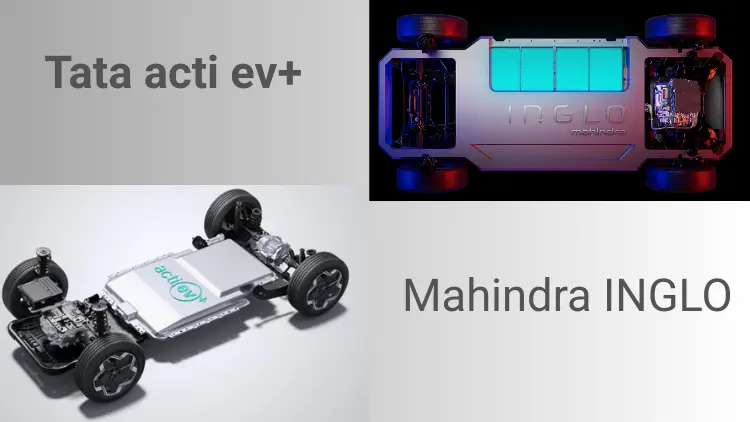
Tata Harrier EV vs Mahindra XEV 9e-The Premium EV SUV Showdown in 2025

Vyom Patil by Vyom Patil
October 14, 2025
in CARS, ELECTRIC, Electric Cars
0
Tata Harrier EV vs Mahindra XEV 9e

Tata Harrier EV vs Mahindra XEV 9e

12
SHARES
153
VIEWS
Share on FacebookShare on Twitter

Introduction

ITata Harrier EV vs Mahindra XEV 9e : India’s EV market is evolving fast, and 2025 is proving to be a landmark year. With increasing adoption, better charging infrastructure, and strong government policy support, electric vehicles are no longer niche — they’re becoming mainstream choices across segments.

Two of the most important launches in the premium EV SUV category are the Tata Harrier EV and the Mahindra XEV 9e. Both models represent the best of homegrown engineering, combining long range, high safety standards, and future-ready technology. Tata brings its successful Harrier nameplate into the electric era, while Mahindra expands its Born Electric range with the XEV 9e. On paper, both SUVs promise comfort, technology, and efficiency. Let’s compare them in detail.

You might also like

Hyundai Lounge Edition Launched: The Alcazar Now Costs Rs 90,000 More With Two Fewer Seats

Maruti Suzuki Baleno Facelift First Look: Fewer Cylinders, Less Power, And Why That Trade Works

MG ADAPT Platform Unveiled: Why MG Showed A Chassis When Everyone Expected An SUV

Design & Road Presence

Tata Harrier EV

The Harrier EV blends its strong SUV proportions with a forward-looking EV identity. The signature connected LED DRLs and tail-lamps highlight its modern styling, while the closed grille and sharp character lines improve aerodynamics. The SUV retains its muscular stance but adds subtle EV cues to differentiate it from the ICE Harrier.

Inside, the Harrier EV delivers a premium and tech-forward experience. A 12.3-inch infotainment screen sits at the center, paired with a 10.25-inch digital cluster. Premium upholstery, ambient lighting, and a well-laid-out cabin emphasize comfort and sophistication. Practicality has also been enhanced with the inclusion of a frunk (front trunk), adding extra storage to the already spacious SUV.

Mahindra XEV 9e

The Mahindra XEV 9e presents a bold and futuristic design language. With its coupe-inspired silhouette, wider stance, and striking signature LED light bars, it projects a road presence that feels modern and international. Its dynamic proportions and flush design elements set it apart from conventional SUVs.

The cabin is a showcase of Mahindra’s technology-first approach. The large multi-screen layout, anchored by a 12.3-inch infotainment display and an Augmented Reality HUD, creates an immersive driving environment. Audio is powered by Harman’s 3D surround system, giving a strong edge in entertainment. Mahindra also introduces Boss Mode for rear passengers, maximizing legroom, while a front frunk adds valuable practicality for everyday use.

Takeaway: The Harrier EV leans on muscular SUV DNA with subtle EV cues, while the XEV 9e emphasizes futuristic design with coupe-like flair.

Powertrain & Performance
Tata Harrier EV

Tata offers both RWD and AWD configurations, giving customers a choice between efficiency and all-weather capability. The dual-motor AWD delivers up to 394 PS and 504 Nm, ensuring quick response and strong traction. Multiple drive modes and regenerative braking levels allow drivers to adapt the SUV’s behavior to city commutes, highways, or even rough terrain. This flexibility makes the Harrier EV a versatile option for performance-focused buyers as well as families.

Mahindra XEV 9e

Mahindra keeps things simpler with a single-motor RWD setup across all trims. Power output peaks at 285 PS with torque around 380 Nm, tuned for smooth, efficient delivery. While it lacks an AWD option, the XEV 9e benefits from a wider stance and longer wheelbase, which enhances stability during highway cruising. Multiple drive modes and regen settings give drivers control over efficiency and driving feel, ensuring predictable and comfortable performance.

SpecificationTata Harrier EVMahindra XEV 9e
Motor OptionsSingle-motor (RWD) and Dual-motor (AWD)Single-motor (RWD only)
Max PowerUp to 394 PS (AWD variants)Up to 285 PS
Max Torque504 Nm (AWD variants)~380 Nm
DrivetrainRWD for entry variants; AWD for higher trimsRWD only across the range
Drive ModesMultiple drive + terrain modes; adjustable regenMultiple drive modes; adjustable regen
Performance FeaturesDual-motor AWD, selectable terrain modes, strong SUV stabilitySmooth single-motor setup, optimized for efficiency, wide stance adds stability

Key Takeaway: The Harrier EV offers buyers the flexibility of RWD and AWD, with higher outputs in dual-motor trims. The XEV 9e sticks to RWD only, focusing on simplicity and efficiency.

Battery & Range

The Tata Harrier EV offers flexibility with two battery sizes — 65 kWh for those who want affordability and 75 kWh for those who crave maximum range. Depending on configuration, the SUV delivers between 538 km and 627 km certified range, which translates to around 420–505 km in real-world usage. Its charging system supports 7.2 kW AC home charging, with full top-ups in 9–10 hours, while 120 kW DC fast charging slashes the 20–80% charge window to just 25 minutes. Tata also equips the Harrier EV with bi-directional charging tech (V2V and V2L), letting owners power external devices or even charge another EV — a feature that boosts practicality during road trips or emergencies.

The Mahindra XEV 9e pushes the bar with slightly bigger packs — 59 kWh and 79 kWh — and a segment-leading 656 km claimed range on the larger option. Even in real-world urban conditions, Mahindra suggests 500+ km on the 79 kWh pack, making it ideal for long commutes and highway trips. Where it really shines is in charging speed: the 180 kW DC fast charge input allows a 20–80% top-up in just 20 minutes, the fastest in its class. AC charging flexibility is also better here, thanks to an optional 11.2 kW onboard charger. Add in the massive 150-litre frunk upfront, and the XEV 9e clearly emphasizes long-distance practicality and day-to-day usability.

SpecificationTata Harrier EVMahindra XEV 9e
Battery Options65 kWh, 75 kWh59 kWh, 79 kWh
Certified Range538–627 km (depending on variant)542–656 km (depending on variant)
Real-World Range~420–505 km500+ km (79 kWh pack)
DC Fast ChargingUp to 120 kW (20–80% in ~25 min)Up to 180 kW (20–80% in ~20 min)
AC Charging7.2 kW (9–10 hrs full charge)7.2 kW or 11.2 kW (6–11.7 hrs full charge)
Bi-DirectionalV2V (5 kVA), V2L (3.3 kVA)Not available
Frunk Space35–67 litres150 litres

Key Takeaway: The XEV 9e edges ahead with slightly higher range and faster charging, while the Harrier EV counters with versatile battery packs and bi-directional charging.

Driving Dynamics

Tata Harrier EV

The Harrier EV has been engineered to feel secure and versatile. Buyers get RWD for everyday efficiency or AWD in higher trims, which brings added confidence when roads get tricky. Tata equips the SUV with multiple terrain modes — Wet, Rough, and Normal — paired with adjustable regenerative braking levels via steering-mounted paddles.

On the road, the Harrier EV feels planted thanks to its wide track and SUV stance. The AWD system continuously distributes torque between front and rear axles, offering reassurance on rain-soaked highways or rural patches. Its suspension soaks up potholes and uneven surfaces, delivering comfort while keeping body roll under control. The quiet EV powertrain, combined with a stable ride, makes long highway journeys less tiring.

Mahindra XEV 9e

The XEV 9e is offered only with RWD, focusing on predictable handling and smooth power delivery. Its wider stance and longer wheelbase enhance stability at speed, making it particularly comfortable for expressway cruising.

In the city, the linear power delivery feels intuitive and easy to manage. On highways, it remains composed and steady, while the low-slung battery pack keeps the center of gravity in check. The suspension is tuned for compliance, absorbing rough patches and speed breakers without unsettling passengers. This makes the XEV 9e a dependable long-distance cruiser that’s equally at ease in urban traffic.

Technology & Infotainment
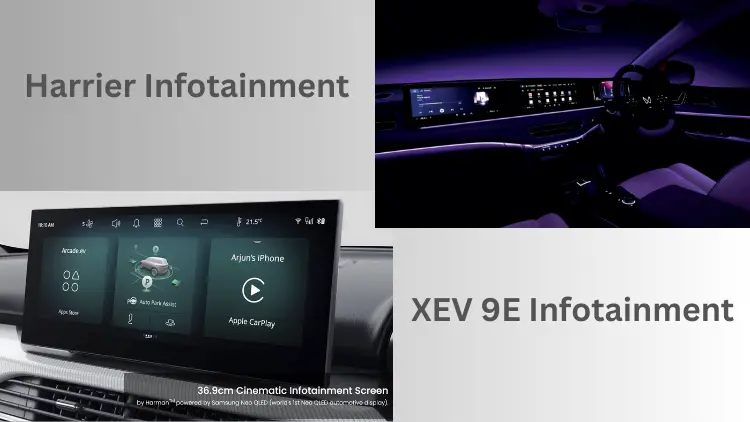
FeatureTata Harrier EVMahindra XEV 9e
Infotainment12.3-inch floating touchscreen with Arcade.ev apps, OTA updates12.3-inch central display with advanced UI, split-screen
Driver Display10.25-inch full digital clusterFully digital instrument panel
Head-Up DisplayNot availableAugmented Reality HUD
Digital MirrorDigital IRVMNot available
AudioJBL 10-speaker Dolby Atmos systemHarman 3D surround audio
ConnectivityWireless Android Auto & Apple CarPlay, connected suiteWireless Android Auto & Apple CarPlay, app-based connected suite
OTA UpdatesYesYes
ExtrasArcade.ev entertainment, wireless chargingMulti-screen cockpit, remote app features

Takeaway: The Harrier EV offers a more traditional premium tech package, while the XEV 9e goes all-in on futuristic features like the AR HUD and lounge-like rear comfort.

ADAS & Safety

Safety is one of the strongest suits for both these premium EV SUVs.

The Tata Harrier EV offers a well-rounded Level 2+ ADAS package, covering features like Adaptive Cruise Control, Lane Keep Assist, Autonomous Emergency Braking, and Traffic Sign Recognition. It also adds rear cross-traffic alert and blind-spot monitoring. On the dynamics side, the Harrier EV includes ESP, hill hold, hill descent control, and roll-over mitigation. Parking is made stress-free with a 360-degree camera offering multiple angles, supported by blind-spot view monitoring. Combined with its Bharat NCAP 5-Star rating for both adult and child protection, the Harrier EV stands out as a family-friendly choice.

The Mahindra XEV 9e is equally confident in its safety package. It also delivers a Level 2+ ADAS suite with adaptive cruise, lane-keeping aids, AEB, and blind-spot detection. Mahindra adds thoughtful extras such as Driver Drowsiness Alert and Auto High Beam Assist. Its wide footprint is easier to manage thanks to a 360° surround camera and front-rear parking sensors. Standard essentials like ESP, TPMS, ISOFIX mounts, and an emergency call system further boost security. With its own 5-Star Bharat NCAP rating, the XEV 9e gives buyers complete confidence.

SpecificationTata Harrier EVMahindra XEV 9e
Airbags7 airbags (front, side, curtain, driver knee)7 airbags (front, side, curtain, driver knee)
ADAS FeaturesLevel 2+ (Adaptive Cruise, Lane Keep, AEB, TSR, Blind Spot, RCTA)Level 2+ (Adaptive Cruise, Lane Keep, AEB, TSR, Blind Spot, Drowsiness Alert)
Parking Assistance360° camera with multiple views, blind-spot monitor360° surround view, front & rear sensors
Driver AidsESP, Hill Hold, Hill Descent, Roll-over MitigationESP, Hill Hold, Auto High Beam Assist
Crash RatingBharat NCAP 5-StarBharat NCAP 5-Star
Other FeaturesISOFIX, TPMS, electronic parking brake with auto-holdISOFIX, TPMS, Emergency Call (e-Call), Speed Assist

Comfort & Practicality

Comfort & Practicality

Both the Tata Harrier EV and Mahindra XEV 9e focus strongly on making everyday ownership comfortable and family-friendly, but they approach it in slightly different ways.

In the Harrier EV, front occupants are treated to ventilated seats, with the driver’s seat getting power adjustment and memory function, while the co-driver benefits from height adjustment. The rear passengers enjoy wide seats, dedicated AC vents, a central armrest, and even Boss Mode, which slides the front passenger seat forward to free up extra legroom. The dual-tone soft-touch dashboard, premium upholstery, and 64-colour ambient lighting create an upscale cabin ambience. Practicality is enhanced with thoughtful touches like a cooled storage console, multiple USB-C ports, wireless charging, a gesture-powered tailgate, and a digital IRVM. The frunk adds between 35–67 litres of extra storage, making it easier to manage luggage and small items on trips.

The XEV 9e, meanwhile, emphasizes futuristic convenience. Both front seats are ventilated and powered, with memory and lumbar support, while the driver’s seat also features a welcome retract function for easier ingress and egress. Rear passengers get the luxury of Boss Mode, reclining seats, a panoramic sunroof, and rear sunshades — making the back row lounge-like for long journeys. The wide-body cabin, with customizable ambient lighting, feels spacious and premium. Storage is a strong point, too, thanks to its segment-leading 150-litre frunk, a generous boot, wireless charging, and multiple USB-C ports. Added conveniences like an app-powered tailgate and remote climate control underline its tech-forward approach, while family-friendly touches such as ISOFIX mounts, a flat rear floor, and thoughtful rear-seat features make it a practical choice for everyday use.

CategoryTata Harrier EVMahindra XEV 9e
Front SeatsVentilated seats, powered driver seat with memory, height-adjustable co-driverVentilated, powered seats with memory & lumbar support, Driver seat with memory and welcome retract
Rear ComfortBoss Mode, wide seats, AC vents, center armrestBoss Mode, panoramic sunroof, recline, sunshades
Cabin AmbienceDual-tone soft-touch dash, premium upholstery, 64-colour ambient lightingWide-body cabin, customizable ambient lighting
StorageCooled console, USB-C ports, wireless charging, frunk (35–67 L)150 L frunk, boot storage, USB-C ports, wireless charging
ConvenienceGesture-powered tailgate, digital IRVMApp-powered tailgate, remote climate control
Family FeaturesISOFIX, flat rear floor, split-folding rear seatsISOFIX, reclinable seats, rear sunshades

Motors77 Verdict

The arrival of the Tata Harrier EV and the Mahindra XEV 9e marks a turning point for India’s electric SUV market. Both models prove that homegrown manufacturers can deliver global-standard EVs with impressive range, advanced safety, and high levels of comfort and technology.

The Tata Harrier EV is the more versatile of the two, thanks to its choice of RWD and AWD powertrains. Buyers who value confidence on varied terrain or highway stability will appreciate the dual-motor AWD system. The Harrier EV also stands out with its Arcade.ev infotainment suite, digital IRVM, and JBL Dolby Atmos audio system, which together create a premium, tech-rich cabin. Add in gesture-controlled powered tailgate, ventilated seats with memory function, and 64-colour ambient lighting, and you get an SUV that balances practicality with sophistication.

The Mahindra XEV 9e plays its strengths differently. With a larger 79 kWh battery pack and a class-leading 656 km range, it is the clear choice for those who travel long distances. Its 180 kW DC fast charging capability makes it future-ready. Inside, the XEV 9e pushes futuristic boundaries with its AR HUD, Harman 3D surround audio, and Boss Mode rear lounge. Add the massive 150-litre frunk, panoramic sunroof, and app-based conveniences, and it becomes the practical, tech-forward choice for families.

In the end, your choice will depend on priorities:

  • Pick the Harrier EV if you want SUV adventure, stability, and tech that supports both off-road ruggedness and city polish.
  • Pick the XEV 9e if your focus is range, fewer charging stops, a plush cabin, and futuristic comfort features that enhance the experience of owning an EV in 2025.

Both SUVs are winners in their own right. The Harrier EV appeals to buyers seeking a balance of performance, luxury, and everyday usability, while the XEV 9e is tailor-made for long-distance commuters and families who want space, efficiency, and cutting-edge technology. Together, they represent the best of India’s EV engineering and set new benchmarks for the segment.

Note: Both the Harrier EV and XEV 9e come loaded with extensive feature lists across trims. This review highlights the most significant aspects, but not every single feature could be detailed here. Buyers are encouraged to check official brochures or dealer information for the full list.

Previous Post

Maruti Suzuki Passes on GST 2.0 Benefits: Price Cut Across Entire Lineup

Next Post

Yamaha FZ-S Fi Hybrid vs FZ-S Fi vs FZ Fi — Full Comparison Review

Vyom Patil

Vyom Patil

Founder & Editor-in-Chief at Motors77. A Pune-based automotive enthusiast with over 10 years of experience following the auto industry. Vyom leads Motors77's editorial direction, ensuring accurate, well-researched coverage of cars, bikes, and EVs for Indian readers.

Related Posts

# Hyundai Lounge Edition Launched: The Alcazar Now Costs Rs 90,000 More With Two Fewer Seats The Hyundai Lounge Edition has arrived across the Creta, Creta Electric and Alcazar, and most of the coverage is leading with the 11.6 inch screen bolted to the back of the front seats. Fair enough. But the number worth pausing on sits in the Alcazar's price list. The Alcazar Lounge Edition costs Rs 21.81 lakh, ex-showroom. That is Rs 71,000 more than the six seat Signature it is based on, and Rs 90,000 more than the seven seat Signature. And the Lounge Edition has five seats. Hyundai is charging you almost a lakh extra to take the third row out of a three row SUV. That sounds absurd until you understand why it might be the smartest thing in this entire launch. ## Hyundai Lounge Edition price, model by model The Hyundai Lounge Edition is a features and styling package applied to the top trim of each SUV. Nothing mechanical changes anywhere in the range. | Creta Lounge Edition | Price, ex-showroom | | --- | --- | | 1.5 petrol iVT | Rs 19.22 lakh | | 1.5 petrol iVT, dual tone | Rs 19.37 lakh | | 1.5 diesel AT | Rs 20.31 lakh | | 1.5 diesel AT, dual tone | Rs 20.46 lakh | | Alcazar and Creta Electric | Price, ex-showroom | | --- | --- | | Alcazar Lounge, 1.5 diesel AT | Rs 21.81 lakh | | Alcazar Lounge, dual tone | Rs 21.96 lakh | | Creta Electric Lounge | From Rs 24.34 lakh | | Creta Electric Lounge, top configuration | Rs 25.22 lakh | Each Hyundai Lounge Edition sits on a specific donor trim. The Creta version is built on the King trim and comes only with automatics, either the 1.5 litre MPi petrol with the iVT or the 1.5 litre CRDi diesel with a torque converter. The Alcazar Lounge is based on the Signature trim and is diesel automatic only. The Creta Electric Lounge uses the Excellence Long Range variant with the 51.4 kWh battery, and can be had with or without the home charger. The premiums tell you what Hyundai thinks each Hyundai Lounge Edition package is worth. The Creta Lounge asks Rs 53,000 over the equivalent King variant, the same on both powertrains. The Creta Electric Lounge asks Rs 67,000 over the Excellence Long Range. The Alcazar asks Rs 71,000 over the six seater and Rs 90,000 over the seven seater. Every figure above is ex-showroom. On road prices will land considerably higher once road tax, registration and insurance are added, and by how much depends heavily on your state, so treat these as the base of the calculation rather than the total. ## What the money buys The centrepiece of every Hyundai Lounge Edition is a 29.46 cm, or 11.6 inch, rear seat entertainment screen. This is not a mirrored display for the front infotainment. It runs OTT video streaming, gaming and apps through a certified app store, and supports phone mirroring on top. Audio runs through the existing eight speaker Bose system with a front centre speaker and a subwoofer. Inside, the Hyundai Lounge Edition adds an all black dashboard with silver inserts on the air conditioning vents, Moonwhite ambient lighting, a new seat upholstery pattern and rear headrest cushions with Lounge branding. Outside, every Hyundai Lounge Edition gets a new Golden Bronze paint option and a blacked out treatment covering the front and rear skid plates, side sill garnish, rear spoiler, roof rails, C-pillar garnish and mirrors. The Creta and Alcazar get 18 inch matte black alloys, the Creta Electric 17 inch black aero wheels. Two models get something extra. The Alcazar Lounge adds a voice enabled smart panoramic sunroof alongside its five seat layout. The Creta Electric Lounge adds a factory fitted dashcam and a rear wireless charger. ## Why does this matter? Here is the gap between the launch messaging and the fuller picture. Hyundai is presenting the Hyundai Lounge Edition as a rear seat entertainment package. The screen is the hero of every press image. But the screen is available on all three SUVs, which makes it the least interesting thing here. The Alcazar's missing third row is the actual news. Think about the third row in a compact three row SUV. It eats boot capacity permanently in exchange for seating that adults generally find cramped and that many owners use only occasionally. For a buyer drawn to the Alcazar's larger footprint, road presence and second row space rather than its seat count, that trade has never been a good one. Hyundai has now built exactly that car and priced it accordingly. The Alcazar Hyundai Lounge Edition is the result. Removing the third row frees genuine luggage space, and the second row becomes the focus rather than a waypoint. Add the panoramic sunroof, the rear screen and the ambient lighting, and the Alcazar Lounge is aimed squarely at the buyer who sits in the back, or who has a family of four and wants space rather than seat count. That is a meaningful read of the Indian market. The rear seat focused buyer, whether chauffeur driven or simply someone whose family lives in the back, has generally had to look at more expensive SUVs for this kind of package. Hyundai is now serving that customer at Rs 21.81 lakh, ex-showroom, in a familiar badge. The Rs 90,000 premium over the seven seater is not really a charge for removing seats. It is the price of the equipment, and the seat deletion is what makes the equipment make sense. There is a second, less comfortable consequence of the Hyundai Lounge Edition strategy. A five seat Alcazar competes directly with Hyundai's own Creta. The Creta Lounge Edition costs Rs 19.22 lakh with the same rear screen, the same interior treatment and the same blacked out styling. Spend Rs 2.59 lakh more and you get a longer car with more rear legroom, more boot space and the sunroof, but the same number of seats and the same basic experience. Hyundai has created a genuine internal decision for buyers, and how that plays out will be interesting to watch in the monthly numbers. ## The equipment question nobody is asking Worth being clear about what the Hyundai Lounge Edition does not change. There is no mechanical revision anywhere. The 1.5 litre petrol and diesel engines carry over exactly as they are, the Creta Electric keeps its 51.4 kWh battery and long range tune, and suspension, brakes and steering are untouched across all three. Every Hyundai Lounge Edition also sits on a top trim, which means the safety and driver assistance equipment is whatever those trims already carried. Nothing has been added on that front, and nothing has been taken away. If you were hoping a premium edition might bring extra active safety hardware down the range, this is not that launch. For the money, the rear screen is a substantial piece of kit rather than a token. An 11.6 inch display with independent app and streaming capability is genuinely useful on long drives with children, and it is the sort of feature that has until recently belonged to cars costing considerably more. Whether it is worth Rs 53,000 on a Creta depends entirely on how often your back seat is occupied. ## Quick Pros and Cons **Pros** - Five seat Alcazar finally answers buyers who wanted space over seat count - Genuinely capable 11.6 inch rear screen with streaming, gaming and app support - Paired with the existing eight speaker Bose system rather than a cheaper setup - New Golden Bronze paint and a well judged blacked out exterior treatment - Creta Electric Lounge adds a factory dashcam and rear wireless charger - Alcazar Lounge gains a voice enabled smart panoramic sunroof **Cons** - Rs 90,000 more than a seven seat Alcazar Signature, with two fewer seats - No mechanical, safety or driver assistance improvements anywhere - Restricted to the top trims and automatic powertrains only - The five seat Alcazar competes closely with Hyundai's own Creta Lounge - Creta Lounge Edition is not offered with a manual gearbox ## Frequently Asked Questions **1. What is the Hyundai Lounge Edition price?** The Creta Lounge Edition starts at Rs 19.22 lakh, the Alcazar Lounge Edition at Rs 21.81 lakh and the Creta Electric Lounge Edition at Rs 24.34 lakh. The range tops out at Rs 25.22 lakh, all ex-showroom. **2. Why does the Alcazar Lounge Edition have only five seats?** Hyundai has removed the third row to prioritise second row space and luggage capacity. The regular Alcazar continues to be offered in six and seven seat layouts, so the five seat configuration is exclusive to the Lounge Edition. **3. How much more does the Lounge Edition cost?** The Creta Lounge is Rs 53,000 above the equivalent King variant, the Creta Electric Lounge is Rs 67,000 above the Excellence Long Range, and the Alcazar Lounge is Rs 71,000 above the six seat Signature or Rs 90,000 above the seven seat Signature. **4. What is the rear seat entertainment system?** An 11.6 inch screen for second row passengers that supports OTT video streaming, gaming, phone mirroring and apps through a certified app store. It works with the existing eight speaker Bose audio system. **5. Which engines are offered?** The Creta Lounge gets the 1.5 litre petrol with iVT or the 1.5 litre diesel automatic. The Alcazar Lounge is diesel automatic only. The Creta Electric Lounge uses the 51.4 kWh Excellence Long Range powertrain. **6. Is there any performance change?** No. Every Hyundai Lounge Edition carries over its powertrain unchanged from the donor variant, with no revisions to suspension, brakes or steering. **7. What colour options are there?** A new Golden Bronze shade joins the palette on every Hyundai Lounge Edition, with the existing colours continuing. Dual tone versions are offered at a premium of roughly Rs 15,000. ## Motors77 Verdict The Hyundai Lounge Edition is being sold as a screen, and it should be sold as a seat count. The 11.6 inch rear display is good, and putting real streaming and app capability in the second row of a Rs 19 lakh SUV is a genuine step forward. But it appears on all three models, which makes it a feature rather than a story. The story is that Hyundai looked at its three row SUV, concluded that a meaningful chunk of buyers never wanted the third row, and built them a version without it. That is a confident piece of product thinking. The five seat Alcazar Lounge occupies a space above the Creta Lounge that nothing else in the range covers, pairing a larger body and more generous rear quarters with a panoramic sunroof and a boot no longer compromised by folded seats. It lands at Rs 21.81 lakh, ex-showroom, in a market where that kind of rear seat focus usually costs more. If Hyundai has read demand correctly, this variant could outperform expectations. The reservations are straightforward. Paying Rs 90,000 above a seven seat Alcazar to receive five seats will look strange on a showroom board no matter how sound the logic underneath, and Hyundai will need its salespeople to explain the equipment rather than the arithmetic. There is no mechanical or safety upgrade to soften the premium. And the Creta Lounge sitting Rs 2.59 lakh below with much the same cabin experience means Hyundai is now competing with itself in a way it will have to manage. If your back seat is regularly occupied, the Hyundai Lounge Edition makes a strong case, and the Alcazar version makes the strongest one. If it is not, you are paying a considerable premium for a screen nobody will watch. --- ## RankMath SEO Block **Focus Keyword:** Hyundai Lounge Edition **SEO Title:** Hyundai Lounge Edition Launched: Creta, Creta Electric And Alcazar Prices, Features **Permalink/URL:** hyundai-lounge-edition-creta-alcazar-price-features **Meta Description:** Hyundai Lounge Edition launched for Creta, Creta Electric and Alcazar from Rs 19.22 lakh. Full prices, the 11.6 inch rear screen and the new five seat Alcazar explained. **Tags:** Hyundai Lounge Edition, Hyundai Creta price, Alcazar five seater, Creta Electric, rear seat entertainment, Hyundai India, Creta Lounge Edition, Alcazar Lounge Edition **Category:** Car News, New Launches --- ## WordPress Banner Image Block **Alt Text:** Hyundai Lounge Edition launched for Creta, Creta Electric and Alcazar with an 11.6 inch rear seat entertainment screen **Title:** Hyundai Lounge Edition Launched For Creta, Creta Electric And Alcazar **Caption:** The Hyundai Lounge Edition brings an 11.6 inch rear screen, blacked out styling and a new five seat Alcazar layout, priced from Rs 19.22 lakh. **Description:** Hyundai Motor India has launched the Lounge Edition across the Creta, Creta Electric and Alcazar, priced from Rs 19.22 lakh to Rs 25.22 lakh, ex-showroom. Every version gains a 29.46 cm rear seat entertainment screen with OTT streaming and gaming, Moonwhite ambient lighting, Lounge branded upholstery, a new Golden Bronze paint option and blacked out exterior detailing. The Alcazar Lounge Edition is the most significant, swapping the six and seven seat layouts for an exclusive five seat configuration with a voice enabled smart panoramic sunroof.

Hyundai Lounge Edition Launched: The Alcazar Now Costs Rs 90,000 More With Two Fewer Seats

by Vyom Patil
September 10, 2026
0

The Hyundai Lounge Edition has arrived across the Creta, Creta Electric and Alcazar, and most of the coverage is leading...

Maruti Suzuki Baleno facelift 2026 launched in India at Rs 6.10 lakh with a new Z12E three cylinder engine and Level 2 ADAS

Maruti Suzuki Baleno Facelift First Look: Fewer Cylinders, Less Power, And Why That Trade Works

by Vyom Patil
September 8, 2026
0

The Baleno facelift has arrived at Rs 6.10 lakh, ex-showroom, and buried inside the launch is a fact Maruti has...

MG ADAPT platform unveiled in India, a multi energy architecture supporting EV, hybrid, plug in hybrid and range extender powertrains

MG ADAPT Platform Unveiled: Why MG Showed A Chassis When Everyone Expected An SUV

by Vyom Patil
July 17, 2026
0

Everyone watching JSW MG Motor India on 16 July 2026 expected a car. Spy shots of the Starlight based EV...

Renault Duster Adventure Edition in Stealth Black with Leh coordinate contour decals, launched in India at Rs 12.99 lakh

Renault Duster Adventure Edition Launched At Rs 12.99 Lakh: Renault Just Quietly Deleted The Techno

by Vyom Patil
July 14, 2026
0

The Renault Duster Adventure Edition has been launched in India at Rs 12.99 lakh, ex-showroom, and on the surface it...

Next Post
Yamaha FZ-S Fi Hybrid vs FZ-S Fi vs FZ Fi

Yamaha FZ-S Fi Hybrid vs FZ-S Fi vs FZ Fi — Full Comparison Review

Related Post

Ford’s-$30,000-Electric-Pickup-Truck

Ford’s $30,000 (approximately ₹25 lakh) Electric Pickup Truck: Revolutionizing EVs in 2027

October 14, 2025
Renault Duster 2026 launch in India on March 17 banner showing SUV on mountain road

Renault To Launch Duster In India On March 17: Price, Specs, Features and Everything You Need To Know

February 25, 2026
Suzuki Vision e-Sky BEV Concept

Suzuki Vision e-Sky BEV Concept: The Future of Compact Electric Mobility

October 14, 2025

Category

  • Bike
  • BIKES
  • Car
  • CARS
  • ELECTRIC
  • Electric Bikes
  • Electric Cars
  • Features
  • India Bike News
  • India Car News
  • International Bike News
  • International Car News
  • New Bike Launches
  • New Car Launches
  • REVIEWS
  • Upcoming Bikes
  • Upcoming Cars

Tags

acti.ev+ Avinya Bajaj Triumph Baleno 2026 Baleno ADAS Baleno facelift Baleno price Bonneville 400 price Hyundai Creta Electric Mahindra BE 6 Maruti Suzuki Baleno premium hatchback India retro motorcycle Royal Enfield Classic 350 Safari EV Sierra EV Tata EV Tata EV portfolio Tata Motors Tata Motors FY31 Tata new cars Tata Sierra EV Tata Sierra EV price Tata Sierra EV variants Triumph 400 series Triumph Bonneville 400 Z12E engine

About

Motors77.com Brings You the Latest Automotive News, Expert Reviews, and Market Insights. Explore Cars, Bikes, and EV Trends | Driving Your Passion for Motoring Forward.

Categories

  • BIKES
    • India Bike News
    • International Bike News
    • New Bike Launches
    • Upcoming Bikes
  • CARS
    • India Car News
    • International Car News
    • New Car Launches
    • Upcoming Cars
  • ELECTRIC
    • Electric Bikes
    • Electric Cars
  • REVIEWS
    • Bike
    • Car
    • Features

Browse by Tag

acti.ev+ Avinya Bajaj Triumph Baleno 2026 Baleno ADAS Baleno facelift Baleno price Bonneville 400 price Hyundai Creta Electric Mahindra BE 6 Maruti Suzuki Baleno premium hatchback India retro motorcycle Royal Enfield Classic 350 Safari EV Sierra EV Tata EV Tata EV portfolio Tata Motors Tata Motors FY31 Tata new cars Tata Sierra EV Tata Sierra EV price Tata Sierra EV variants Triumph 400 series Triumph Bonneville 400 Z12E engine

Recent Posts

  • Hyundai Lounge Edition Launched: The Alcazar Now Costs Rs 90,000 More With Two Fewer Seats
  • Maruti Suzuki Baleno Facelift First Look: Fewer Cylinders, Less Power, And Why That Trade Works
  • Home
  • About US
  • Contact Us
  • Privacy Policy
  • Terms & Conditions

Copyright © 2026 Motors77. All rights reserved.

No Result
View All Result
  • Home
  • CARS
    • India Car News
    • International Car News
    • New Car Launches
    • Upcoming Cars
  • BIKES
    • India Bike News
    • International Bike News
    • New Bike Launches
    • Upcoming Bikes
  • ELECTRIC
    • Electric Cars
    • Electric Bikes
  • REVIEWS
    • Bike
    • Car
    • Features
    • Fuel Cost Calculator

Copyright © 2026 Motors77. All rights reserved.

This website uses cookies to improve your experience. By continuing to use this website, you consent to the use of cookies. Visit our Privacy and Cookie Policy.