
The all-new Tata Sierra launches November 25, 2025, introducing two distinct 1.5-litre petrol engines designed for different buyer priorities. Whether you prioritize fuel efficiency or performance, this comprehensive comparison will help you make the right choice.
Engine Specifications: Side-by-Side Comparison
| Specification | 1.5L NA Engine | 1.5L Turbo Engine |
|---|---|---|
| Power Output | 120 PS | 170 PS (+42%) |
| Peak Torque | 140 Nm | 280 Nm (+100%) |
| Fuel Injection | Port Fuel Injection | Direct Injection |
| Turbocharging | None | Variable Geometry Turbo |
| Peak Torque RPM | Higher RPM range | 2,000-3,500 RPM |
| Transmission | 6-speed MT / 7-speed DCT | 6-speed MT / 7-speed DCT |
| Target Buyers | Efficiency-focused | Performance enthusiasts |
Understanding the Tata Sierra’s 1.5L Naturally Aspirated Engine
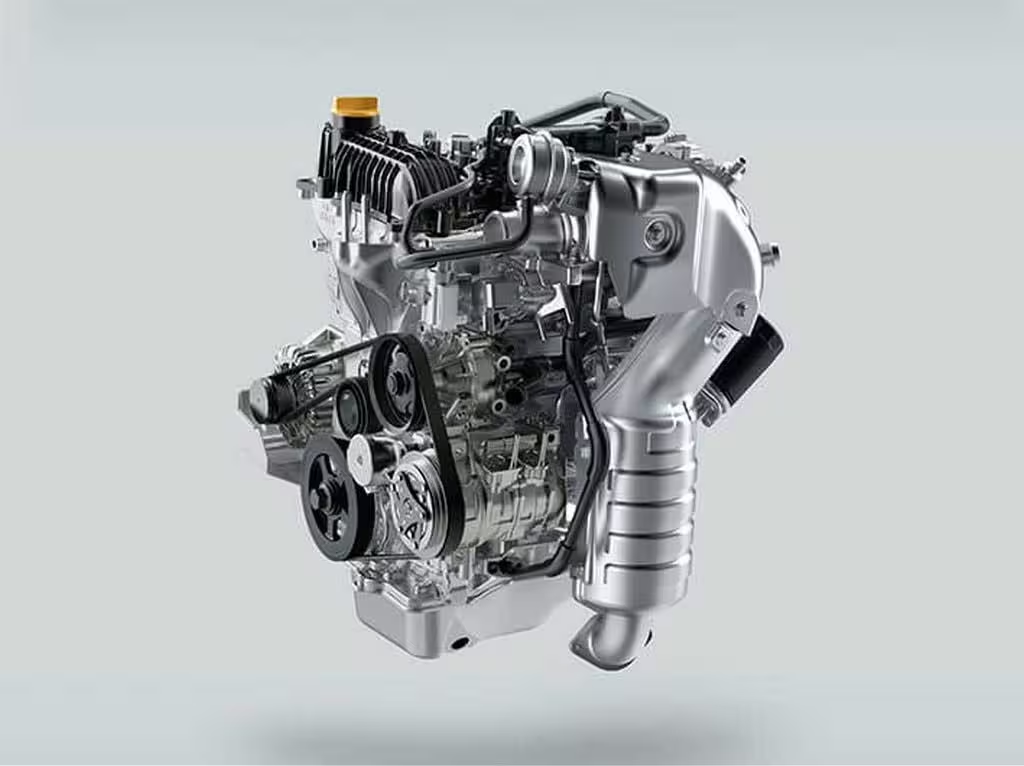
Tata’s new NA engine shares its basic architecture with the turbo variant but uses simpler port fuel injection instead of direct injection and turbocharging. This approach significantly reduces manufacturing complexity while delivering impressive refinement.
Key Strengths:
- E20 fuel compatibility for future-ready operations
- Best-in-class NVH levels with smooth, quiet operation
- Linear power delivery providing predictable, connected driving
- Lower maintenance costs due to simpler design
The NA engine targets buyers who prioritize daily usability over outright performance, offering approximately 22-25 kmpl highway efficiency comparable to segment leaders.
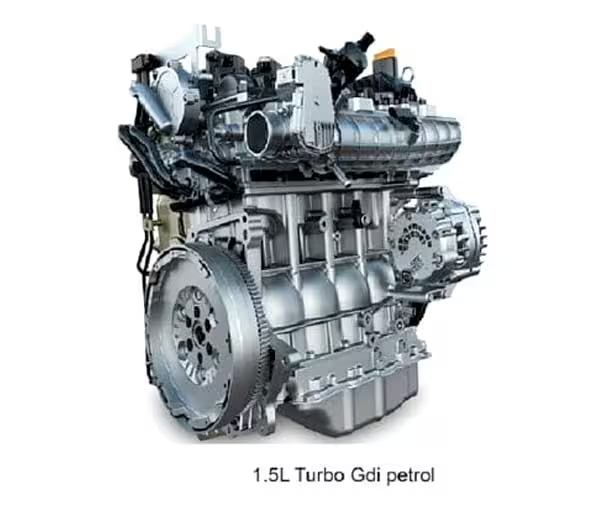
Understanding the Tata Sierra’s 1.5L Turbocharged Engine
First showcased at Auto Expo 2023, this direct-injection turbo engine represents Tata’s flagship petrol powertrain. With variable geometry turbocharging and advanced knock control, it delivers 50 PS more power and double the torque of its NA sibling.
Key Advantages:
- Peak torque from 2,000 RPM enabling effortless acceleration
- 170 PS at 5,000 RPM for genuine performance credentials
- Advanced thermal management for consistent power delivery
- Altitude compensation maintaining performance in mountainous terrain
This engine will eventually power the Harrier and Safari, showcasing Tata’s confidence in its capabilities for larger, heavier vehicles.
Performance & Driving Dynamics
Power Delivery
The NA engine offers immediate, linear throttle response with zero lag. Power builds smoothly and predictably, making it ideal for relaxed driving. The turbo engine delivers progressive power with a noticeable mid-range surge once boost builds, providing exhilarating acceleration that feels significantly more potent.
Real-World Acceleration
While official 0-100 kmph figures aren’t released, expect the turbo variant to be approximately 3-4 seconds quicker than the NA version, with substantially better 20-80 kmph overtaking performance thanks to its low-RPM torque advantage.
Throttle Response
NA engines provide instantaneous response press the pedal, power arrives immediately. Turbo engines have minimal lag (significantly reduced by VGT technology), but there’s still a slight delay before boost pressure builds and full power arrives.
Fuel Efficiency Reality Check
NA Engine Efficiency
Naturally aspirated engines excel at consistent fuel economy. Operating within optimal rev ranges, the Sierra NA should deliver 17-19 kmpl in mixed conditions and 22-25 kmpl on highways. Lower internal stresses and simpler combustion mean efficiency remains predictable regardless of driving style.
Turbo Engine Efficiency
Turbo engines are thermodynamically efficient, but real-world consumption depends heavily on driving behavior. Gentle driving without utilizing boost can match NA efficiency, but aggressive acceleration significantly increases fuel consumption. Expect 15-17 kmpl mixed and 19-22 kmpl highway approximately 10-15% lower than the NA variant.
Reliability & Maintenance Considerations
NA Engine Advantages
- Fewer components mean reduced failure points
- No turbocharger maintenance requirements
- Lower operating temperatures extend component life
- Simpler repairs with wider mechanic familiarity
- More affordable replacement parts
Turbo Engine Considerations
- Turbocharger operates under extreme heat and stress
- Requires quality synthetic oil for turbo longevity
- More complex electronic management systems
- Higher repair costs if turbocharger requires replacement
- Slightly more frequent service intervals recommended
However, modern turbos are highly reliable when properly maintained. Follow manufacturer service schedules, use recommended oils, and expect trouble-free operation for 200,000+ kilometers.
Special Driving Scenarios
High-Altitude Performance
NA engines lose approximately 3% power per 1,000 feet elevation due to thinner air. In hill stations, the NA Sierra will feel noticeably less responsive. Turbo engines compensate by compressing available air, maintaining consistent performance regardless of altitude a crucial advantage for mountain region buyers.
City vs Highway
For stop-and-go traffic, the NA engine’s instant response and smooth operation shine. For highway cruising and overtaking, the turbo’s mid-range torque and higher power make long-distance driving more effortless and engaging.
The Verdict: Which Engine for You?
Choose the 1.5L NA Engine if you:
- Drive primarily in urban environments
- Prioritize fuel economy and lower running costs
- Want maximum long-term reliability
- Prefer smooth, predictable power delivery
- Seek the most affordable Sierra variant
- Value simplicity over performance
Choose the 1.5L Turbo Engine if you:
- Frequently drive on highways or open roads
- Want strong overtaking capability
- Live in or frequently visit mountainous areas
- Enjoy spirited, engaging driving dynamics
- Can absorb 10-15% higher ownership costs
- Prioritize performance over economy
Price Expectation
While official pricing awaits, expect the NA variants to start around ₹12-13 lakh, with turbo variants commanding a ₹1.5-2 lakh premium. This pricing strategy positions the Sierra competitively against the Hyundai Creta, Kia Seltos, and MG Astor.
Final Thoughts
Tata’s dual-engine strategy demonstrates mature product planning offering genuine choice rather than forcing buyers into one solution. The NA engine delivers everything most buyers need: efficiency, refinement, and reliability. The turbo engine satisfies enthusiasts demanding more engagement and performance.
Both engines represent significant progress for Tata’s petrol portfolio, sharing modern architecture while serving distinct buyer personas. Your choice should align with your driving patterns, budget priorities, and performance expectations. Test drive both variants before deciding the real-world driving experience will make your choice clear.
With just 11 days until launch, the Sierra promises to bring fresh competition to India’s hottest SUV segment with engines engineered for Indian conditions and buyer preferences.
Also Read: Tata Sierra SUV India Launch Date Confirmed: The Icon Returns on November 25, 2025