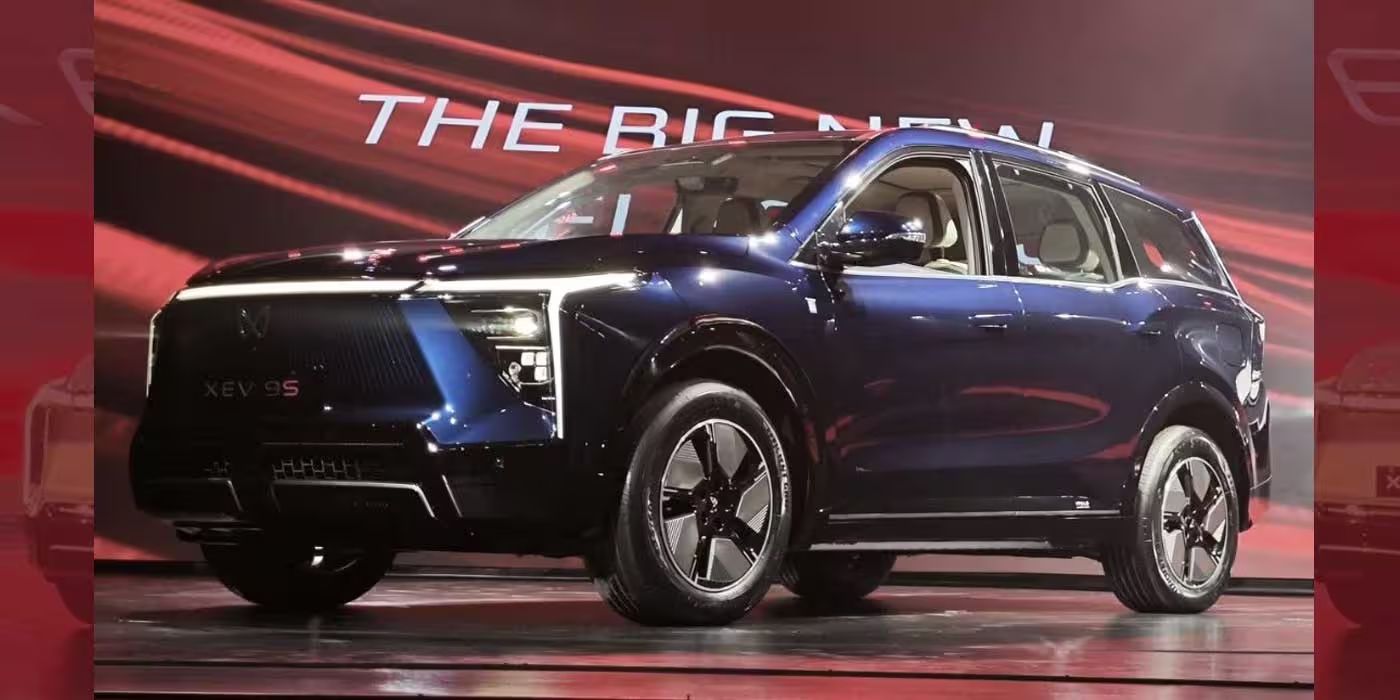
Mahindra XEV 9S is India’s latest seven-seater electric SUV launched at ₹19.95 lakh.
Here’s something genuinely unexpected in India’s rapidly evolving EV landscape: a proper seven-seater electric SUV starting below Rs 20 lakh. Mahindra just unveiled the XEV 9S, and the pricing structure alone is bold enough to make competitors nervous. Starting at Rs 19.95 lakh (ex-showroom), this electric SUV undercuts its five-seater sibling by nearly two lakh rupees while offering more seating. That’s either brilliant market strategy or a gamble on volume sales offsetting slimmer margins.
What makes this launch particularly significant is timing. India’s electric passenger vehicle market crossed 107,000 units in FY25, marking 18% annual growth, and family SUVs are driving much of this expansion. The XEV 9S arrives when buyers want space, range, and features without the traditional EV premium. Whether Mahindra can deliver on all three promises while maintaining build quality remains the critical question.
Platform Engineering That Actually Matters
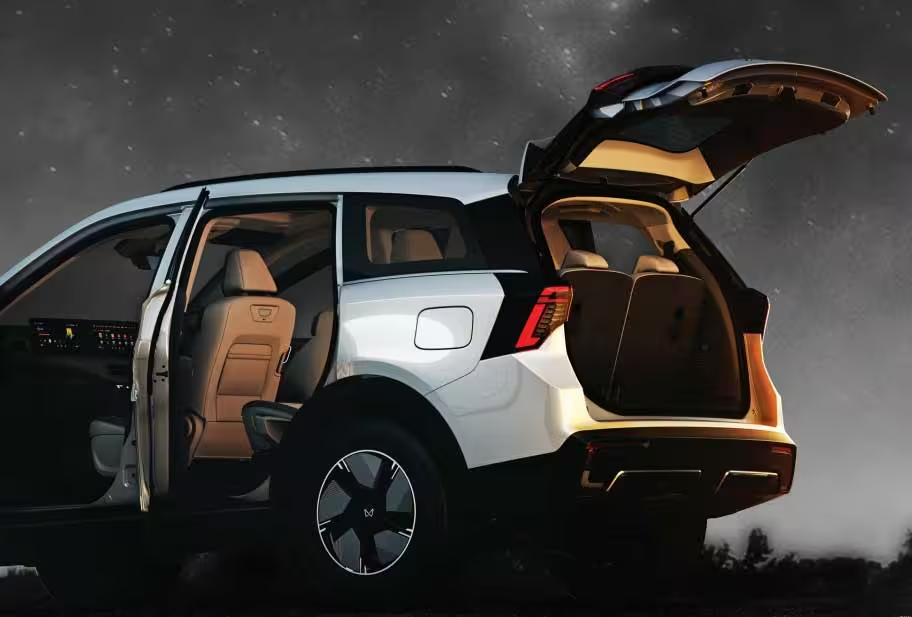
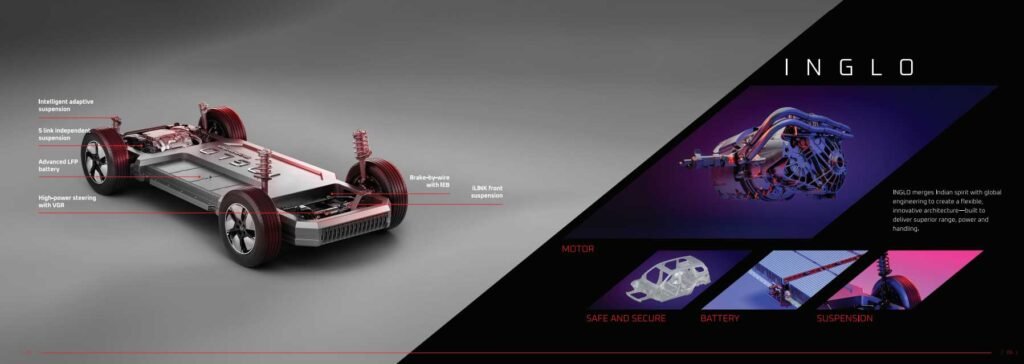
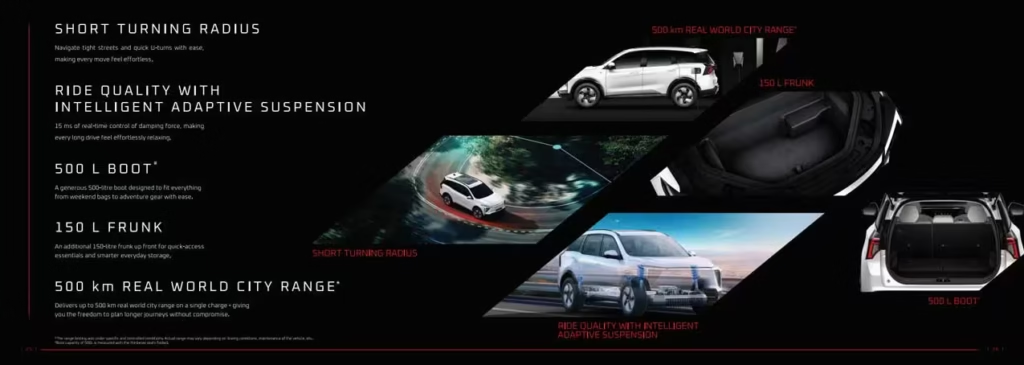
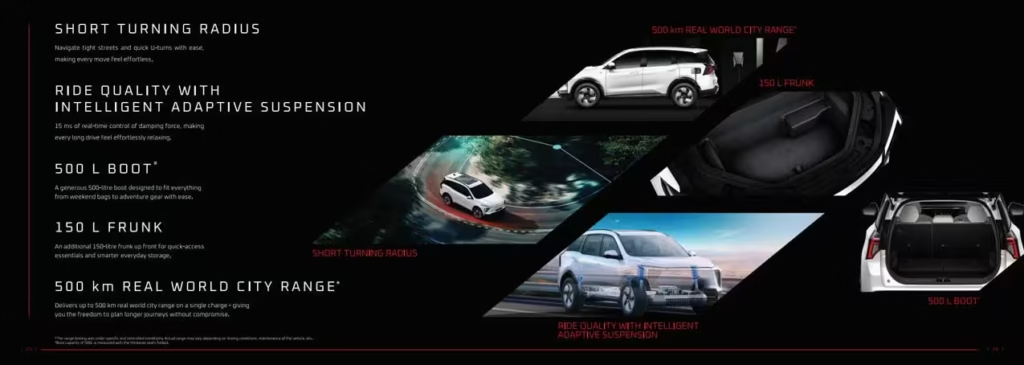
The XEV 9S sits on Mahindra’s INGLO skateboard architecture, their purpose-built electric platform rather than an adapted ICE chassis. This isn’t marketing fluff. The flat battery pack positioned beneath the floor creates tangible advantages: completely level cabin flooring without transmission tunnels, genuinely impressive 4,076 litres of combined front and second-row volume, proper 527 litres boot space with third row folded, and a functional 150-litre front trunk that actually holds luggage.
Dimensionally, we’re looking at 4,737mm length, 1,900mm width, 1,747mm height, and a crucial 2,762mm wheelbase. That wheelbase number particularly matters because it determines whether the third row becomes usable seating or marketing fiction. Ground clearance measures 205mm overall, with 219mm at the battery pack itself, which should handle Indian road conditions without constant scraping anxiety.
The INGLO platform also enables better weight distribution, improving handling dynamics compared to front-heavy ICE conversions. The low-mounted battery pack lowers the centre of gravity, reducing body roll during cornering. These engineering fundamentals matter more than flashy features when you’re regularly carrying seven passengers.
Battery Configurations and Range Reality Check
Mahindra offers three battery options, and refreshingly, they’re being somewhat honest about real-world range expectations rather than hiding behind optimistic ARAI numbers.
The 59kWh variant produces 228 bhp and 380 Nm torque. ARAI claims 542km range; expect closer to 400km in mixed driving. The 70kWh battery (new to Mahindra’s lineup) bumps power to 245 bhp while maintaining 380 Nm torque. Claims stretch to 600km; realistic expectation sits around 450km. The range-topping 79kWh configuration delivers 282 bhp and the same 380 Nm torque, with ARAI rating of 679km translating to approximately 500km real-world range.
Performance figures show 0-100 km/h acceleration between 7.0-7.7 seconds depending on battery size, with top speed electronically limited at 202 km/h. Not thrilling, but adequate for overtaking heavily loaded trucks on highways and merging into fast-moving traffic.
All variants support DC fast charging up to 175kW, enabling 20-80% charge in roughly 20 minutes. That’s competitive with current market offerings and makes long-distance family trips feasible rather than theoretical. Home charging equipment costs extra: Rs 50,000 for 7.2kW charger, Rs 75,000 for 11.2kW unit. Factor these costs into your purchase decision because relying solely on public charging infrastructure in India remains impractical for daily use.
Interior Tech That Balances Gimmicks and Usefulness
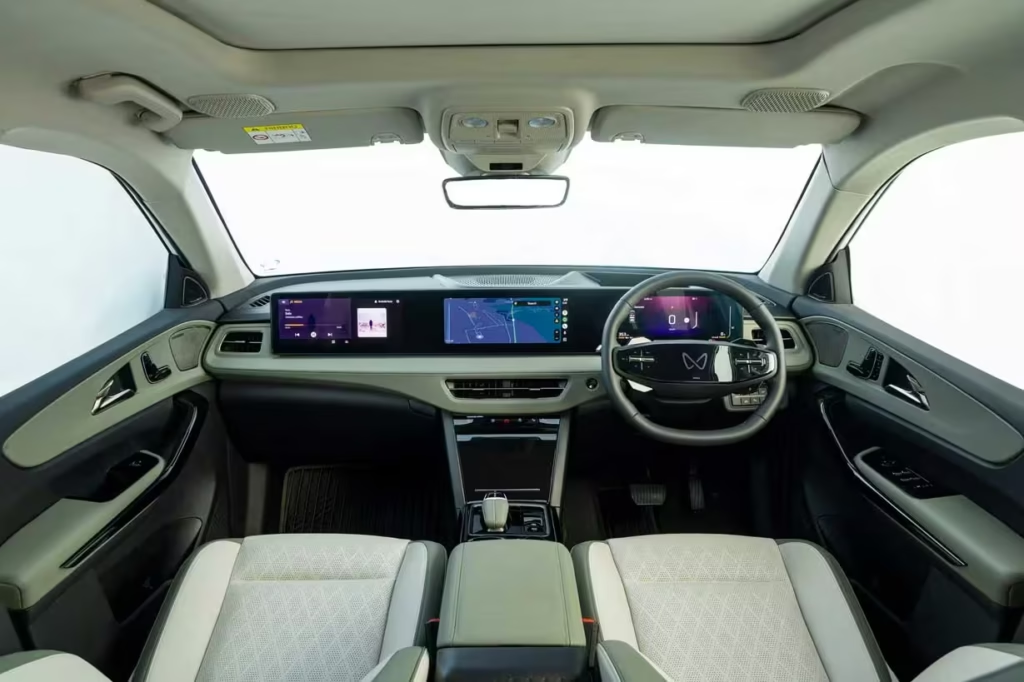
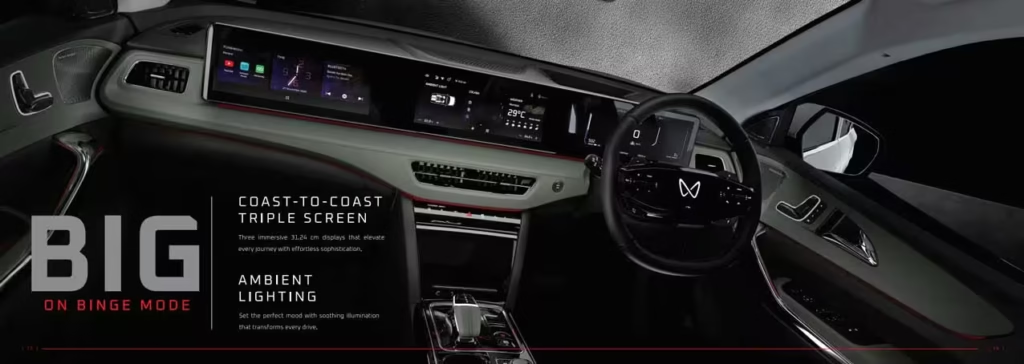
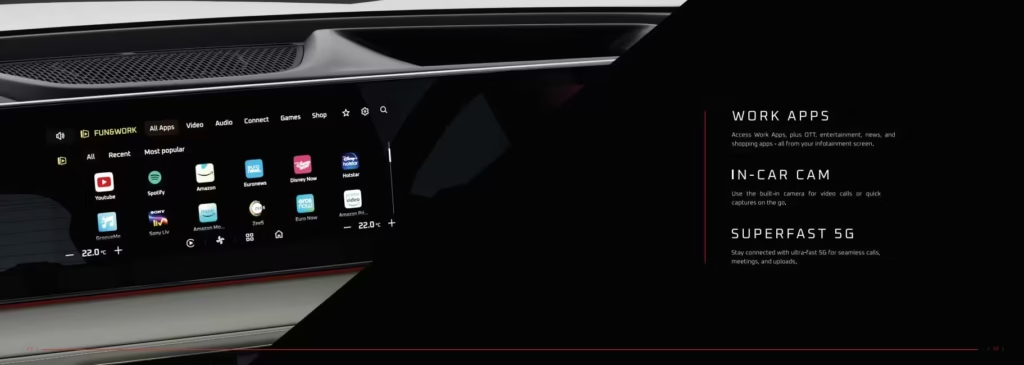
Step inside and Mahindra’s triple-screen dashboard dominates: digital instrument cluster, central infotainment touchscreen, and dedicated passenger display. Second-row passengers get entertainment screens plus BYOD tablet mounts. The setup looks impressive in photos but real-world usability depends on software responsiveness and interface logic, aspects we’ll need extended testing to properly evaluate.
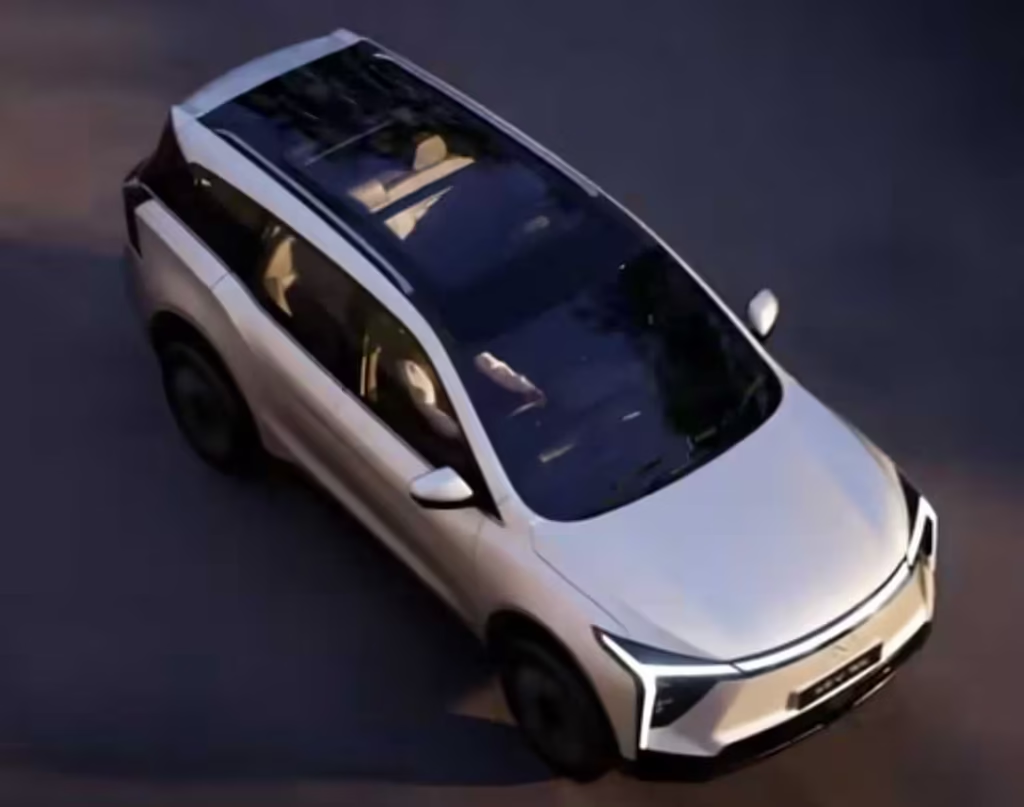
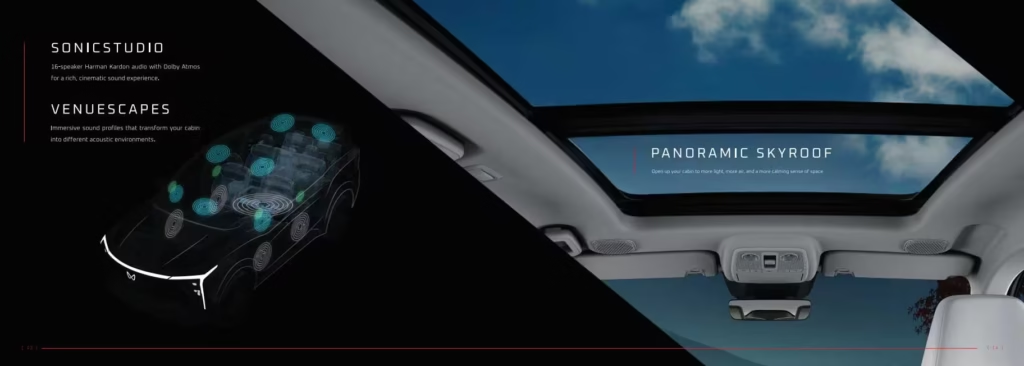
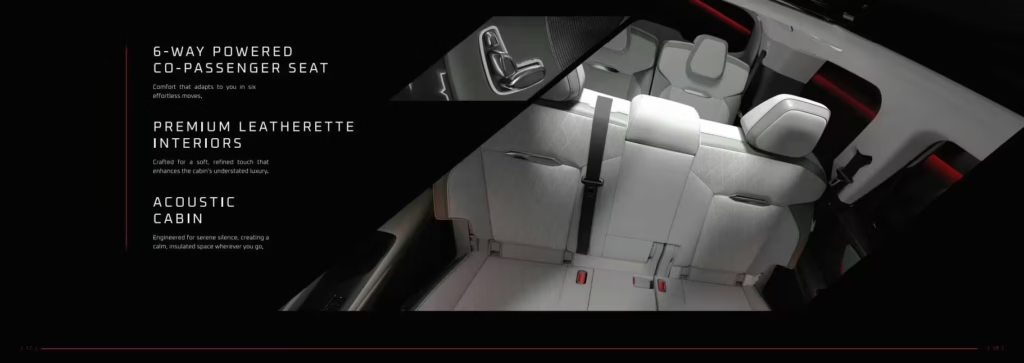
The panoramic sunroof actually opens, unlike the XEV 9e’s fixed glass panel. Small detail, significant difference for buyers who value ventilation over aesthetics. The 16-speaker Harman Kardon audio system with Dolby Atmos appears on higher variants, and laminated acoustic glass keeps cabin noise pleasantly subdued even at highway speeds.
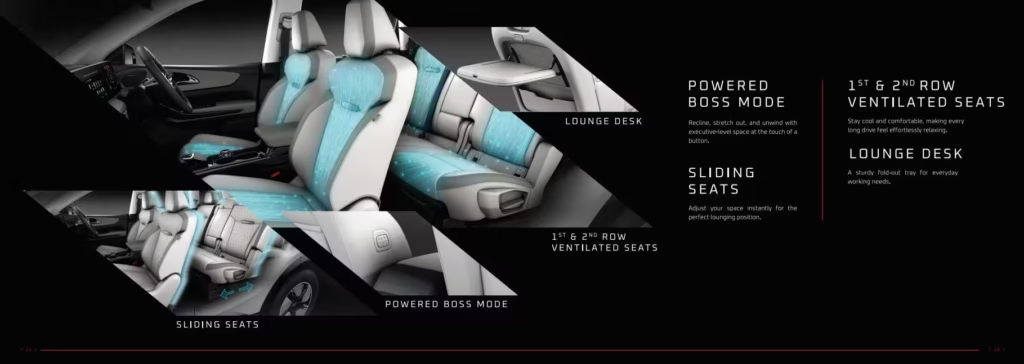
Six-way power-adjustable front seats include memory function. Both first and second rows offer ventilation, absolutely essential in Indian summer conditions. Boss Mode enhances rear passenger comfort on top trims. Wireless charging handles modern smartphones, and multiple USB-C ports include a 65W fast charger for laptops.
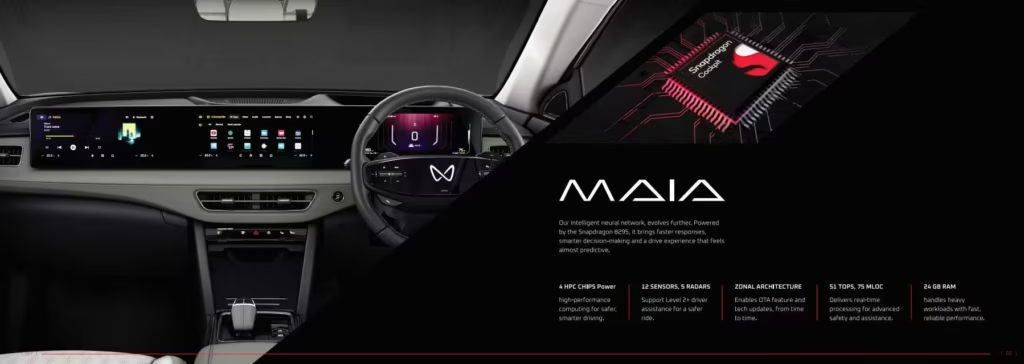
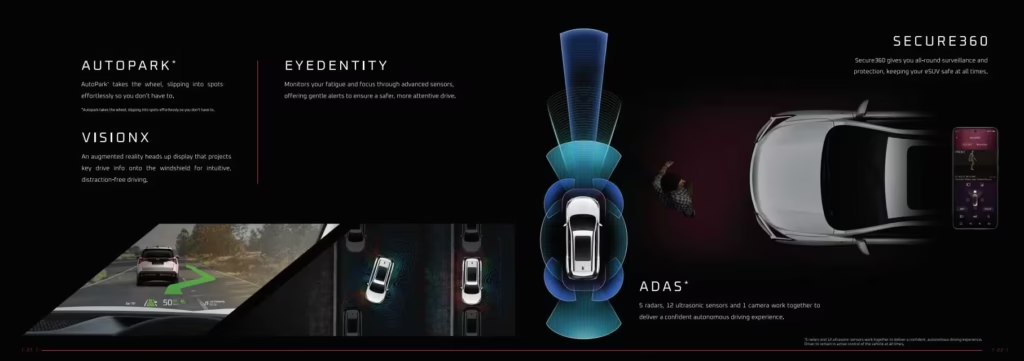
The MAIA AI system manages voice commands for climate, infotainment, and navigation. Over 140 connected features include digital key support, live security monitoring, and remote diagnostics. The VisionX augmented reality heads-up display projects critical information onto the windscreen on higher variants, though whether this proves genuinely useful or merely distracting remains to be determined through real-world testing.
Safety Equipment Deserves Serious Examination
Standard safety features include up to seven airbags (driver knee airbag on higher trims), electronic parking brake with auto-hold, TPMS with live pressure monitoring, and drowsiness detection. The body structure emphasizes high stiffness for improved crash protection.
Pack Two variants introduce Level 2 ADAS with radar and vision cameras: adaptive cruise control, lane-keep assist, forward collision warning, and 360-degree camera. Pack Three upgrades to Level 2+ ADAS with five radars and one camera, adding lane centering, emergency steering assist, driver-initiated auto lane changes, blind spot monitoring, cross-traffic alerts, and AutoPark Assist.
The XEV 9S shares its INGLO platform with the XEV 9e, which achieved a perfect 32/32 adult occupant protection score from Bharat NCAP, the highest rating any vehicle has received in that testing program. That suggests strong structural integrity, though the seven-seater variant’s additional weight and different crash dynamics mean we shouldn’t simply assume identical performance until independent testing confirms it.
Driving Dynamics and Practical Considerations
Four driving modes address different scenarios. Default Mode balances performance and efficiency. Range Mode maximizes distance by limiting power delivery. Race Mode unleashes full performance (though why you’d need this in a family SUV remains questionable). Everyday Mode provides comfortable commuting characteristics.
Regenerative braking offers five adjustment levels including proper one-pedal driving. Higher variants receive intelligent adaptive dampers and five-link rear suspension, theoretically maintaining ride quality even with all seven seats occupied. The second-row seats slide and recline rather than being fixed benches. The third row features 50:50 split folding for cargo flexibility.
Climate control includes Camp Mode and Keep Mode, maintaining interior comfort when parked. Useful for waiting in parking lots during Indian summers without running the entire powertrain.
Pricing Breakdown and Value Analysis
Pack One Above 59kWh: Rs 19.95 lakh
Pack One Above 79kWh: Rs 21.95 lakh
Pack Two Above 70kWh: Rs 24.45 lakh
Pack Two Above 79kWh: Rs 25.45 lakh
Pack Three 79kWh: Rs 27.35 lakh
Pack Three Above 79kWh: Rs 29.45 lakh
The entry variant at Rs 19.95 lakh includes triple-screen setup, panoramic sunroof, 18-inch alloys, LED lighting, electronic parking brake, six airbags, and reclining second-row seats. That’s genuinely competitive feature packaging, though whether build quality matches the specification list requires hands-on evaluation.
The pricing strategy appears designed to undercut potential competitors before they establish market presence. The Tata Harrier EV offers similar pricing but only five seats. The BYD eMax 7 provides seven seats but MPV styling rather than SUV proportions that Indian buyers prefer. The Kia Carens Clavis EV will offer another MPV alternative.
Market Context and Competitive Landscape
India’s electric passenger vehicle market is experiencing genuine momentum. August 2025 saw 17,298 units sold, representing 155% year-on-year growth. Tata Motors maintained 41% market share despite increasing competition from JSW MG Motor (27.51%) and Mahindra (20%). The luxury EV segment also expanded 170% year-on-year, indicating growing acceptance across price brackets.
The broader EV market is projected to expand from $54.41 billion in 2025 to $110.7 billion by 2029, growing at 19.44% CAGR. SUVs are gaining particular traction due to Indian consumer preference for higher ground clearance and commanding driving positions. The XEV 9S enters this expanding market with unique positioning: genuine seven-seat SUV utility without the traditional three-row premium.
First-mover advantage matters significantly here. By the time competitors launch rival products, Mahindra will have established market presence, refined manufacturing processes, and gathered real-world feedback for improvements. Whether they can execute this advantage depends entirely on production quality and service infrastructure reliability.
Design Language Without Marketing Hyperbole
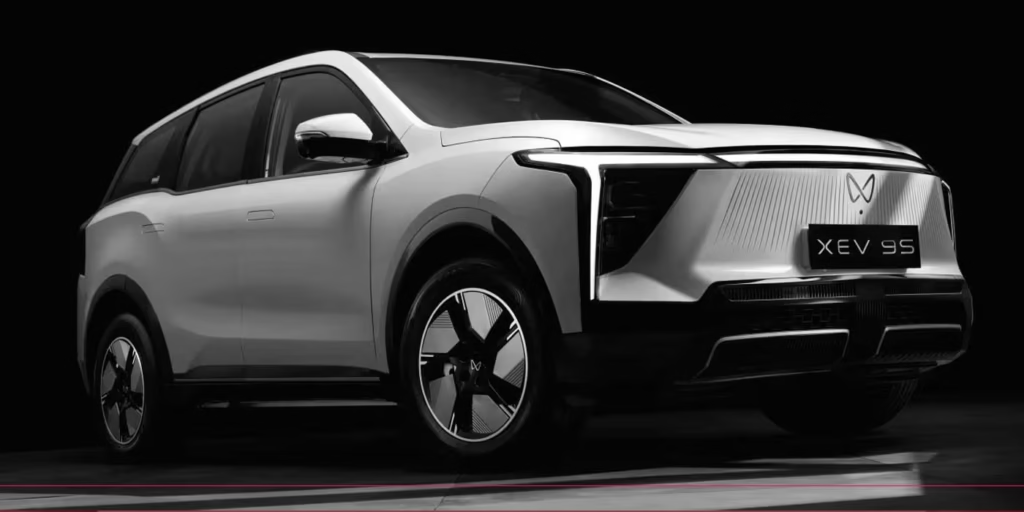
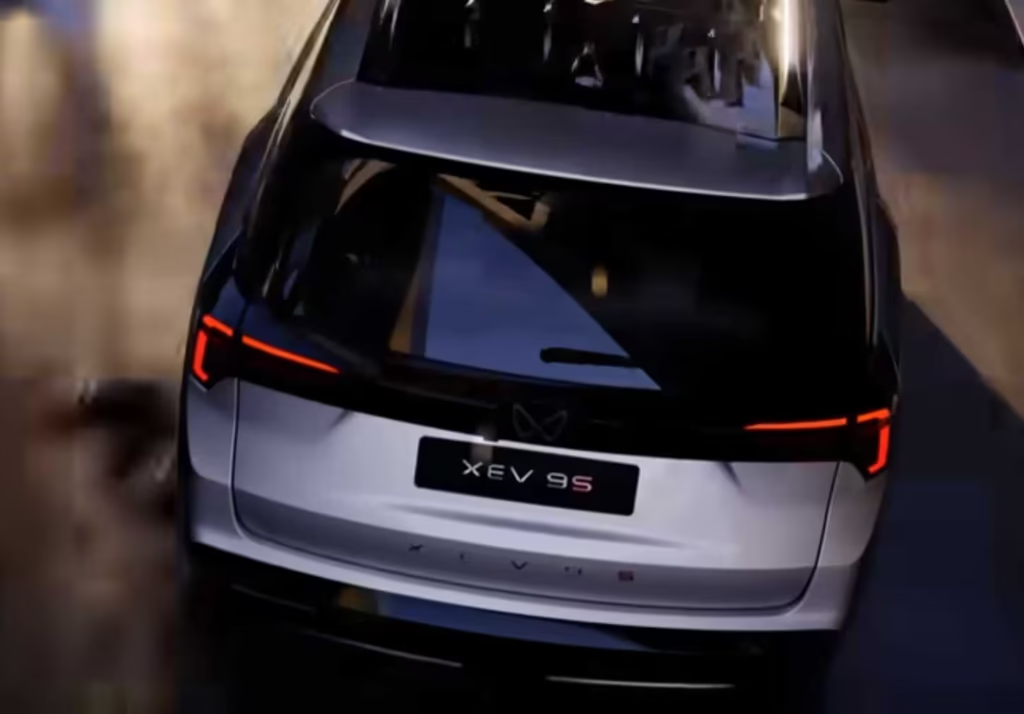
The XEV 9S borrows heavily from the XEV 9e’s design philosophy. Connected LED DRLs form an inverted L-shape. Triangular LED headlamps sit below the DRL strip. Blanked-off grille features an illuminated Mahindra logo. Flush-fitting door handles reduce aerodynamic drag. The 19-inch wheels balance aesthetics with efficiency. Muscular body lines echo the XUV700 without directly copying it. Smoked LED tail lamps and Mahindra’s new butterfly emblem complete the styling.
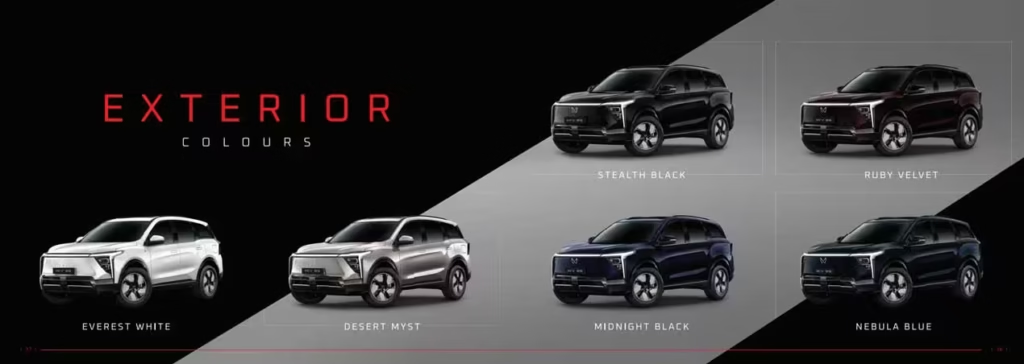
Six colour options provide adequate choice: Stealth Black, Ruby Velvet (dark red), Everest White, Desert Myst (silver-gold), Midnight Black (navy blue), and Nebula Blue. Nothing groundbreaking here, just competent execution of current electric vehicle design trends.
Timeline for Actual Buyers
Test drives begin January 5, 2026. Bookings open January 14, 2026. Deliveries commence January 23, 2026. This phased approach makes sense for a segment-first product where buyers need reassurance through actual experience rather than just reading specifications and watching promotional videos.
Who Should Genuinely Consider This
The XEV 9S makes most sense for families currently driving seven-seater ICE SUVs (XUV700, Safari, Hector Plus) who want to switch to electric without compromising practicality. If you regularly carry more than five passengers, need legitimate cargo space, want competitive range for daily commutes plus occasional long trips, and appreciate modern tech features without requiring absolute luxury, this vehicle deserves serious consideration.
It’s also worth examining if you’re tired of paying escalating fuel costs for a three-row SUV, value the lower operating costs of electric powertrains, and have reliable home charging capability or access to workplace charging infrastructure.
However, if you prioritize absolute build quality refinement, need proven long-term reliability data, require extensive service network coverage beyond major cities, or want cutting-edge autonomous driving features, waiting for more established alternatives might prove wiser.
Complete Specifications Reference
| Specification | Details |
|---|---|
| Dimensions | |
| Length | 4,737 mm |
| Width | 1,900 mm |
| Height | 1,747 mm |
| Wheelbase | 2,762 mm |
| Ground Clearance | 205 mm (219 mm at battery) |
| Capacity | |
| Seating | 7 (2+3+2 configuration) |
| Boot Space | 527 litres (third row folded) |
| Frunk | 150 litres |
| Cabin Volume | 4,076 litres (front + second row) |
| Powertrain | |
| Battery Options | 59 kWh / 70 kWh / 79 kWh |
| Power Output | 228 bhp / 245 bhp / 282 bhp |
| Torque | 380 Nm (all variants) |
| Drivetrain | RWD (Rear-Wheel Drive) |
| Performance | |
| 0-100 km/h | 7.0-7.7 seconds |
| Top Speed | 202 km/h (limited) |
| Range | |
| ARAI Claimed | 542 km / 600 km / 679 km |
| Real-World Estimate | 400 km / 450 km / 500 km |
| Charging | |
| DC Fast Charging | 20-80% in 20 minutes (175 kW) |
| AC Charging | 7.2 kW / 11.2 kW (optional) |
| Features | |
| Infotainment | Triple 12.3″ screens |
| Audio System | 16-speaker Harman Kardon |
| Sunroof | Panoramic (opening) |
| Climate Zones | Multi-zone automatic |
| Safety | 7 airbags, Level 2+ ADAS |
| Connectivity | 140+ connected features |
Frequently Asked Questions
What makes the XEV 9S different from other electric SUVs?
It’s India’s first mass-market seven-seater electric SUV on a dedicated EV platform rather than an ICE conversion. The INGLO architecture enables genuine three-row practicality without major compromises in cargo space, range, or features while maintaining competitive pricing.
Is the third row actually comfortable for adults?
For average-height adults on short journeys (under 2 hours), yes. For long highway trips or taller passengers, the third row works better for children or teenagers. The raised seating position improves comfort compared to typical third-row packaging, but physics still limits legroom compared to the second row.
How accurate are the claimed range figures?
Mahindra quotes ARAI figures of 542-679 km but honestly suggests expecting 400-500 km in real-world conditions. City driving with regenerative braking achieves better range than sustained highway speeds. Actual range varies significantly based on climate control usage, driving style, payload weight, and terrain.
Can I charge this at regular public charging stations?
Yes, all variants support standard DC fast charging (CCS2 connector) up to 175 kW. Most public charging stations in major cities offer compatible connectors. However, charging infrastructure remains limited in smaller towns, making home charging capability essential for practical daily use.
What’s the total cost including home charger installation?
Add Rs 50,000-75,000 for home charging equipment beyond the vehicle price. Installation costs vary by location and electrical panel capacity. Some buyers may need electrical panel upgrades, adding further expense. Factor these costs into your budget planning beyond the ex-showroom price.
How does it compare to the Tata Harrier EV?
The Harrier EV offers similar pricing (Rs 21.49 lakh starting) but only five seats. It provides dual-motor AWD option with quicker acceleration (6.3 seconds 0-100 km/h) and slightly different feature packaging. The XEV 9S trades AWD capability for genuine seven-seat practicality and marginally better range from the 79kWh battery.
Will Mahindra offer all-wheel-drive variants later?
Mahindra hasn’t confirmed AWD versions at launch, though the INGLO platform technically supports dual-motor configurations. Current lineup uses rear-wheel drive across all battery options. Whether they introduce AWD variants depends on market demand and competitive pressure from rivals.
When can deliveries actually begin?
Official deliveries start January 23, 2026, following test drive availability from January 5 and booking commencement on January 14. However, initial production volumes may limit immediate availability. Mahindra’s recent EV launches experienced delivery delays, so patience may be required despite announced timelines.
Final Assessment Without Marketing Spin
The XEV 9S represents Mahindra’s most strategically important EV launch. By combining genuine seven-seat utility, competitive pricing below Rs 20 lakh, and real-world range credibility, it addresses the primary barriers preventing family SUV buyers from switching to electric vehicles: inadequate space, affordability concerns, and range anxiety.
Success depends less on the product itself and more on execution. Can Mahindra deliver consistent build quality across volume production? Will service infrastructure handle the inevitable teething issues? Can they maintain adequate inventory without multi-month waiting periods? The XEV 9e launch generated significant interest but also revealed production constraints and delivery challenges. This time, they need to execute better.
For buyers genuinely considering the electric transition, the XEV 9S removes traditional excuses. It offers the space families require, range eliminating daily charging anxiety, features justifying premium positioning, and safety credentials providing peace of mind. Whether that’s sufficient to overcome lingering concerns about battery longevity, uncertain resale values, and charging infrastructure gaps depends on individual risk tolerance and practical circumstances.
What’s undeniable: Mahindra has created a category-defining product that could either accelerate EV adoption among family SUV buyers or become a cautionary tale about overambitious pricing strategies. The next six months will determine which narrative prevails. Indian roads will provide the ultimate verdict, not marketing presentations or specification sheets.
Also Read: Mahindra BE Rall E Teased Ahead of November 26 Launch: What The Production Model Really Looks Like