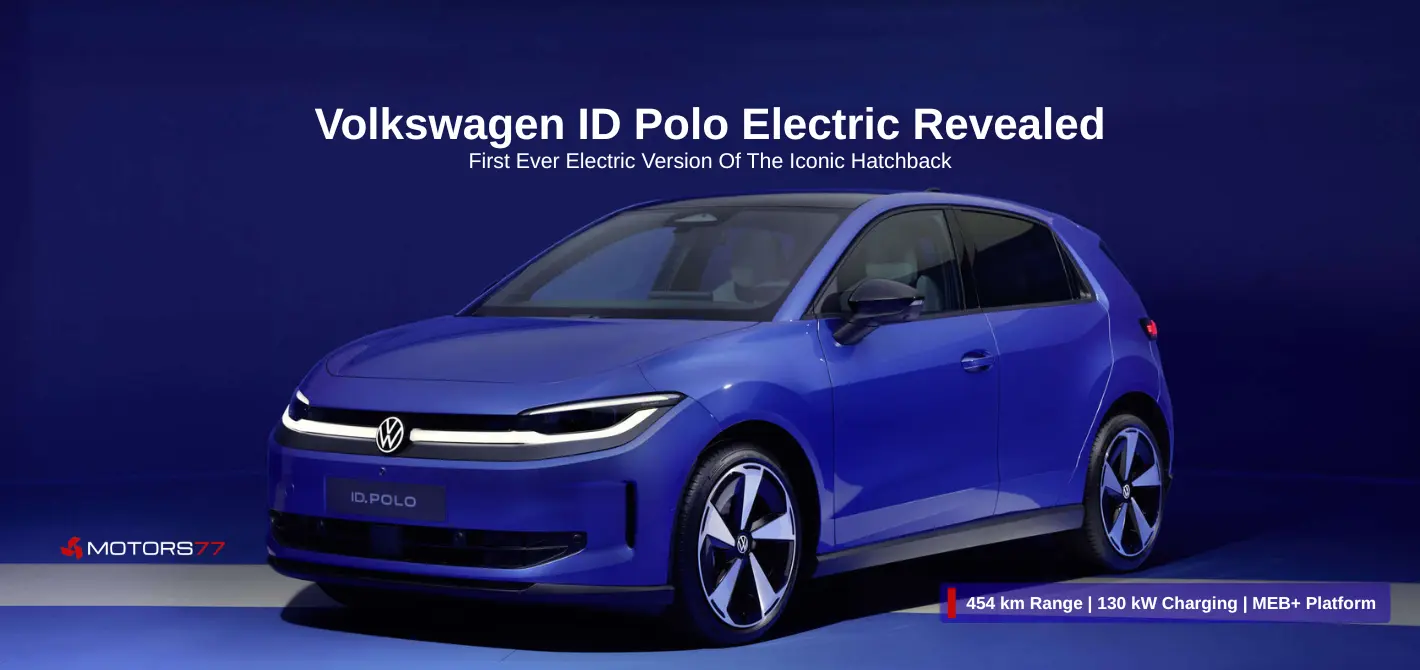
Fifty years after the first Polo rolled out, and over 20 million units sold worldwide later, the Volkswagen Polo Electric has finally arrived. The German automaker has officially pulled the covers off the ID Polo, marking the very first fully electric iteration of its bestselling hatchback nameplate. Unveiled today, April 29, 2026, the model opens a fresh chapter for one of the most successful small cars in automotive history, blending familiar Polo character with modern EV technology built on a brand new platform. It is also the first of four new Volkswagen electric models planned for the small car and compact segment from 2026 onwards.
The new electric hatchback is underpinned by Volkswagen Group’s upgraded MEB+ architecture and arrives with two battery options, three power outputs at launch, and a hot GTI variant on the way. Pre-sales begin in Germany at €24,995 (approximately Rs 23.7 lakh), with the global rollout planned through the rest of 2026 and into 2027. Range tops out at up to 450 km on the larger battery.
Volkswagen Polo Electric Design: Pure Positive Debut
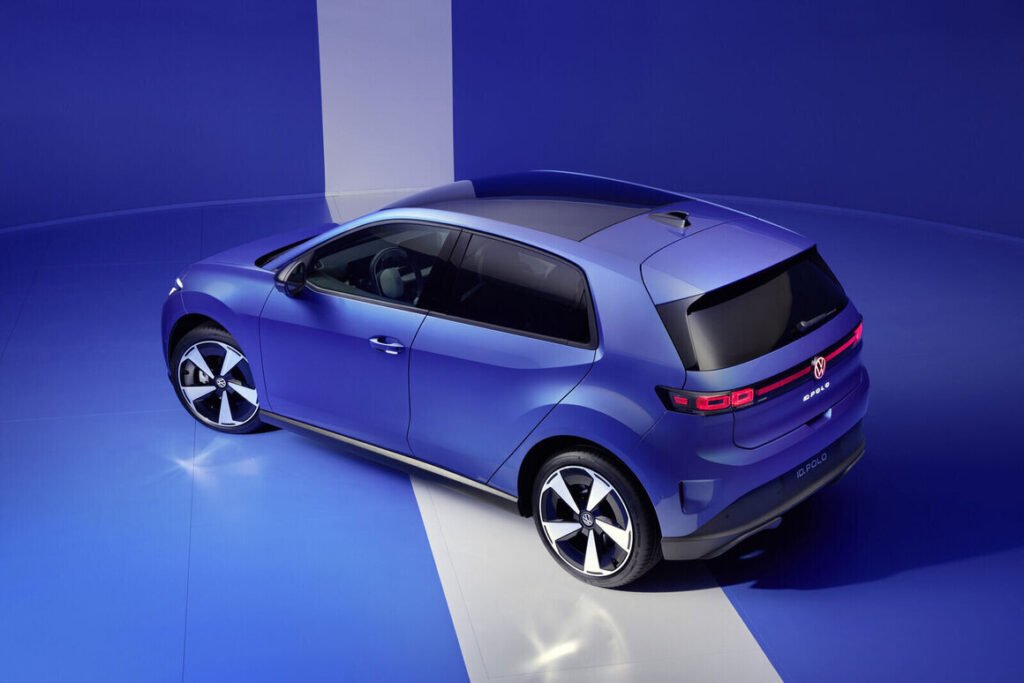
The ID Polo is the very first model to wear chief designer Andreas Mindt’s new “Pure Positive” design language. The front fascia features a connected LED light bar between the headlamps, slim eyelid style daytime running lights, and an illuminated VW logo on higher trims. The C-pillar treatment draws clear inspiration from the original Mk1 Golf, while flared wheel arches and Alfa Romeo style hidden rear door handles add visual interest.
At the rear, a horizontal LED light bar spans the full tailgate width, integrated within a glass panel. Pricier trims get an illuminated VW roundel and 3D effect tail lamps for added depth. Wheel sizes range from 17 inches on the Trend trim to 19 inches on top variants.
Volkswagen Polo Electric Dimensions At A Glance
| Parameter | Measurement |
|---|---|
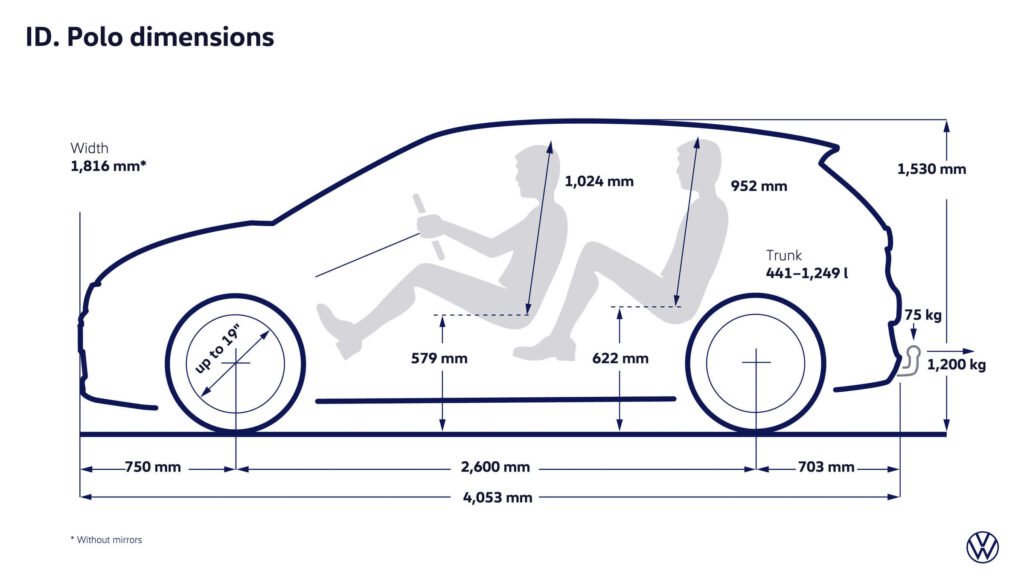
| Length | 4,053 mm |
| Width | 1,816 mm |
| Height | 1,530 mm |
| Wheelbase | 2,600 mm |
| Boot Space | 435 litres |
| Boot (rear seats folded) | 1,243 litres |
| Kerb Weight | Under 1,600 kg |
The hatchback measures 131 mm shorter than the Renault 5 E-Tech and stays close to the original Polo’s compact urban friendly proportions. Boot space sees a notable 24 percent increase over the petrol Polo, climbing from 351 litres to 435 litres thanks to the front wheel drive layout that frees up space under the cargo bay. Interior length has also grown by 19 mm, particularly noticeable for rear passengers.
Volkswagen Polo Electric Powertrain And Specifications
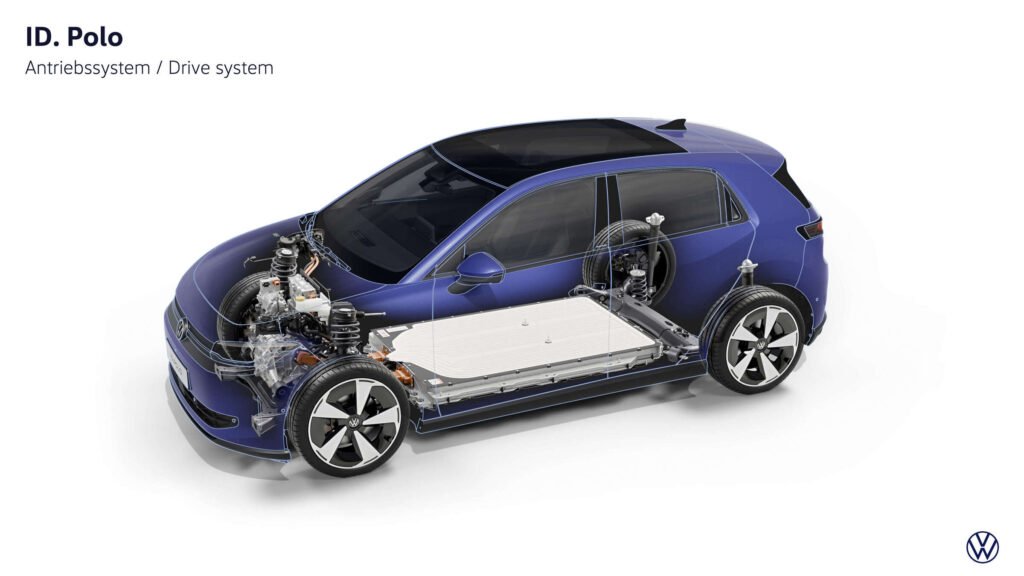
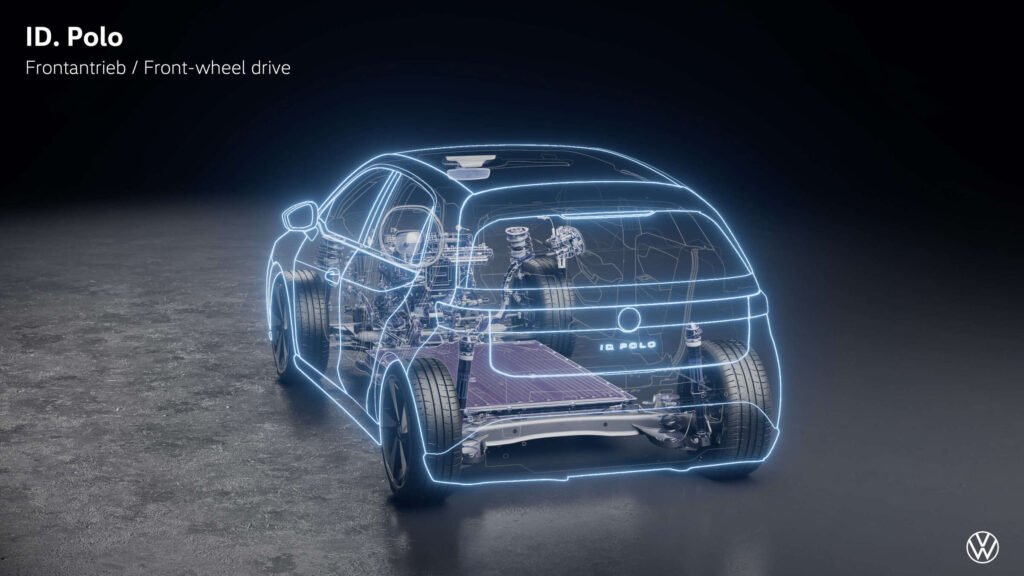
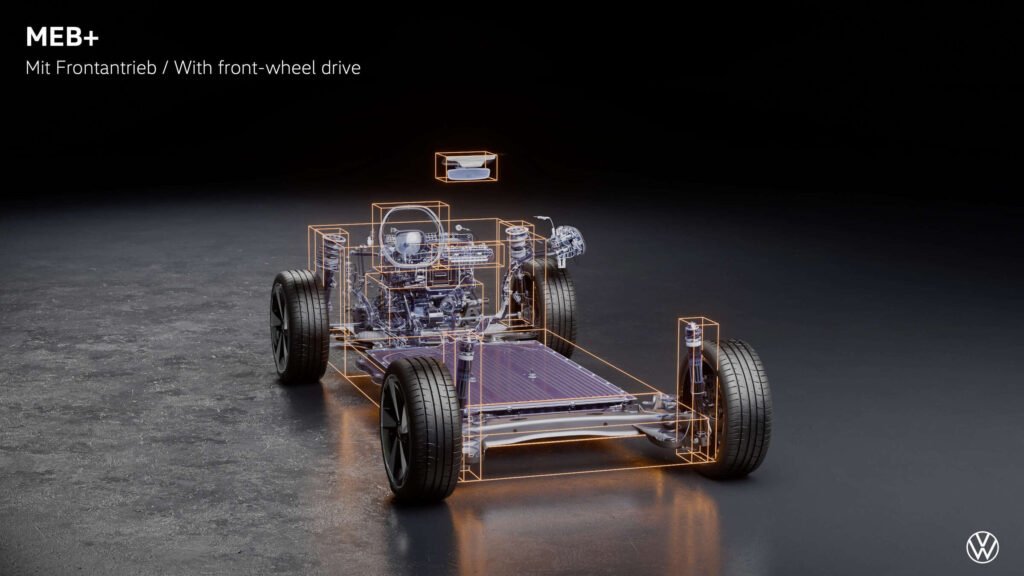
The new ID Polo arrives with three power outputs at launch and a fourth GTI variant arriving later in 2026. All variants are front wheel drive with a single front mounted APP 290 electric motor, Volkswagen’s latest-generation drive unit developed for the MEB+ platform.
| Variant | Power | Battery | Range (WLTP) |
|---|---|---|---|
| Trend (Base) | 85 kW (116 PS) | 37 kWh LFP | Up to 329 km |
| Mid Spec | 99 kW (135 PS) | 37 kWh LFP | Up to 329 km |
| Style | 155 kW (211 PS) | 52 kWh NMC | Up to 450 km |
| GTI (Late 2026) | 166 kW (226 PS) | 52 kWh NMC | TBA |
The 37 kWh LFP (lithium iron phosphate) battery serves the entry level versions and supports DC fast charging up to 90 kW. The larger 52 kWh NMC (nickel manganese cobalt) pack uses PowerCo’s new unified cell with cell-to-pack technology, supports faster 130 kW DC charging, and delivers around 10 percent higher energy density.
Volkswagen Polo Electric Charging Performance
| Battery | DC Charging Speed | 10 to 80 percent |
|---|---|---|
| 37 kWh LFP | Up to 90 kW | Around 27 minutes |
| 52 kWh NMC | Up to 130 kW | Under 23 minutes |
Vehicle to Load (V2L) functionality comes standard on every Volkswagen Polo Electric variant, allowing owners to push out up to 3.6 kW for charging e-bikes or running outdoor equipment via a Schuko adapter. Top trims can also tow up to 1,200 kg, which is a rare feature in the affordable EV segment.
Volkswagen Polo Electric Interior And Features
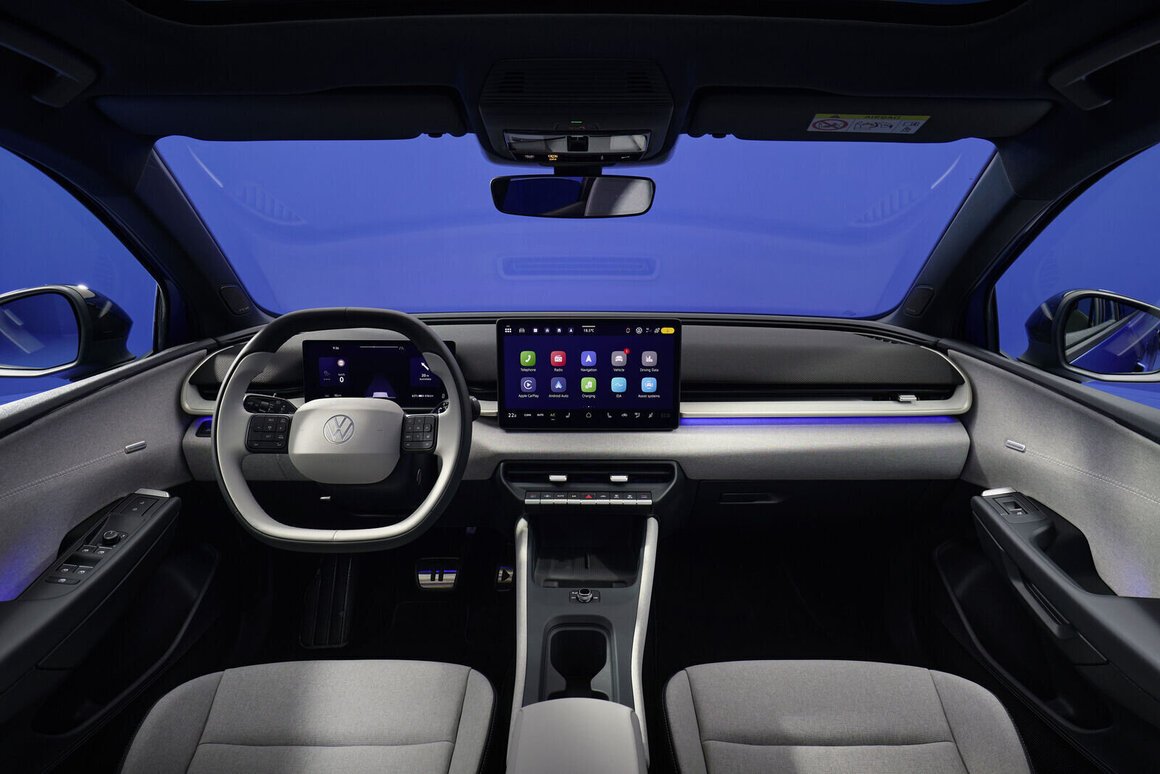
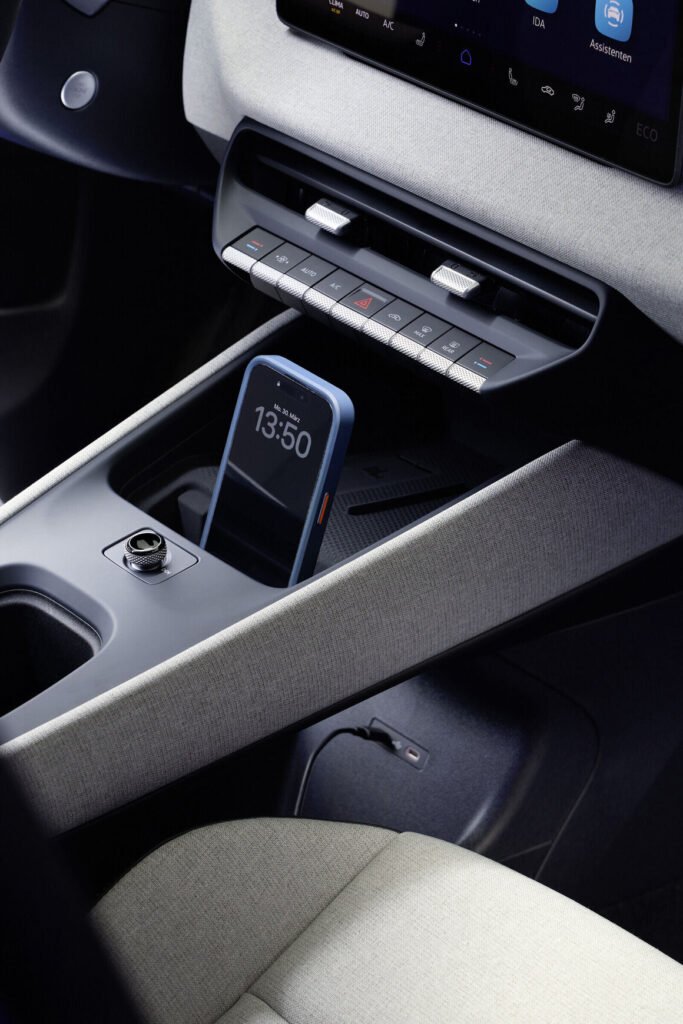
Inside, the new electric supermini tackles the criticism aimed at earlier ID models head on. Physical buttons return for climate control, window switches, and steering wheel functions. A rotary audio dial sits between the front seats, and the much criticised haptic touch pads have finally been ditched.
The dashboard houses a 10-inch digital instrument cluster paired with a 13-inch central touchscreen. A new “Retro Mode” lets drivers configure the digital cockpit to mimic the analogue dials of a 1980s Mk1 Golf, complete with a classic speedometer and a power gauge in place of a rev counter. The infotainment system supports wireless Apple CarPlay, Android Auto, and Volkswagen’s own voice assistant.
Standard equipment on even the base Trend trim includes:
- LED headlights with automatic high beam
- 10-inch digital cockpit display
- 13-inch central touchscreen
- Climate control air conditioning
- Multi function steering wheel
- Lane Assist and Side Assist
- Vehicle to Load (V2L)
- DC fast charging capability
Mid tier Life trim adds adaptive cruise control, front and rear parking sensors, a rear view camera, and wireless smartphone charging. Top spec Style trim brings IQ.LIGHT matrix LED headlights, heated front seats, heated steering wheel, 3D LED tail lights, dual zone climate control, and ambient interior lighting.
The MEB+ platform also brings significantly enhanced Travel Assist to the segment. The system enables assisted lateral and longitudinal guidance, assisted lane changes on motorways, and for the very first time on a Volkswagen, traffic light sign recognition.
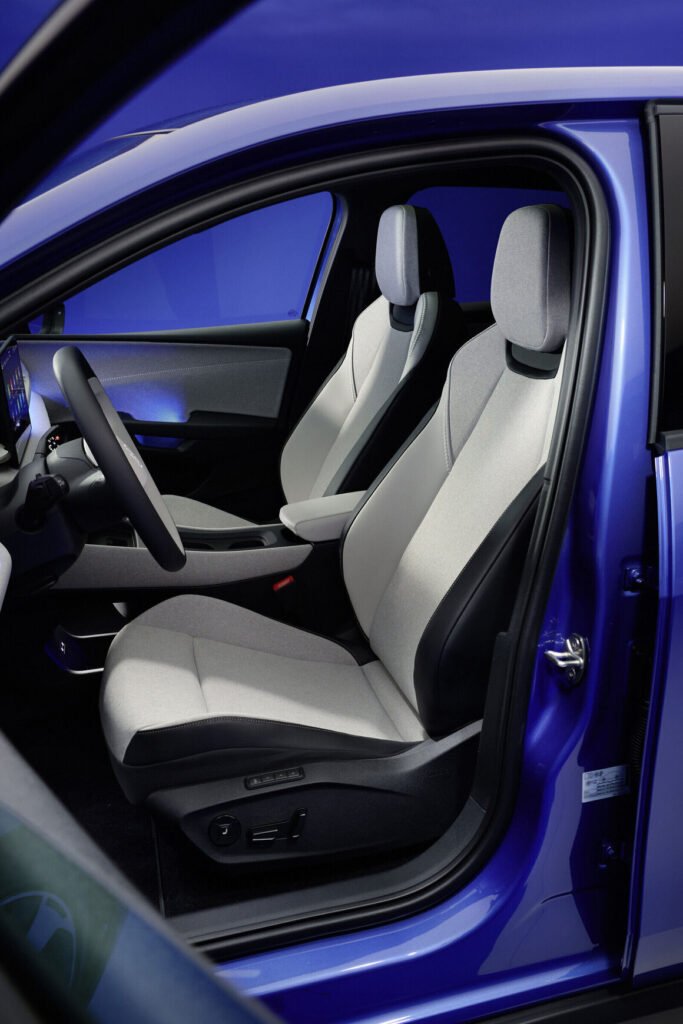
Optional extras include a 425 watt 10-speaker Harman Kardon sound system, a fixed panoramic glass roof, 12-way power adjustable front seats with massage and memory functions, and a digital key for smartphone based unlocking. Massaging seats are a segment first.
Volkswagen Polo Electric Pricing And Trim Lineup
The Volkswagen Polo Electric is offered in three trim levels at launch in Germany: Trend, Life, and Style. Pre-sales open from the end of April 2026, with first deliveries scheduled for autumn 2026.
| Trim | Powertrain | Starting Price (Germany) |
|---|---|---|
| Trend | 37 kWh, 85 kW | €24,995 |
| Life | 52 kWh, 155 kW | €33,795 |
| Style | 52 kWh, 155 kW | TBA |
Initial bookings will be limited to the Life trim with the 155 kW motor and 52 kWh battery. The €24,995 entry level Trend variant and additional drivetrain combinations will follow in summer 2026. UK pricing has not yet been confirmed.
Will The Volkswagen Polo Electric Come To India?
This is the question on every Indian enthusiast’s mind. The Polo holds a special place in Indian hearts, having been on sale here from 2010 to 2022 before being discontinued. Volkswagen India’s current strategy under “India 2.0” is heavily focused on SUVs like the Taigun and Tiguan, plus the Virtus sedan.
A direct import is unlikely as high duties would push pricing well past Rs 30 lakh, making it commercially unviable in the hatchback segment. Local assembly remains the only realistic path forward, but the brand has not committed to any India launch for the ID Polo at this stage. For now, the model remains a global market product, with Europe being the lead launch market.
Volkswagen Polo Electric: Quick Pros And Cons
Pros
- Real WLTP range of up to 450 km from the 52 kWh battery
- Fast 130 kW DC charging on top variants
- Physical buttons return for climate and audio controls
- 24 percent larger boot than petrol Polo at 435 litres
- Vehicle to Load comes standard across all variants
- Affordable starting price of €24,995 in Germany
- GTI variant confirmed for performance enthusiasts
- Massaging front seats and traffic light recognition are segment firsts
Cons
- Base €24,995 trim arrives only in summer 2026
- Smaller 37 kWh battery limited to 329 km range
- Front wheel drive only, no AWD option even on GTI
- India launch not confirmed by the brand
- Top Style trim pricing yet to be announced
- Initial bookings limited to costlier Life trim
Motors77 Verdict
The arrival of the Volkswagen Polo Electric represents a genuinely important moment for European EV buyers. By reviving a trusted Polo nameplate and pairing it with a sub €25,000 starting price, the brand is making electric mobility accessible without compromising on its traditional strengths of build quality, refinement, and everyday practicality. The return of physical buttons, the impressive 435 litre boot, and the option of up to 450 km of range make the ID Polo an immediate threat to the Renault 5 E-Tech, Hyundai Inster, BYD Dolphin Surf, and Kia EV3.
For Indian enthusiasts, however, the wait will likely continue. While the heart says the Polo nameplate belongs back on Indian roads, the head knows that current import duties and Volkswagen India’s SUV focused strategy make a near term launch unlikely. If the brand ever decides to localise EV production in India, this could be a smart and emotionally compelling choice. Until then, this is a global product that proves the Polo nameplate still has plenty to offer in the electric era, and that EV hatchbacks done right can still be exciting.
Frequently Asked Questions
Q1. What is the price of the Volkswagen Polo Electric?
The new ID Polo starts at €24,995 (approximately Rs 23.7 lakh) for the entry level Trend trim in Germany. The mid spec Life trim with the 52 kWh battery is priced at €33,795 (approximately Rs 32 lakh). UK and other market pricing is yet to be announced.
Q2. What is the range of the ID Polo electric hatchback?
The model offers a WLTP range of up to 450 km with the 52 kWh NMC battery. The smaller 37 kWh LFP battery delivers up to 329 km of range. Real world figures are expected to be slightly lower, in line with the typical WLTP to real world gap.
Q3. How fast does the new ID Polo charge?
The 52 kWh NMC battery supports DC fast charging at up to 130 kW, taking the battery from 10 to 80 percent in under 23 minutes. The 37 kWh LFP battery charges at up to 90 kW, completing the same 10 to 80 percent top up in around 27 minutes.
Q4. Is the Volkswagen Polo Electric coming to India?
Volkswagen has not confirmed an India launch. The brand’s current India strategy focuses on SUVs and sedans, and high import duties make a full import route unviable for a hatchback. Local assembly remains a possibility but has not been committed to.
Q5. What is the boot space?
The hatchback offers 435 litres of boot space, which expands to 1,243 litres with the rear seats folded. This represents a 24 percent improvement over the petrol powered Polo’s 351 litre boot, made possible by the front wheel drive MEB+ platform.
Q6. How many trims is the new ID Polo available in?
The model is offered in three trim levels at launch: Trend, Life, and Style. A high performance GTI variant with 226 PS will join the lineup later in 2026, and a hotter R version with possible all wheel drive is also being explored for the future.
Q7. Will there be a GTI version?
Yes, Volkswagen has confirmed a GTI version with 166 kW (226 PS) of power, arriving later in 2026. It will use the same 52 kWh NMC battery as the top regular variant. The GTI badging brings sportier styling, red brake calipers, side skirts, and a roof spoiler.
Q8. What platform does the new ID Polo use?
The hatchback is built on Volkswagen Group’s upgraded MEB+ platform with a 400V electrical architecture. It is exclusively front wheel drive and is built at the SEAT/CUPRA plant in Martorell, Spain, alongside the Cupra Raval and Skoda Epiq.
Q9. Will the petrol Polo continue to be sold?
Yes, the petrol Polo will continue to be sold alongside the new electric model in European markets. The two cars are treated as siblings, with VW confirming that both ICE and EV Polos will coexist for years to come.
Q10. When will deliveries begin?
Pre-sales opened on April 29, 2026 in Germany. First deliveries are scheduled for autumn 2026, beginning with the Life trim. The base Trend variant and additional drivetrain combinations will arrive in summer 2026.