Motors77 | Latest Auto News - Cars, Bikes & EV Updates
  • Home
  • CARS
    • India Car News
    • International Car News
    • New Car Launches
    • Upcoming Cars
  • BIKES
    • India Bike News
    • International Bike News
    • New Bike Launches
    • Upcoming Bikes
  • ELECTRIC
    • Electric Cars
    • Electric Bikes
  • REVIEWS
    • Bike
    • Car
    • Features
    • Fuel Cost Calculator
No Result
View All Result
Motors77 | Latest Auto News - Cars, Bikes & EV Updates
  • Home
  • CARS
    • India Car News
    • International Car News
    • New Car Launches
    • Upcoming Cars
  • BIKES
    • India Bike News
    • International Bike News
    • New Bike Launches
    • Upcoming Bikes
  • ELECTRIC
    • Electric Cars
    • Electric Bikes
  • REVIEWS
    • Bike
    • Car
    • Features
    • Fuel Cost Calculator
No Result
View All Result
Motors77 | Latest Auto News - Cars, Bikes & EV Updates
No Result
View All Result
Home CARS

New Kia Seltos Teaser Revealed: Everything We Know About the December 10 Launch

Vyom Patil by Vyom Patil
December 1, 2025
in CARS, Upcoming Cars
0
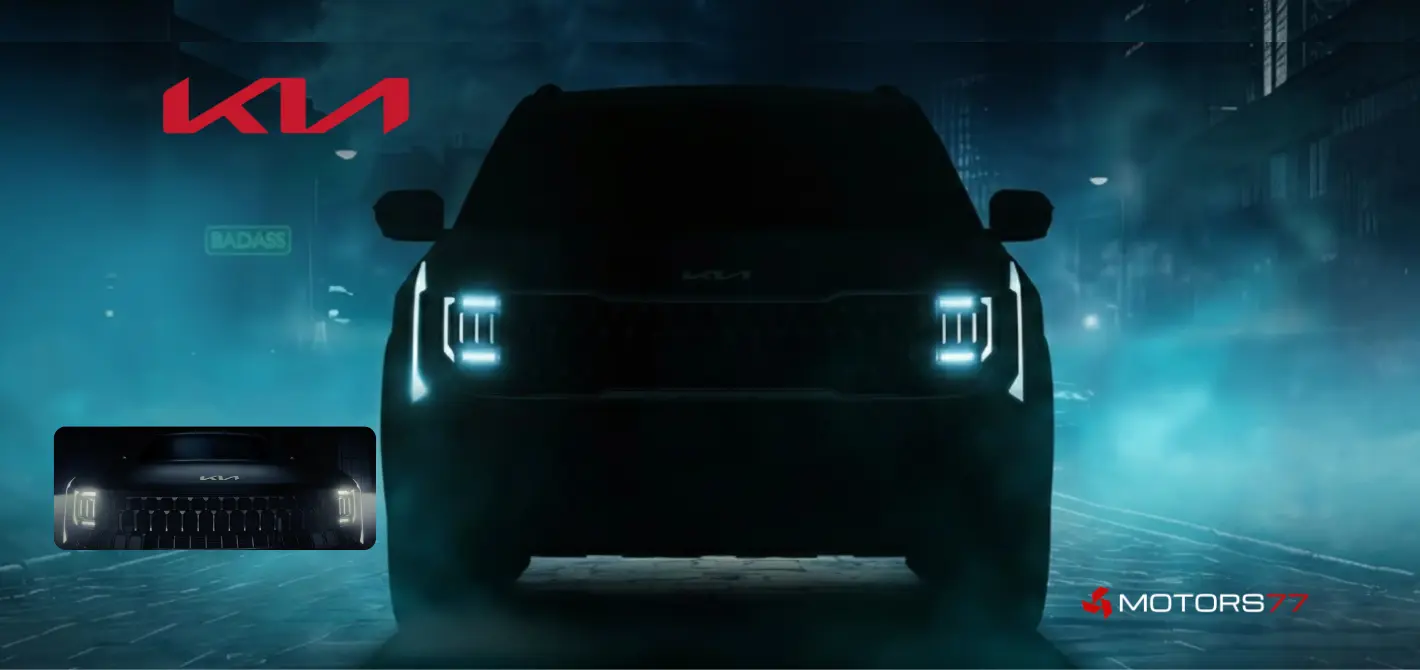
New Kia Seltos Teaser

Official teaser of the new Kia Seltos 2025 revealing the updated exterior design

10
SHARES
130
VIEWS
Share on FacebookShare on Twitter

New Kia Seltos Teaser: The automotive world’s attention has shifted firmly to Kia India following the official release of teaser images and video for the all-new second-generation Kia Seltos. Six years after the original model revolutionised India’s compact SUV segment in 2019, Kia has confirmed through its official teaser campaign that the redesigned Seltos will make its global debut on December 10, 2025, as per Kia’s teaser campaign and media confirmation, with the India launch expected to follow in early 2026 (anticipated Q1 2026 based on industry timelines). The teasers reveal a transformation so comprehensive that this appears to be far more than a typical facelift the new Seltos appears to represent a complete generational shift in design philosophy, technology, and market positioning based on the extensive changes visible in official teaser materials.

The current-generation Seltos has consistently ranked among India’s best-selling SUVs, competing directly with the Hyundai Creta, Maruti Suzuki Grand Vitara, and Honda Elevate. With over six years of market presence and a successful mid-cycle facelift in 2023, the timing for a full-generation change aligns perfectly with typical automotive product cycles. The teaser campaign launched by Kia India on December 1, 2025, has generated significant excitement by showcasing design elements that mark a radical departure from the softer, more conservative styling of the outgoing model.

You might also like

Hyundai Lounge Edition Launched: The Alcazar Now Costs Rs 90,000 More With Two Fewer Seats

Maruti Suzuki Baleno Facelift First Look: Fewer Cylinders, Less Power, And Why That Trade Works

MG ADAPT Platform Unveiled: Why MG Showed A Chassis When Everyone Expected An SUV

New Kia Seltos Teaser: Bold new design language

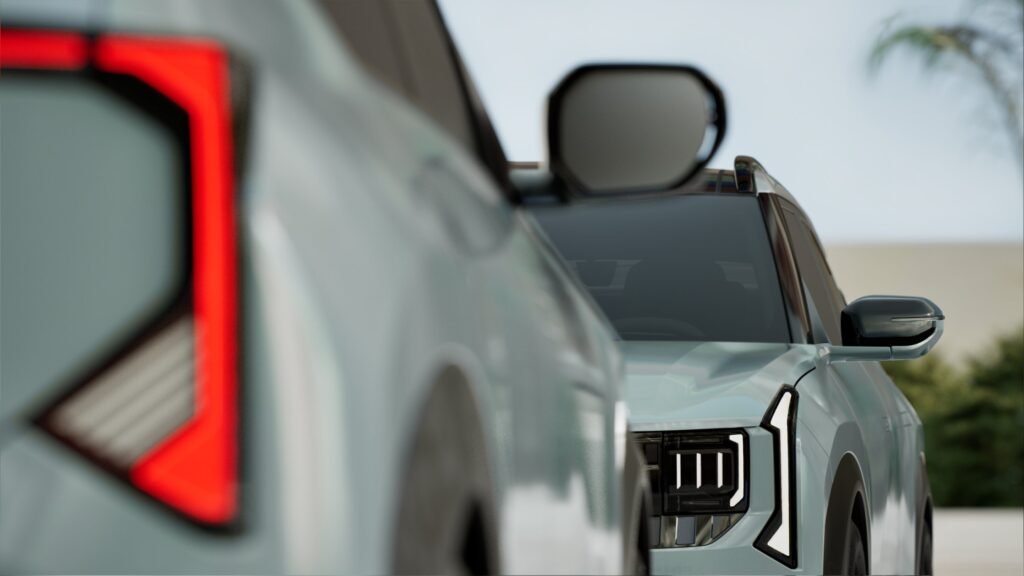
The official teaser video and images reveal a front fascia that bears little resemblance to the current Seltos. Kia has adopted what the company calls its “Digital Tiger Face” grille a significantly wider and more angular interpretation of the brand’s signature Tiger Nose design element. The grille now dominates the front fascia, stretching across almost the entire width of the vehicle and creating a commanding road presence that positions the Seltos more aggressively within the premium compact SUV segment.

The most striking visual element showcased in the teaser is the new “Star Map” LED lighting signature. Vertical LED daytime running lights flank both sides of the grille, creating a distinctly futuristic appearance that aligns the Seltos with Kia’s latest global design direction. These aren’t merely decorative elements the teaser video demonstrates an LED welcome animation that activates when the vehicle is unlocked, adding a premium touch previously associated with vehicles costing significantly more. The main headlight units have been integrated into the edges of the grille itself, featuring a complex arrangement that combines C-shaped, horizontal, and vertical LED elements for a sophisticated lighting architecture.

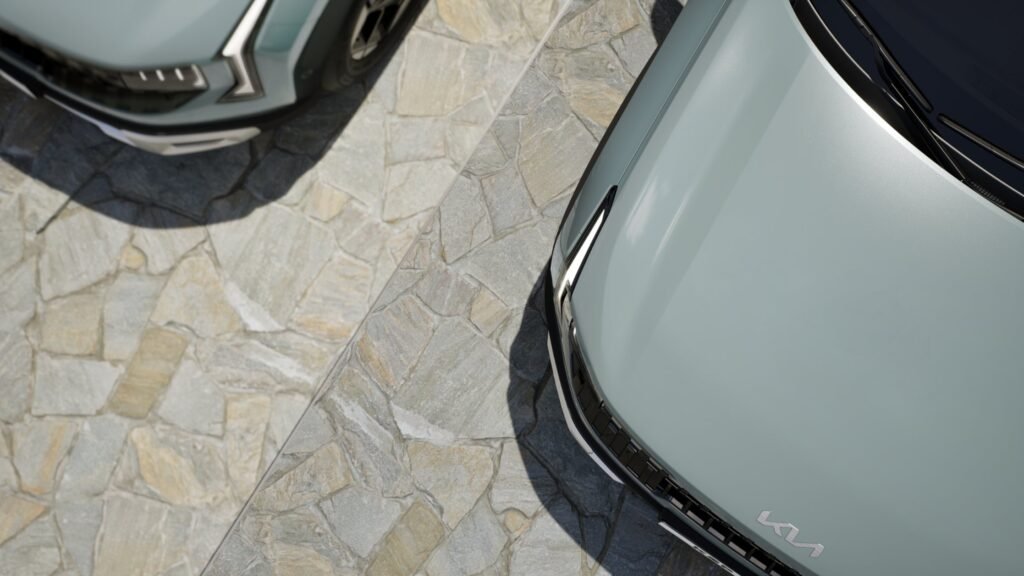
The bonnet design visible in the teaser top-view image appears almost flat, contributing to a more upright and muscular stance compared to the current model’s rounded contours. Industry analysts comparing spy photographs with the official teasers suggest the new Seltos is likely larger than the current model’s 4,365-millimeter length and 1,800-millimeter width, based on spy shots and teaser proportions. This potential size increase would translate directly to improved interior space and position the vehicle more confidently against competitors in the increasingly crowded mid-size SUV segment.

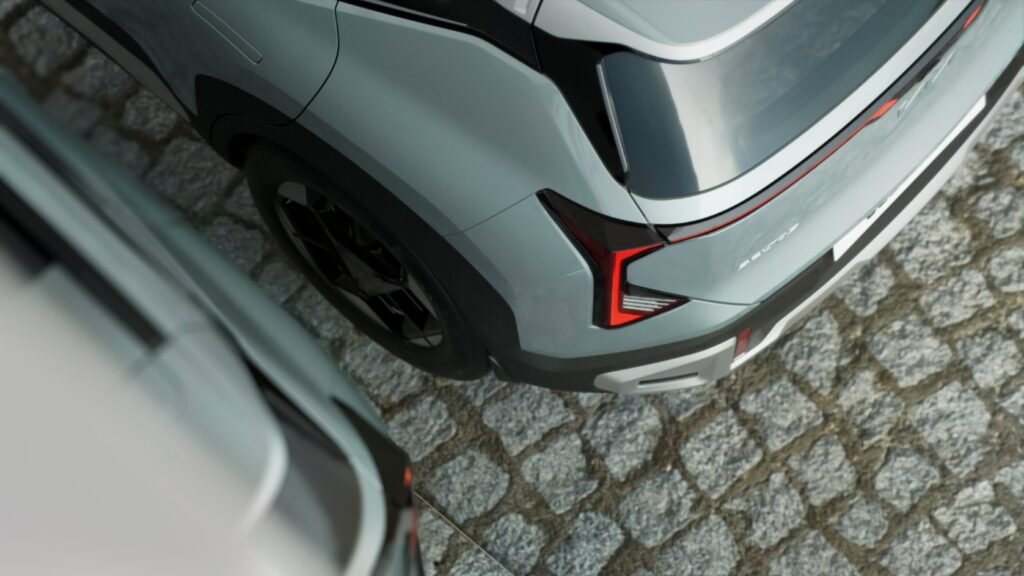
Side profile changes showcased in the teaser images include flush-mounted door handles a first for the Seltos nameplate that improves aerodynamic efficiency while adding to the contemporary aesthetic. The roofline appears flatter and more horizontal, abandoning the flowing coupe-like silhouette of the current generation for a boxier, more traditional SUV shape. This design direction emphasizes practicality and interior volume over pure styling dynamism. The teaser confirms a panoramic sunroof will be available, with the camera panning upward in the video to showcase this premium feature.

The rear design, partially visible in the teaser images, features what Kia calls connected LED tail lights, with the teaser suggesting a full-width light bar stretching across the tailgate. This C-shaped LED signature creates visual continuity with the front lighting elements while establishing a distinctive nighttime identity. The tailgate itself appears more upright and rugged compared to the current model’s softer surfacing, reinforcing the SUV’s more assertive character.
Interior transformation promises technology leadership

Based on teaser images and media reports: While Kia has not officially revealed the interior in these initial teasers, spy photographs extensively documented by Indian automotive media over recent months provide substantial insight into the expected cabin transformation. Based on teaser images and media reports, the most significant change appears to be the adoption of a dual curved-display setup featuring two 12.3-inch screens one functioning as the digital instrument cluster and another as the infotainment touchscreen. This configuration mirrors setups seen in more expensive Kia and Hyundai models globally, bringing premium technology to the compact SUV segment at competitive pricing.

Reports from multiple automotive publications including CarWale, RushLane, and V3Cars suggest an additional 5-inch touchscreen will be dedicated to climate control functions, creating a three-screen cockpit configuration rarely seen in this price segment. The curved display panel merges the dual 12.3-inch screens into a single visual element, creating a modern, driver-focused environment that emphasizes technology integration over traditional controls.

Material quality throughout the cabin is expected to receive substantial upgrades, with spy photographs showing revised upholstery patterns, improved plastics quality, and more sophisticated trim elements. The seating has been redesigned with improved ergonomics, and automotive sources report the possibility of ventilated rear seats on higher variants based on unconfirmed test mule reports a feature that would be segment-first if it materializes, addressing a genuine comfort need in Indian climatic conditions. A powered co-driver seat with what industry sources describe as “boss mode” functionality provides maximum adjustability for front passenger comfort.

Connectivity features will expand substantially with the new generation. Wireless Apple CarPlay and Android Auto eliminate cable clutter, while Kia’s connected car ecosystem provides over-the-air software updates, remote vehicle monitoring through smartphone apps, and comprehensive vehicle insights accessible from anywhere. The teaser confirms retention of premium features from the current generation including an 8-speaker Bose sound system, dual-zone automatic climate control, ventilated front seats, wireless phone charging, and a powered tailgate for convenient boot access.

Powertrain continuity with hybrid potential

Kia has not disclosed detailed powertrain specifications in the teaser campaign, but multiple industry sources report that the proven engine lineup will continue with refinements. The three existing powertrains a 1.5-liter naturally aspirated petrol engine producing 113 bhp and 144 Nm, a 1.5-liter turbocharged petrol delivering 158-160 bhp and 253 Nm, and a 1.5-liter turbocharged diesel generating 114 bhp and 250 Nm have established strong reliability records and meet current emission standards.

The most significant powertrain development concerns a strong-hybrid system that has been spotted testing on global Seltos prototypes. This hybrid configuration would pair a petrol engine with an electric motor to deliver substantially improved fuel efficiency while reducing emissions. However, India launch timing for this hybrid variant remains unconfirmed. Whether this hybrid option will be available for the India market at launch or arrive later depends on Kia’s assessment of local market readiness, though the company is certainly aware of growing demand for hybrid vehicles following the success of the Toyota Urban Cruiser Hyryder and Maruti Suzuki Grand Vitara strong-hybrid models in the Indian market.

Transmission options will include six-speed manual gearboxes across all variants, with the turbocharged petrol engine offering a seven-speed dual-clutch automatic transmission for performance oriented buyers. The diesel variants are rumored to receive a revised automatic gearbox, potentially upgrading from the current six-speed unit to improve refinement and fuel efficiency, though this awaits official confirmation. The intelligent manual transmission (iMT) that provides clutch-less convenience while retaining manual gear selection will continue as an option for buyers seeking a middle ground between traditional manual and automatic operation.

Safety leadership through comprehensive ADAS implementation

Based on spy shots and media reports: The new Seltos is positioned to establish safety leadership in the compact SUV segment through comprehensive Level 2 Advanced Driver Assistance Systems. While the teaser doesn’t explicitly showcase ADAS features, spy photographs and industry reports indicate the new generation will expand significantly beyond the basic ADAS functionality offered on current variants.

Expected ADAS features include adaptive cruise control that maintains set speeds while automatically adjusting to traffic flow, forward collision warning with automatic emergency braking that can engage brakes to prevent or mitigate collisions, and lane-keeping assist that helps maintain lane position during highway driving. These systems work through a combination of forward-facing cameras, radar sensors, and ultrasonic sensors integrated throughout the vehicle.

Standard safety equipment across all variants will include six airbags, electronic stability control, hill start assist, tire pressure monitoring system, front and rear parking sensors, and all-wheel disc brakes. Higher variants will add a 360-degree camera system providing a bird’s-eye view for parking maneuvers, electronic parking brake with auto-hold function for convenience in traffic, and enhanced warning systems for comprehensive occupant protection.

Confirmed versus expected features: What we know for certain

Based on official teaser materials and reliable media reporting, here’s what’s confirmed versus what remains expected or rumored:

FeatureStatus
Digital Tiger Face grille✔ Confirmed (teaser)
Star Map LED DRLs✔ Confirmed (teaser)
LED welcome animation✔ Confirmed (teaser)
Panoramic sunroof✔ Confirmed (teaser)
Flush door handles✔ Confirmed (teaser)
Connected LED tail lights✔ Confirmed (teaser)
Dual 12.3-inch curved displays⚠️ Expected (spy shots)
5-inch climate control screen⚠️ Expected (media reports)
Ventilated front seats⚠️ Likely (current feature)
Bose sound system⚠️ Likely (current feature)
Ventilated rear seats⚠️ Rumored (unconfirmed)
Level 2 ADAS expansion⚠️ Expected (spy shots)
360-degree camera⚠️ Expected (spy shots)
Strong-hybrid powertrain⚠️ Possible (global testing)
Upgraded diesel automatic⚠️ Rumored (unconfirmed)

This table will be updated following the official December 10 reveal when complete specifications are announced.

Market positioning and competitive landscape

The new Seltos arrives at a critical moment in India’s compact SUV segment, which has become intensely competitive with multiple manufacturers launching updated models and new entrants. The Hyundai Creta received a comprehensive facelift recently and continues selling strongly. The Maruti Suzuki Grand Vitara and Toyota Urban Cruiser Hyryder have established the viability of strong-hybrid powertrains in this segment. The Tata Sierra is launching with advanced features and bold styling. The Volkswagen Taigun and Skoda Kushaq bring European engineering and strong turbocharged engines.

Kia’s strategy with the new Seltos appears focused on pushing the model further upmarket with premium features, advanced technology, and potentially segment-leading ADAS capabilities. The company’s Managing Director, Gwanggu Lee, stated in the teaser release: “The Seltos has always set benchmarks in the mid-SUV segment, and this new evolution takes it to the next level. Every detail from its striking design to advanced technology and enhanced performance has been reimagined around the aspirations of our customers.”

Current Seltos pricing starts at approximately ₹10.79 lakh ex-showroom for base variants and extends to approximately ₹21 lakh for top-specification models. Industry analysts expect the new generation to command a modest premium justified by substantially increased feature content, with base variants potentially starting around ₹11.30 lakh and top variants reaching ₹23 lakh or beyond depending on final feature configurations.

The teaser images show the vehicle in matte black finish, strongly suggesting that Kia will continue offering multiple trim levels including the rugged X-Line variant for buyers seeking adventure-focused styling and the GT-Line variant targeting performance-conscious customers with sportier visual elements. This multi-trim strategy allows Kia to address diverse buyer preferences within a single model lineup.

What the December 10 reveal will clarify

The global debut scheduled for December 10, 2025, will answer several critical questions that remain unresolved in the teaser campaign. Complete technical specifications including precise dimensions, weight, ground clearance, and boot capacity will be announced. The full feature list across all variants will be detailed, clarifying exactly which advanced features will be standard versus optional or restricted to higher trims. Most importantly for Indian buyers, confirmation of whether the strong-hybrid powertrain will be available at launch or arrive later will significantly influence purchase decisions for efficiency-focused customers.

Pricing details for the Indian market are unlikely to be announced on December 10, with the actual India launch and price reveal expected in early 2026, likely during the January-March quarter. This timing allows Kia to assess market response to the global debut, finalize India-specific feature configurations, and ensure production readiness at the company’s Anantapur manufacturing facility in Andhra Pradesh.

The new-generation Kia Seltos represents one of the most comprehensive transformations in the compact SUV segment, moving decisively upmarket in design, technology, and market positioning. For the estimated hundreds of thousands of Indian buyers who have made the current Seltos one of the country’s best-selling SUVs, the December 10 reveal will determine whether this radical new direction aligns with their expectations and needs. The teaser campaign has certainly succeeded in generating excitement and anticipation—now the world awaits the complete reveal to judge whether the product delivers on the promise.

Frequently Asked Questions

When is the new Kia Seltos launching in India?
The global debut is confirmed for December 10, 2025. The India launch is expected in early 2026, likely during the January-March quarter, with final pricing and variant details to be announced closer to the launch date.

Will the new Seltos have a hybrid engine option?
A strong-hybrid powertrain has been spotted on global test prototypes. However, India availability and launch timing for the hybrid variant remain unconfirmed. Kia will likely clarify this during the December 10 global reveal.

What features are confirmed in the new Seltos?
Officially confirmed from teasers: Digital Tiger Face grille, Star Map LED DRLs with welcome animation, panoramic sunroof, flush door handles, and connected LED tail lights. Other features like dual 12.3-inch displays and Level 2 ADAS are expected based on spy shots.

How much will the new Seltos cost?
Current Seltos pricing ranges from ₹10.79 lakh to ₹21 lakh. Industry analysts expect the new generation to start around ₹11.30 lakh for base variants, with top-spec models potentially reaching ₹23 lakh or beyond, justified by significantly enhanced features.

Is this a facelift or completely new generation?
Based on the extensive design changes visible in official teasers, this appears to be a full second-generation model rather than a mid-cycle facelift, though Kia has not explicitly used “second-generation” terminology in teaser materials.

What competitors will the new Seltos face?
The 2026 Seltos will compete against Hyundai Creta, Maruti Suzuki Grand Vitara, Toyota Urban Cruiser Hyryder, Honda Elevate, Volkswagen Taigun, Skoda Kushaq, MG Astor, Tata Sierra, and the upcoming Renault Duster.

Will there be X-Line and GT-Line variants?
The teaser shows the vehicle in matte black finish, strongly suggesting multiple trim levels including the rugged X-Line and sporty GT-Line variants will continue, though official confirmation awaits the December 10 reveal.

Read Next:
👉 2025 Tata Sierra Complete Guide – ARGOS Platform, Engines, AWD, Launch Timeline & Pricing

Previous Post

Budget Electric Cars Under ₹15 Lakh in India: Your Complete 2025 Buying Guide

Next Post

Maruti Suzuki e Vitara Scores 5-Star Bharat NCAP Rating: Among India’s Safest Electric SUVs

Vyom Patil

Vyom Patil

Founder & Editor-in-Chief at Motors77. A Pune-based automotive enthusiast with over 10 years of experience following the auto industry. Vyom leads Motors77's editorial direction, ensuring accurate, well-researched coverage of cars, bikes, and EVs for Indian readers.

Related Posts

# Hyundai Lounge Edition Launched: The Alcazar Now Costs Rs 90,000 More With Two Fewer Seats The Hyundai Lounge Edition has arrived across the Creta, Creta Electric and Alcazar, and most of the coverage is leading with the 11.6 inch screen bolted to the back of the front seats. Fair enough. But the number worth pausing on sits in the Alcazar's price list. The Alcazar Lounge Edition costs Rs 21.81 lakh, ex-showroom. That is Rs 71,000 more than the six seat Signature it is based on, and Rs 90,000 more than the seven seat Signature. And the Lounge Edition has five seats. Hyundai is charging you almost a lakh extra to take the third row out of a three row SUV. That sounds absurd until you understand why it might be the smartest thing in this entire launch. ## Hyundai Lounge Edition price, model by model The Hyundai Lounge Edition is a features and styling package applied to the top trim of each SUV. Nothing mechanical changes anywhere in the range. | Creta Lounge Edition | Price, ex-showroom | | --- | --- | | 1.5 petrol iVT | Rs 19.22 lakh | | 1.5 petrol iVT, dual tone | Rs 19.37 lakh | | 1.5 diesel AT | Rs 20.31 lakh | | 1.5 diesel AT, dual tone | Rs 20.46 lakh | | Alcazar and Creta Electric | Price, ex-showroom | | --- | --- | | Alcazar Lounge, 1.5 diesel AT | Rs 21.81 lakh | | Alcazar Lounge, dual tone | Rs 21.96 lakh | | Creta Electric Lounge | From Rs 24.34 lakh | | Creta Electric Lounge, top configuration | Rs 25.22 lakh | Each Hyundai Lounge Edition sits on a specific donor trim. The Creta version is built on the King trim and comes only with automatics, either the 1.5 litre MPi petrol with the iVT or the 1.5 litre CRDi diesel with a torque converter. The Alcazar Lounge is based on the Signature trim and is diesel automatic only. The Creta Electric Lounge uses the Excellence Long Range variant with the 51.4 kWh battery, and can be had with or without the home charger. The premiums tell you what Hyundai thinks each Hyundai Lounge Edition package is worth. The Creta Lounge asks Rs 53,000 over the equivalent King variant, the same on both powertrains. The Creta Electric Lounge asks Rs 67,000 over the Excellence Long Range. The Alcazar asks Rs 71,000 over the six seater and Rs 90,000 over the seven seater. Every figure above is ex-showroom. On road prices will land considerably higher once road tax, registration and insurance are added, and by how much depends heavily on your state, so treat these as the base of the calculation rather than the total. ## What the money buys The centrepiece of every Hyundai Lounge Edition is a 29.46 cm, or 11.6 inch, rear seat entertainment screen. This is not a mirrored display for the front infotainment. It runs OTT video streaming, gaming and apps through a certified app store, and supports phone mirroring on top. Audio runs through the existing eight speaker Bose system with a front centre speaker and a subwoofer. Inside, the Hyundai Lounge Edition adds an all black dashboard with silver inserts on the air conditioning vents, Moonwhite ambient lighting, a new seat upholstery pattern and rear headrest cushions with Lounge branding. Outside, every Hyundai Lounge Edition gets a new Golden Bronze paint option and a blacked out treatment covering the front and rear skid plates, side sill garnish, rear spoiler, roof rails, C-pillar garnish and mirrors. The Creta and Alcazar get 18 inch matte black alloys, the Creta Electric 17 inch black aero wheels. Two models get something extra. The Alcazar Lounge adds a voice enabled smart panoramic sunroof alongside its five seat layout. The Creta Electric Lounge adds a factory fitted dashcam and a rear wireless charger. ## Why does this matter? Here is the gap between the launch messaging and the fuller picture. Hyundai is presenting the Hyundai Lounge Edition as a rear seat entertainment package. The screen is the hero of every press image. But the screen is available on all three SUVs, which makes it the least interesting thing here. The Alcazar's missing third row is the actual news. Think about the third row in a compact three row SUV. It eats boot capacity permanently in exchange for seating that adults generally find cramped and that many owners use only occasionally. For a buyer drawn to the Alcazar's larger footprint, road presence and second row space rather than its seat count, that trade has never been a good one. Hyundai has now built exactly that car and priced it accordingly. The Alcazar Hyundai Lounge Edition is the result. Removing the third row frees genuine luggage space, and the second row becomes the focus rather than a waypoint. Add the panoramic sunroof, the rear screen and the ambient lighting, and the Alcazar Lounge is aimed squarely at the buyer who sits in the back, or who has a family of four and wants space rather than seat count. That is a meaningful read of the Indian market. The rear seat focused buyer, whether chauffeur driven or simply someone whose family lives in the back, has generally had to look at more expensive SUVs for this kind of package. Hyundai is now serving that customer at Rs 21.81 lakh, ex-showroom, in a familiar badge. The Rs 90,000 premium over the seven seater is not really a charge for removing seats. It is the price of the equipment, and the seat deletion is what makes the equipment make sense. There is a second, less comfortable consequence of the Hyundai Lounge Edition strategy. A five seat Alcazar competes directly with Hyundai's own Creta. The Creta Lounge Edition costs Rs 19.22 lakh with the same rear screen, the same interior treatment and the same blacked out styling. Spend Rs 2.59 lakh more and you get a longer car with more rear legroom, more boot space and the sunroof, but the same number of seats and the same basic experience. Hyundai has created a genuine internal decision for buyers, and how that plays out will be interesting to watch in the monthly numbers. ## The equipment question nobody is asking Worth being clear about what the Hyundai Lounge Edition does not change. There is no mechanical revision anywhere. The 1.5 litre petrol and diesel engines carry over exactly as they are, the Creta Electric keeps its 51.4 kWh battery and long range tune, and suspension, brakes and steering are untouched across all three. Every Hyundai Lounge Edition also sits on a top trim, which means the safety and driver assistance equipment is whatever those trims already carried. Nothing has been added on that front, and nothing has been taken away. If you were hoping a premium edition might bring extra active safety hardware down the range, this is not that launch. For the money, the rear screen is a substantial piece of kit rather than a token. An 11.6 inch display with independent app and streaming capability is genuinely useful on long drives with children, and it is the sort of feature that has until recently belonged to cars costing considerably more. Whether it is worth Rs 53,000 on a Creta depends entirely on how often your back seat is occupied. ## Quick Pros and Cons **Pros** - Five seat Alcazar finally answers buyers who wanted space over seat count - Genuinely capable 11.6 inch rear screen with streaming, gaming and app support - Paired with the existing eight speaker Bose system rather than a cheaper setup - New Golden Bronze paint and a well judged blacked out exterior treatment - Creta Electric Lounge adds a factory dashcam and rear wireless charger - Alcazar Lounge gains a voice enabled smart panoramic sunroof **Cons** - Rs 90,000 more than a seven seat Alcazar Signature, with two fewer seats - No mechanical, safety or driver assistance improvements anywhere - Restricted to the top trims and automatic powertrains only - The five seat Alcazar competes closely with Hyundai's own Creta Lounge - Creta Lounge Edition is not offered with a manual gearbox ## Frequently Asked Questions **1. What is the Hyundai Lounge Edition price?** The Creta Lounge Edition starts at Rs 19.22 lakh, the Alcazar Lounge Edition at Rs 21.81 lakh and the Creta Electric Lounge Edition at Rs 24.34 lakh. The range tops out at Rs 25.22 lakh, all ex-showroom. **2. Why does the Alcazar Lounge Edition have only five seats?** Hyundai has removed the third row to prioritise second row space and luggage capacity. The regular Alcazar continues to be offered in six and seven seat layouts, so the five seat configuration is exclusive to the Lounge Edition. **3. How much more does the Lounge Edition cost?** The Creta Lounge is Rs 53,000 above the equivalent King variant, the Creta Electric Lounge is Rs 67,000 above the Excellence Long Range, and the Alcazar Lounge is Rs 71,000 above the six seat Signature or Rs 90,000 above the seven seat Signature. **4. What is the rear seat entertainment system?** An 11.6 inch screen for second row passengers that supports OTT video streaming, gaming, phone mirroring and apps through a certified app store. It works with the existing eight speaker Bose audio system. **5. Which engines are offered?** The Creta Lounge gets the 1.5 litre petrol with iVT or the 1.5 litre diesel automatic. The Alcazar Lounge is diesel automatic only. The Creta Electric Lounge uses the 51.4 kWh Excellence Long Range powertrain. **6. Is there any performance change?** No. Every Hyundai Lounge Edition carries over its powertrain unchanged from the donor variant, with no revisions to suspension, brakes or steering. **7. What colour options are there?** A new Golden Bronze shade joins the palette on every Hyundai Lounge Edition, with the existing colours continuing. Dual tone versions are offered at a premium of roughly Rs 15,000. ## Motors77 Verdict The Hyundai Lounge Edition is being sold as a screen, and it should be sold as a seat count. The 11.6 inch rear display is good, and putting real streaming and app capability in the second row of a Rs 19 lakh SUV is a genuine step forward. But it appears on all three models, which makes it a feature rather than a story. The story is that Hyundai looked at its three row SUV, concluded that a meaningful chunk of buyers never wanted the third row, and built them a version without it. That is a confident piece of product thinking. The five seat Alcazar Lounge occupies a space above the Creta Lounge that nothing else in the range covers, pairing a larger body and more generous rear quarters with a panoramic sunroof and a boot no longer compromised by folded seats. It lands at Rs 21.81 lakh, ex-showroom, in a market where that kind of rear seat focus usually costs more. If Hyundai has read demand correctly, this variant could outperform expectations. The reservations are straightforward. Paying Rs 90,000 above a seven seat Alcazar to receive five seats will look strange on a showroom board no matter how sound the logic underneath, and Hyundai will need its salespeople to explain the equipment rather than the arithmetic. There is no mechanical or safety upgrade to soften the premium. And the Creta Lounge sitting Rs 2.59 lakh below with much the same cabin experience means Hyundai is now competing with itself in a way it will have to manage. If your back seat is regularly occupied, the Hyundai Lounge Edition makes a strong case, and the Alcazar version makes the strongest one. If it is not, you are paying a considerable premium for a screen nobody will watch. --- ## RankMath SEO Block **Focus Keyword:** Hyundai Lounge Edition **SEO Title:** Hyundai Lounge Edition Launched: Creta, Creta Electric And Alcazar Prices, Features **Permalink/URL:** hyundai-lounge-edition-creta-alcazar-price-features **Meta Description:** Hyundai Lounge Edition launched for Creta, Creta Electric and Alcazar from Rs 19.22 lakh. Full prices, the 11.6 inch rear screen and the new five seat Alcazar explained. **Tags:** Hyundai Lounge Edition, Hyundai Creta price, Alcazar five seater, Creta Electric, rear seat entertainment, Hyundai India, Creta Lounge Edition, Alcazar Lounge Edition **Category:** Car News, New Launches --- ## WordPress Banner Image Block **Alt Text:** Hyundai Lounge Edition launched for Creta, Creta Electric and Alcazar with an 11.6 inch rear seat entertainment screen **Title:** Hyundai Lounge Edition Launched For Creta, Creta Electric And Alcazar **Caption:** The Hyundai Lounge Edition brings an 11.6 inch rear screen, blacked out styling and a new five seat Alcazar layout, priced from Rs 19.22 lakh. **Description:** Hyundai Motor India has launched the Lounge Edition across the Creta, Creta Electric and Alcazar, priced from Rs 19.22 lakh to Rs 25.22 lakh, ex-showroom. Every version gains a 29.46 cm rear seat entertainment screen with OTT streaming and gaming, Moonwhite ambient lighting, Lounge branded upholstery, a new Golden Bronze paint option and blacked out exterior detailing. The Alcazar Lounge Edition is the most significant, swapping the six and seven seat layouts for an exclusive five seat configuration with a voice enabled smart panoramic sunroof.

Hyundai Lounge Edition Launched: The Alcazar Now Costs Rs 90,000 More With Two Fewer Seats

by Vyom Patil
September 10, 2026
0

The Hyundai Lounge Edition has arrived across the Creta, Creta Electric and Alcazar, and most of the coverage is leading...

Maruti Suzuki Baleno facelift 2026 launched in India at Rs 6.10 lakh with a new Z12E three cylinder engine and Level 2 ADAS

Maruti Suzuki Baleno Facelift First Look: Fewer Cylinders, Less Power, And Why That Trade Works

by Vyom Patil
September 8, 2026
0

The Baleno facelift has arrived at Rs 6.10 lakh, ex-showroom, and buried inside the launch is a fact Maruti has...

MG ADAPT platform unveiled in India, a multi energy architecture supporting EV, hybrid, plug in hybrid and range extender powertrains

MG ADAPT Platform Unveiled: Why MG Showed A Chassis When Everyone Expected An SUV

by Vyom Patil
July 17, 2026
0

Everyone watching JSW MG Motor India on 16 July 2026 expected a car. Spy shots of the Starlight based EV...

Renault Duster Adventure Edition in Stealth Black with Leh coordinate contour decals, launched in India at Rs 12.99 lakh

Renault Duster Adventure Edition Launched At Rs 12.99 Lakh: Renault Just Quietly Deleted The Techno

by Vyom Patil
July 14, 2026
0

The Renault Duster Adventure Edition has been launched in India at Rs 12.99 lakh, ex-showroom, and on the surface it...

Next Post
Maruti e Vitara

Maruti Suzuki e Vitara Scores 5-Star Bharat NCAP Rating: Among India's Safest Electric SUVs

Related Post

Ford’s-$30,000-Electric-Pickup-Truck

Ford’s $30,000 (approximately ₹25 lakh) Electric Pickup Truck: Revolutionizing EVs in 2027

October 14, 2025
Renault Duster 2026 launch in India on March 17 banner showing SUV on mountain road

Renault To Launch Duster In India On March 17: Price, Specs, Features and Everything You Need To Know

February 25, 2026
Suzuki Vision e-Sky BEV Concept

Suzuki Vision e-Sky BEV Concept: The Future of Compact Electric Mobility

October 14, 2025

Category

  • Bike
  • BIKES
  • Car
  • CARS
  • ELECTRIC
  • Electric Bikes
  • Electric Cars
  • Features
  • India Bike News
  • India Car News
  • International Bike News
  • International Car News
  • New Bike Launches
  • New Car Launches
  • REVIEWS
  • Upcoming Bikes
  • Upcoming Cars

Tags

acti.ev+ Avinya Bajaj Triumph Baleno 2026 Baleno ADAS Baleno facelift Baleno price Bonneville 400 price Hyundai Creta Electric Mahindra BE 6 Maruti Suzuki Baleno premium hatchback India retro motorcycle Royal Enfield Classic 350 Safari EV Sierra EV Tata EV Tata EV portfolio Tata Motors Tata Motors FY31 Tata new cars Tata Sierra EV Tata Sierra EV price Tata Sierra EV variants Triumph 400 series Triumph Bonneville 400 Z12E engine

About

Motors77.com Brings You the Latest Automotive News, Expert Reviews, and Market Insights. Explore Cars, Bikes, and EV Trends | Driving Your Passion for Motoring Forward.

Categories

  • BIKES
    • India Bike News
    • International Bike News
    • New Bike Launches
    • Upcoming Bikes
  • CARS
    • India Car News
    • International Car News
    • New Car Launches
    • Upcoming Cars
  • ELECTRIC
    • Electric Bikes
    • Electric Cars
  • REVIEWS
    • Bike
    • Car
    • Features

Browse by Tag

acti.ev+ Avinya Bajaj Triumph Baleno 2026 Baleno ADAS Baleno facelift Baleno price Bonneville 400 price Hyundai Creta Electric Mahindra BE 6 Maruti Suzuki Baleno premium hatchback India retro motorcycle Royal Enfield Classic 350 Safari EV Sierra EV Tata EV Tata EV portfolio Tata Motors Tata Motors FY31 Tata new cars Tata Sierra EV Tata Sierra EV price Tata Sierra EV variants Triumph 400 series Triumph Bonneville 400 Z12E engine

Recent Posts

  • Hyundai Lounge Edition Launched: The Alcazar Now Costs Rs 90,000 More With Two Fewer Seats
  • Maruti Suzuki Baleno Facelift First Look: Fewer Cylinders, Less Power, And Why That Trade Works
  • Home
  • About US
  • Contact Us
  • Privacy Policy
  • Terms & Conditions

Copyright © 2026 Motors77. All rights reserved.

No Result
View All Result
  • Home
  • CARS
    • India Car News
    • International Car News
    • New Car Launches
    • Upcoming Cars
  • BIKES
    • India Bike News
    • International Bike News
    • New Bike Launches
    • Upcoming Bikes
  • ELECTRIC
    • Electric Cars
    • Electric Bikes
  • REVIEWS
    • Bike
    • Car
    • Features
    • Fuel Cost Calculator

Copyright © 2026 Motors77. All rights reserved.

This website uses cookies to improve your experience. By continuing to use this website, you consent to the use of cookies. Visit our Privacy and Cookie Policy.