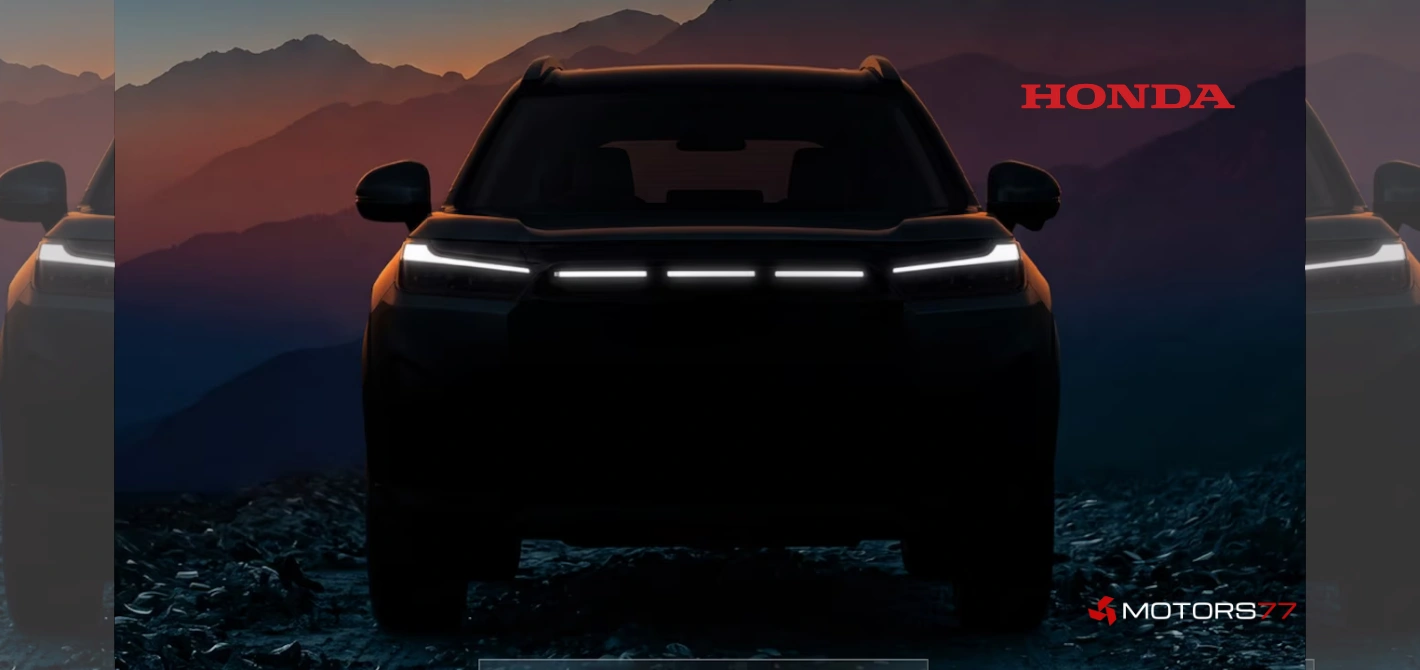
Honda has opened bookings for the Honda Elevate facelift at Rs 21,000, with prices to be announced on 6 October 2026. A teaser has landed, India is the first market in the world to receive the updated SUV, and Honda is promising bolder styling, more equipment and a more premium cabin.
Read that list again and notice what is missing from it. Nothing about the powertrain.
That is not an oversight. There is no hybrid planned for the Honda Elevate facelift, with current reports indicating Honda’s e:HEV system will remain exclusive to the City in this part of its range. In a segment where strong hybrids have become the main battleground, Honda is bringing a restyled cabin to a powertrain fight. Understanding why is the most interesting thing about this launch.
What Honda has actually confirmed
Very little, and that is normal at the booking stage. Here is what is on the record for the Honda Elevate facelift.
Bookings are open at Rs 21,000 through authorised Honda dealerships. Prices and the full variant list arrive on 6 October 2026. India is the first market globally to get the facelifted car, which is notable given the Elevate was developed here and launched in September 2023, making this its first substantial update in roughly three years.
The engine carries over. The Honda Elevate facelift keeps the 1.5 litre four cylinder naturally aspirated i-VTEC petrol producing 121 PS and 145 Nm, paired with a six speed manual or a CVT. No hybrid, no electric version, and no turbocharged option.
For reference, the current car is priced from Rs 11.81 lakh to Rs 16.78 lakh, ex-showroom, with the ADV Edition CVT at the top. Honda is widely expected to revise prices upward with the Honda Elevate facelift, but no figure has been announced and estimates in circulation vary so widely that none of them are worth repeating.
Bookings are being taken in person at dealerships rather than online, which is worth knowing if you are planning to reserve one before prices are revealed. Booking ahead of a price announcement always carries a small risk, since you are committing without knowing the number, though Rs 21,000 is refundable in the ordinary course and modest enough that most buyers will treat it as holding a place in the queue rather than a real financial decision.
What the teaser shows
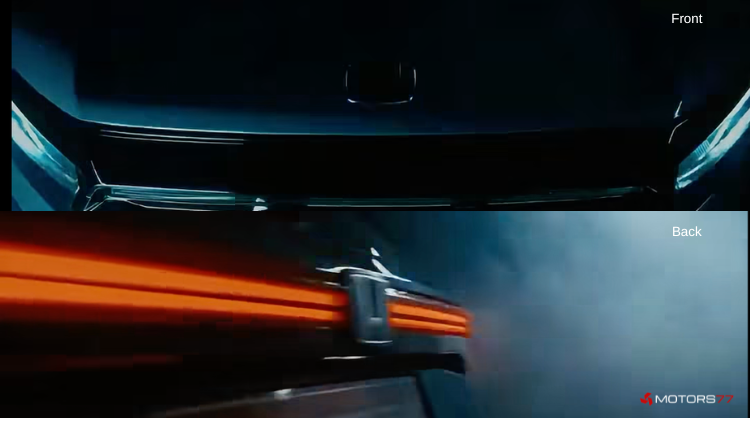
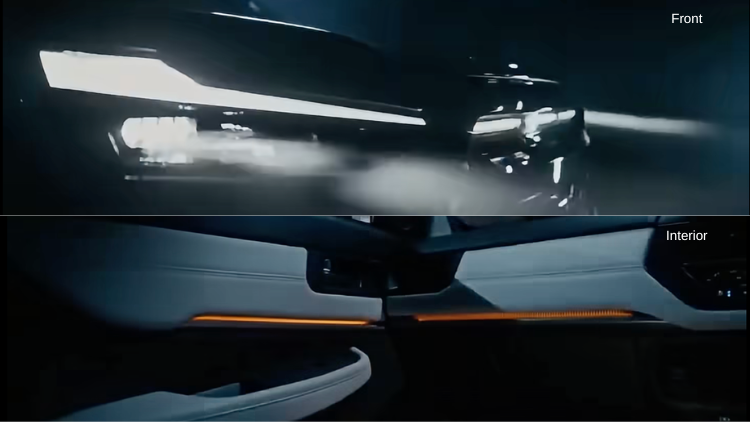
Honda’s teaser video, filmed with the car running through a tunnel, gives away more than most.
| Confirmed by the teaser | Detail |
|---|---|
| Honda badge position | Moved from the grille to the bonnet, as on the City facelift |
| Front lighting | Segmented LED daytime running lamps forming a light bar |
| Grille | New design |
| Tail lamps | Connected LED treatment |
| Cabin | Revised dashboard design and ambient lighting |
The badge move is the detail worth noting, because it signals Honda applying a consistent family face across its India range rather than treating the Elevate as a standalone product. Revised bumpers and new alloy wheel designs are widely expected on the Honda Elevate facelift but have not been shown.
Why does this matter?
Here is the gap between Honda’s messaging and the fuller picture.
Honda is selling the Honda Elevate facelift on styling and equipment, and the teaser already confirms changes in both areas. But look at what it is up against. The Maruti Grand Vitara and Toyota Hyryder offer strong hybrids. The Hyundai Creta and Kia Seltos offer turbo petrol and diesel options with automatics. The Tata Sierra, Maruti Victoris, Skoda Kushaq, Volkswagen Taigun and Renault Duster all bring something the Elevate does not.
Against that field, the Honda Elevate facelift arrives with a single naturally aspirated petrol engine making 121 PS, and nothing else. No diesel, no turbo, no hybrid. For a buyer comparing monthly running costs in a city, a strong hybrid rival can look dramatically cheaper to live with, and no amount of ambient lighting closes that gap on a spreadsheet.
What makes the decision genuinely puzzling is that Honda already has the technology in India. The City e:HEV uses the company’s two motor hybrid system, and Honda also sells the ZR-V here as a hybrid, though as an import priced far above this segment. The one vehicle it is not putting the system into is the locally built SUV competing in India’s crowded midsize SUV segment.
One plausible explanation is cost and localisation. The e:HEV system is expensive, and fitting it to the Elevate would either push the SUV out of its price band or require Honda to localise more hybrid hardware, which is a large investment in a market where it holds modest share. That is our reading rather than a reason Honda has publicly given, but if it is right, the decision is defensible. It is also a decision to compete on cabin quality rather than on the thing most of this segment is now arguing about.
What is expected but not confirmed
This is where most of the current coverage gets loose, so it is worth being precise. None of the following has been confirmed by Honda, and all of it should be treated as expectation until 6 October.
Reported as likely are ventilated front seats, rain sensing wipers, a larger touchscreen, dual zone climate control, a powered front passenger seat, rear sunblinds and a panoramic sunroof in place of the current single pane unit. Some reports also mention a 360 degree camera, though the current Elevate already offers one on the ADV Edition, so any change there would be wider availability rather than a new feature.
Several of those would be meaningful. The Elevate already carries Honda Sensing, the company’s ADAS suite, along with six airbags, a lane watch camera, an electric sunroof and a tyre pressure monitor. What it has lacked against the Creta and Seltos is the showroom feature count, and this is clearly where Honda intends to spend on the Honda Elevate facelift.
It is worth remembering that the Elevate has never been a weak car on fundamentals. It rides well, the i-VTEC engine is smooth and long lived, and Honda Sensing has been one of its notable strengths since launch, offered across most of the range rather than only on the top variant. The problem has been that none of those strengths photograph well or fit neatly into a comparison chart, which is precisely the battle this update is being fought on.
Confirmed versus expected
| Item | Status |
|---|---|
| Rs 21,000 booking amount | Confirmed |
| Launch and pricing on 6 October 2026 | Confirmed |
| India as first market globally | Confirmed |
| 1.5 litre i-VTEC, 121 PS, 145 Nm, 6MT or CVT | Carries over |
| No hybrid or electric version | Not planned, per current reports |
| Badge on bonnet, LED light bar, connected tail lamps | Shown in teaser |
| Ventilated seats, rain sensing wipers, larger screen | Expected |
| Panoramic sunroof, dual zone climate, rear sunblinds | Expected |
| Variant list and prices | Announced 6 October |
We will update this post once Honda confirms the full specification for the Honda Elevate facelift on 6 October.
What works in its favour, and what to watch
In its favour
- Six airbags as standard, with Honda Sensing ADAS on most variants
- A substantial feature upgrade appears to be coming, closing a long standing gap
- India gets the updated car before any other market
- The 1.5 litre i-VTEC is a proven, refined and reliable engine
- Honda’s reputation for long term reliability remains a genuine purchase driver
- Rs 21,000 is a modest booking amount in this segment
What to watch
- No hybrid option in a segment increasingly defined by them
- No diesel and no turbo petrol, so a single engine must cover every buyer
- Prices are expected to rise, and the increase has not been quantified
- Honda’s dealer network is smaller than Hyundai’s, Kia’s or Maruti’s
- A facelift arriving three years in, against rivals that are newer still
Frequently Asked Questions
1. How much is the booking amount for the Honda Elevate facelift? Rs 21,000, payable at authorised Honda dealerships. Prices and the full variant list will be announced on 6 October 2026.
2. When does the Honda Elevate facelift launch? 6 October 2026, when Honda announces prices and the full variant list. India is the first market in the world to receive the updated SUV.
3. Will the Honda Elevate facelift get a hybrid? No hybrid is planned, according to current reports, with Honda’s e:HEV system staying with the City. No electric version is expected in the near term either.
4. What engine does it use? The same 1.5 litre four cylinder naturally aspirated i-VTEC petrol as the current car, producing 121 PS and 145 Nm, with a six speed manual or CVT. There is no diesel or turbo petrol option.
5. What has the Honda Elevate facelift teaser confirmed? The Honda badge moves from the grille to the bonnet, there are segmented LED daytime running lamps forming a front light bar, a new grille, connected LED tail lamps, a revised dashboard and ambient lighting.
6. What will the Honda Elevate facelift cost? Honda has not announced prices. The current Elevate runs from Rs 11.81 lakh to Rs 16.78 lakh, ex-showroom, and prices are expected to rise with the facelift. Estimates circulating vary too widely to be useful, so wait for 6 October.
7. Which cars does it compete against? The Hyundai Creta, Kia Seltos, Maruti Grand Vitara and Victoris, Toyota Hyryder, Tata Sierra, Skoda Kushaq, Volkswagen Taigun and Renault Duster, among others.
Motors77 Verdict
The Honda Elevate facelift is shaping up to be a more complete car, and it may still arrive with the wrong engine for the moment.
Everything Honda is signalling about the Honda Elevate facelift points to a serious equipment upgrade. The current Elevate is a well engineered, pleasant, reliable SUV that has consistently lost showroom comparisons on feature count rather than on substance. If the expected additions arrive, that specific weakness largely disappears, and a car that always deserved more attention than it received becomes much easier to recommend.
The hybrid decision is the one that will define how this update ages. Honda has the technology, sells it in India in two other models, and has chosen not to put it in the SUV that needs it most. There is a defensible cost argument behind that, and localising a hybrid system for modest volumes is a genuinely difficult investment case. But the practical result is that the Honda Elevate facelift enters a 2026 segment with a 2023 powertrain strategy, at exactly the moment rivals are using efficiency as their primary weapon.
For the buyer, the calculation is refreshingly simple. If you value Honda’s engineering and reliability, and your usage does not make a hybrid’s running cost advantage decisive, the Elevate has probably just become a far stronger proposition than it was. If fuel bills are the deciding factor, nothing in this update changes the arithmetic.
Everything else waits for 6 October, when Honda announces prices and the full specification. That is when we will know whether the equipment makes up for the engine bay.