Motors77 | Latest Auto News - Cars, Bikes & EV Updates
  • Home
  • CARS
    • India Car News
    • International Car News
    • New Car Launches
    • Upcoming Cars
  • BIKES
    • India Bike News
    • International Bike News
    • New Bike Launches
    • Upcoming Bikes
  • ELECTRIC
    • Electric Cars
    • Electric Bikes
  • REVIEWS
    • Bike
    • Car
    • Features
    • Fuel Cost Calculator
No Result
View All Result
Motors77 | Latest Auto News - Cars, Bikes & EV Updates
  • Home
  • CARS
    • India Car News
    • International Car News
    • New Car Launches
    • Upcoming Cars
  • BIKES
    • India Bike News
    • International Bike News
    • New Bike Launches
    • Upcoming Bikes
  • ELECTRIC
    • Electric Cars
    • Electric Bikes
  • REVIEWS
    • Bike
    • Car
    • Features
    • Fuel Cost Calculator
No Result
View All Result
Motors77 | Latest Auto News - Cars, Bikes & EV Updates
No Result
View All Result
Home CARS

Audi RS5 V6 PHEV: 630hp Hybrid Performance Redefines Sports Sedans

Vyom Patil by Vyom Patil
February 19, 2026
in CARS, New Car Launches
0
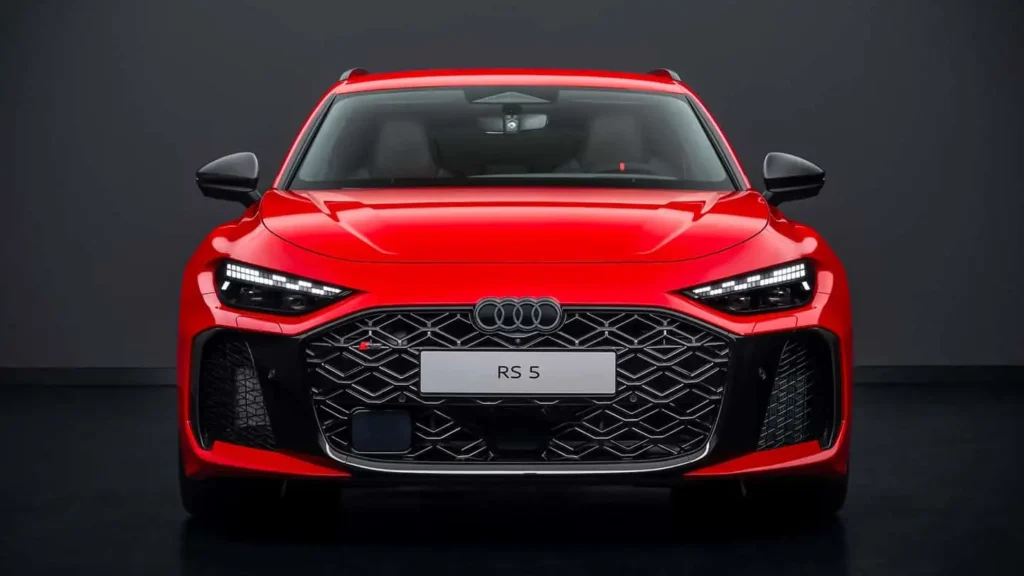
Audi RS5 V6 PHEV 630hp plug-in hybrid sports sedan in red studio shot 2026

Audi RS5 V6 PHEV 630hp Hybrid Performance 2026

13
SHARES
168
VIEWS
Share on FacebookShare on Twitter

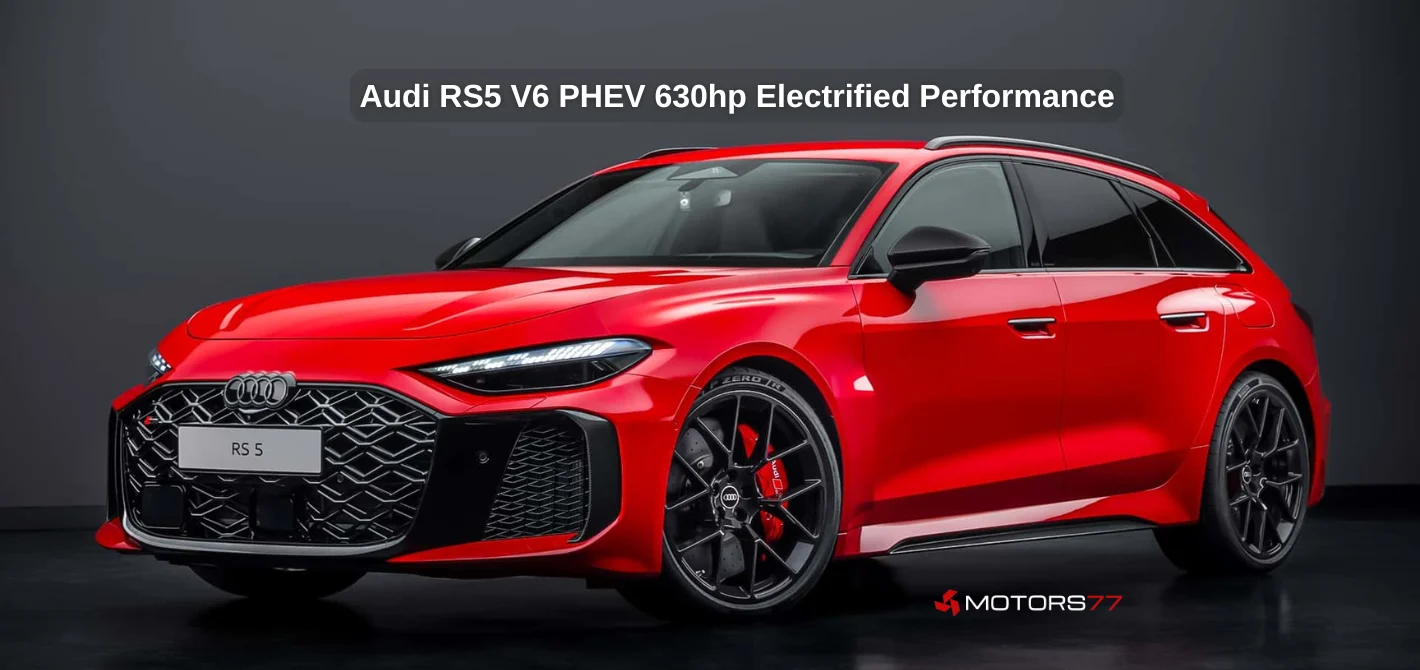
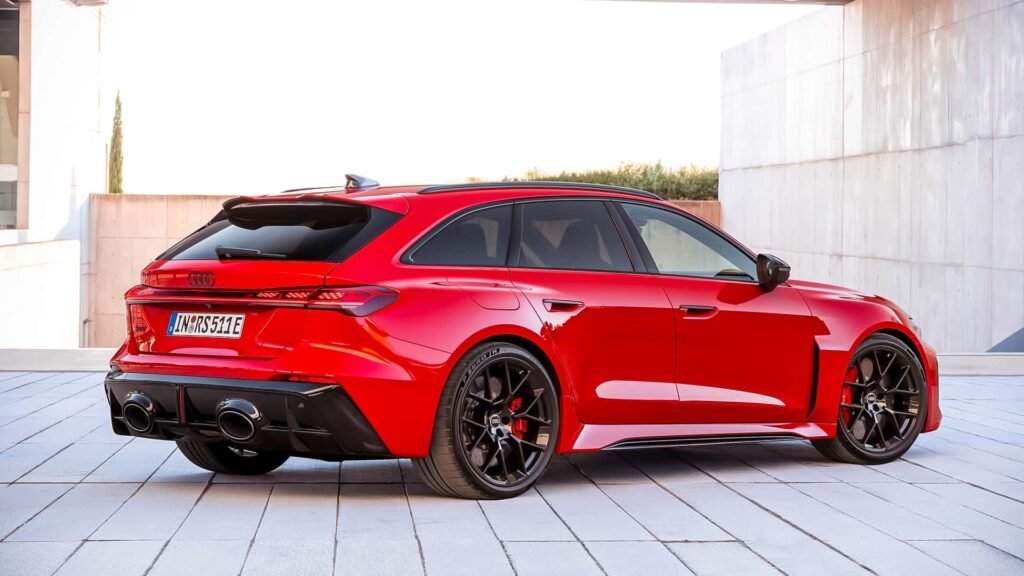
Audi RS5 V6 PHEV enters the performance segment with a thunderous 470kW (630hp) output that eclipses even the mighty RS6’s V8 engine. Officially revealed on February 19, 2026, this electrified successor to the legendary RS4 combines a twin-turbocharged V6 with plug-in hybrid technology, delivering acceleration figures that place it among the fastest compact sports cars ever produced by Audi Sport.
Why the Audi RS5 V6 PHEV Matters Right Now

The automotive industry stands at a crossroads. While Mercedes-AMG controversially downsized to a four-cylinder for the C63, Audi Sport has retained six-cylinder grunt in the RS5 V6 PHEV. This decision speaks volumes about Ingolstadt’s commitment to performance enthusiasts who refuse to compromise on engine character.

You might also like

Hyundai Lounge Edition Launched: The Alcazar Now Costs Rs 90,000 More With Two Fewer Seats

Maruti Suzuki Baleno Facelift First Look: Fewer Cylinders, Less Power, And Why That Trade Works

MG ADAPT Platform Unveiled: Why MG Showed A Chassis When Everyone Expected An SUV

European emissions regulations demanded electrification. Audi’s response proves that compliance and excitement can coexist beautifully.
Audi RS5 V6 PHEV Powertrain Specifications

ComponentSpecification
Engine2.9L Twin-Turbocharged V6
Engine Output375kW (503hp) / 443 lb-ft
Electric Motor130kW (175hp) / 339 lb-ft
Combined System Output470kW (630hp) / 825Nm (608 lb-ft)
Battery Capacity25.9 kWh
Transmission8-Speed Automatic
DrivetrainQuattro AWD with Torque Vectoring

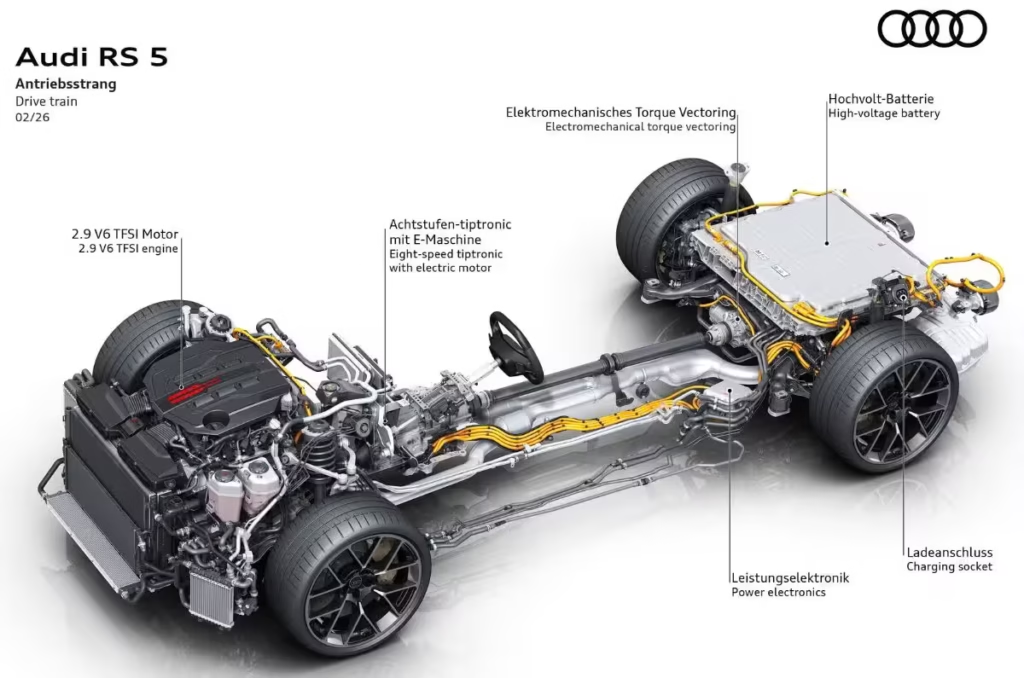
The 2.9-litre twin-turbocharged V6 carries over from the previous RS4 Avant but receives extensive modifications. Approximately 60 percent of components are new, including water-cooled intercoolers (a first for RS models), variable geometry turbos, revised air intake systems, and an upgraded fuel injection system with higher pressure.

Hybrid System Integration

An electric motor resides within the torque-converter 8-speed automatic transmission, replacing the conventional 12-volt starter motor. This integration creates seamless power delivery while enabling the Boost function that unleashes maximum performance on demand.
Audi RS5 V6 PHEV Performance Numbers

MetricFigure
0-100 km/h (0-62 mph)3.6 seconds
Top Speed (Standard)250 km/h (155 mph)
Top Speed (Audi Sport Package)285 km/h (177 mph)
Electric-Only Range87 km (54 miles) WLTP
AC Charging Rate11 kW
Full Charge Time2.5 hours

These acceleration figures position the Audi RS5 V6 PHEV just tenths behind the larger RS6 Avant, despite the significant power difference in combustion engines. The electric motor’s instant torque delivery compensates brilliantly during launches.

Electromechanical Torque Vectoring: A World First

The Audi RS5 V6 PHEV debuts the industry’s first electromechanical torque vectoring system at the rear axle. This system uses a dedicated electric motor, overdrive gears, and differential to shift torque between rear wheels in just 15 milliseconds. The RS Torque Rear mode transforms handling character for track-oriented driving experiences.

Chassis and Suspension Details

ComponentSpecification
Front Brakes (Standard)420mm Steel Discs
Rear Brakes (Standard)400mm Steel Discs
Front Brakes (Optional Carbon Ceramic)440mm
Rear Brakes (Optional Carbon Ceramic)410mm
Standard Wheels20-inch with 285/35 tyres
Optional Wheels21-inch Forged
Steering Ratio13:1
DampersTwin-Valve Adjustable

Twin-valve dampers modulate compression and rebound independently. The faster 13:1 steering rack and sophisticated damping should help mask the considerable kerb weight.

Weight Considerations

VariantKerb Weight
RS5 Sedan2,355 kg
RS5 Avant2,370 kg
RS6 Avant (V8, non-PHEV)2,075 kg

The Audi RS5 V6 PHEV carries approximately 280 kg more than the RS6 Avant with its non-electrified V8, resulting from PHEV hardware and the larger A5 platform.

Design Evolution

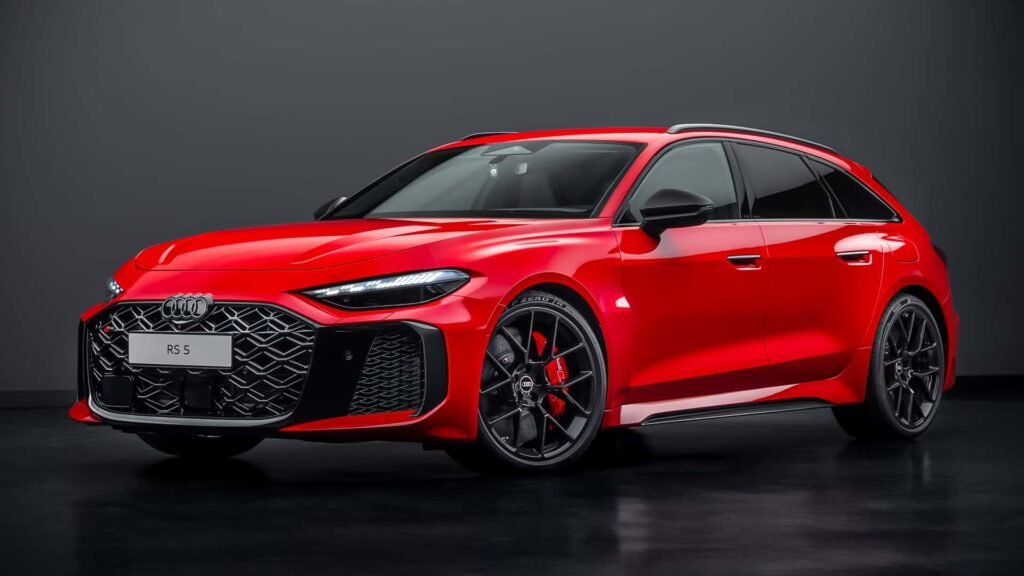
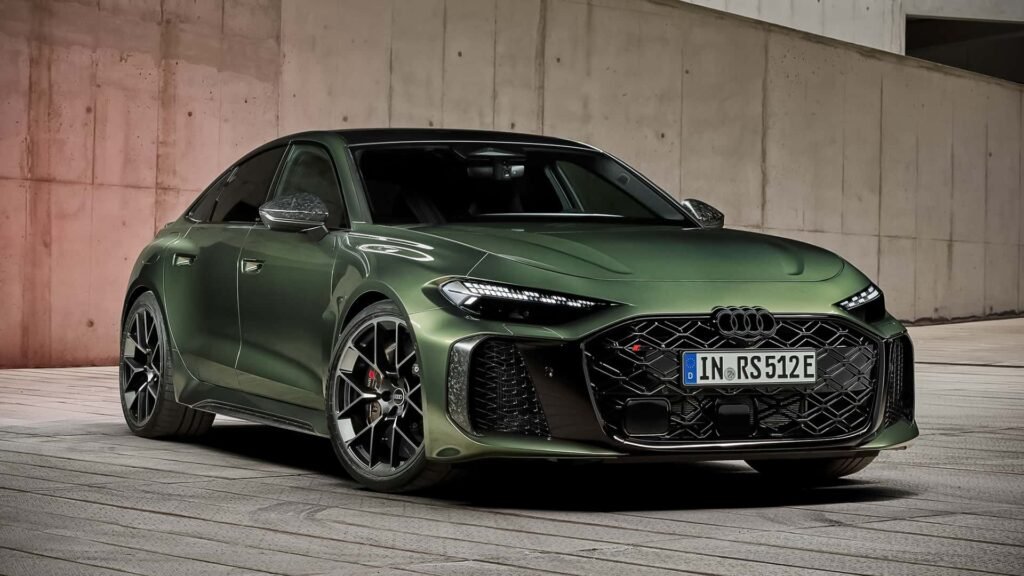
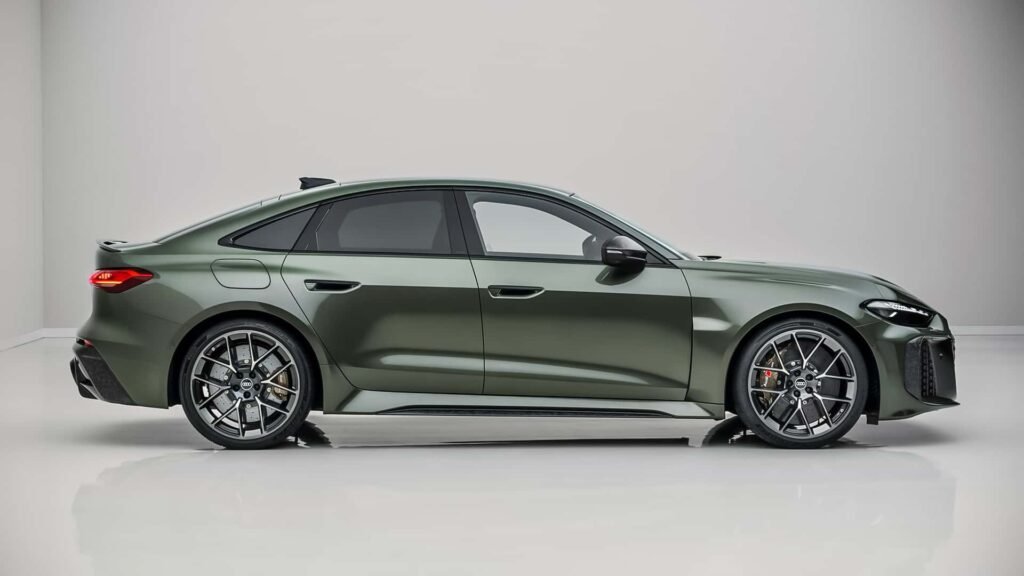
The RS5 wears dramatically flared wheelarches contributing to 90mm additional width over standard A5 models. Unlike BMW’s approach of simply flaring existing panels, Audi replaces rear doors entirely to create cohesive factory-integrated proportions. Visual highlights include the massive trapezoidal grille, functional front-fender air intakes, dual oval exhaust tips within an aggressive rear diffuser, and checkered flag motifs in OLED headlights and taillights.

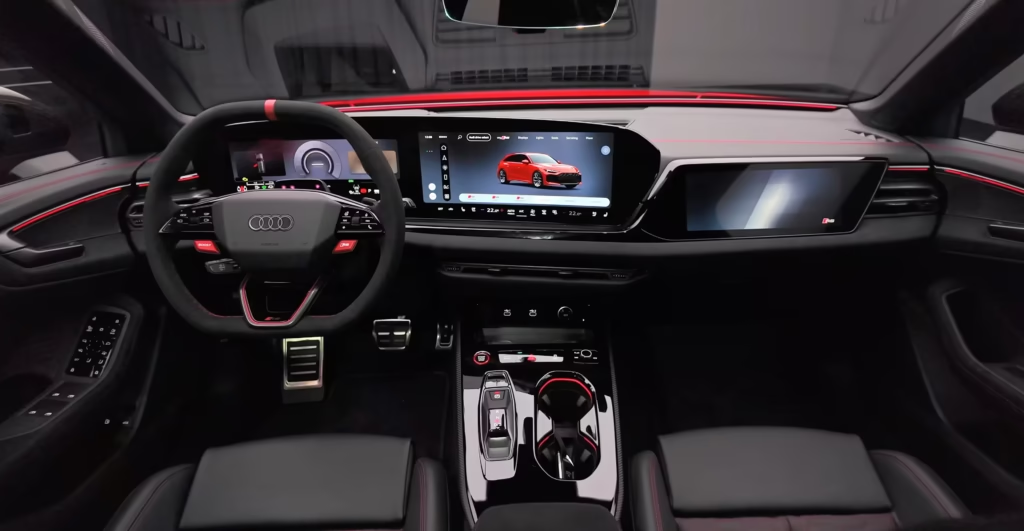
Interior Technology and Features

DisplaySize
Virtual Cockpit11.9 inches
MMI Touchscreen14.5 inches
Passenger Display10.9 inches

The cabin receives deeply bolstered sports seats with honeycomb quilted leather, a flat-bottom steering wheel featuring the Boost button, and extensive red detailing. The Boost button activates maximum output for 10 seconds, instantly engaging the combustion engine while opening exhaust valves.
Audi RS5 V6 PHEV Pricing and Availability

MarketVariantPrice
UKRS5 Sedan£89,400
UKRS5 Avant£91,300
IndiaBoth VariantsTBA

Orders commence summer 2026, with European deliveries expected shortly after. Indian pricing and launch timeline remain unconfirmed. The Audi Sport package adds broader front air intakes, RS sport exhaust with matte black tailpipes, carbon-ceramic brakes, and increases the top speed to 177 mph.

The Carbon Camouflage package offers distinctive forged carbon fibre for front bumper inserts, side sills, mirror caps, and rear diffuser.

Quick Pros and Cons

Advantages

AspectBenefit
V6 RetentionSix-cylinder character preserved unlike rivals
Combined Output630hp exceeds RS6’s V8 power
Electric Range80+ km enables zero-emission commuting
Torque VectoringWorld-first electromechanical system
DesignCohesive widebody styling with new door panels

Disadvantages

AspectConsideration
Weight2,355-2,370 kg significantly heavier than predecessors
Boot SpaceBattery impacts cargo capacity (361L Avant)
DC ChargingAC-only charging limits rapid top-up options
PriceSubstantial increase over outgoing RS4
ComplexityPHEV system adds potential maintenance considerations

Competition Comparison

ModelPower0-100 km/hPrice (UK)
Audi RS5 V6 PHEV630 hp3.6 sec£89,400
BMW M3 Competition510 hp3.9 sec£93,585
Mercedes-AMG C63680 hp3.4 sec£100,935
Alfa Romeo Giulia QV510 hp3.9 sec£80,095

The RS5 positions itself competitively, offering superior character to the four-cylinder AMG C63 while matching BMW’s six-cylinder approach with additional electrified capability.

Driving Modes

Multiple profiles include EV Mode, Hybrid Mode, Dynamic Mode, RS Sport Mode, and RS Torque Rear Mode. Nine exterior colours include Merlin pearl effect, Goodwood green, and Panther black crystal effect.

Frequently Asked Questions

What engine does the RS5 hybrid use?

The RS5 uses a heavily revised 2.9-litre twin-turbocharged V6 petrol engine producing 503 hp on its own. Combined with the 175 hp electric motor, total system output reaches 630 hp (470kW) and 608 lb-ft of torque.

How fast is the new RS5?

The RS5 accelerates from 0-100 km/h in 3.6 seconds. Standard top speed is electronically limited to 250 km/h, while the Audi Sport package increases this to 285 km/h (177 mph).

What is the electric range?

The RS5 offers over 80 kilometres (50 miles) of electric-only range according to WLTP testing, enabling zero-emission commuting capability alongside high-performance motoring.

How much does the RS5 weigh?

The RS5 Sedan weighs 2,355 kg while the Avant variant weighs 2,370 kg. This represents approximately 280 kg more than the non-electrified RS6 Avant, attributed to battery and electric motor hardware.

Does the RS5 support DC fast charging?

No, the RS5 supports AC charging only at a maximum rate of 11 kW. A complete charge requires approximately 2.5 hours. DC fast charging capability is not available on this model.

What is the Boost button?

The Boost button on the steering wheel activates maximum system output (630 hp) for 10 seconds. It functions even in electric mode, instantly starting the combustion engine and opening exhaust valves for immediate full-power acceleration.

When will the Audi RS5 V6 PHEV be available?

Orders open summer 2026 with European deliveries commencing shortly after. US availability includes the sedan variant, while Avant wagon availability remains unconfirmed for North American markets. Indian launch timeline is yet to be announced.

How does the RS5 compare to BMW M3?

The RS5 produces 630 hp versus the M3 Competition’s 510 hp, while both feature six-cylinder engines and all-wheel-drive capability. The RS5 offers additional electric-only driving capability and advanced torque vectoring technology.

What is unique about the torque vectoring system?

The RS5 debuts the world’s first electromechanical torque vectoring system. It uses a dedicated electric motor rather than brake intervention to actively distribute torque between rear wheels regardless of throttle position.

What boot space does the RS5 Avant offer?

The RS5 Avant offers 361 litres with seats upright and 1,302 litres with rear seats folded. The underseat battery placement impacts cargo capacity compared to non-electrified alternatives.

Audi RS5 V6 PHEV India Launch: Will It Happen?

Audi India has not confirmed the RS5 for our market. However, the upcoming India-EU Free Trade Agreement could change the equation. Performance enthusiasts wondering why this model deserves consideration over pending launches like the Q3, Q5, A5, and A6 should understand the fundamental difference.

The RS5 represents a halo product. Low volume, high value, fully imported. Audi requires minimal infrastructure investment compared to volume models needing local assembly. CBU imports of flagship performance cars serve brand-building purposes rather than sales targets.

Should Audi bring the RS5 to India, the debate becomes body style selection. Indian buyers historically favour sedans, yet growing appreciation for lifestyle vehicles could make the Avant equally compelling.

Motors77 believes the RS5 deserves serious India consideration. The V6 character, electric commuting capability, and 630hp performance creates a compelling proposition. Whether Audi India recognises this opportunity remains the unanswered question.

Motors77 Verdict

The Audi RS5 V6 PHEV represents what performance car electrification should achieve. While rivals retreated to four cylinders, Audi Sport preserved six-cylinder character with electrification that enhances rather than compromises the experience.

That 630hp output delivers supercar-rivalling acceleration with genuine zero-emission commuting capability. The world-first torque vectoring system suggests handling sophistication that could offset the weight penalty.

For enthusiasts mourning the combustion era’s decline, the RS5 provides reassurance. This remains an RS car in character, with electrification serving performance rather than regulations.

Motors77 believes the RS5 Avant represents the most compelling proposition, combining estate versatility with supercar-shaming performance.

The Audi RS5 V6 PHEV earns its position among the finest performance hybrids available, proving that electrification and driving excitement need not be mutually exclusive concepts.
Previous Post

Maruti e Vitara Prices Officially Revealed: Full Variant-Wise Price List, BaaS vs Standard, Specs and Verdict

Next Post

Tata Punch EV 2026 Facelift Launched at Rs 9.69 Lakh: Everything You Need to Know

Vyom Patil

Vyom Patil

Founder & Editor-in-Chief at Motors77. A Pune-based automotive enthusiast with over 10 years of experience following the auto industry. Vyom leads Motors77's editorial direction, ensuring accurate, well-researched coverage of cars, bikes, and EVs for Indian readers.

Related Posts

# Hyundai Lounge Edition Launched: The Alcazar Now Costs Rs 90,000 More With Two Fewer Seats The Hyundai Lounge Edition has arrived across the Creta, Creta Electric and Alcazar, and most of the coverage is leading with the 11.6 inch screen bolted to the back of the front seats. Fair enough. But the number worth pausing on sits in the Alcazar's price list. The Alcazar Lounge Edition costs Rs 21.81 lakh, ex-showroom. That is Rs 71,000 more than the six seat Signature it is based on, and Rs 90,000 more than the seven seat Signature. And the Lounge Edition has five seats. Hyundai is charging you almost a lakh extra to take the third row out of a three row SUV. That sounds absurd until you understand why it might be the smartest thing in this entire launch. ## Hyundai Lounge Edition price, model by model The Hyundai Lounge Edition is a features and styling package applied to the top trim of each SUV. Nothing mechanical changes anywhere in the range. | Creta Lounge Edition | Price, ex-showroom | | --- | --- | | 1.5 petrol iVT | Rs 19.22 lakh | | 1.5 petrol iVT, dual tone | Rs 19.37 lakh | | 1.5 diesel AT | Rs 20.31 lakh | | 1.5 diesel AT, dual tone | Rs 20.46 lakh | | Alcazar and Creta Electric | Price, ex-showroom | | --- | --- | | Alcazar Lounge, 1.5 diesel AT | Rs 21.81 lakh | | Alcazar Lounge, dual tone | Rs 21.96 lakh | | Creta Electric Lounge | From Rs 24.34 lakh | | Creta Electric Lounge, top configuration | Rs 25.22 lakh | Each Hyundai Lounge Edition sits on a specific donor trim. The Creta version is built on the King trim and comes only with automatics, either the 1.5 litre MPi petrol with the iVT or the 1.5 litre CRDi diesel with a torque converter. The Alcazar Lounge is based on the Signature trim and is diesel automatic only. The Creta Electric Lounge uses the Excellence Long Range variant with the 51.4 kWh battery, and can be had with or without the home charger. The premiums tell you what Hyundai thinks each Hyundai Lounge Edition package is worth. The Creta Lounge asks Rs 53,000 over the equivalent King variant, the same on both powertrains. The Creta Electric Lounge asks Rs 67,000 over the Excellence Long Range. The Alcazar asks Rs 71,000 over the six seater and Rs 90,000 over the seven seater. Every figure above is ex-showroom. On road prices will land considerably higher once road tax, registration and insurance are added, and by how much depends heavily on your state, so treat these as the base of the calculation rather than the total. ## What the money buys The centrepiece of every Hyundai Lounge Edition is a 29.46 cm, or 11.6 inch, rear seat entertainment screen. This is not a mirrored display for the front infotainment. It runs OTT video streaming, gaming and apps through a certified app store, and supports phone mirroring on top. Audio runs through the existing eight speaker Bose system with a front centre speaker and a subwoofer. Inside, the Hyundai Lounge Edition adds an all black dashboard with silver inserts on the air conditioning vents, Moonwhite ambient lighting, a new seat upholstery pattern and rear headrest cushions with Lounge branding. Outside, every Hyundai Lounge Edition gets a new Golden Bronze paint option and a blacked out treatment covering the front and rear skid plates, side sill garnish, rear spoiler, roof rails, C-pillar garnish and mirrors. The Creta and Alcazar get 18 inch matte black alloys, the Creta Electric 17 inch black aero wheels. Two models get something extra. The Alcazar Lounge adds a voice enabled smart panoramic sunroof alongside its five seat layout. The Creta Electric Lounge adds a factory fitted dashcam and a rear wireless charger. ## Why does this matter? Here is the gap between the launch messaging and the fuller picture. Hyundai is presenting the Hyundai Lounge Edition as a rear seat entertainment package. The screen is the hero of every press image. But the screen is available on all three SUVs, which makes it the least interesting thing here. The Alcazar's missing third row is the actual news. Think about the third row in a compact three row SUV. It eats boot capacity permanently in exchange for seating that adults generally find cramped and that many owners use only occasionally. For a buyer drawn to the Alcazar's larger footprint, road presence and second row space rather than its seat count, that trade has never been a good one. Hyundai has now built exactly that car and priced it accordingly. The Alcazar Hyundai Lounge Edition is the result. Removing the third row frees genuine luggage space, and the second row becomes the focus rather than a waypoint. Add the panoramic sunroof, the rear screen and the ambient lighting, and the Alcazar Lounge is aimed squarely at the buyer who sits in the back, or who has a family of four and wants space rather than seat count. That is a meaningful read of the Indian market. The rear seat focused buyer, whether chauffeur driven or simply someone whose family lives in the back, has generally had to look at more expensive SUVs for this kind of package. Hyundai is now serving that customer at Rs 21.81 lakh, ex-showroom, in a familiar badge. The Rs 90,000 premium over the seven seater is not really a charge for removing seats. It is the price of the equipment, and the seat deletion is what makes the equipment make sense. There is a second, less comfortable consequence of the Hyundai Lounge Edition strategy. A five seat Alcazar competes directly with Hyundai's own Creta. The Creta Lounge Edition costs Rs 19.22 lakh with the same rear screen, the same interior treatment and the same blacked out styling. Spend Rs 2.59 lakh more and you get a longer car with more rear legroom, more boot space and the sunroof, but the same number of seats and the same basic experience. Hyundai has created a genuine internal decision for buyers, and how that plays out will be interesting to watch in the monthly numbers. ## The equipment question nobody is asking Worth being clear about what the Hyundai Lounge Edition does not change. There is no mechanical revision anywhere. The 1.5 litre petrol and diesel engines carry over exactly as they are, the Creta Electric keeps its 51.4 kWh battery and long range tune, and suspension, brakes and steering are untouched across all three. Every Hyundai Lounge Edition also sits on a top trim, which means the safety and driver assistance equipment is whatever those trims already carried. Nothing has been added on that front, and nothing has been taken away. If you were hoping a premium edition might bring extra active safety hardware down the range, this is not that launch. For the money, the rear screen is a substantial piece of kit rather than a token. An 11.6 inch display with independent app and streaming capability is genuinely useful on long drives with children, and it is the sort of feature that has until recently belonged to cars costing considerably more. Whether it is worth Rs 53,000 on a Creta depends entirely on how often your back seat is occupied. ## Quick Pros and Cons **Pros** - Five seat Alcazar finally answers buyers who wanted space over seat count - Genuinely capable 11.6 inch rear screen with streaming, gaming and app support - Paired with the existing eight speaker Bose system rather than a cheaper setup - New Golden Bronze paint and a well judged blacked out exterior treatment - Creta Electric Lounge adds a factory dashcam and rear wireless charger - Alcazar Lounge gains a voice enabled smart panoramic sunroof **Cons** - Rs 90,000 more than a seven seat Alcazar Signature, with two fewer seats - No mechanical, safety or driver assistance improvements anywhere - Restricted to the top trims and automatic powertrains only - The five seat Alcazar competes closely with Hyundai's own Creta Lounge - Creta Lounge Edition is not offered with a manual gearbox ## Frequently Asked Questions **1. What is the Hyundai Lounge Edition price?** The Creta Lounge Edition starts at Rs 19.22 lakh, the Alcazar Lounge Edition at Rs 21.81 lakh and the Creta Electric Lounge Edition at Rs 24.34 lakh. The range tops out at Rs 25.22 lakh, all ex-showroom. **2. Why does the Alcazar Lounge Edition have only five seats?** Hyundai has removed the third row to prioritise second row space and luggage capacity. The regular Alcazar continues to be offered in six and seven seat layouts, so the five seat configuration is exclusive to the Lounge Edition. **3. How much more does the Lounge Edition cost?** The Creta Lounge is Rs 53,000 above the equivalent King variant, the Creta Electric Lounge is Rs 67,000 above the Excellence Long Range, and the Alcazar Lounge is Rs 71,000 above the six seat Signature or Rs 90,000 above the seven seat Signature. **4. What is the rear seat entertainment system?** An 11.6 inch screen for second row passengers that supports OTT video streaming, gaming, phone mirroring and apps through a certified app store. It works with the existing eight speaker Bose audio system. **5. Which engines are offered?** The Creta Lounge gets the 1.5 litre petrol with iVT or the 1.5 litre diesel automatic. The Alcazar Lounge is diesel automatic only. The Creta Electric Lounge uses the 51.4 kWh Excellence Long Range powertrain. **6. Is there any performance change?** No. Every Hyundai Lounge Edition carries over its powertrain unchanged from the donor variant, with no revisions to suspension, brakes or steering. **7. What colour options are there?** A new Golden Bronze shade joins the palette on every Hyundai Lounge Edition, with the existing colours continuing. Dual tone versions are offered at a premium of roughly Rs 15,000. ## Motors77 Verdict The Hyundai Lounge Edition is being sold as a screen, and it should be sold as a seat count. The 11.6 inch rear display is good, and putting real streaming and app capability in the second row of a Rs 19 lakh SUV is a genuine step forward. But it appears on all three models, which makes it a feature rather than a story. The story is that Hyundai looked at its three row SUV, concluded that a meaningful chunk of buyers never wanted the third row, and built them a version without it. That is a confident piece of product thinking. The five seat Alcazar Lounge occupies a space above the Creta Lounge that nothing else in the range covers, pairing a larger body and more generous rear quarters with a panoramic sunroof and a boot no longer compromised by folded seats. It lands at Rs 21.81 lakh, ex-showroom, in a market where that kind of rear seat focus usually costs more. If Hyundai has read demand correctly, this variant could outperform expectations. The reservations are straightforward. Paying Rs 90,000 above a seven seat Alcazar to receive five seats will look strange on a showroom board no matter how sound the logic underneath, and Hyundai will need its salespeople to explain the equipment rather than the arithmetic. There is no mechanical or safety upgrade to soften the premium. And the Creta Lounge sitting Rs 2.59 lakh below with much the same cabin experience means Hyundai is now competing with itself in a way it will have to manage. If your back seat is regularly occupied, the Hyundai Lounge Edition makes a strong case, and the Alcazar version makes the strongest one. If it is not, you are paying a considerable premium for a screen nobody will watch. --- ## RankMath SEO Block **Focus Keyword:** Hyundai Lounge Edition **SEO Title:** Hyundai Lounge Edition Launched: Creta, Creta Electric And Alcazar Prices, Features **Permalink/URL:** hyundai-lounge-edition-creta-alcazar-price-features **Meta Description:** Hyundai Lounge Edition launched for Creta, Creta Electric and Alcazar from Rs 19.22 lakh. Full prices, the 11.6 inch rear screen and the new five seat Alcazar explained. **Tags:** Hyundai Lounge Edition, Hyundai Creta price, Alcazar five seater, Creta Electric, rear seat entertainment, Hyundai India, Creta Lounge Edition, Alcazar Lounge Edition **Category:** Car News, New Launches --- ## WordPress Banner Image Block **Alt Text:** Hyundai Lounge Edition launched for Creta, Creta Electric and Alcazar with an 11.6 inch rear seat entertainment screen **Title:** Hyundai Lounge Edition Launched For Creta, Creta Electric And Alcazar **Caption:** The Hyundai Lounge Edition brings an 11.6 inch rear screen, blacked out styling and a new five seat Alcazar layout, priced from Rs 19.22 lakh. **Description:** Hyundai Motor India has launched the Lounge Edition across the Creta, Creta Electric and Alcazar, priced from Rs 19.22 lakh to Rs 25.22 lakh, ex-showroom. Every version gains a 29.46 cm rear seat entertainment screen with OTT streaming and gaming, Moonwhite ambient lighting, Lounge branded upholstery, a new Golden Bronze paint option and blacked out exterior detailing. The Alcazar Lounge Edition is the most significant, swapping the six and seven seat layouts for an exclusive five seat configuration with a voice enabled smart panoramic sunroof.

Hyundai Lounge Edition Launched: The Alcazar Now Costs Rs 90,000 More With Two Fewer Seats

by Vyom Patil
September 10, 2026
0

The Hyundai Lounge Edition has arrived across the Creta, Creta Electric and Alcazar, and most of the coverage is leading...

Maruti Suzuki Baleno facelift 2026 launched in India at Rs 6.10 lakh with a new Z12E three cylinder engine and Level 2 ADAS

Maruti Suzuki Baleno Facelift First Look: Fewer Cylinders, Less Power, And Why That Trade Works

by Vyom Patil
September 8, 2026
0

The Baleno facelift has arrived at Rs 6.10 lakh, ex-showroom, and buried inside the launch is a fact Maruti has...

MG ADAPT platform unveiled in India, a multi energy architecture supporting EV, hybrid, plug in hybrid and range extender powertrains

MG ADAPT Platform Unveiled: Why MG Showed A Chassis When Everyone Expected An SUV

by Vyom Patil
July 17, 2026
0

Everyone watching JSW MG Motor India on 16 July 2026 expected a car. Spy shots of the Starlight based EV...

Renault Duster Adventure Edition in Stealth Black with Leh coordinate contour decals, launched in India at Rs 12.99 lakh

Renault Duster Adventure Edition Launched At Rs 12.99 Lakh: Renault Just Quietly Deleted The Techno

by Vyom Patil
July 14, 2026
0

The Renault Duster Adventure Edition has been launched in India at Rs 12.99 lakh, ex-showroom, and on the surface it...

Next Post
Tata Punch EV 2026 facelift launched at ₹9.69 lakh showing three colour variants in India

Tata Punch EV 2026 Facelift Launched at Rs 9.69 Lakh: Everything You Need to Know

Related Post

Royal Enfield Bullet 650 showcased at Motoverse 2025 on display platform

Royal Enfield Bullet 650 Makes India Debut at Motoverse 2025: The Legend Gets Twin Power

November 21, 2025
Citroen C3 Aircross Achieves 5-Star Bharat NCAP Safety Rating

Citroen C3 Aircross Achieves 5-Star Bharat NCAP Safety Rating: Full Fact Sheet & Analysis

October 14, 2025
Volkswagen Taigun colors and variants guide 2026 showing red Taigun SUV front view

Volkswagen Taigun Colors and Variants: Complete Guide 2026

April 10, 2026

Category

  • Bike
  • BIKES
  • Car
  • CARS
  • ELECTRIC
  • Electric Bikes
  • Electric Cars
  • Features
  • India Bike News
  • India Car News
  • International Bike News
  • International Car News
  • New Bike Launches
  • New Car Launches
  • REVIEWS
  • Upcoming Bikes
  • Upcoming Cars

Tags

acti.ev+ Avinya Bajaj Triumph Baleno 2026 Baleno ADAS Baleno facelift Baleno price Bonneville 400 price Hyundai Creta Electric Mahindra BE 6 Maruti Suzuki Baleno premium hatchback India retro motorcycle Royal Enfield Classic 350 Safari EV Sierra EV Tata EV Tata EV portfolio Tata Motors Tata Motors FY31 Tata new cars Tata Sierra EV Tata Sierra EV price Tata Sierra EV variants Triumph 400 series Triumph Bonneville 400 Z12E engine

About

Motors77.com Brings You the Latest Automotive News, Expert Reviews, and Market Insights. Explore Cars, Bikes, and EV Trends | Driving Your Passion for Motoring Forward.

Categories

  • BIKES
    • India Bike News
    • International Bike News
    • New Bike Launches
    • Upcoming Bikes
  • CARS
    • India Car News
    • International Car News
    • New Car Launches
    • Upcoming Cars
  • ELECTRIC
    • Electric Bikes
    • Electric Cars
  • REVIEWS
    • Bike
    • Car
    • Features

Browse by Tag

acti.ev+ Avinya Bajaj Triumph Baleno 2026 Baleno ADAS Baleno facelift Baleno price Bonneville 400 price Hyundai Creta Electric Mahindra BE 6 Maruti Suzuki Baleno premium hatchback India retro motorcycle Royal Enfield Classic 350 Safari EV Sierra EV Tata EV Tata EV portfolio Tata Motors Tata Motors FY31 Tata new cars Tata Sierra EV Tata Sierra EV price Tata Sierra EV variants Triumph 400 series Triumph Bonneville 400 Z12E engine

Recent Posts

  • Hyundai Lounge Edition Launched: The Alcazar Now Costs Rs 90,000 More With Two Fewer Seats
  • Maruti Suzuki Baleno Facelift First Look: Fewer Cylinders, Less Power, And Why That Trade Works
  • Home
  • About US
  • Contact Us
  • Privacy Policy
  • Terms & Conditions

Copyright © 2026 Motors77. All rights reserved.

No Result
View All Result
  • Home
  • CARS
    • India Car News
    • International Car News
    • New Car Launches
    • Upcoming Cars
  • BIKES
    • India Bike News
    • International Bike News
    • New Bike Launches
    • Upcoming Bikes
  • ELECTRIC
    • Electric Cars
    • Electric Bikes
  • REVIEWS
    • Bike
    • Car
    • Features
    • Fuel Cost Calculator

Copyright © 2026 Motors77. All rights reserved.

This website uses cookies to improve your experience. By continuing to use this website, you consent to the use of cookies. Visit our Privacy and Cookie Policy.