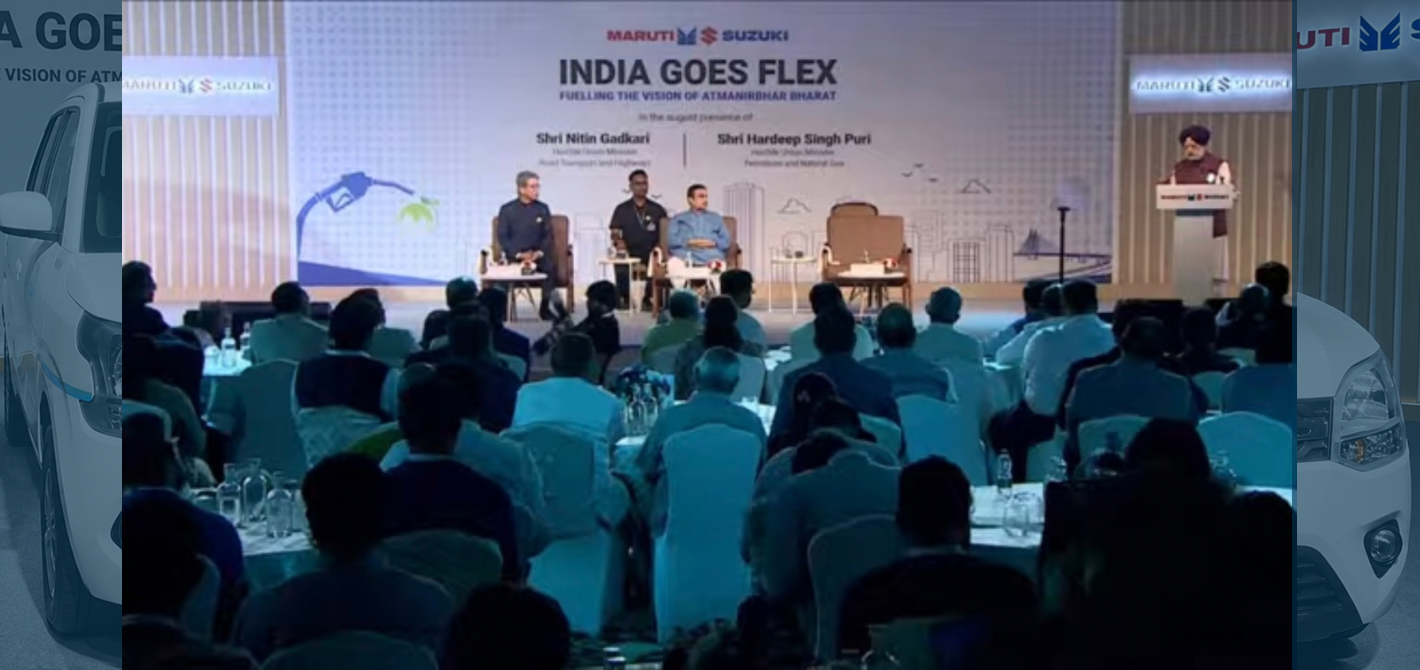
The Maruti WagonR Flex Fuel has been unveiled, and with it India finally has its first flex fuel passenger car from a mainstream carmaker. Maruti Suzuki revealed the WagonR Flex Fuel on June 4, 2026, a day before World Environment Day, in the presence of Union Ministers Nitin Gadkari and Hardeep Singh Puri. The big headline is the fuel flexibility: the car can run on ethanol blends all the way from E20 to E100, and is officially homologated for E85, or 85 percent ethanol.
This is a genuine milestone for the Indian car market, because until now not a single flex fuel passenger vehicle had been formally introduced by an Indian manufacturer. Here is everything that was revealed about the Maruti WagonR Flex Fuel, what is still unknown, and what it means for buyers.
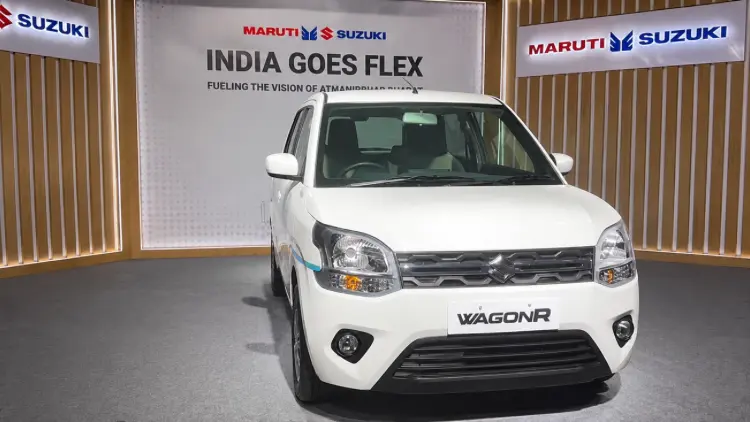
Maruti WagonR Flex Fuel: What Was Revealed
The unveiling confirmed the model and its fuel capability, while leaving the full technical details for later.
| Detail | Information |
|---|---|
| Model | Maruti WagonR Flex Fuel |
| Unveiled | June 4, 2026, in New Delhi |
| Status | Unveiled, not yet on sale |
| Fuel compatibility | E20 to E100 |
| Homologated for | E85 |
| Price | Not announced |
| Present at reveal | Nitin Gadkari and Hardeep Singh Puri |
By formally introducing the WagonR Flex Fuel, Maruti became the first passenger vehicle maker in India to bring a flex fuel car to the public, beyond the prototype stage. A flex fuel WagonR had been shown earlier at the Bharat Mobility Global Expo, but this reveal marks the step from concept to a production ready car.
A Showcase, Not Yet A Sale
One important point to be clear about: this was an unveiling, not a full market launch. Maruti has not announced a price for the WagonR Flex Fuel, and the car is not yet on sale. The company has been honest that flex fuel volumes will be small to begin with. Senior Maruti executive Rahul Bharti recently described it as a futuristic plan, saying meaningful volumes are likely only five to ten years from now, not immediately.
In other words, the WagonR Flex Fuel is a statement of intent and readiness, signalling that Maruti has the technology when the fuel and the demand catch up. An on sale date and pricing are expected to follow once the ethanol pump network is more widely in place.
What Flex Fuel And E85 Mean
A flex fuel car can run on petrol, ethanol, or any blend of the two from the same tank, automatically adjusting to whatever is in the tank. India currently uses an E20 blend as standard, but the WagonR Flex Fuel goes far beyond that.
| Blend | Ethanol Content | Note |
|---|---|---|
| E20 | 20 percent | Current India standard |
| E85 | 85 percent | What the WagonR is homologated for |
| E100 | 100 percent | Maximum the car can handle |
The key takeaway is that the car is certified for E85, meaning it is officially approved to run on fuel that is up to 85 percent ethanol, while remaining compatible right up to E100. Ethanol is made from crops like sugarcane and corn, so every litre used is a litre of imported crude oil saved.
Maruti WagonR Flex Fuel: Specifications
This is where buyers will have to be patient. Maruti did not share the full technical specifications at the reveal, so power, torque, mileage and price all remain officially unconfirmed. What we can say is based on the standard WagonR and the nature of flex fuel engines, and should be treated as expected rather than confirmed.
The WagonR Flex Fuel keeps the familiar tallboy hatchback body, with flex fuel badging to set it apart. The standard WagonR is offered with 1.0 litre and 1.2 litre K series petrol engines, and the flex fuel model is expected to be based on one of these, suitably modified. Under the bonnet, the petrol engine has been reworked to cope with high ethanol blends. Because ethanol is more corrosive and absorbs moisture more easily than petrol, flex fuel engines need upgraded fuel lines, injectors and seals, along with revised engine calibration and a cold start system. Buyers should also expect a drop in fuel efficiency on high ethanol blends, since ethanol carries less energy per litre than petrol, a trade off offset by ethanol’s lower cost and cleaner running.
The Ethanol Infrastructure Push
A flex fuel car is only as useful as the fuel you can buy, and this was a major theme at the reveal. Petroleum Minister Hardeep Singh Puri laid out a clear rollout plan for ethanol dispensing outlets.
| Timeline | Planned Ethanol Outlets |
|---|---|
| To begin with | 50 to 100 (Delhi NCR and the Mumbai, Pune, Nagpur corridor) |
| By December 2026 | Around 500 |
| By end of 2027 | Around 5,000 across major cities |
This phased expansion is crucial. Without enough pumps selling high ethanol blends, a flex fuel car simply runs on regular petrol, which defeats the purpose. The government’s target of roughly 5,000 outlets within about two years is what will decide whether flex fuel becomes practical for everyday owners.
Why The WagonR Flex Fuel Matters
Choosing the WagonR for this milestone is no accident. It is one of Maruti’s highest selling hatchbacks with a huge, urban, value focused customer base, exactly the kind of mass market car that can take a new fuel technology mainstream if the conditions are right. A premium, low volume model would have made headlines, but a WagonR Flex Fuel has the potential to actually put ethanol cars into ordinary driveways once the fuel network grows.
The bigger picture is India’s drive to cut its dependence on imported crude oil and reduce pollution. Flex fuel sits alongside electric vehicles as a cleaner option, but with one big advantage: it works with existing engines and does not need a charging network, only ethanol at the pump. For buyers who are not ready to go fully electric, a flex fuel car offers a greener path without changing how they refuel or drive.
It also puts pressure on the rest of the industry. Gadkari noted that around a dozen carmakers, including Mahindra, Tata Motors and Toyota, have flex fuel vehicles in development, so Maruti moving first with a mass market model could accelerate the whole shift.
Quick Pros & Cons
Here is the honest snapshot of what the WagonR Flex Fuel brings.
Pros
- India’s first flex fuel passenger car from a mainstream brand.
- Runs on anything from E20 to E100, homologated for E85.
- Uses cleaner, home grown ethanol and cuts oil imports.
- Works with existing engines, no charging network needed.
- Based on the proven, practical and popular WagonR.
Cons
- Not yet on sale, and no price has been announced.
- Lower fuel efficiency on high ethanol blends.
- Very few ethanol pumps available right now.
- Full specifications are still unconfirmed.
Maruti WagonR Flex Fuel: Frequently Asked Questions
1. Has the Maruti WagonR Flex Fuel launched?
The WagonR Flex Fuel was unveiled on June 4, 2026, but it is not yet on sale. Maruti has not announced a price or an on sale date.
2. What fuel can the WagonR Flex Fuel run on?
It can run on ethanol blends from E20 all the way to E100, and is officially homologated for E85, meaning it is certified to run on up to 85 percent ethanol.
3. Is the WagonR Flex Fuel India’s first flex fuel car?
Yes. It is the first flex fuel passenger vehicle formally introduced by a mainstream carmaker in India, going beyond the prototype stage.
4. How much will the WagonR Flex Fuel cost?
Maruti has not revealed a price yet. Adapting a car for high ethanol blends is estimated to add some cost, but nothing official has been confirmed.
5. Will the WagonR Flex Fuel give lower mileage?
Likely yes on high ethanol blends, because ethanol contains less energy than petrol. The hope is that cheaper ethanol offsets the higher consumption.
6. Where can I buy ethanol fuel for it?
The government plans to start with 50 to 100 ethanol outlets, expanding to around 500 by December 2026 and roughly 5,000 across major cities by the end of 2027.
7. Is flex fuel better than an electric car?
They suit different buyers. Flex fuel needs no charging network and works with existing engines, while an EV is cleaner and cheaper to run if you can charge it. Flex fuel is a useful bridge for those not ready for an EV.
Motors77 Verdict
The unveiling of the Maruti WagonR Flex Fuel is a landmark moment for the Indian car market, even if it is a beginning rather than a finished product. By putting a flex fuel engine into one of its best selling, most affordable hatchbacks, Maruti has signalled that ethanol is ready for the mainstream, and that it intends to lead the shift rather than follow it. The E20 to E100 capability, with E85 homologation, is genuinely impressive for a mass market car.
The honest reality, which Maruti itself has acknowledged, is that this is an early step. The car is not on sale, there is no price, and the network of ethanol pumps is still tiny. The lower mileage on high ethanol blends is the consumer catch, and real world adoption will depend entirely on how quickly those promised 5,000 outlets arrive and how attractively ethanol is priced against petrol.
At Motors77, our verdict is that the WagonR Flex Fuel is a smart, forward looking move that deserves attention, even if its time has not fully come. It proves India’s shift to cleaner fuels is moving from talk to metal. We will update this story with full specifications and pricing the moment Maruti confirms them, so check back as the WagonR Flex Fuel moves from showcase to showroom.