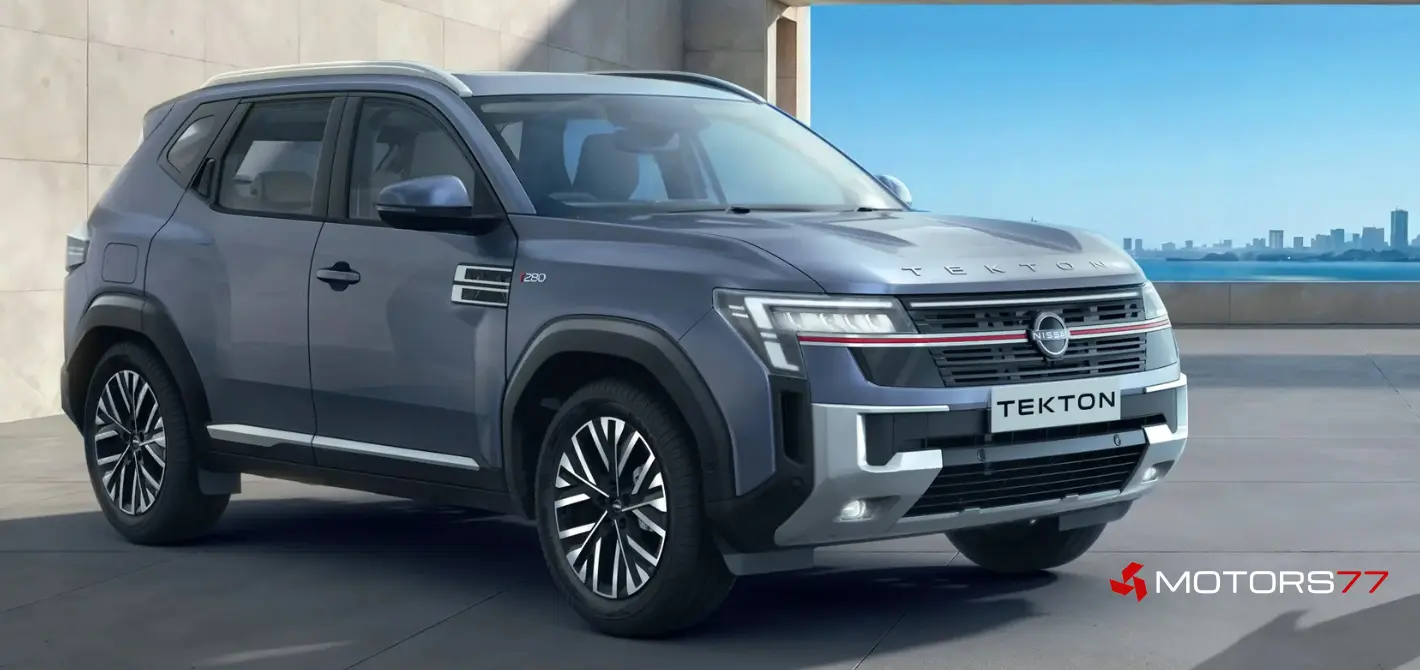
The Nissan Tekton has finally launched in India, priced from ₹10.49 lakh to ₹18.59 lakh, ex-showroom, and it is far more important than a single new SUV usually is. For a brand that has spent years surviving in India on budget models alone, the Tekton is a statement of intent, Nissan’s first serious step into the country’s richest, most fiercely fought segment, the mid size SUV. Nissan is even calling it the Baby Patrol, and while the styling borrows that legend’s face, the real story is what this car means for the company’s future.
Built on the Renault Duster’s bones but given a bold identity of its own, the Nissan Tekton arrives with turbo petrol power, a five star safety rating and a loaded cabin, but no hybrid. That single decision, along with the aggressive pricing and Nissan’s global export ambitions, tells you exactly why this launch matters. Here is the full picture, and why the Tekton could decide whether Nissan stays relevant in India.
Nissan Tekton: the key facts at launch
| Aspect | Detail |
|---|---|
| Price | ₹10.49 lakh to ₹18.59 lakh, ex-showroom (introductory) |
| Variants | 12, across two engines |
| Engines | 1.0 litre turbo petrol, 1.3 litre turbo petrol |
| Gearbox | 6 speed MT, 6 speed DCT (1.3 litre only) |
| Hybrid | Not offered, confirmed |
| Platform | Renault Duster based, made in Chennai |
| Seating | Five, with a seven seat model due in 2027 |
| Safety | Five star Bharat NCAP |
| Bookings | Open at ₹21,000 token, deliveries from 20 July |
The full trim and price ladder
The Tekton comes in six trims, Visia, Visia+, Acenta, N-Connecta, Tekna and Tekna+, each offered with the turbo petrol engines. These are the special introductory ex-showroom prices for the 1.0 litre versions.
| Variant | Key features | Starting price (ex-showroom) |
|---|---|---|
| Visia | 7 inch TFT cluster, R17 wheels, height adjustable driver seat | ₹10.49 lakh |
| Visia+ | LED headlamps with DRL, 9 inch infotainment, front skid plates | ₹11.14 lakh |
| Acenta | Signature LED taillamps, cruise control, rear wiper and defogger, 60:40 split seats | ₹11.79 lakh |
| N-Connecta | R18 alloys, connected LED lamps, roof rails, semi leather seats | ₹13.69 lakh |
| Tekna | R18 premium alloys, 10.1 inch infotainment, paddle shifters and auto hold EPB (DCT) | ₹15.39 lakh |
| Tekna+ | 10.1 inch Google built in screen, 10.25 inch TFT cluster, ventilated leather seats, 3D around view monitor | ₹16.49 lakh |
The 1.3 litre T280 versions cost more, with the top Tekna+ DCT topping the range at ₹18.59 lakh. At ₹10.49 lakh, the Nissan Tekton matches its Renault Duster sibling exactly and undercuts the Hyundai Creta and Kia Seltos on entry price, a smart way to buy attention in a crowded segment.
Engines, and the no hybrid gamble
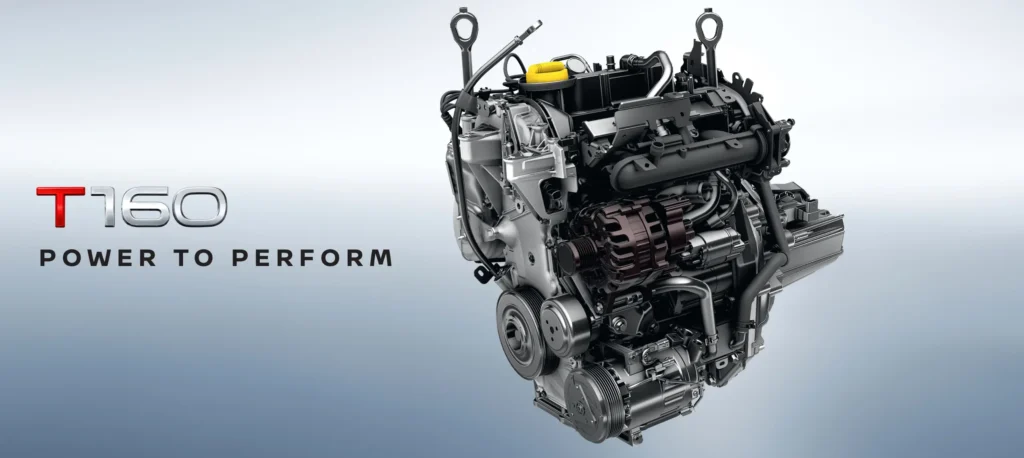
The Tekton comes with two turbo petrol engines shared with the Duster. The entry 1.0 litre T160 turbo petrol produces around 100 PS and 166 Nm, paired only with a six speed manual. The stronger 1.3 litre T280 turbo petrol makes around 160 PS and 280 Nm, and can be had with a six speed manual or a six speed DCT automatic.
The bigger talking point is what is missing. Nissan has confirmed the Tekton will not get the 1.8 litre E-Tech strong hybrid that the Renault Duster receives this festive season. This is a deliberate strategic choice, not an oversight. By keeping the hybrid exclusive to the Duster, the Renault Nissan alliance separates the value propositions of two otherwise closely related cars, giving the Duster a clear technological headline and leaving the Tekton to compete on design, features and price.
It is a calculated gamble. In a market where the Maruti Grand Vitara and Toyota Hyryder are winning buyers with strong hybrid efficiency, launching a fresh mid size SUV without any electrified option is a real risk. Nissan is betting that the Tekton’s styling, equipment and sharp pricing will matter more to its target buyer than fuel bills. Whether that bet pays off is the single most interesting question hanging over this launch.
Design and features: the Baby Patrol look
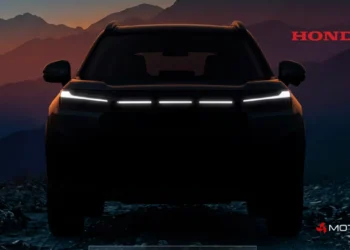
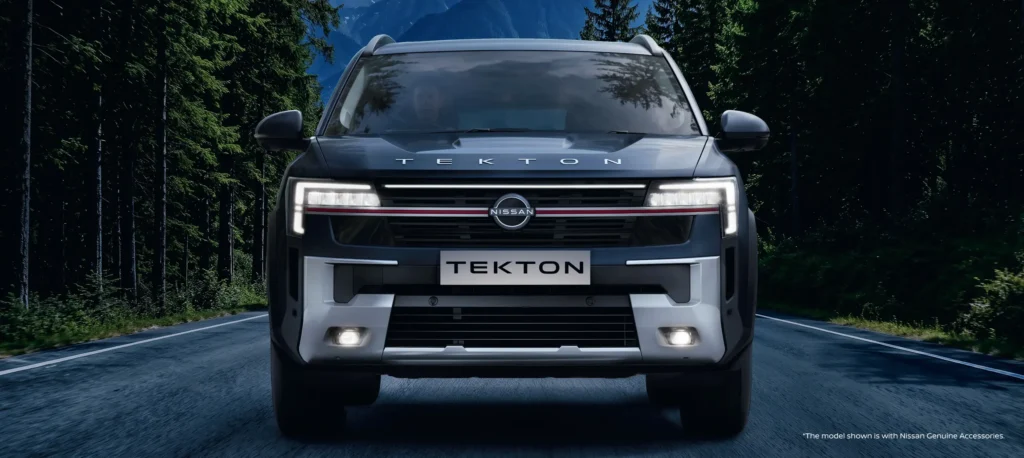
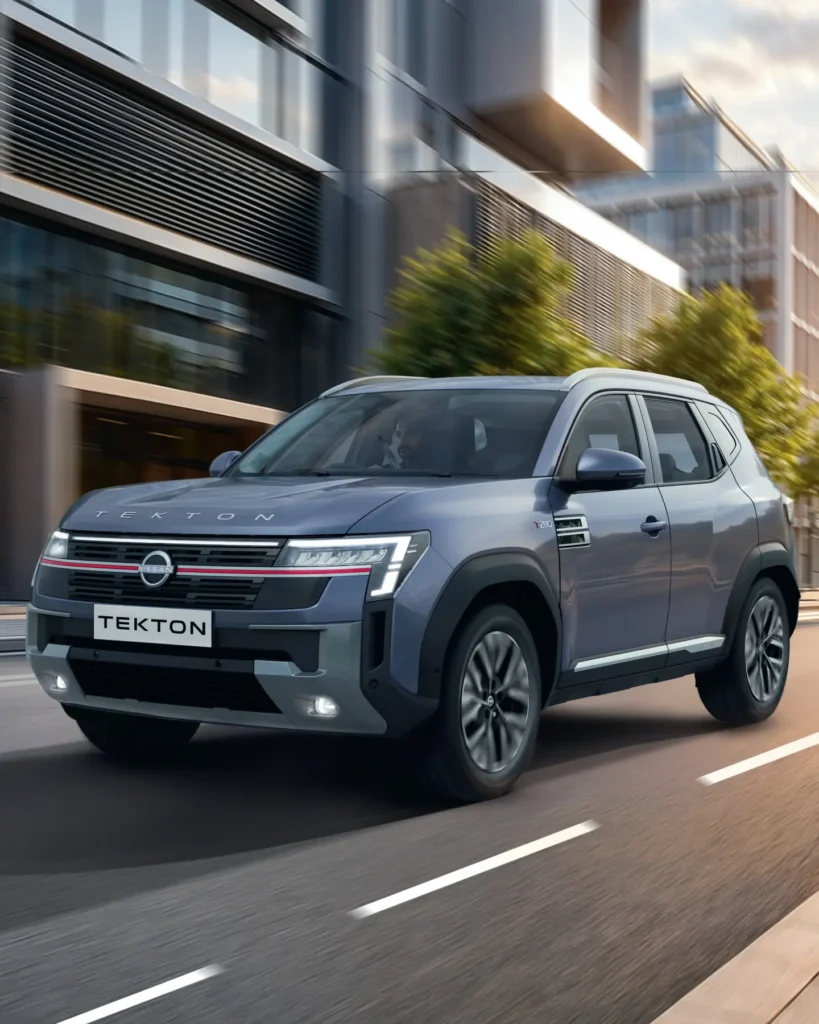
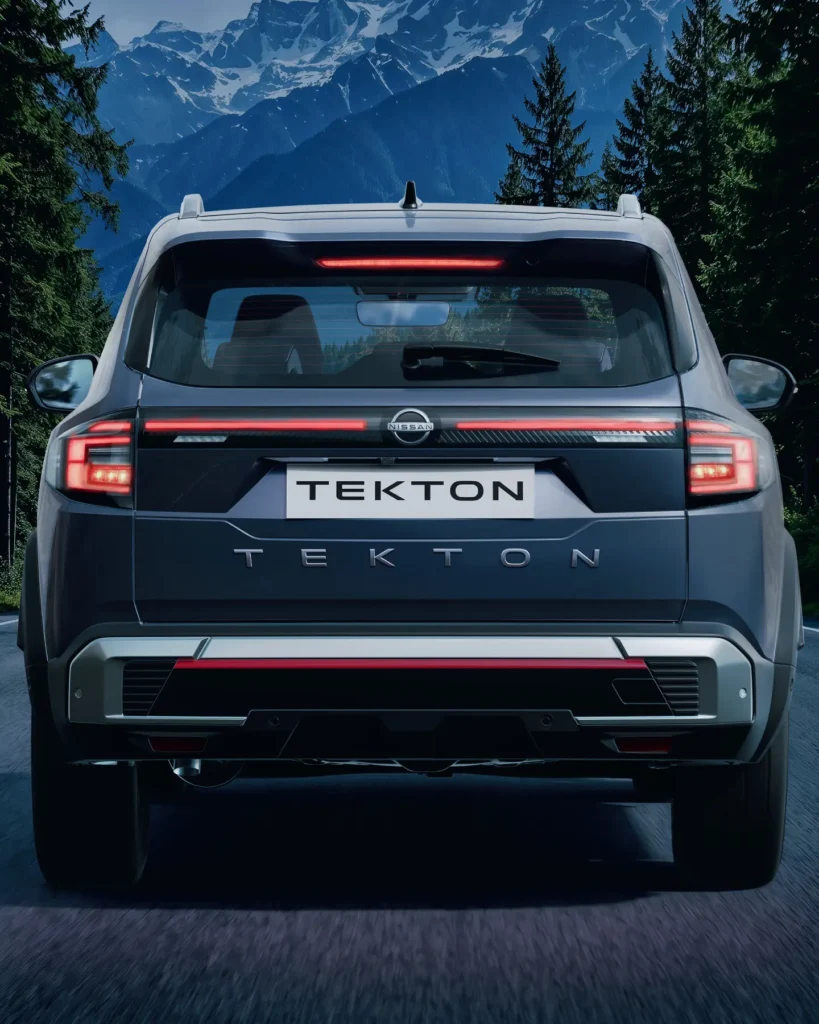
Where the Tekton earns its distinct identity is the design. Although it shares its silhouette with the Duster, Nissan has reworked the front and rear completely, drawing on the imposing Patrol for inspiration. The result is a commanding upright nose, vertical LED DRLs connected by a light bar, a multi slat grille with a red insert, a chunky bumper with silver skid plates, 18 inch alloys, C pillar mounted rear door handles and connected LED tail lamps. It is one of the more butch looking SUVs in the class.
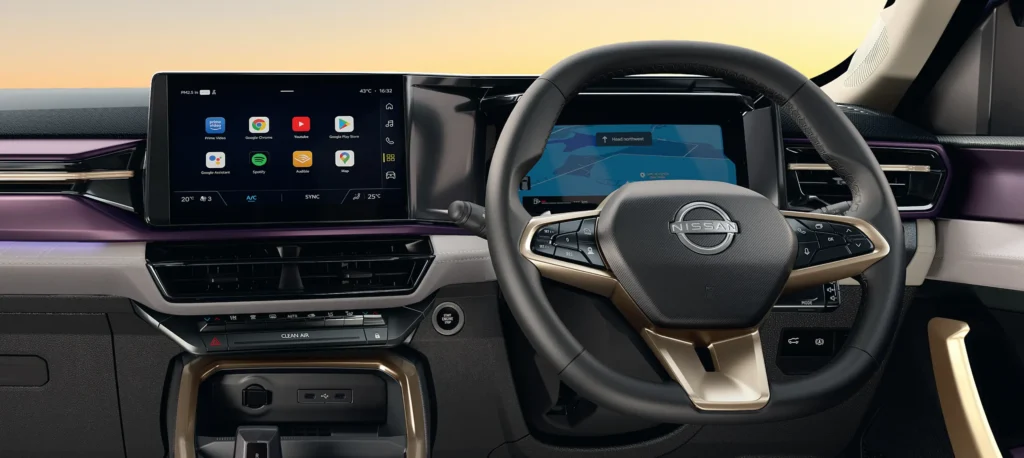
Inside, the top Tekna+ is genuinely loaded. Highlights include a 10.1 inch infotainment screen with Google built in, a 10.25 inch digital instrument cluster, a Level 2 ADAS suite, a panoramic sunroof, powered and ventilated front seats, a 360 degree camera, leatherette upholstery with burgundy inserts, ambient lighting, paddle shifters, dual zone climate control with rear vents and a powered tailgate. This is a cabin built to feel a segment above its entry price.
Safety: a five star start
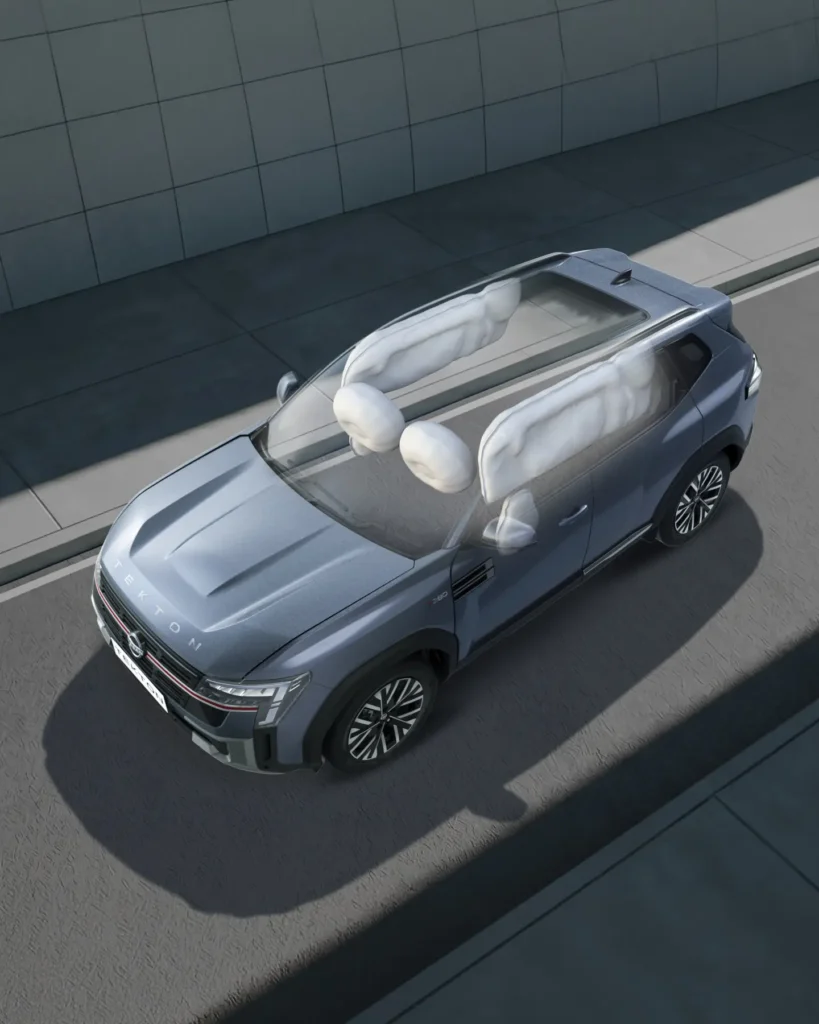
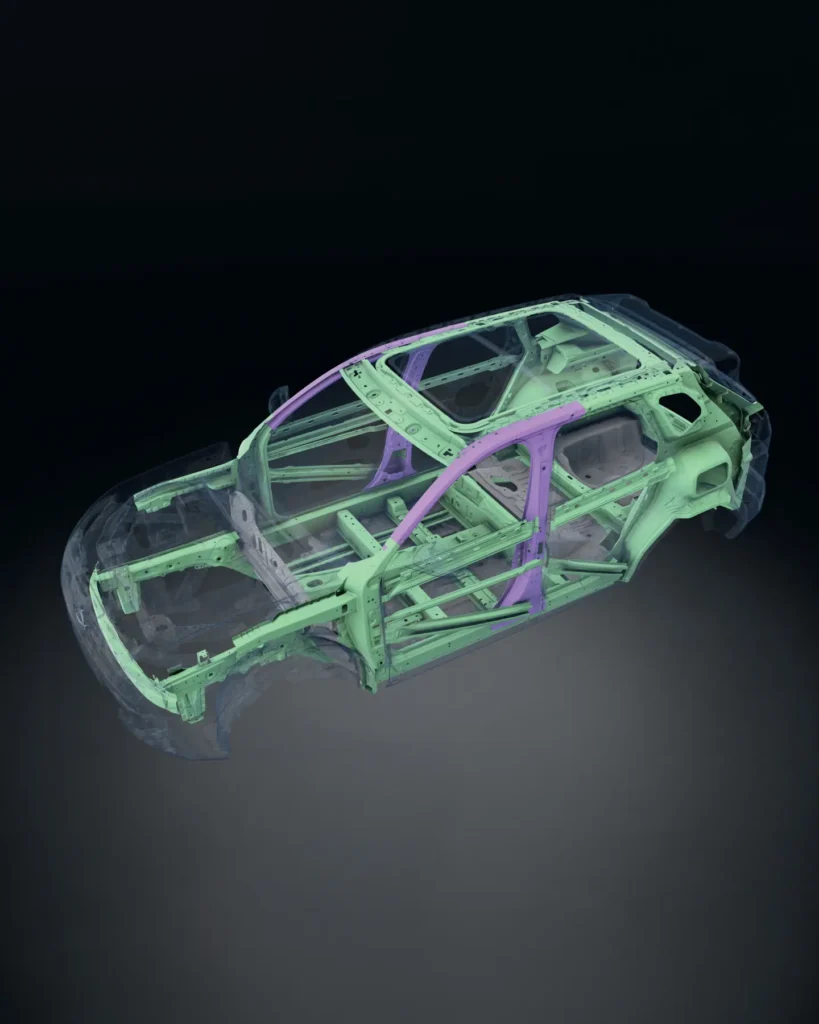
One of the Tekton’s strongest cards is safety. Like the Duster it is based on, the Nissan Tekton has earned a five star Bharat NCAP rating, scoring 30.49 out of 32 for adult occupant protection and 45 out of 49 for child occupant protection. Standard safety kit includes six airbags, electronic stability control, ISOFIX child seat anchors and seat belt reminders for all occupants. In a segment where safety is increasingly a deciding factor, launching with a five star badge from day one is a meaningful advantage.
Why the Nissan Tekton matters so much
Here is the strategic heart of this launch. Until now, Nissan’s India portfolio was thin and budget focused, built around the Magnite and the recently added Gravite, both affordable rebadges. The Tekton is the first time in years that Nissan has a credible product in the ₹10 lakh to ₹19 lakh mid size SUV space, which is the largest, most profitable and most hotly contested part of the Indian market. Simply having a real contender here changes Nissan’s relevance overnight.
The importance runs deeper than domestic sales. Nissan has announced ambitious export plans built around India, targeting more than one lakh units a year shipped to over 50 international markets, with the Tekton, Gravite and Magnite leading that charge from its Chennai plant. In other words, the Tekton is not just a car for Indian buyers, it is a cornerstone of Nissan’s plan to make India a global manufacturing and export hub. That dual role, reviving the brand at home while anchoring its exports, is what makes this launch so pivotal.
There is a neat industrial logic underneath it too. The Tekton shares its Chennai production and Renault Duster underpinnings with the wider alliance, and the same local supply base that the Renault Nissan partnership is deepening through moves like the Horse Powertrain investment. Sharing platforms and plants lets Nissan launch a segment leading product without the cost of developing one from scratch, which is exactly how a brand with limited India resources gets back into the game.
How the Tekton stacks up
The Tekton lands in a brutally competitive segment. Here is where its entry price sits against key rivals, using approximate ex-showroom figures.
| SUV | Starting price (approx) |
|---|---|
| Renault Duster (sibling) | ₹10.49 lakh |
| Nissan Tekton | ₹10.49 lakh |
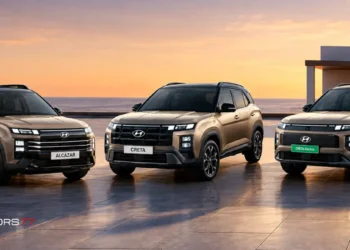
| Hyundai Creta | Around ₹11.1 lakh |
| Kia Seltos | Around ₹11.1 lakh |
| Maruti Grand Vitara | Around ₹11.4 lakh |
Beyond these, the Tekton also faces the Maruti Victoris, Tata Sierra, Toyota Hyryder, Honda Elevate, Volkswagen Taigun, Skoda Kushaq and MG Astor. Its trump cards are the striking design, the five star safety, the loaded top variant and that keen entry price. Its challenges are equally clear: no hybrid option, a smaller dealer and service network than Hyundai, Kia or Maruti, and a brand image that still needs rebuilding in the premium space.
Quick Pros and Cons
| Pros | Cons |
|---|---|
| Bold, distinctive Patrol inspired design | No hybrid option in a hybrid hungry segment |
| Aggressive ₹10.49 lakh starting price | Smaller sales and service network than rivals |
| Five star Bharat NCAP safety rating | Nissan’s premium brand image still needs work |
| Loaded top variant with Level 2 ADAS and sunroof | Rebadged Renault Duster, so less exclusive to some buyers |
| Proven Duster mechanicals and Chennai build | Only a five seater at launch, seven seater due 2027 |
Frequently Asked Questions
1. What is the price of the Nissan Tekton? The Nissan Tekton is priced from ₹10.49 lakh to ₹18.59 lakh, ex-showroom, across 12 variants. These are introductory prices applicable for a limited period.
2. Does the Nissan Tekton get a hybrid engine? No. Nissan has confirmed the Tekton will not be offered with a hybrid powertrain, unlike its sibling the Renault Duster, which gets a 1.8 litre strong hybrid. The Tekton is petrol only.
3. What engines does the Nissan Tekton offer? It gets a 1.0 litre turbo petrol with around 100 PS and 166 Nm, paired with a six speed manual, and a 1.3 litre turbo petrol with around 160 PS and 280 Nm, offered with a six speed manual or a DCT automatic.
4. Is the Nissan Tekton safe? Yes. The Tekton has earned a five star Bharat NCAP rating, scoring 30.49 out of 32 for adult protection and 45 out of 49 for child protection, with six airbags and ESC as standard.
5. Which cars does the Nissan Tekton rival? It competes with the Hyundai Creta, Kia Seltos, Maruti Grand Vitara, Maruti Victoris, Tata Sierra, Toyota Hyryder, Honda Elevate, Volkswagen Taigun, Skoda Kushaq and MG Astor, along with its own sibling, the Renault Duster.
6. Is the Nissan Tekton a Renault Duster? It shares its platform, engines and Chennai production with the Renault Duster, but Nissan has given it a completely distinct, Patrol inspired design, much like the Skoda Kushaq and Volkswagen Taigun relationship.
7. When do Nissan Tekton deliveries start? Bookings are open at a ₹21,000 token, with customer deliveries scheduled to begin from 20 July.
Motors77 Verdict
The Nissan Tekton is comfortably the most important car Nissan has launched in India in years, and its significance goes well beyond the showroom. With a striking Patrol inspired design, a five star safety rating, a genuinely loaded top variant and an entry price that matches the Renault Duster and undercuts the Creta and Seltos, Nissan has built a product that finally makes it a real player in the country’s biggest SUV segment.
What we find most telling is the no hybrid decision. By reserving the strong hybrid for the Duster, the alliance has deliberately positioned the Tekton to fight on design, features and value rather than efficiency. It is a bold, clear strategy, but also the Tekton’s biggest vulnerability, because rivals like the Grand Vitara and Hyryder are winning exactly the buyers who care about running costs. Nissan is wagering that desirability beats economy in this price band, and the next few months will show whether that holds.
Zoom out, and the Tekton is really about survival and ambition at once. It gives Nissan relevance at home while anchoring an export plan that aims to ship over a lakh units a year from Chennai to more than 50 markets. That is a lot resting on one SUV. For buyers, it means a bold, safe, feature rich and sharply priced new option in a segment that just got even more crowded. On this evidence, the Baby Patrol has the substance to back its swagger, and it makes the mid size SUV fight more interesting than ever.