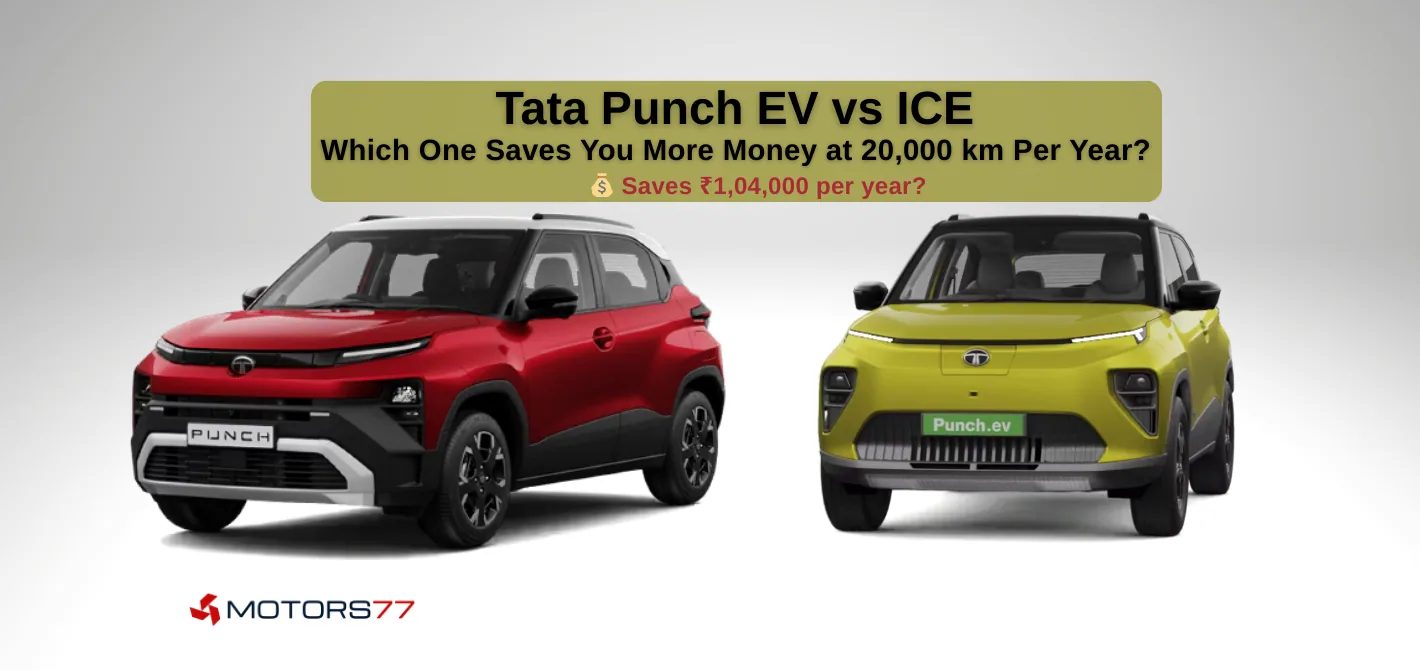
Tata Punch EV vs ICE has become the most debated topic among Indian car buyers in 2026. With petrol prices hovering around Rs 95 per litre and electricity costs remaining stable at Rs 8-10 per unit, the financial equation between electric and petrol variants has never been more compelling. If you drive approximately 20,000 km annually, which Tata Punch variant truly makes sense for your wallet?
The Real Cost Story That Nobody Tells You
This comprehensive analysis breaks down every cost, specification, and real-world factor to help you make an informed decision in the Tata Punch EV vs ICE debate.
Picture this scenario clearly. You just completed 20,000 kilometres in your new Tata Punch. At year-end, you pull out your calculator to tally the expenses. The numbers will surprise you, and they form the foundation of understanding Tata Punch EV vs ICE economics.
The Punch EV owner spent approximately Rs 22,400 on electricity for the entire year. The petrol Punch owner? A staggering Rs 1,26,600 disappeared into the fuel tank. That Rs 1,04,200 difference in just one year represents the core advantage in Tata Punch EV vs ICE running cost analysis.
But hold on. Before rushing to the nearest Tata showroom demanding an EV, there remains more to this story that demands your careful attention.
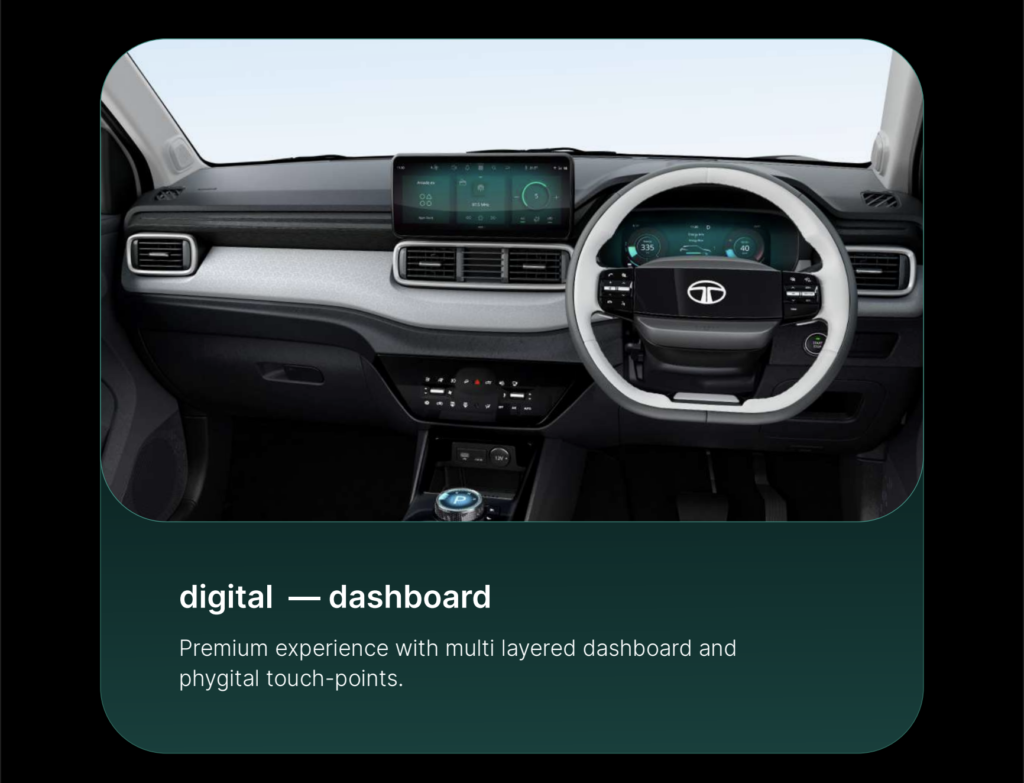
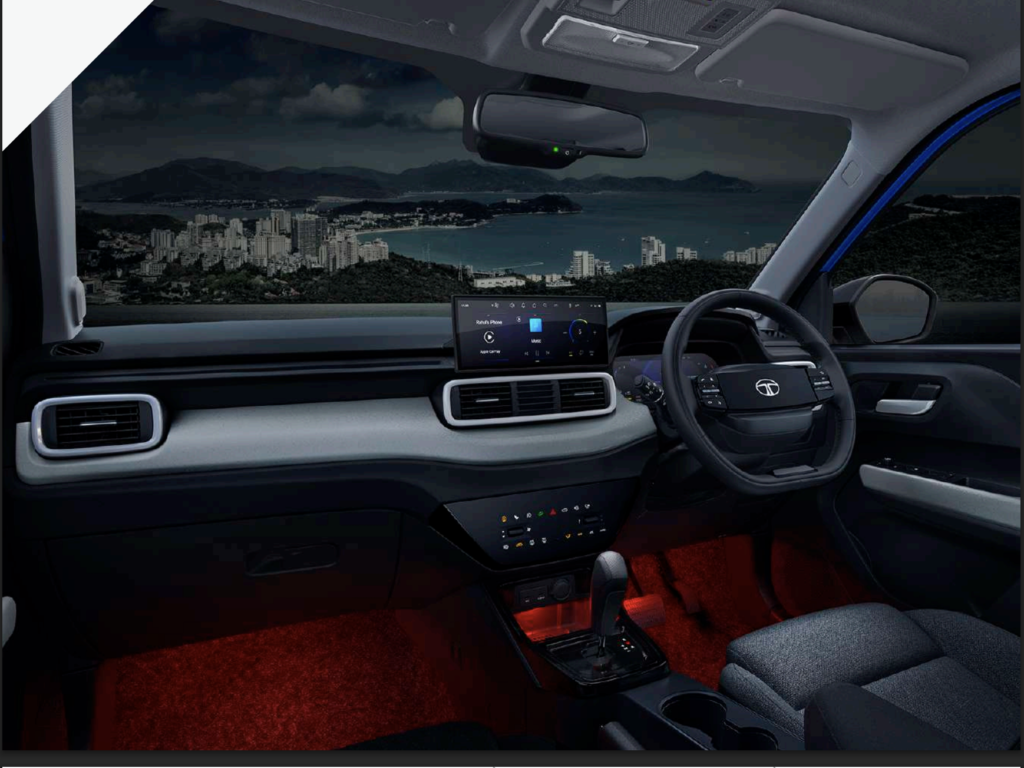
Complete Specifications Comparison
Understanding technical differences becomes crucial when evaluating Tata Punch EV vs ICE options for your requirements.
Powertrain and Performance Specifications
| Parameter | Punch EV (40kWh) | Punch EV (30kWh) | Punch Petrol | Punch Turbo |
|---|---|---|---|---|
| Power Output | 129 PS | 82 PS | 87 PS | 118 PS |
| Peak Torque | 190 Nm | 114 Nm | 115 Nm | 170 Nm |
| Transmission | Single-speed Auto | Single-speed Auto | 5-MT/AMT | 6-MT |
| 0-100 kmph | Under 9 sec | 12+ sec | 15+ sec | 11 sec |
| Top Speed | 140 kmph | 120 kmph | 165 kmph | 175 kmph |
Range and Efficiency Specifications
| Parameter | Punch EV (40kWh) | Punch EV (30kWh) | Punch Petrol MT | Punch Petrol AMT |
|---|---|---|---|---|
| ARAI Range/Mileage | 468 km | 365 km | 20.09 km/l | 18.8 km/l |
| Real-world | 320-355 km | 250-280 km | 15-17 km/l | 13-15 km/l |
| Energy Consumption | 8.5 kWh/100km | 9.2 kWh/100km | 5.9 L/100km | 6.7 L/100km |
Dimensions and Capacity
| Parameter | Punch EV | Punch ICE |
|---|---|---|
| Length | 3,880 mm | 3,840 mm |
| Width | 1,742 mm | 1,742 mm |
| Wheelbase | 2,445 mm | 2,445 mm |
| Ground Clearance | 190 mm | 193 mm |
| Boot Space | 366 litres | 366 litres |
| Kerb Weight | 1,280-1,350 kg | 990-1,070 kg |
Price Comparison Across Variants
The upfront investment remains a critical factor in your Tata Punch EV vs ICE decision.
| Variant Category | Punch EV | Punch ICE |
|---|---|---|
| Entry Level | Rs 9.69 lakh (Smart 30kWh) | Rs 5.60 lakh (Smart) |
| Mid Variant | Rs 11.59 lakh (Adventure 40kWh) | Rs 7.35 lakh (Adventure) |
| Top Variant | Rs 12.59 lakh (Empowered+ S) | Rs 9.80 lakh (Accomplished+ S Turbo) |
| BaaS Option | Rs 6.49 lakh + Rs 2.6/km rental | Not Available |
The price difference between comparable variants ranges from Rs 2.79 lakh to Rs 4.09 lakh, favouring ICE initially.
5-Year Total Cost of Ownership Analysis
This section reveals where the Tata Punch EV vs ICE comparison gets genuinely interesting for the 20,000 km per year driver.
Running Cost Calculation (20,000 km/year)
| Cost Component | Punch EV (40kWh) | Punch Petrol AMT |
|---|---|---|
| Energy/Fuel Cost per km | Rs 1.12 | Rs 6.33 |
| Annual Energy/Fuel Cost | Rs 22,400 | Rs 1,26,600 |
| 5-Year Energy/Fuel Cost | Rs 1,12,000 | Rs 6,33,000 |
Maintenance Cost (5-Year Period)
| Service Component | Punch EV | Punch Petrol |
|---|---|---|
| Scheduled Services | Rs 7,214 | Rs 40,532 |
| Brake Pads Replacement | Rs 3,000 | Rs 6,000 |
| Tyre Replacement | Rs 20,000 | Rs 20,000 |
| Battery/Consumables | Covered under warranty | Rs 5,000 |
| Miscellaneous | Rs 5,000 | Rs 10,000 |
| Total 5-Year Maintenance | Rs 35,214 | Rs 81,532 |
Complete 5-Year Cost Summary
| Component | Punch EV (Empowered+) | Punch Petrol (Accomplished+ AMT) |
|---|---|---|
| Purchase Price (On-road) | Rs 14.20 lakh | Rs 10.85 lakh |
| 5-Year Fuel/Energy Cost | Rs 1,12,000 | Rs 6,33,000 |
| 5-Year Maintenance | Rs 35,214 | Rs 81,532 |
| Insurance (5 years) | Rs 95,000 | Rs 72,000 |
| Total 5-Year Cost | Rs 16,62,214 | Rs 18,71,532 |
| Monthly Cost | Rs 27,703 | Rs 31,192 |
Despite the higher purchase price, the Tata Punch EV vs ICE comparison reveals that EV ownership becomes economical after approximately 3 years of 20,000 km annual driving.
Quick Pros and Cons
Tata Punch EV
Pros:
- Running cost of just Rs 1.12/km compared to Rs 6.33/km for petrol
- Annual fuel savings exceeding Rs 1,04,000 at 20,000 km usage
- Maintenance cost 57% lower than petrol variant over 5 years
- Instant torque delivery with 190 Nm available from zero rpm
- Lifetime battery warranty covering 15 years for peace of mind
- Zero RTO registration charges in most Indian states
- Silent operation enhancing driving comfort
Cons:
- Higher upfront cost by Rs 3-4 lakh compared to ICE variants
- Charging infrastructure still developing in tier-2 and tier-3 cities
- Real-world range of 320-355 km may cause anxiety on long trips
- Longer refuelling time compared to 5-minute petrol fill
- Heavier kerb weight affects handling dynamics slightly
Tata Punch ICE (Petrol)
Pros:
- Lower purchase price starting at Rs 5.60 lakh ex-showroom
- Extensive refuelling network with 70,000+ petrol pumps across India
- 5-minute refuelling enabling 500+ km driving capability
- Turbo variant offers 118 PS for enthusiastic driving experience
- CNG option available for further running cost reduction
- Established resale value understanding in current market
Cons:
- Running cost of Rs 6.33/km makes long-term ownership expensive
- Annual fuel expenditure of Rs 1,26,600 at 20,000 km usage
- Higher maintenance requirements with more moving parts
- Subject to volatile petrol price fluctuations
- Environmental impact through tailpipe emissions
Key Factors to Consider
Your Daily Commute Pattern
If daily driving stays within 100 km, the Punch EV handles a week of commuting on single charge. The petrol variant becomes necessary only when travel patterns remain highly unpredictable.
Charging Infrastructure Access
Home charging transforms EV ownership economics completely. Without it, the convenience factor tilts towards ICE despite higher running costs.
Ownership Duration
Short-term ownership of 2-3 years favours petrol due to lower depreciation risk. Planning 5+ years? The EV savings become substantial and undeniable.
Frequently Asked Questions
Q1: What is the break-even point for Tata Punch EV vs ICE at 20,000 km annually? The Punch EV reaches break-even in approximately 3 to 3.5 years. After this period, EV owners save Rs 8,000-10,000 monthly compared to petrol owners.
Q2: How much does full home charging cost for Punch EV? A full 40kWh charge costs Rs 320-400 at home electricity rates, providing 320-355 km real-world range. This translates to Rs 0.85-1.12 per kilometre.
Q3: Is Tata Punch EV battery covered under warranty? Yes, Tata provides lifetime warranty covering 15 years or 1,60,000 km, whichever comes first, significantly reducing long-term concerns.
Q4: Can Punch EV handle long road trips? Yes, the 40kWh battery handles trips up to 300 km comfortably. DC fast charging adds 135 km range in just 15 minutes.
Q5: What are real-world running costs for both variants? Punch EV: Rs 1.12/km. Punch Petrol: Rs 5.60-6.33/km depending on driving conditions and traffic.
Q6: Does Punch EV qualify for government subsidies? Yes, most states offer road tax exemption and registration charge waivers, potentially saving Rs 50,000-1,50,000.
Q7: Which variant has better resale value currently? Petrol has more predictable resale. However, for 5+ year ownership, EV running cost savings outweigh resale value concerns.
Q8: How does Punch EV perform on hilly terrain? Excellently, with instant 190 Nm torque delivery. Range consumption increases 15-25% in mountainous conditions.
Q9: What are insurance cost differences between variants? EV: Rs 18,000-22,000 annually. Petrol: Rs 12,000-16,000 annually due to lower component costs.
Q10: Is home charger installation complicated? Tata provides complimentary 3.3 kW charger installation with purchase. Most urban homes accommodate this without electrical upgrades.
Motors77 Verdict
After comprehensive Tata Punch EV vs ICE analysis with 20,000 km annual usage, our verdict clearly favours the Tata Punch EV for urban Indian buyers with home charging access.
The mathematics prove compelling. Over 5 years, the EV variant saves approximately Rs 2,09,318 despite the higher initial purchase price. The monthly cost difference of Rs 3,489 favouring the EV accumulates significantly over the ownership period.
Choose the Punch EV if: You have reliable home or workplace charging, daily commute stays under 80 km, you plan ownership for 4-5 years minimum, and value silent operation with instant acceleration.
Choose the Punch Petrol if: Charging infrastructure remains challenging in your area, you frequently undertake unplanned trips exceeding 300 km, initial budget constraints exist, or you prefer the engaging turbo petrol driving experience.
For the 20,000 km per year urban driver with home charging capability, the Tata Punch EV emerges as the smarter long-term investment in 2026.
Disclaimer: Prices, specifications, and calculations based on February 2026 data. Actual costs may vary by location, electricity tariffs, fuel prices, and individual usage patterns. Visit your nearest Tata Motors dealership for current pricing.
Last Updated: February 2026