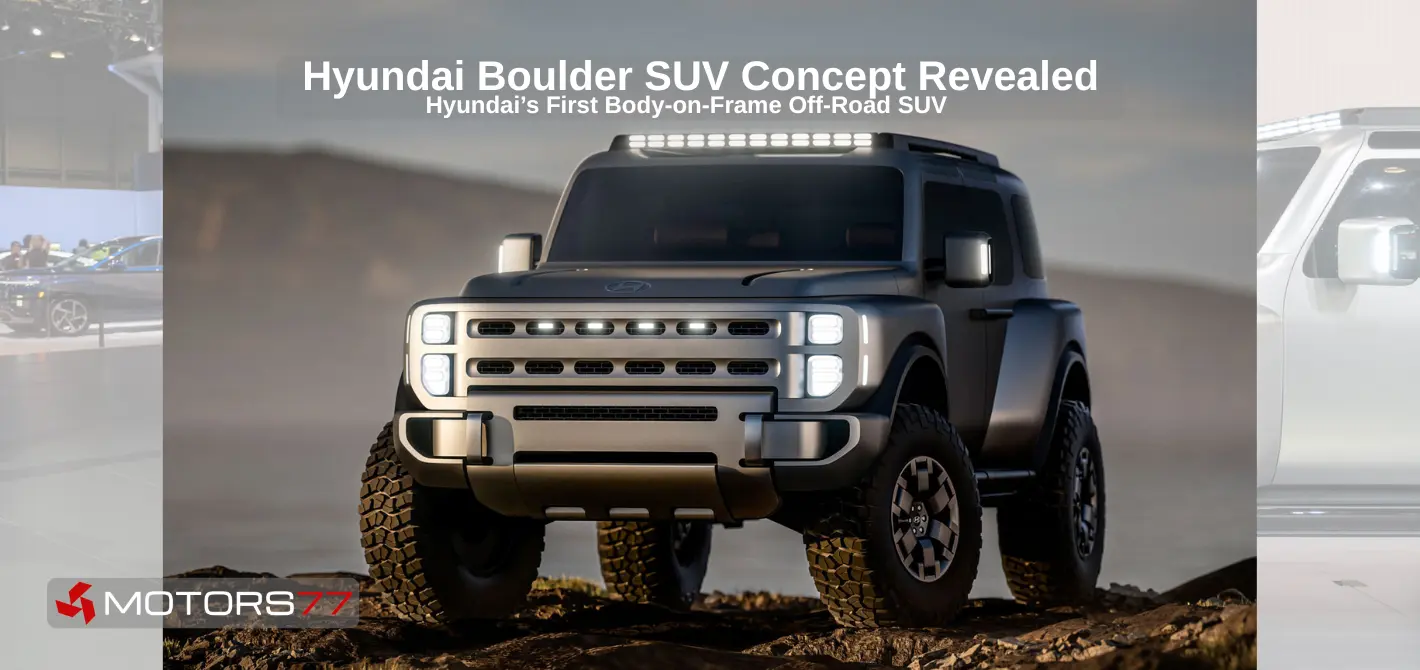
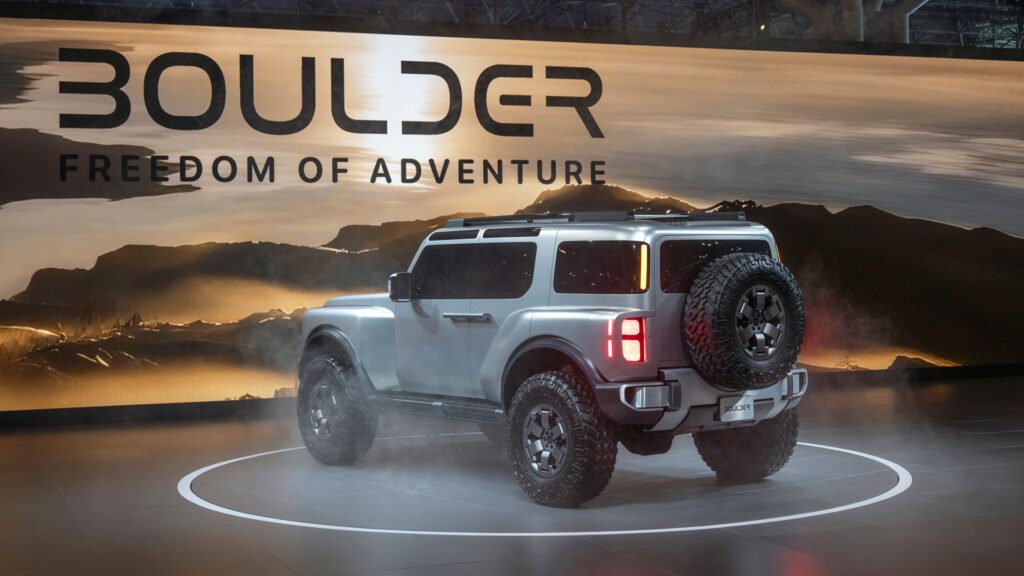
The Hyundai Boulder SUV Concept marks a dramatic shift in the Korean automaker’s strategy as it enters the rugged body-on-frame SUV segment for the first time. Unveiled at the 2026 New York International Auto Show on April 1, this design study signals Hyundai’s serious intentions to challenge established off-road icons like the Ford Bronco, Jeep Wrangler, and Toyota 4Runner.
The timing of this reveal carries strategic importance. As global automotive markets shift towards adventure-oriented vehicles, the Hyundai Boulder SUV Concept demonstrates the brand’s willingness to compete in segments previously dominated by American and Japanese manufacturers. Hyundai has confirmed that the platform underpinning this concept will support a production midsize pickup truck arriving by 2030.
Quick Pros and Cons
Pros:
- First body-on-frame architecture from Hyundai for the US market
- Bold “Art of Steel” design language with commanding presence
- 37-inch mud-terrain tires deliver serious off-road capability
- Real-time off-road guidance system acts as digital spotter
- Physical knobs and buttons prioritise tactile usability
- Configurable interior with fold-out tray tables
- Power drop-down rear window for versatile cargo loading
- Designed, developed, and to be built in America
Cons:
- Still a concept with no confirmed production timeline for SUV variant
- Powertrain specifications not yet revealed
- Coach-style doors may not reach production
- Production pickup confirmed for 2030, SUV timeline uncertain
- Ground clearance and angle specifications not disclosed
- Pricing and market availability details unavailable
What Makes the Hyundai Boulder SUV Concept Special?
The Hyundai Boulder SUV Concept represents the brand’s first fully-boxed body-on-frame architecture, a construction method long favoured by consumers seeking vehicles capable of serious off-roading, towing, and hauling. Unlike the unibody construction used in Hyundai’s current SUV lineup including the Tucson and Santa Fe, body-on-frame construction provides the structural rigidity and durability that hardcore off-road enthusiasts demand.
Design Philosophy: Art of Steel
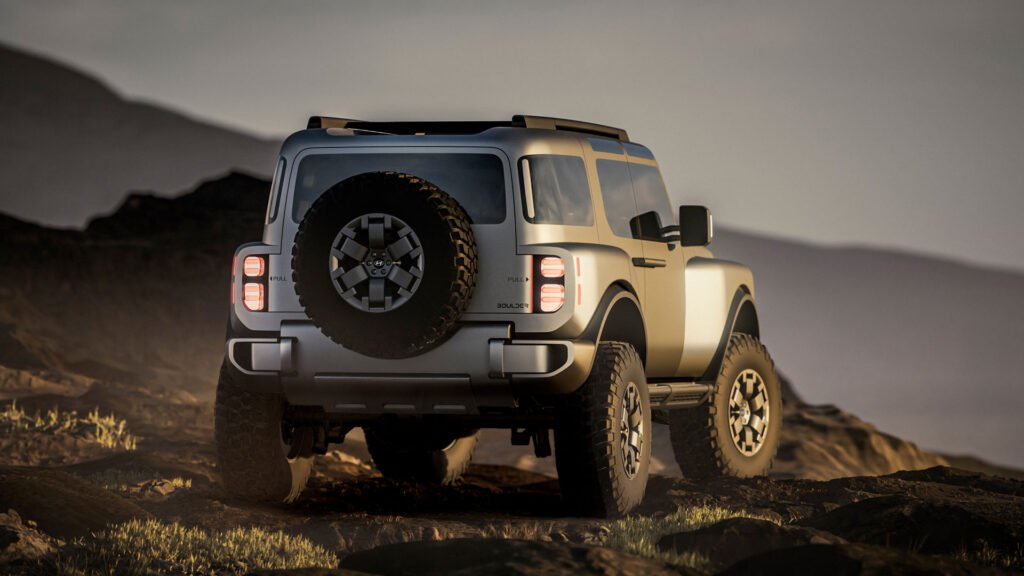
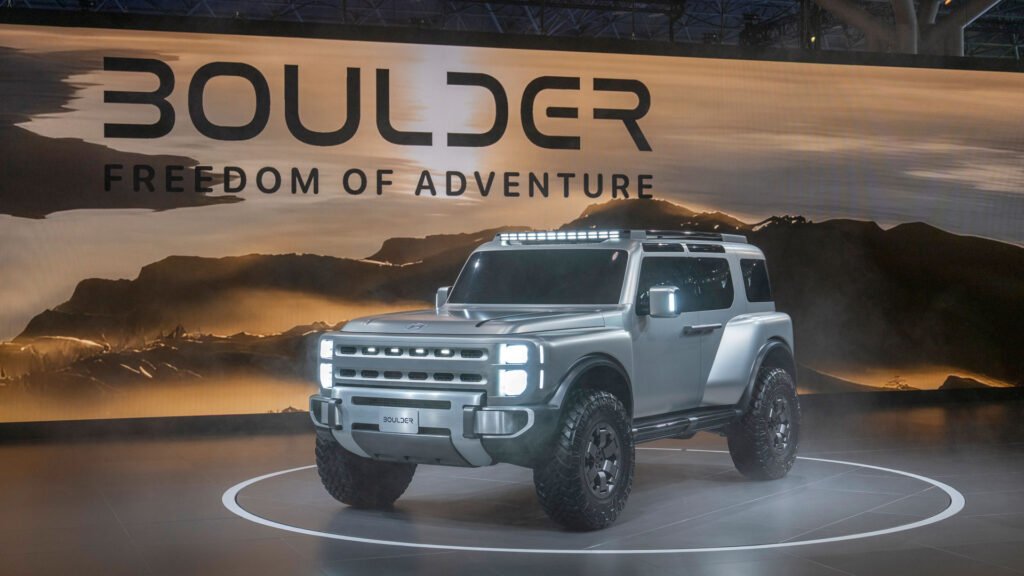
The exterior design of the Hyundai Boulder SUV Concept follows what Hyundai calls the “Art of Steel” philosophy. This design language transforms the strength and flexibility of steel into sculptural yet functional beauty. Inspired by advanced steel technologies pioneered by Hyundai Steel, the alloy’s natural formability reveals flowing volumes and precise lines that capitalise on the robust nature of the material.
| Design Element | Description |
|---|---|
| Design Language | Art of Steel |
| Exterior Colour | Liquid Titanium (Matte Finish) |
| Silhouette | Two-box upright design |
| Overall Stance | Commanding, aggressive posture |
| Design Origin | Hyundai Design North America (California) |
The two-box silhouette gives the Hyundai Boulder SUV Concept an imposing presence on the road. With its upright stance and pronounced fender flares, the vehicle draws comparisons to the Ford Bronco Badlands, though Hyundai’s interpretation brings unique Korean design sensibilities to the American off-road aesthetic.
Exterior Features and Off-Road Credentials
Every aspect of the Hyundai Boulder SUV Concept has been engineered with off-road capability in mind. The boxy design enables aggressive approach, departure, and breakover angles for exceptional trail agility. When obstacles like creek crossings appear, generous fording depth keeps the vehicle moving safely.
Exterior Specifications Table
| Feature | Specification |
|---|---|
| Tyre Size | 37-inch mud-terrain |
| Wheel Size | 18 inches |
| Spare Tyre | Full-size, rear-mounted |
| Roof Rack | Low-profile design |
| Roof Lights | Off-road light bar |
| Door Style | Coach-style (suicide doors) |
| Windows | Safari-style fixed upper |
| Rear Window | Power drop-down |
| Tailgate | Double-hinged (opens both directions) |
| Tow Hooks | Front and rear |
The oversized 37-inch mud-terrain tyres wrapped around 18-inch wheels provide the traction necessary for tackling challenging terrain. A full-size spare tyre mounted on the tailgate ensures preparedness for any trail emergency. The low-profile roof rack accommodates adventure gear without adding excessive bulk, while the bank of off-road lights mounted above illuminates the path ahead during night-time excursions.
Unique Exterior Elements
The coach-style doors provide wide access to both rows, though this feature may prove too unconventional for production. Safari-style fixed upper windows create an open-air atmosphere reminiscent of classic expedition vehicles. The power drop-down rear window serves dual purposes: enabling flow-through ventilation and accommodating longer objects like surfboards extending from the cargo area.
Interior Design: Function Meets Adventure
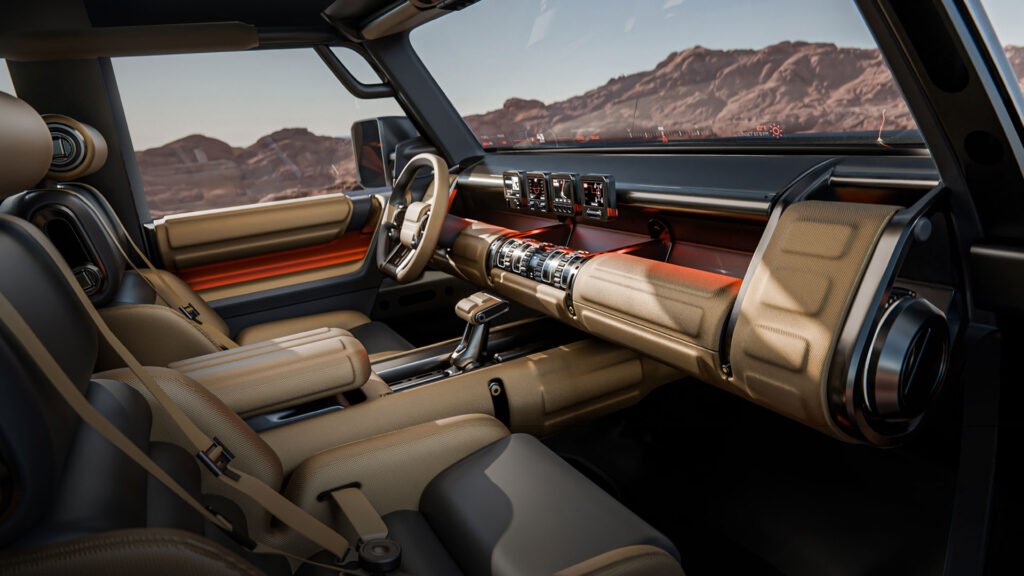
Inside, the Hyundai Boulder SUV Concept continues the theme of purpose-driven design. Unlike modern vehicles that prioritise massive touchscreens, this concept returns to physical controls that inspire confidence even when bouncing over uneven terrain.
Interior Features Overview
| Component | Details |
|---|---|
| Control Interface | Physical knobs and buttons |
| Display Configuration | Four small square screens |
| Screen Movement | Lateral rail-mounted (movable) |
| Instrument Display | Windshield-projected (full-width HUD) |
| Grab Handles | Robust, high-durability materials |
| Tray Tables | Fold-out design |
| Steering Wheel | Flat-bottom design |
| Material Focus | Durable, high-wear resistant |
The dashboard layout represents a refreshing departure from current industry trends. Rather than a single massive screen, four small square displays can be moved laterally along a rail according to preferences. Vital vehicle information appears at the bottom of the windshield through a full-width head-up display.
Practicality for Adventurers
Grab handles manufactured from robust materials are positioned throughout the cabin. The configurable interior supports every moment of an adventure, with fold-out tray tables proving perfect for trail lunches or completing work in remote locations.
Off-Road Technology
The Hyundai Boulder SUV Concept includes an available software-driven real-time off-road guidance system that acts like a digital spotter. This system guides drivers over loose surfaces and steep terrain, providing recommendations that would typically require an experienced co-pilot.
Platform and Production Future
While the Hyundai Boulder SUV Concept remains a design study, it previews a new body-on-frame platform with confirmed production applications. Hyundai has established clear ground rules for vehicles built on this architecture.
Production Commitment Details
| Aspect | Commitment |
|---|---|
| Design Location | United States |
| Development Focus | American market |
| Manufacturing | Built in America |
| Steel Source | Hyundai-produced US steel |
| First Production Model | Midsize pickup truck |
| Production Timeline | By 2030 |
| Total New Vehicles | 36 Hyundai models for North America by 2030 |
Jose Munoz, President and CEO of Hyundai Motor Company, emphasised the strategic importance of this platform. Body-on-frame vehicles remain the backbone of American work and adventure. The body-on-frame truck represents one of 36 new Hyundai vehicles coming to North America by 2030.
Expected Powertrain Options
Though Hyundai has not revealed specific powertrain details for the Boulder SUV Concept or the production vehicles it previews, industry expectations point towards multiple propulsion choices. The new platform is anticipated to accommodate purely electric powertrains, plug-in hybrid systems, and extended-range electric vehicle configurations.
| Powertrain Type | Status |
|---|---|
| Pure Electric | Expected |
| Plug-in Hybrid | Expected |
| Extended-Range EV | Expected |
| Traditional Combustion | Possible |
This flexibility in powertrain options would position Hyundai to compete across different buyer preferences and regulatory environments, providing adventure capability regardless of fuel source preference.
Market Positioning and Competition
The Hyundai Boulder SUV Concept enters a competitive segment dominated by well-established nameplates. Direct competitors include the Ford Bronco, Jeep Wrangler, and Toyota 4Runner. The upcoming midsize pickup will face the Toyota Tacoma, Chevrolet Colorado, Ford Ranger, and their performance variants including the Tacoma TRD Pro, Colorado ZR2, and Ranger Raptor.
Competitive Landscape
| Segment | Key Competitors |
|---|---|
| Off-Road SUV | Ford Bronco, Jeep Wrangler, Toyota 4Runner |
| Midsize Pickup | Toyota Tacoma, Chevrolet Colorado, Ford Ranger |
| Performance Variants | Tacoma TRD Pro, Colorado ZR2, Ranger Raptor |
SangYup Lee, Executive Vice President and Head of Hyundai and Genesis Global Design Center, described the Boulder SUV Concept as a four-wheeled love letter to the dynamic off-road way of life that many customers have requested through future-focused research. The confidence expressed by Hyundai leadership suggests that something resembling this concept could reach production to fulfil the needs of adventure seekers.
Relevance for Indian Market
While the Hyundai Boulder SUV Concept debuts specifically for the American market, its implications extend to global Hyundai strategy. The development of body-on-frame expertise within the Hyundai Motor Group could eventually influence products in other markets, including India. Indian consumers have demonstrated growing interest in capable SUVs, evidenced by the success of vehicles like the Mahindra Thar. However, no announcements regarding Indian market availability have been made.
Frequently Asked Questions
When was this concept unveiled?
The vehicle made its surprise global debut at the 2026 New York International Auto Show on April 1, 2026.
Is the Boulder SUV Concept going into production?
The SUV itself remains a design study without confirmed production plans. However, the body-on-frame platform it previews will underpin a production midsize pickup truck arriving by 2030.
What design language does this concept feature?
The concept showcases Hyundai’s “Art of Steel” design philosophy, which transforms steel’s strength and flexibility into sculptural yet functional forms.
What tyre size does the Boulder Concept use?
The concept rides on 37-inch mud-terrain tyres mounted on 18-inch wheels, providing serious off-road capability.
Where was this concept designed?
The vehicle was designed at Hyundai Design North America, the brand’s Southern California-based design studio.
What makes the interior of the Boulder Concept unique?
The interior features physical knobs and buttons instead of large touchscreens, four small movable displays on a lateral rail, and a full-width head-up display projected on the windshield.
Will this concept come to India?
No announcements have been made regarding Indian market availability. The concept was developed specifically for North American consumers.
What competitors does the Boulder Concept target?
The concept positions against off-road SUVs like the Ford Bronco, Jeep Wrangler, and Toyota 4Runner.
What powertrain options are expected?
While not officially confirmed, the platform is expected to support pure electric, plug-in hybrid, and extended-range electric vehicle powertrains.
Does the Boulder Concept have an off-road guidance system?
Yes, the concept includes an available real-time off-road guidance system that acts as a digital spotter, helping drivers navigate challenging terrain.
Motors77 Verdict
The Hyundai Boulder SUV Concept represents a bold statement of intent from a manufacturer typically associated with practical family vehicles. By developing body-on-frame architecture designed, developed, and built in America using domestically produced steel, Hyundai demonstrates commitment to competing in segments where brand heritage typically matters most.
The “Art of Steel” design language produces a genuinely attractive vehicle that balances aggression with sophistication. While comparisons to the Ford Bronco are inevitable, Hyundai has added enough distinctive character to establish its own identity within the adventure SUV segment.
The return to physical controls and tactile interfaces deserves particular praise. In an era where automotive interiors resemble tablets with steering wheels, Hyundai’s decision to prioritise usable buttons and knobs reflects genuine understanding of what off-road enthusiasts require.
However, uncertainties remain significant. The production SUV timeline remains unclear, with only the midsize pickup confirmed for 2030 delivery. Powertrain specifications, ground clearance figures, and other critical metrics have not been disclosed.
For Indian enthusiasts watching from afar, the Hyundai Boulder SUV Concept provides an exciting glimpse of what Hyundai can achieve when targeting adventure-focused buyers. While immediate availability in India appears unlikely, the development of body-on-frame expertise could eventually yield globally relevant products.
The Hyundai Boulder SUV Concept succeeds as a concept vehicle should. It generates excitement, demonstrates capability, and points towards a future where Hyundai competes across every vehicle segment consumers desire.
Published: April 2026
Source: Hyundai Motor Company, 2026 New York International Auto Show