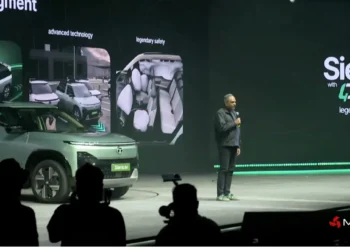
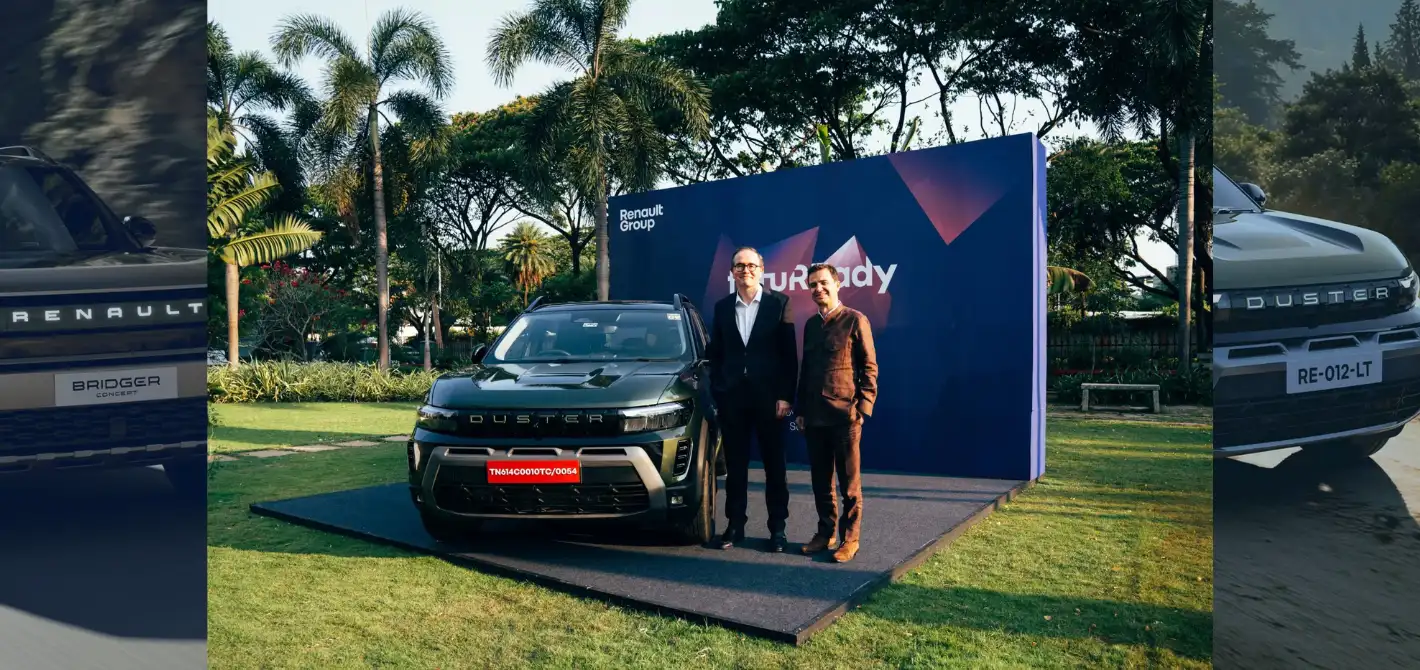
Renault Plans A 7-Model Lineup in India under its newly announced futuREady India strategy, marking the most ambitious product offensive the French automaker has ever attempted in this country. Announced on 16 April 2026 by Renault Group CEO François Provost at the conclusion of his week-long visit to India, this plan targets a 5 percent market share and aims to position India among the Renault brand’s top three global markets by 2030.
Renault Group, which sold 2.337 million vehicles globally in 2025, is entering what it calls its largest-ever product renewal cycle in India. The portfolio will expand to seven multi-energy models, all designed specifically for local market needs, built on a next-generation digital and electronic architecture, and spanning powertrains from petrol and CNG to strong hybrid and fully electric.
India represents more than one-third of the growth potential across markets where the Renault brand already operates. The futuREady India plan goes beyond products. It is an integrated strategy where the Group’s 15,000 employees in India, including 6,000 engineers at the Chennai R&D centre, will develop platforms and technologies for both domestic and global markets. The Group also aims to generate Euro 2 billion in annual exports by 2030 in vehicles, R&D, and components, with a particular focus on South America.
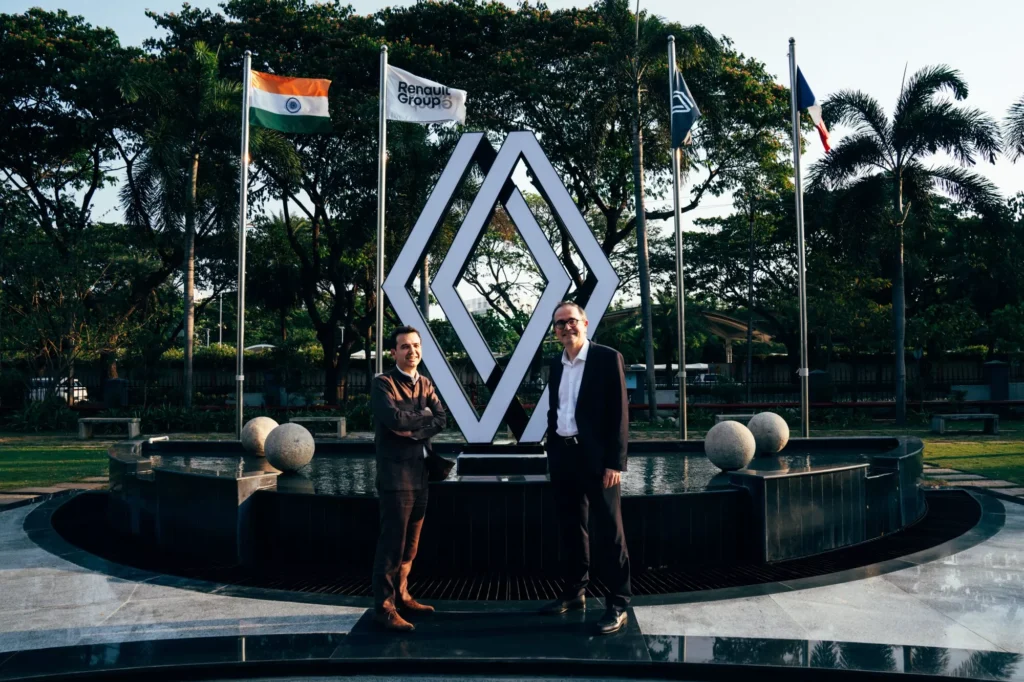
Renault’s Current India Lineup At A Glance
| Model | Segment | Price Range (Ex-Showroom) | Engine |
|---|---|---|---|
| Renault Kwid | Entry Hatchback | Rs 4.30 lakh to Rs 5.99 lakh | 1.0L Petrol |
| Renault Triber | Compact MPV (7-Seater) | Rs 5.76 lakh to Rs 8.60 lakh | 1.0L Petrol |
| Renault Kiger | Sub-4m SUV | Rs 5.81 lakh to Rs 10.34 lakh | 1.0L NA / 1.0L Turbo Petrol |
| Renault Duster | Midsize SUV | Rs 10.49 lakh to Rs 18.49 lakh | 1.0L Turbo / 1.3L Turbo / 1.8L Hybrid (Diwali 2026) |
The 7 Models: Renault Plans A 7-Model Lineup Spanning SUVs, Compacts And EVs
Four additional vehicles will join the current four-model lineup to reach a total of seven by 2030. Stéphane Deblaise, CEO of Renault Group in India, confirmed that the portfolio will span key segments from compact cars to larger SUVs, featuring a full spectrum of electrified powertrains, from strong hybrids to fully electric vehicles.
1. Renault Duster (Launched March 2026)
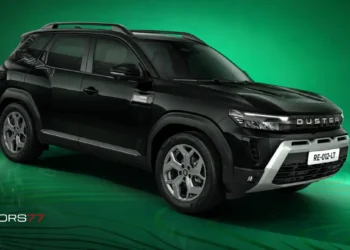
Unveiled in January 2026 and launched on 17 March 2026, the Duster is the foundation of Renault’s comeback. Deliveries of turbo-petrol variants began in April 2026, and the strong hybrid E-Tech variant is scheduled for Diwali 2026. The hybrid is already sold out for 2026.
Key Renault Duster Specifications:
| Parameter | Details |
|---|---|
| Platform | RGMP Small |
| Dimensions (L/W/H) | 4,343 mm / 1,815 mm / 1,659 mm |
| Wheelbase / Ground Clearance | 2,657 mm / 212 mm |
| 1.0L Turbo Petrol | 100 hp, 160 Nm, 6-speed MT |
| 1.3L Turbo Petrol | 163 hp, 280 Nm, 6-speed MT / 6-speed DCT |
| 1.8L Hybrid E-Tech | 160 hp combined, 1.4 kWh battery, 80% electric city driving |
| Boot Space | 518 litres (parcel shelf) / 700 litres (to roof) |
| Safety & ADAS | Level 2 ADAS (17 systems), 6 airbags, 360-degree camera |
| Mileage (ARAI) | 17.75 to 18.45 kmpl |
| Warranty | Up to 7 years / 1,50,000 km (Renault Forever) |
2. Renault Bigster / 7-Seater Duster (Expected Late 2026 to Early 2027)
Based on the Dacia Bigster sold internationally, this three-row SUV will measure approximately 4.57 metres on the RGMP Small platform. It targets the Mahindra XUV700, Tata Safari, and Hyundai Alcazar.
Expected Renault Bigster Specifications:
| Parameter | Expected Details |
|---|---|
| Platform | RGMP Small |
| Length / Wheelbase | ~4,570 mm / ~2,700 mm |
| Seating | 7-seater (3 rows) |
| Engines | 1.3L Turbo Petrol (163 hp), Strong Hybrid |
| Key Features | Panoramic sunroof, ADAS, dual-zone AC, powered tailgate |
| Expected Price | Rs 15 lakh to Rs 23 lakh (ex-showroom) |
3. Renault Bridger (Expected by Diwali 2027)
Presented as part of the futuREady India announcements, the Bridger Concept previews a B-segment compact SUV designed and developed entirely in India. The official press release describes it as “a true multi-energy vehicle including an electric version.” It will be produced at the Chennai plant for both domestic and international markets.
Expected Renault Bridger Specifications:
| Parameter | Expected Details |
|---|---|
| Platform | RGMP Small |
| Length / Ground Clearance | Under 4,000 mm / 200 mm |
| Boot Space / Rear Knee Room | 400 litres / 200 mm (class-leading) |
| Engine Options | 1.2L Turbo Petrol (115 hp, 190 Nm), Hybrid, EV |
| Wheels | 18-inch alloy wheels |
| Expected Price | Rs 7 lakh to Rs 14 lakh (ex-showroom) |
| Rivals | Maruti Brezza, Tata Nexon, Hyundai Venue, Skoda Kylaq |
4. Renault Bridger EV (Expected Post-2027)
The Bridger will also come in a fully electric version, marking Renault’s entry into the Indian EV market. Reports suggest a battery pack of around 40 kWh with an expected range of approximately 500 km.
5, 6, and 7. Updated Kwid, Kiger, and Triber on RGEP Platform
The three existing entry-level models will transition from the ageing CMF-A architecture to the new RGEP (Renault Group Entry Platform). This is not a cosmetic facelift but a full platform migration bringing factory-fitted CNG, updated powertrains, and next-generation digital architecture.
Two Platforms Powering Renault Plans A 7-Model Lineup
All seven vehicles will be based on two complementary platforms deployed first on the Indian market. Both are designed with a multi-energy approach.
RGEP (Renault Group Entry Platform)
| Feature | Details |
|---|---|
| Official Description | Multi-energy platform, entry level |
| Replaces | CMF-A platform |
| Models | Kwid, Kiger, Triber |
| Powertrain Support | Petrol, Factory-fitted CNG (turbo petrol + CNG combo) |
| CNG Innovation | Underbody-mounted dual-cylinder layout, no boot space loss |
| CNG Filler | Alongside regular fuel filler (not under bonnet) |
| Localisation | Over 90 percent |
Renault will become the fourth carmaker in India to offer factory-fitted CNG after Maruti Suzuki, Tata Motors, and Hyundai. The underbody CNG placement is particularly significant for the Triber, where preserving third-row usability is essential.
RGMP Small (Renault Group Modular Platform)
| Feature | Details |
|---|---|
| Official Description | Modular platform, B & C segments |
| Models | Duster, Bigster, Bridger, Bridger EV |
| Vehicle Length Range | Sub-4m to 4.7 metres |
| Powertrain Support | Petrol, CNG, Flex-fuel, Hybrid, Electric |
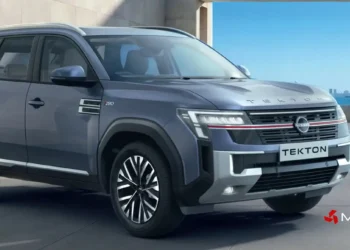
| Shared With | Nissan (Tekton and future SUVs) |
India As A Global Hub: Manufacturing, R&D, And Export Strategy
Renault Group now has full ownership of its Chennai manufacturing facility, reinforcing its ability to localise production and deepen supplier integration. The Chennai engineering centre, with 6,000 engineers and IT specialists, is set to take on an elevated global role, developing platforms, vehicle architectures, and technologies for India and worldwide.
The company is targeting up to 90 percent localisation and Euro 2 billion in annual exports by 2030. Renault Group has also committed to carbon neutrality in Europe by 2040 and worldwide by 2050.
Quick Pros and Cons
Pros:
- Seven models covering entry hatchbacks to 7-seater SUVs
- Two modern platforms (RGEP and RGMP Small) replacing dated CMF-A
- Factory-fitted CNG with innovative underbody tanks, preserving boot space
- Strong hybrid and fully electric powertrains confirmed
- Up to 90 percent localisation for competitive pricing
- 7-year / 1,50,000 km warranty under Renault Forever
- Euro 2 billion export target with 15,000 India employees and full Chennai facility ownership
Cons:
- Dealer and service network smaller than Maruti, Hyundai, and Tata
- No diesel engine options across any model
- Key launches (Bigster, Bridger, Bridger EV) still 1 to 3 years away
- EV infrastructure challenges remain for Bridger EV
- Execution and after-sales improvements needed to hit 5% market share
Expected Renault India Launch Timeline
| Model | Expected Launch | Platform | Key Powertrain |
|---|---|---|---|
| Duster Hybrid E-Tech | Diwali 2026 | RGMP Small | 1.8L Strong Hybrid |
| Updated Kiger / Triber | Late 2026 to 2027 | RGEP | Petrol + Factory CNG |
| Bigster 7-Seater | Late 2026 to Early 2027 | RGMP Small | 1.3L Turbo, Hybrid |
| Bridger (ICE) | Diwali 2027 | RGMP Small | 1.2L Turbo, Hybrid |
| Bridger EV | Post-2027 | RGMP Small | Full Electric |
| Updated Kwid | 2027 to 2028 | RGEP | Petrol + Factory CNG |
Frequently Asked Questions (FAQs)
1. How many models does Renault plan to have in India by 2030? Renault plans a 7-model lineup by 2030: the Duster, Bigster (7-seater), Bridger (compact SUV), Bridger EV, and updated Kwid, Kiger, and Triber on the RGEP platform.
2. What is the futuREady India strategy? Announced on 16 April 2026 by CEO François Provost, it is Renault’s local rollout of its global futuREady plan, covering seven models, two platforms, multi-energy powertrains, and Euro 2 billion annual exports from India.
3. When will the Renault Bridger launch in India? The production-spec Bridger compact SUV is expected by Diwali 2027. It will be designed, developed, and manufactured in India.
4. Will Renault offer factory-fitted CNG in India? Yes. The RGEP platform brings factory-fitted CNG to the Kiger, Triber, and potentially Kwid, with underbody-mounted dual-cylinder tanks that preserve boot space.
5. What is the new Renault Duster 2026 price? Rs 10.49 lakh to Rs 18.49 lakh (ex-showroom) for turbo-petrol variants. Hybrid pricing will be announced by Diwali 2026.
6. What is the difference between RGEP and RGMP Small? RGEP is the entry-level platform for models under Rs 10 lakh (petrol, CNG). RGMP Small is the modular platform for B and C segment vehicles (petrol, hybrid, CNG, electric).
7. Will Renault launch an EV in India? Yes. The Bridger EV, based on the RGMP Small platform, is confirmed for post-2027 launch with an expected 40 kWh battery and approximately 500 km range.
8. How many employees does Renault have in India? 15,000 employees, including 6,000 engineers and IT specialists at the Chennai engineering centre.
9. What is Renault’s export target from India? Euro 2 billion annually by 2030 in vehicles, R&D, and components, particularly targeting South American markets.
10. What is the Renault Forever warranty? An up to 7-year / 1,50,000 km warranty programme designed to build long-term customer trust and simplify the ownership experience.
Motors77 Verdict
Renault’s futuREady India strategy is one of the most comprehensive turnaround plans any automaker has presented for the Indian market in recent years. Seven models, two new platforms, factory-fitted CNG with underbody tanks, strong hybrid powertrains, and a genuine EV push cover nearly every base a mass-market buyer could want.
The early signs are encouraging. The Duster has received a strong response with hybrid bookings sold out. The Bridger concept shows Renault’s commitment to India-specific development. The RGEP platform’s CNG integration could give Renault a genuine edge in the sub-Rs 10 lakh segment.
What strengthens credibility is the infrastructure backing this plan: 15,000 employees, full Chennai factory ownership, 6,000 engineers at a global R&D centre, and 90 percent localisation. The South America export connection means Indian-built vehicles will need to meet international quality benchmarks, benefiting domestic buyers too.
The biggest challenge will not be the products but the ecosystem. A smaller dealer network, modest brand recall compared to Maruti, Hyundai, or Tata, and launches still 1 to 3 years away mean buyers need to see sustained commitment. If Renault delivers with the same quality it has shown with the Duster, the 5 percent market share target is ambitious but achievable. The next 18 to 24 months will tell the story.
Disclaimer: All specifications, prices, and timelines are based on the official Renault Group press release dated 16 April 2026 and credible industry reports. Motors77 recommends verifying details from official Renault India channels before making purchase decisions.
Last Updated: April 17, 2026 | Motors77.com