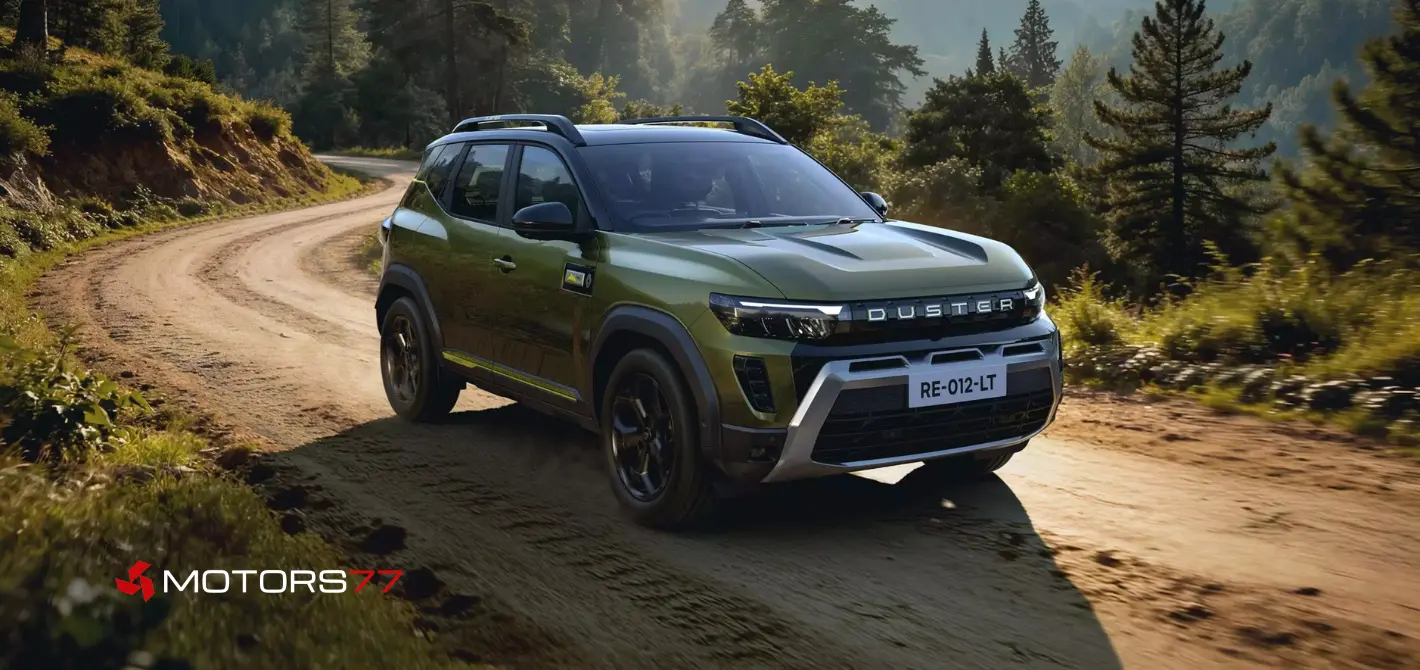
cfdA quiet investment filing could end up deciding what fuel your next Renault Duster or Nissan Tekton burns. Horse Powertrain India is the story of a little known, Renault-Geely owned engine giant preparing to build strong hybrids on Indian soil, and of how that lines up almost perfectly with the country’s push towards E85 and E100 ethanol fuel.
On paper it reads like a dry corporate filing: a $370 million investment, roughly ₹3,500 crore, routed through Renault’s Chennai plant. Look closer and the Horse Powertrain India plan touches three of 2026’s most talked about cars, the Duster Hybrid, Nissan Tekton and Renault Bridger, while opening a door to flex fuel hybrids few rivals can match. Let us separate the confirmed from the merely possible.
Who, or what, is Horse Powertrain?
Most Indian buyers have never heard the name, yet Horse Powertrain is already one of the planet’s largest engine and hybrid specialists. Set up in 2024 as a Renault and Geely joint venture, with Saudi Aramco later taking 10 percent, it leaves Renault and Geely on 45 percent each. It runs 18 plants worldwide, employs around 19,000 people, and supplies engines, gearboxes and complete hybrid systems to Renault, Geely, Volvo, Proton, Nissan and Mitsubishi.
That is the key to the Horse Powertrain India move: this is not a carmaker entering India but a powertrain factory, with customers already lined up.
Horse Powertrain India: the deal on the table
Here is the proposed entry, from reported figures and the company’s own statement.
| Item | Detail |
|---|---|
| JV ownership | Renault 45 percent, Geely 45 percent, Saudi Aramco 10 percent |
| Established | 2024 |
| Global footprint | 18 plants worldwide, around 19,000 employees, HQ London |
| India investment | $370 million, about ₹3,500 crore, phased |
| First site | Renault’s Chennai plant |
| Current status | Application submitted; India reported as likely to approve soon, not yet formally cleared |
| Purpose | Local manufacture of strong hybrid powertrains for Renault and Nissan |
Horse Powertrain has confirmed it applied to Indian authorities for the right to invest and is “expecting a formal decision soon.” By late June 2026, reports said approval looked imminent, though no formal clearance had been announced. The money will be deployed in phases from Chennai, following Renault’s move to separate its India powertrain manufacturing into a dedicated entity.
There is wider significance. If cleared, this would be among the first major Chinese linked manufacturing investments in India since the country eased foreign investment rules for neighbouring nations earlier this year. No Chinese automaker has invested big here since SAIC bought a GM plant to launch MG in 2017, so the Horse Powertrain India application is being watched as a test case, not just a car story.
The HR18: the hybrid heart of the Duster
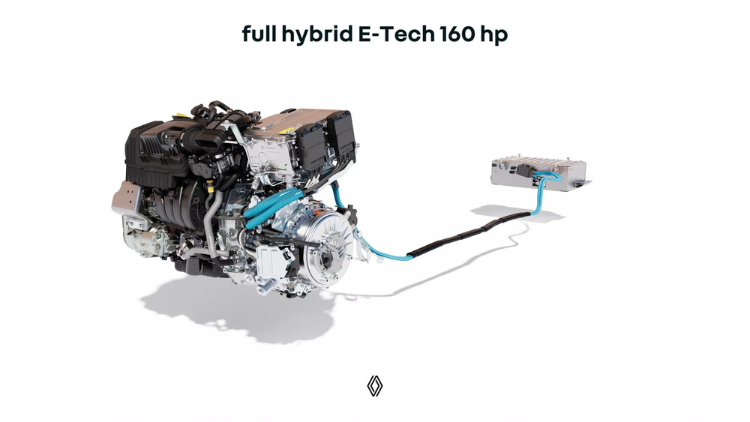
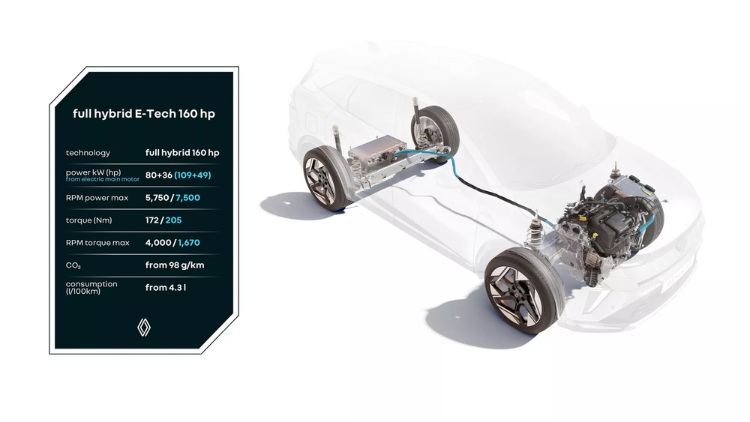
The engine at the centre of all this is the HR18, a 1.8 litre, four cylinder, direct injection petrol unit running the efficient Atkinson cycle. It forms the combustion half of Horse Powertrain’s integrated strong hybrid, sold in Renault trim as the E-Tech 160, and it is exactly the setup confirmed for the India bound Duster Hybrid.
| Parameter | Detail (HR18 strong hybrid / Renault E-Tech 160) |
|---|---|
| Engine | 1.8 litre four cylinder petrol, Atkinson cycle, direct injection |
| Engine weight | About 100 kg |
| System type | Strong (full) hybrid with two electric motors |
| Battery | 1.4 kWh lithium ion |
| Transmission | Clutchless multi mode automatic |
| System output | About 160 PS combined; petrol engine 172 Nm |
| EV running | Up to 80 percent of city driving on electric, per Renault |
| Fuel compatibility as built | Petrol up to E10, India version calibrated for E20 |
| Emissions | Euro 6E-BIS and Euro 7 compliant globally |
Unlike Toyota’s power split hybrid, Renault’s E-Tech 160 uses a clutchless multi mode gearbox with fixed ratios, so it behaves more like a conventional automatic with perceptible shifts. Its larger 1.4 kWh battery, nearly double Toyota’s, is how Renault claims up to 80 percent electric running in the city.
Which cars get the Horse hybrid, and when
Confirmed and expected sit close together here, so read this carefully.
| Model | Hybrid status | Expected timing | Notes |
|---|---|---|---|
| Renault Duster | Confirmed | Festive season 2026, around Diwali | 1.8 litre E-Tech 160 strong hybrid, petrol versions deliver from April 2026 |
| Nissan Tekton | Not officially confirmed | Likely after the Duster, possibly 2027 | Rebadged Duster, global debut 9 July 2026, petrol first |
| Renault Bridger | Expected | After the Duster | Compact SUV likely to share a Horse powertrain |
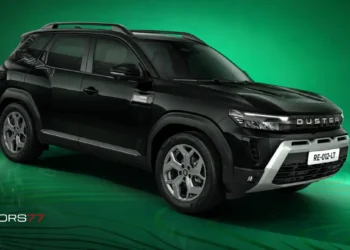
The Renault Duster strong hybrid is the firm one. It is confirmed for India around the festive season and will take on the Maruti Grand Vitara, Toyota Hyryder, Maruti Victoris and the hybrid curious end of the Creta and Seltos crowd.
The Nissan Tekton, which debuts globally on 9 July 2026, is essentially a Patrol inspired rebody of the Duster on the same CMF-B platform and Chennai line, sharing its 1.0 and 1.3 litre turbo petrol engines. The 1.8 litre strong hybrid is widely expected to follow, possibly in 2027, but Nissan has not confirmed a Tekton hybrid. Treat it as likely, not locked.
The E85 and E100 question, answered honestly
Now the headline grabbing part, the bit most coverage gets fuzzy on. Can the Duster and Tekton hybrid really run on E85 and E100?
As built, the HR18 hybrid is officially compatible with up to 10 percent ethanol, and the India version is calibrated for E20. That is not an E85 or E100 flex fuel engine today. The current India Duster is not a flex fuel E85 vehicle, though its hardware is material compliant for higher blends, leaving some headroom.
So where does the E85 and E100 story come from? From Horse Powertrain itself. Its broader portfolio already proves high ethanol capability: a flex fuel HR13 turbo engine built in Brazil, roots in Renault and Nissan flex fuel engines that already run E100 in South America, and a Future Hybrid Concept whose pre chamber ignition is designed for gasoline, E85, M100 methanol and synthetic fuels. The expertise to localise an E85 or E100 hybrid for India clearly exists inside the group.
That is why a local Horse Powertrain India factory is so interesting. India is moving fast on ethanol, and the timing lines up.
| India ethanol milestone | Status or timing |
|---|---|
| E20, 20 percent ethanol | Achieved around 2025, mandatory at all pumps from April 2026 |
| E85 and E100 framework | Regulatory framework cleared via a CMVR amendment |
| Flex fuel outlets | About 500 by December 2026, around 5,000 by end of 2027, key corridors first |
| CAFE III norms | From April 2027, flex fuel vehicles on E85 or E100 count as near zero fossil CO2 |
| Distribution model | Brazil style, E20, E85 and E100 sold side by side, higher blends only for flex fuel vehicles |
Put the two together and the logic is clear. India has cleared E85 and E100 rules, is building flex fuel infrastructure, and from April 2027 CAFE III will reward flex fuel vehicles heavily. Horse already knows how to build flex fuel hybrids, so a Chennai factory gives Renault and Nissan a ready path to localise one when, and only when, the fuel and demand arrive. The word that matters is could, not will.
Why this matters for Indian buyers
Strip away the corporate layers and the Horse Powertrain India plan points to real outcomes. Local manufacturing of hybrid engines and batteries cuts reliance on imports, the biggest lever for bringing strong hybrid prices within mainstream reach. There is an energy security angle too: a domestically built hybrid that can eventually sip ethanol from Indian crops appeals to policymakers and farmers alike. For Renault and Nissan, two brands long short on relevance here, a localised, efficient, potentially flex fuel hybrid could be the differentiator they have lacked.
The catch is patience and proof. The hybrid Duster is real and near; the flex fuel future is plausible but unconfirmed. Buy a Duster or Tekton hybrid in 2026 for its efficiency, not on the assumption it runs on E100 the day you drive it home.
Quick Pros and Cons
| Pros | Cons |
|---|---|
| Brings world class hybrid manufacturing to India at Chennai | E85 and E100 capability is not in the launch HR18 spec, only in Horse’s wider portfolio |
| Localisation can lower strong hybrid prices over time | Tekton hybrid is expected, not officially confirmed |
| Horse already has proven flex fuel and ethanol expertise globally | Approval still pending with Indian authorities |
| Aligns neatly with India’s E85, E100 and CAFE III roadmap | Flex fuel fuelling network is still tiny and years from scale |
| Could make India an export hub for hybrid systems later | The Chinese linked stake invites extra regulatory scrutiny |
Frequently Asked Questions
1. Is Horse Powertrain a Chinese company? No, it is a joint venture. Renault and Geely hold 45 percent each, Saudi Aramco 10 percent. Because Geely is Chinese, the India investment is treated as Chinese linked and needs clearance under foreign investment rules.
2. Which cars will use Horse Powertrain hybrids in India? The Renault Duster strong hybrid is confirmed. The Nissan Tekton and Renault Bridger are widely expected to use Horse powertrains, the Tekton hybrid likely following the Duster, possibly in 2027.
3. Can the Renault Duster Hybrid run on E85 or E100? Not as launched. The HR18 hybrid is officially compatible with up to E10, and the India version is calibrated for E20. Horse Powertrain does have flex fuel technology capable of E85 and E100 elsewhere, so a future India flex fuel hybrid is possible, but the launch Duster Hybrid is not an E85 or E100 car.
4. When will the Nissan Tekton launch and get a hybrid? The Tekton debuts globally on 9 July 2026 and launches in India shortly after, initially with turbo petrol engines. A strong hybrid is expected to follow, possibly in 2027, but Nissan has not officially confirmed it.
5. How much is Horse Powertrain investing in India? Around $370 million, roughly ₹3,500 crore, in phases starting at Renault’s Chennai plant, with formal approval reported as imminent.
6. What is the HR18 engine? It is Horse Powertrain’s 1.8 litre, four cylinder, Atkinson cycle petrol engine, paired with two electric motors and a 1.4 kWh battery to form a strong hybrid making a combined 160 PS. It is the unit behind the Renault Duster Hybrid.
7. Can I run E85 or E100 in my current car? No. Cars sold in India are built for up to E20 only. E85 and E100 will be sold separately for certified flex fuel vehicles. Using them in a normal car can hurt efficiency and damage the engine.
Motors77 Verdict
The Horse Powertrain India story matters more than its low key announcement suggests. A ₹3,500 crore powertrain factory in Chennai, backed by Renault, Geely and Aramco, gives two of India’s underdog brands a credible, localisable, efficient hybrid heart and a head start on the flex fuel future policymakers are racing towards.
What we like is the strategic fit. India has cleared E85 and E100 rules, is building flex fuel infrastructure, and from April 2027 the CAFE III norms will actively reward flex fuel vehicles. Horse Powertrain already builds flex fuel hybrids in other markets. Connect those dots and a locally made, ethanol friendly Duster or Tekton hybrid is a logical next step once the fuel is freely available.
What we will not do is overstate it. The confirmed reality today is a 1.8 litre, E10 compatible, E20 calibrated strong hybrid for the Duster, the Tekton hybrid expected but unconfirmed, and the investment reported as close to approval but not yet formally cleared. The leap to a showroom full of E100 sipping hybrids depends on regulators, fuelling networks and demand arriving together, which will take years.
If the Horse Powertrain India investment is cleared, it does two things at once: it makes affordable, locally built strong hybrids realistic for Renault and Nissan buyers, and it positions both to ride India’s ethanol wave when E85 and E100 go mainstream. That is a smarter, longer game than a single Duster launch, well worth watching.