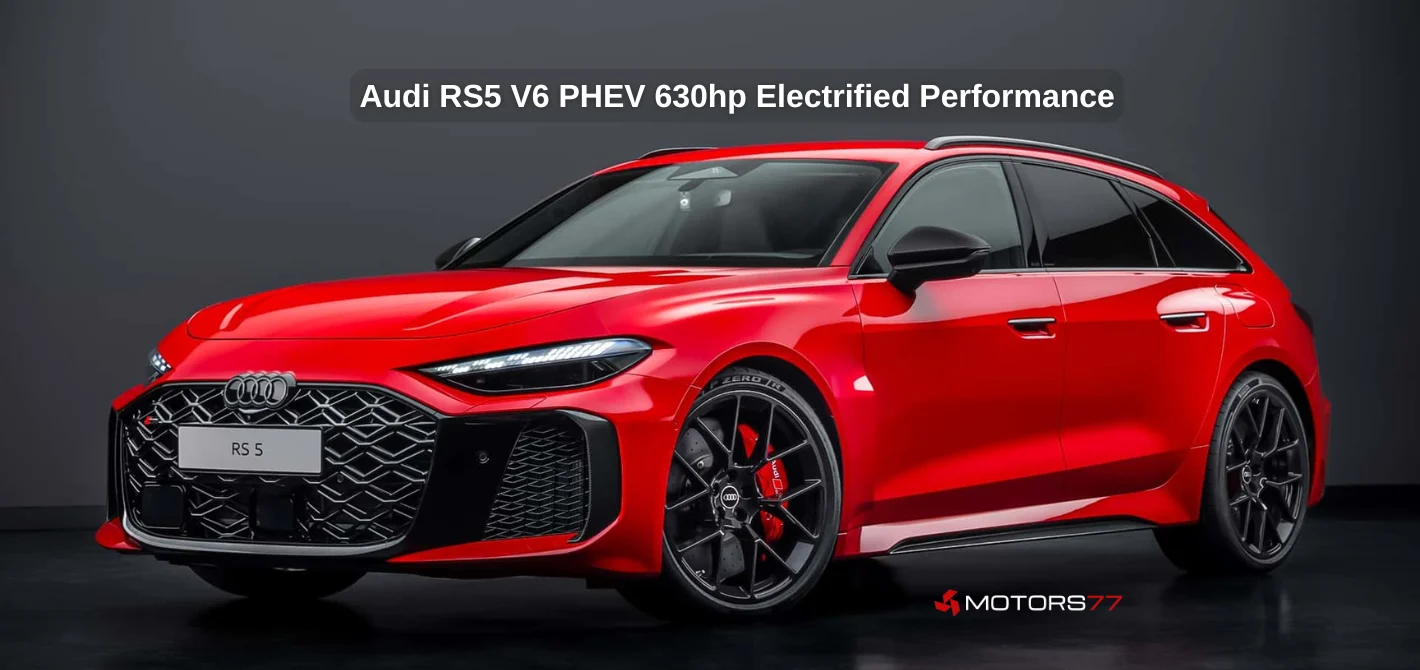
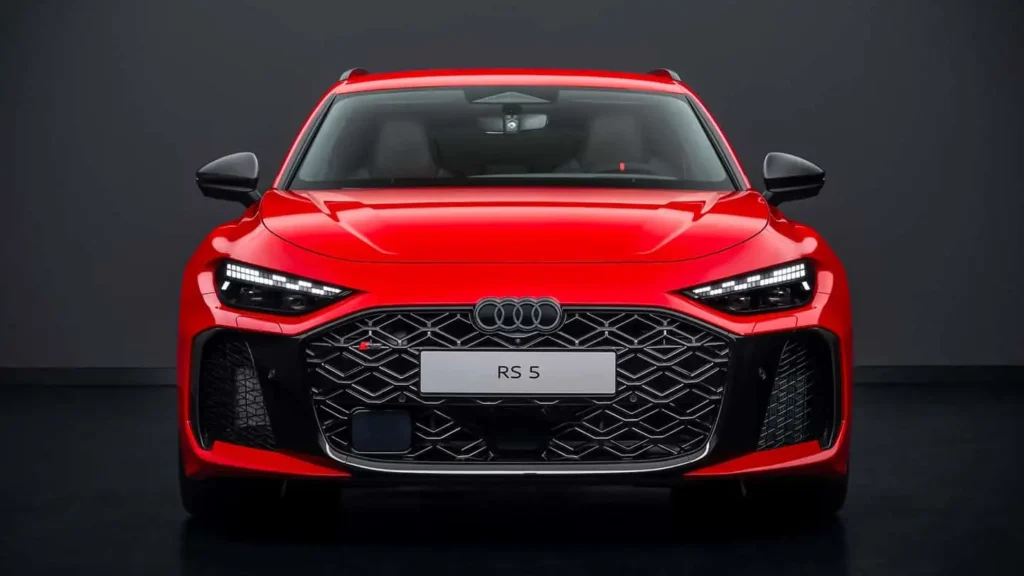
Audi RS5 V6 PHEV enters the performance segment with a thunderous 470kW (630hp) output that eclipses even the mighty RS6’s V8 engine. Officially revealed on February 19, 2026, this electrified successor to the legendary RS4 combines a twin-turbocharged V6 with plug-in hybrid technology, delivering acceleration figures that place it among the fastest compact sports cars ever produced by Audi Sport.
Why the Audi RS5 V6 PHEV Matters Right Now
The automotive industry stands at a crossroads. While Mercedes-AMG controversially downsized to a four-cylinder for the C63, Audi Sport has retained six-cylinder grunt in the RS5 V6 PHEV. This decision speaks volumes about Ingolstadt’s commitment to performance enthusiasts who refuse to compromise on engine character.
European emissions regulations demanded electrification. Audi’s response proves that compliance and excitement can coexist beautifully.
Audi RS5 V6 PHEV Powertrain Specifications
| Component | Specification |
|---|---|
| Engine | 2.9L Twin-Turbocharged V6 |
| Engine Output | 375kW (503hp) / 443 lb-ft |
| Electric Motor | 130kW (175hp) / 339 lb-ft |
| Combined System Output | 470kW (630hp) / 825Nm (608 lb-ft) |
| Battery Capacity | 25.9 kWh |
| Transmission | 8-Speed Automatic |
| Drivetrain | Quattro AWD with Torque Vectoring |
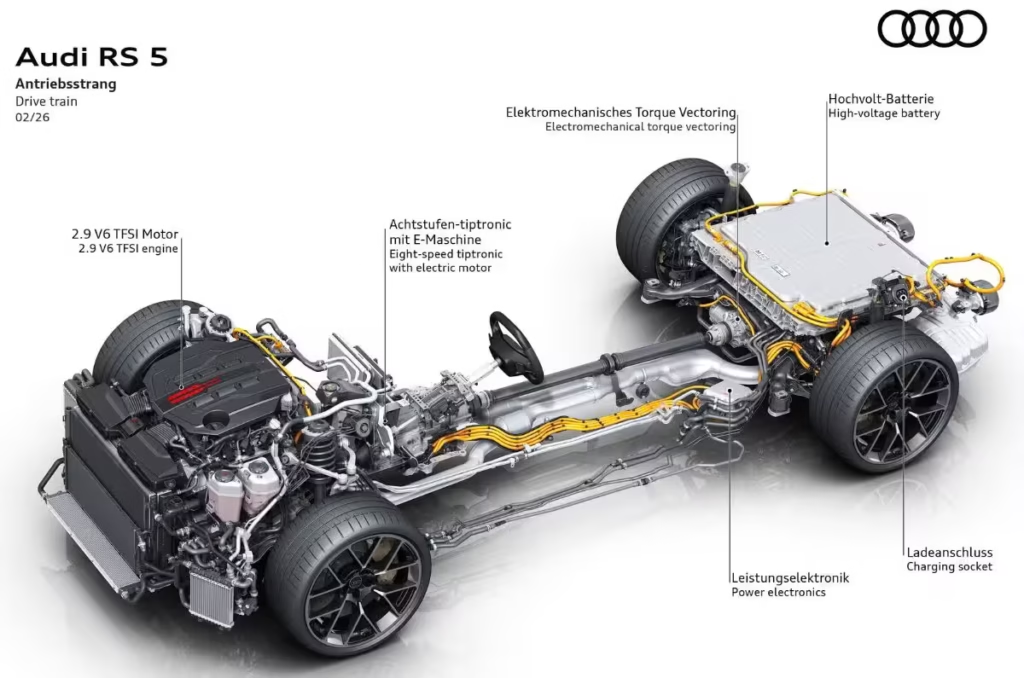
The 2.9-litre twin-turbocharged V6 carries over from the previous RS4 Avant but receives extensive modifications. Approximately 60 percent of components are new, including water-cooled intercoolers (a first for RS models), variable geometry turbos, revised air intake systems, and an upgraded fuel injection system with higher pressure.
Hybrid System Integration
An electric motor resides within the torque-converter 8-speed automatic transmission, replacing the conventional 12-volt starter motor. This integration creates seamless power delivery while enabling the Boost function that unleashes maximum performance on demand.
Audi RS5 V6 PHEV Performance Numbers
| Metric | Figure |
|---|---|
| 0-100 km/h (0-62 mph) | 3.6 seconds |
| Top Speed (Standard) | 250 km/h (155 mph) |
| Top Speed (Audi Sport Package) | 285 km/h (177 mph) |
| Electric-Only Range | 87 km (54 miles) WLTP |
| AC Charging Rate | 11 kW |
| Full Charge Time | 2.5 hours |
These acceleration figures position the Audi RS5 V6 PHEV just tenths behind the larger RS6 Avant, despite the significant power difference in combustion engines. The electric motor’s instant torque delivery compensates brilliantly during launches.
Electromechanical Torque Vectoring: A World First
The Audi RS5 V6 PHEV debuts the industry’s first electromechanical torque vectoring system at the rear axle. This system uses a dedicated electric motor, overdrive gears, and differential to shift torque between rear wheels in just 15 milliseconds. The RS Torque Rear mode transforms handling character for track-oriented driving experiences.
Chassis and Suspension Details
| Component | Specification |
|---|---|
| Front Brakes (Standard) | 420mm Steel Discs |
| Rear Brakes (Standard) | 400mm Steel Discs |
| Front Brakes (Optional Carbon Ceramic) | 440mm |
| Rear Brakes (Optional Carbon Ceramic) | 410mm |
| Standard Wheels | 20-inch with 285/35 tyres |
| Optional Wheels | 21-inch Forged |
| Steering Ratio | 13:1 |
| Dampers | Twin-Valve Adjustable |
Twin-valve dampers modulate compression and rebound independently. The faster 13:1 steering rack and sophisticated damping should help mask the considerable kerb weight.
Weight Considerations
| Variant | Kerb Weight |
|---|---|
| RS5 Sedan | 2,355 kg |
| RS5 Avant | 2,370 kg |
| RS6 Avant (V8, non-PHEV) | 2,075 kg |
The Audi RS5 V6 PHEV carries approximately 280 kg more than the RS6 Avant with its non-electrified V8, resulting from PHEV hardware and the larger A5 platform.
Design Evolution
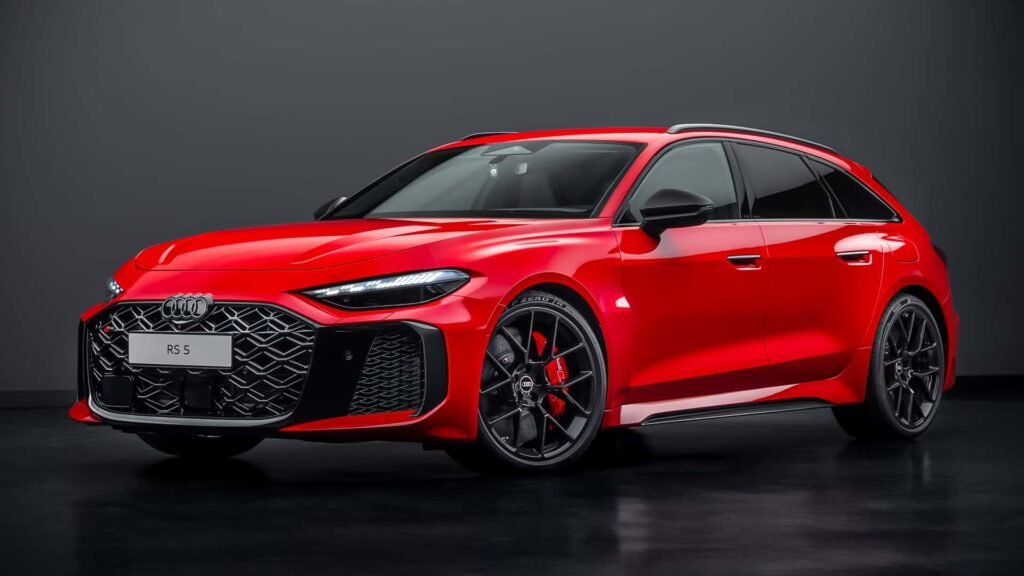
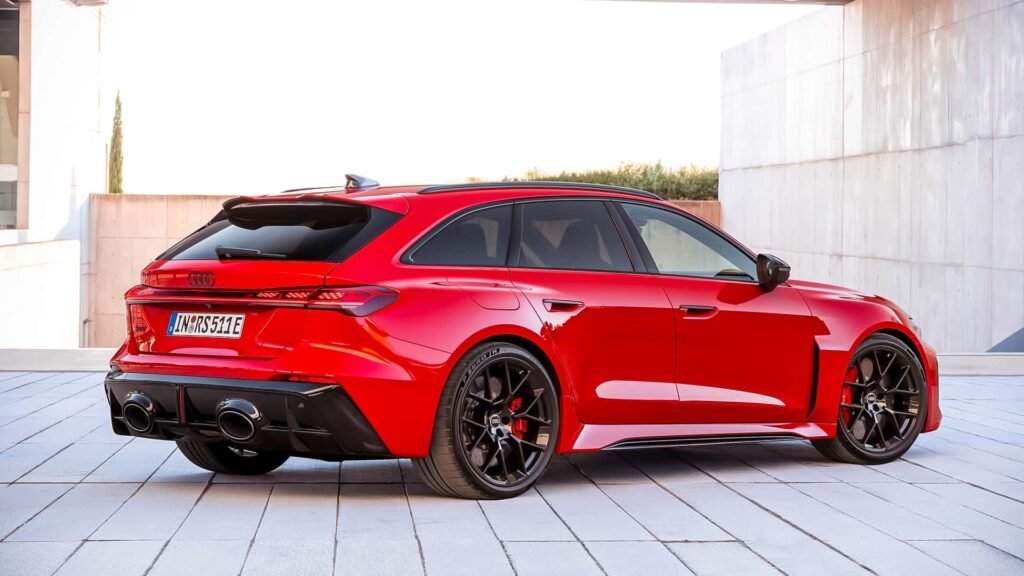
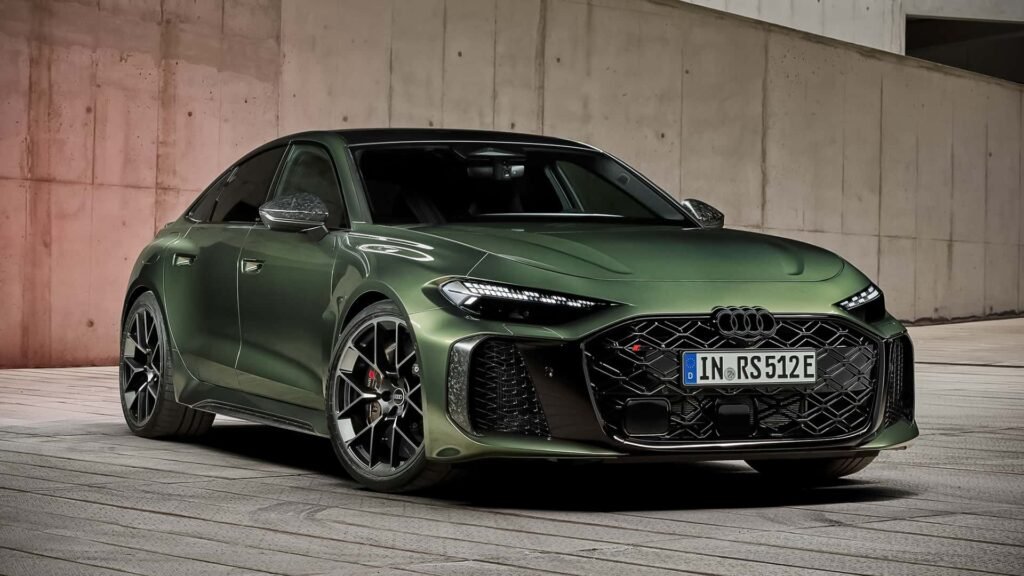
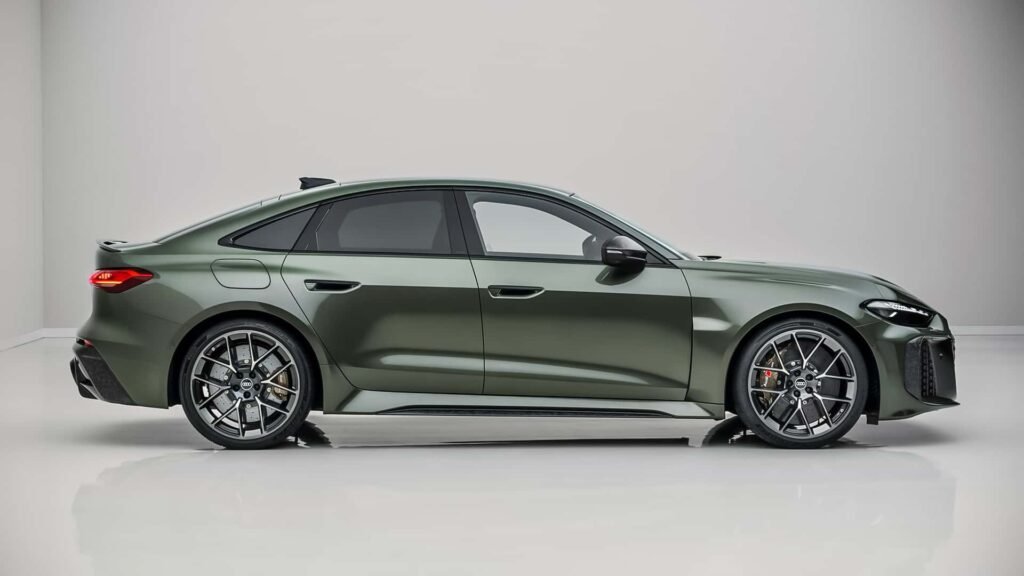
The RS5 wears dramatically flared wheelarches contributing to 90mm additional width over standard A5 models. Unlike BMW’s approach of simply flaring existing panels, Audi replaces rear doors entirely to create cohesive factory-integrated proportions. Visual highlights include the massive trapezoidal grille, functional front-fender air intakes, dual oval exhaust tips within an aggressive rear diffuser, and checkered flag motifs in OLED headlights and taillights.
Interior Technology and Features
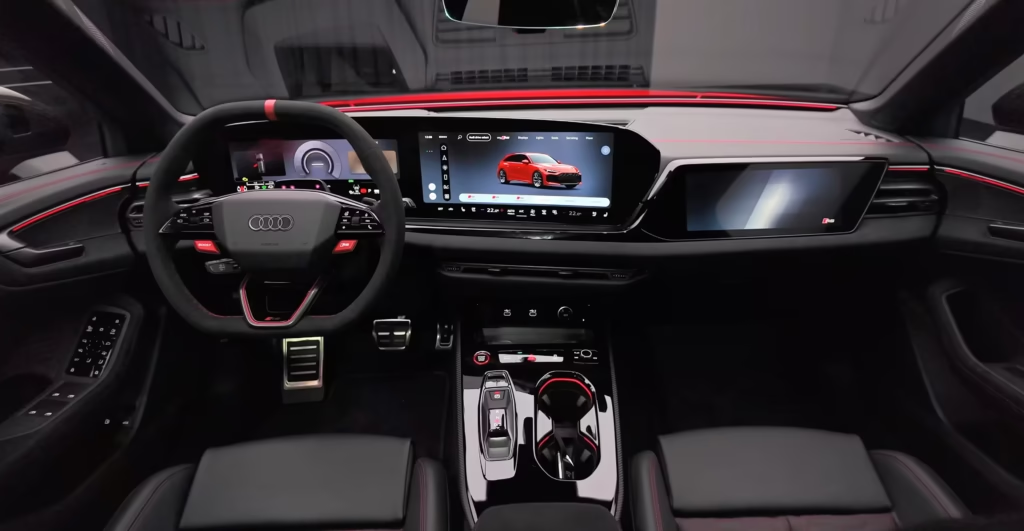
| Display | Size |
|---|---|
| Virtual Cockpit | 11.9 inches |
| MMI Touchscreen | 14.5 inches |
| Passenger Display | 10.9 inches |
The cabin receives deeply bolstered sports seats with honeycomb quilted leather, a flat-bottom steering wheel featuring the Boost button, and extensive red detailing. The Boost button activates maximum output for 10 seconds, instantly engaging the combustion engine while opening exhaust valves.
Audi RS5 V6 PHEV Pricing and Availability
| Market | Variant | Price |
|---|---|---|
| UK | RS5 Sedan | £89,400 |
| UK | RS5 Avant | £91,300 |
| India | Both Variants | TBA |
Orders commence summer 2026, with European deliveries expected shortly after. Indian pricing and launch timeline remain unconfirmed. The Audi Sport package adds broader front air intakes, RS sport exhaust with matte black tailpipes, carbon-ceramic brakes, and increases the top speed to 177 mph.
The Carbon Camouflage package offers distinctive forged carbon fibre for front bumper inserts, side sills, mirror caps, and rear diffuser.
Quick Pros and Cons
Advantages
| Aspect | Benefit |
|---|---|
| V6 Retention | Six-cylinder character preserved unlike rivals |
| Combined Output | 630hp exceeds RS6’s V8 power |
| Electric Range | 80+ km enables zero-emission commuting |
| Torque Vectoring | World-first electromechanical system |
| Design | Cohesive widebody styling with new door panels |
Disadvantages
| Aspect | Consideration |
|---|---|
| Weight | 2,355-2,370 kg significantly heavier than predecessors |
| Boot Space | Battery impacts cargo capacity (361L Avant) |
| DC Charging | AC-only charging limits rapid top-up options |
| Price | Substantial increase over outgoing RS4 |
| Complexity | PHEV system adds potential maintenance considerations |
Competition Comparison
| Model | Power | 0-100 km/h | Price (UK) |
|---|---|---|---|
| Audi RS5 V6 PHEV | 630 hp | 3.6 sec | £89,400 |
| BMW M3 Competition | 510 hp | 3.9 sec | £93,585 |
| Mercedes-AMG C63 | 680 hp | 3.4 sec | £100,935 |
| Alfa Romeo Giulia QV | 510 hp | 3.9 sec | £80,095 |
The RS5 positions itself competitively, offering superior character to the four-cylinder AMG C63 while matching BMW’s six-cylinder approach with additional electrified capability.
Driving Modes
Multiple profiles include EV Mode, Hybrid Mode, Dynamic Mode, RS Sport Mode, and RS Torque Rear Mode. Nine exterior colours include Merlin pearl effect, Goodwood green, and Panther black crystal effect.
Frequently Asked Questions
What engine does the RS5 hybrid use?
The RS5 uses a heavily revised 2.9-litre twin-turbocharged V6 petrol engine producing 503 hp on its own. Combined with the 175 hp electric motor, total system output reaches 630 hp (470kW) and 608 lb-ft of torque.
How fast is the new RS5?
The RS5 accelerates from 0-100 km/h in 3.6 seconds. Standard top speed is electronically limited to 250 km/h, while the Audi Sport package increases this to 285 km/h (177 mph).
What is the electric range?
The RS5 offers over 80 kilometres (50 miles) of electric-only range according to WLTP testing, enabling zero-emission commuting capability alongside high-performance motoring.
How much does the RS5 weigh?
The RS5 Sedan weighs 2,355 kg while the Avant variant weighs 2,370 kg. This represents approximately 280 kg more than the non-electrified RS6 Avant, attributed to battery and electric motor hardware.
Does the RS5 support DC fast charging?
No, the RS5 supports AC charging only at a maximum rate of 11 kW. A complete charge requires approximately 2.5 hours. DC fast charging capability is not available on this model.
What is the Boost button?
The Boost button on the steering wheel activates maximum system output (630 hp) for 10 seconds. It functions even in electric mode, instantly starting the combustion engine and opening exhaust valves for immediate full-power acceleration.
When will the Audi RS5 V6 PHEV be available?
Orders open summer 2026 with European deliveries commencing shortly after. US availability includes the sedan variant, while Avant wagon availability remains unconfirmed for North American markets. Indian launch timeline is yet to be announced.
How does the RS5 compare to BMW M3?
The RS5 produces 630 hp versus the M3 Competition’s 510 hp, while both feature six-cylinder engines and all-wheel-drive capability. The RS5 offers additional electric-only driving capability and advanced torque vectoring technology.
What is unique about the torque vectoring system?
The RS5 debuts the world’s first electromechanical torque vectoring system. It uses a dedicated electric motor rather than brake intervention to actively distribute torque between rear wheels regardless of throttle position.
What boot space does the RS5 Avant offer?
The RS5 Avant offers 361 litres with seats upright and 1,302 litres with rear seats folded. The underseat battery placement impacts cargo capacity compared to non-electrified alternatives.
Audi RS5 V6 PHEV India Launch: Will It Happen?
Audi India has not confirmed the RS5 for our market. However, the upcoming India-EU Free Trade Agreement could change the equation. Performance enthusiasts wondering why this model deserves consideration over pending launches like the Q3, Q5, A5, and A6 should understand the fundamental difference.
The RS5 represents a halo product. Low volume, high value, fully imported. Audi requires minimal infrastructure investment compared to volume models needing local assembly. CBU imports of flagship performance cars serve brand-building purposes rather than sales targets.
Should Audi bring the RS5 to India, the debate becomes body style selection. Indian buyers historically favour sedans, yet growing appreciation for lifestyle vehicles could make the Avant equally compelling.
Motors77 believes the RS5 deserves serious India consideration. The V6 character, electric commuting capability, and 630hp performance creates a compelling proposition. Whether Audi India recognises this opportunity remains the unanswered question.
Motors77 Verdict
The Audi RS5 V6 PHEV represents what performance car electrification should achieve. While rivals retreated to four cylinders, Audi Sport preserved six-cylinder character with electrification that enhances rather than compromises the experience.
That 630hp output delivers supercar-rivalling acceleration with genuine zero-emission commuting capability. The world-first torque vectoring system suggests handling sophistication that could offset the weight penalty.
For enthusiasts mourning the combustion era’s decline, the RS5 provides reassurance. This remains an RS car in character, with electrification serving performance rather than regulations.
Motors77 believes the RS5 Avant represents the most compelling proposition, combining estate versatility with supercar-shaming performance.
The Audi RS5 V6 PHEV earns its position among the finest performance hybrids available, proving that electrification and driving excitement need not be mutually exclusive concepts.